




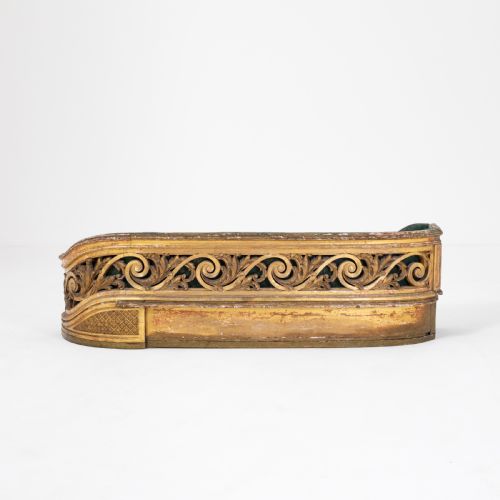
19th Century French Jardiniere
A 19th century french jardiniere brings sculptural presence and botanical display into a room through heavy metal mounts and glazed ceramic.
19th Century French Jardiniere
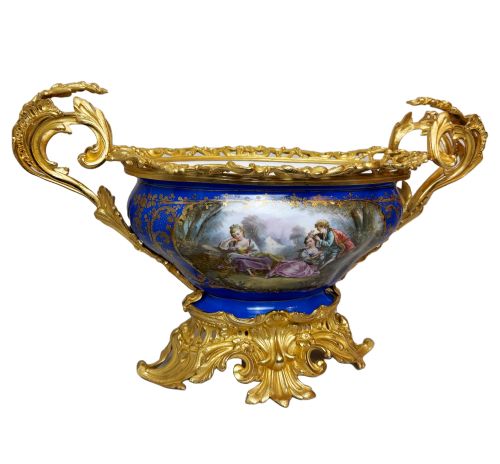
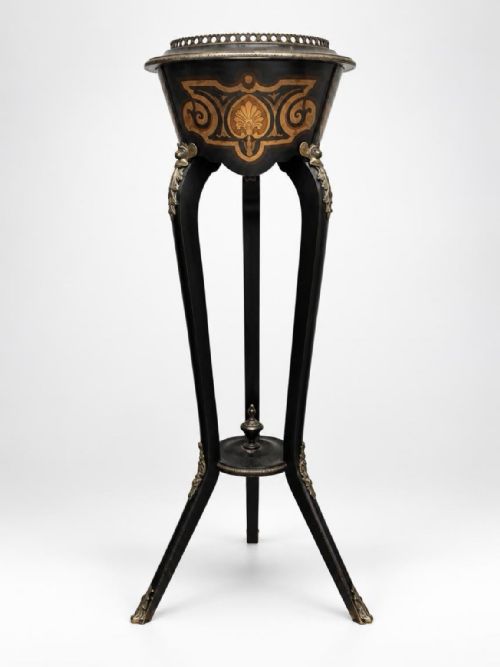
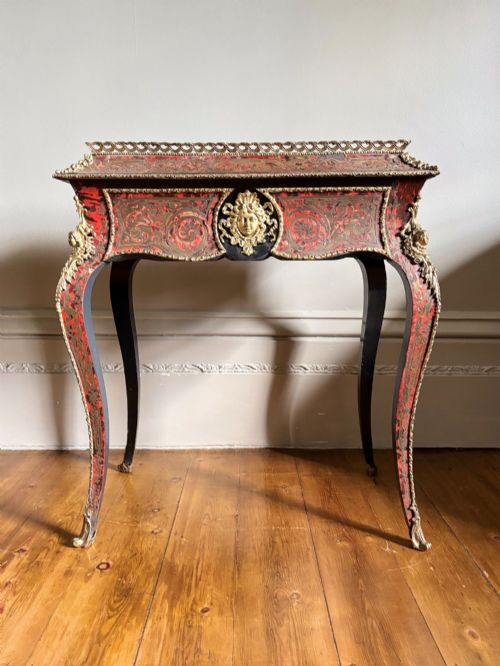
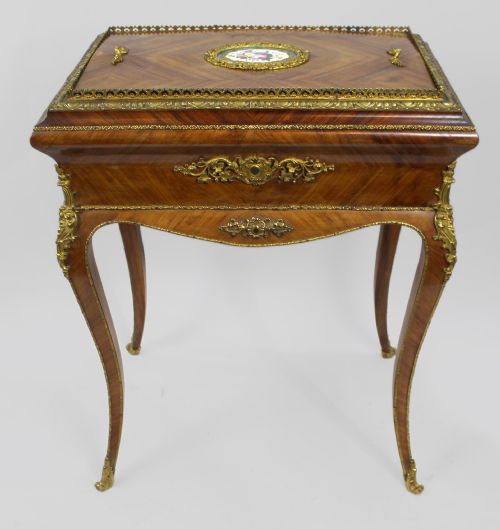
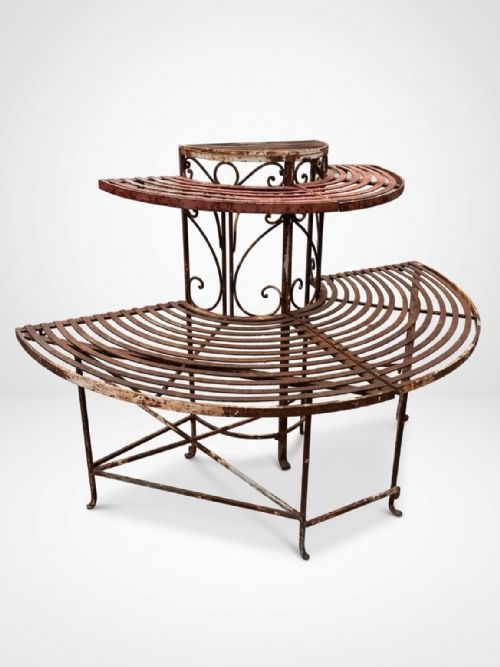
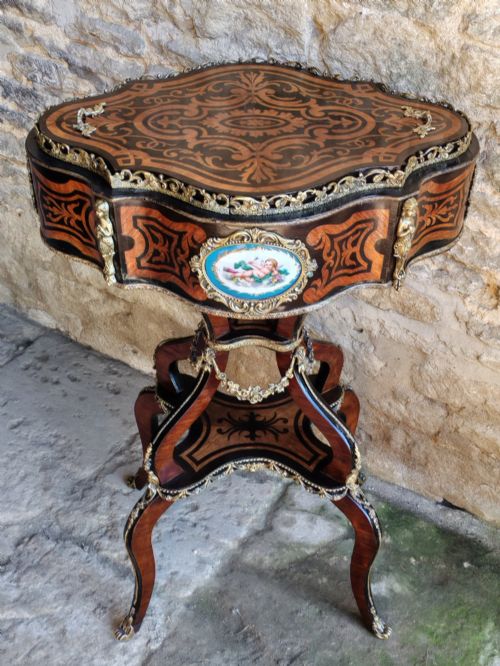
A 19th century french jardiniere functions primarily as an indoor plant holder or decorative centrepiece, often taking the form of a freestanding stand, a table vessel, or a floor planter. These objects emerge from periods including Napoleon III, Louis XV style, and Louis XVI revival, reflecting the ornate interior tastes of the era.
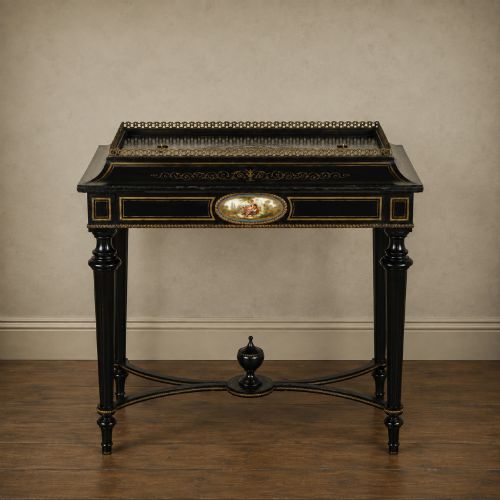
The most common versions encountered on this page combine polished timbers like ebonised wood, kingwood, and burr walnut with cast metal mounts. Many examples incorporate ceramic elements, such as hand-painted porcelain plaques or blue ceramic bodies, designed to hold indoor foliage or floral arrangements securely.
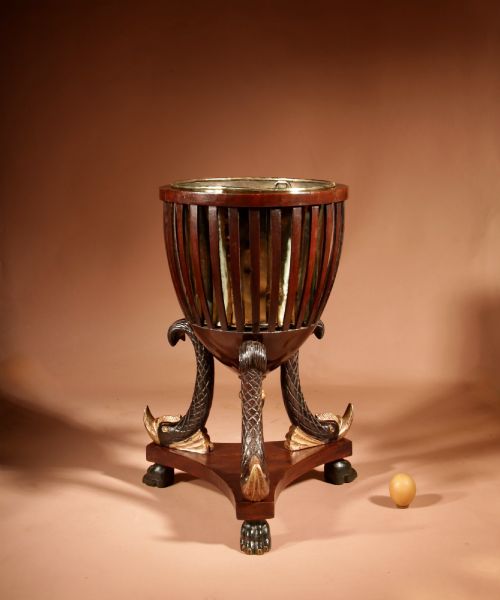
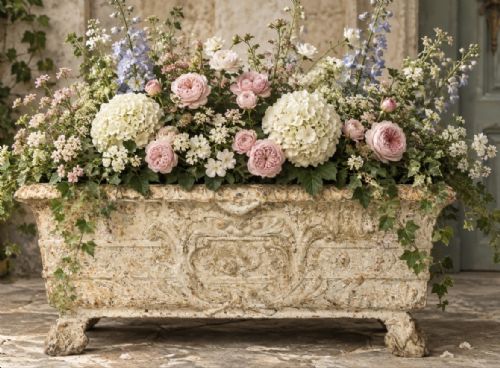
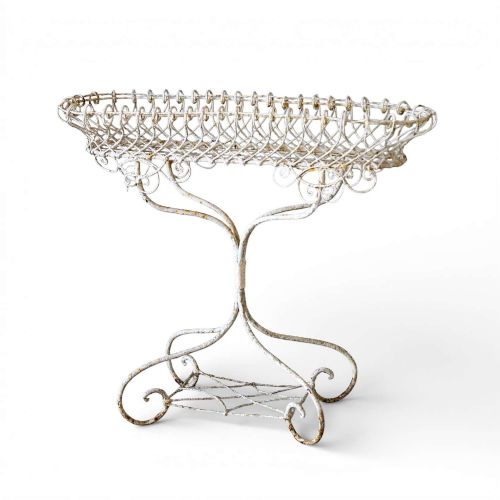
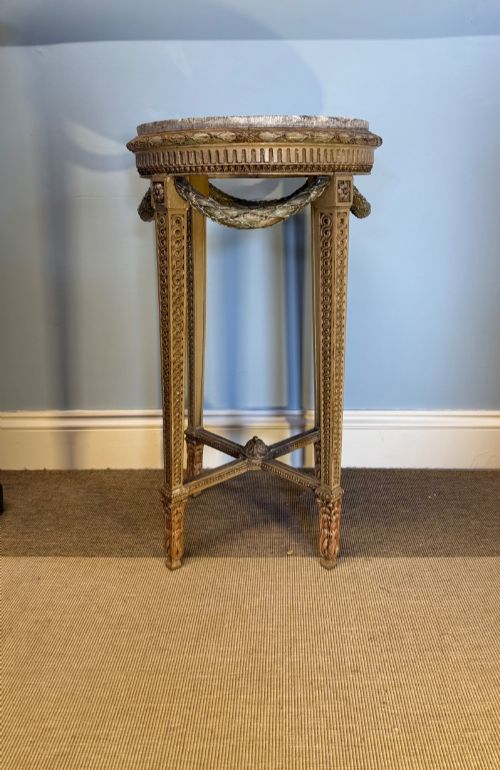
Beyond domestic plant displays, certain variations serve a dual purpose as wine coolers or cellarettes, lined to hold bottles rather than soil. Forms range from low table-standing vessels to tall column stands and heavy cast iron garden planters suited for veranda or terrace use.
Materials and construction
Cabinetmakers utilised rich decorative veneers, including kingwood, satinwood, and burr walnut, frequently applying intricate marquetry patterns or Boullework inlay to the wooden bodies. Ebonised finishes provide a dark contrast against bright metallic ornamentation.
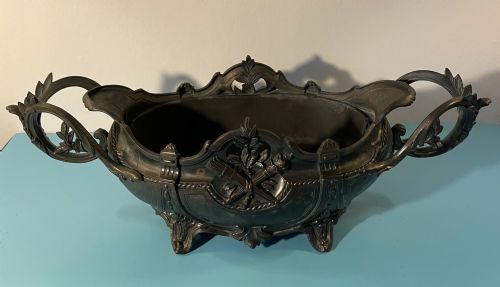
Metalworkers cast bronze, ormolu, brass, and iron to produce structural mounts, scrollwork, lattice baskets, and decorative feet. These cast elements are chased and fixed to the wooden or ceramic bodies to reinforce corners and frame inset plaques.
Ceramic components involve porcelain bodies decorated with hand-painted scenes or enamel work, sometimes paired with marble tops on taller column stands to create a stable, water-resistant surface.
19th Century French Jardiniere Retail Price Guide 2026
Typical asking prices for 19th century french jardiniere among the pieces listed under this phrase on Sellingantiques today, from the lower quarter to the upper quarter. They describe what is for sale here now, not the wider market.
The listings feature diverse materials including cast iron, porcelain, ormolu, and ebonised wood across the Victorian and 19th century periods.
Indicators of quality
The distinction between standard production and finer work rests on the crispness of the metal chasing and the depth of the timber marquetry. Superior pieces exhibit sharply defined ormolu mounts that fit flush against the wood or ceramic body without gaps.
The integration of materials dictates the overall calibre of the object. High-tier examples combine hand-painted porcelain plaques or cloisonné enamel directly into intricate hardwood frames, whereas simpler items rely solely on turned timber or plain cast iron.
The 19th Century French Jardiniere Glossary
- Ormolu
- Gilded bronze applied as a decorative mount to furniture and planters. This technique creates a bright golden contrast against dark timbers.
- Boullework
- A form of marquetry utilising brass and tortoiseshell inlaid into wood. It appears frequently on Napoleon III pieces.
- Jardiniere
- A decorative container or stand designed for holding plants and flowers. They sit on tables or stand independently on the floor.
- Cloisonne
- An ancient technique for decorating metal object surfaces with coloured enamel compartments. Wires form the partitions holding the enamel paste before firing.
19th Century French Jardiniere: Frequently Asked Questions
Can I plant directly inside an antique jardiniere?
Most antique jardinieres feature delicate wooden bodies or metal liners that can rust or stain if exposed to damp soil and direct watering. It is standard practice to place a separate potted plant inside a plastic or ceramic saucer within the vessel to protect the interior.
Using a separate inner pot also allows for easy plant rotation and prevents stagnant water from accumulating against antique porcelain plaques or gilt bronze mounts.
How do I distinguish between Louis XV and Louis XVI styles?
Louis XV style pieces, often produced during the Napoleon III period, display asymmetrical curves, C-scrolls, and naturalistic floral carvings. The overall lines remain fluid and organic.
In contrast, Louis XVI style items adhere to strict symmetry, straight lines, fluted columns, and neoclassical motifs like ribbons and bead-reels. This distinction helps date the decorative influence of the piece.
Were these pieces always used for plants?
While primarily designed for displaying indoor foliage or cut flowers, many larger vessels served alternative domestic functions. Contemporary descriptions often list them as wine coolers, champagne buckets, or cellarettes.
Water-tight metal liners inside certain specimens indicate they were frequently filled with ice and bottles for dining rooms rather than earth for ferns.
How do I clean wooden and ormolu surfaces?
Maintenance requires dry dusting with a soft, lint-free cloth to remove surface particles without abrasive friction. Moisture and modern chemical polishes can damage antique French polishes and degrade gilded bronze surfaces.
If the ormolu accumulates stubborn grime, a very light touch with a dry cotton swab is preferred. Professional conservation is recommended for deep cleaning.