


19th Century French Desk
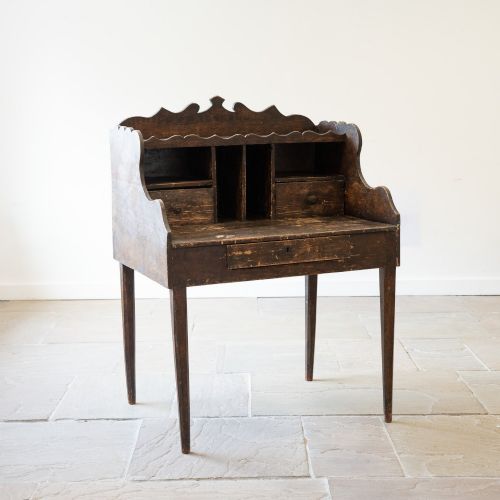
A 19th century french desk brings decorative cabinet-making and functional writing surfaces together, offering a stately workspace for a traditional study.
19th Century French Desk
A 19th century french desk encompasses various practical forms designed for correspondence and paperwork, ranging from sprawling partners models to compact ladies writing tables.
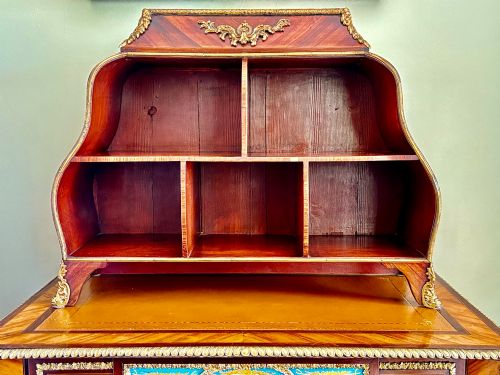
Bureau plat forms dominate the selections, alongside drop-front secretaires, cylinder desks, and feminine bonheur-du-jour variations fitted with small drawers and shelves.
Originating primarily from Parisian workshops and provincial makers, these pieces reflect the shifting tastes of the nineteenth century through revivalist decorative schemes.
Materials and Technique
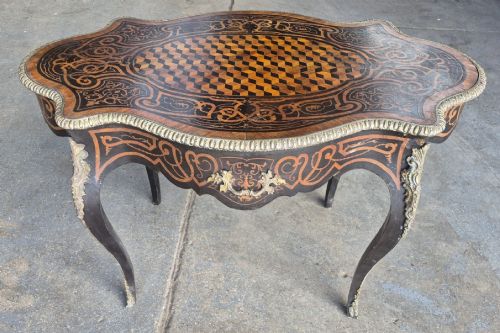
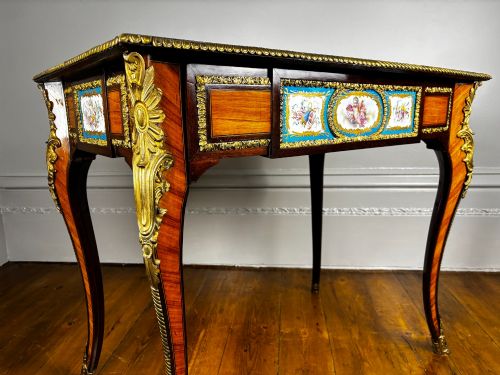
Cabinet-makers constructed carcases from dense timbers like mahogany, walnut, and kingwood, frequently applying intricate marquetry or parquetry geometric patterns across flat surfaces.
Cast ormolu mounts, gilt bronze details, and brass inlays accent the structural lines, while inset leather writing panels provide durable surfaces for daily correspondence.
19th Century French Desk Retail Price Guide 2026
Typical asking prices for 19th century french desk among the pieces listed under this phrase on Sellingantiques today, from the lower quarter to the upper quarter. They describe what is for sale here now, not the wider market.
Listings feature mahogany, kingwood, rosewood, and walnut timbers alongside ormolu mounts and leather writing inserts.
Evaluating the Pieces
Excellence rests upon the crispness of the gilt bronze mounts and the precision of the wood veneers, where hand-chiselled detailing distinguishes superior cabinet-work.
Original fitted interiors, well-preserved leather inserts, and the structural integrity of internal drawers elevate the standing of an individual writing table.
Francois Linke·Paul Sormani
The 19th Century French Desk Glossary
- Bureau plat
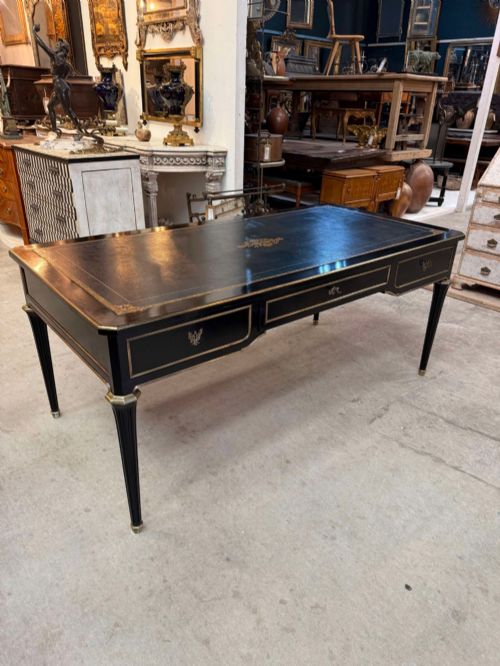
- A freestanding writing table fitted with one or more rows of drawers beneath the work surface. These open tables typically display finished backs for placement in the centre of a room.
- Ormolu
- Gilt bronze ornamentation applied to furniture edges and mounts. This decorative metalwork requires skilled casting and chasing.
- Marquetry
- Decorative veneer work forming pictorial or geometric patterns using various coloured woods. Craftsmen cut these thin slices to fit flush across desk surfaces.
- Secretaire abattant
- A tall writing cabinet featuring a drop-down front panel that conceals small pigeonholes and drawers. This upright form saves floor space while offering a private writing surface.
- Parquetry
- Geometric wood inlay arranged in repetitive patterns such as cubes or chevrons. It differs from marquetry through its strict geometric repetition.
19th Century French Desk: Frequently Asked Questions
How do I use a bureau plat?
A bureau plat functions as a freestanding centre desk, offering a broad writing surface with shallow drawers integrated into the frieze beneath the top.
Position it away from walls to display the finished back and decorative mounts in the middle of a study or library.
What is a secretaire abattant?
A secretaire abattant is an upright cabinet featuring a hinged fall-front panel that lowers to create a horizontal writing ledge.
Behind this dropped flap lie numerous small compartments and pigeonholes designed for stationery and correspondence storage.
How do I care for leather desk tops?
Leather writing surfaces require gentle cleaning with a slightly damp cloth, avoiding harsh chemical solvents that strip the original dye and gold tooling.
Periodic application of suitable leather balms preserves the suppleness of the hide against drying and cracking over time.
How do I distinguish revival styles?
Revival pieces borrow decorative motifs from earlier reigns, combining Louis XV asymmetrical curves or Louis XVI neoclassical symmetry with nineteenth-century cabinet methods.
Examine the secondary woods, screw types, and mounting techniques to confirm the piece dates to the 1900 era rather than the original eighteenth-century periods.