
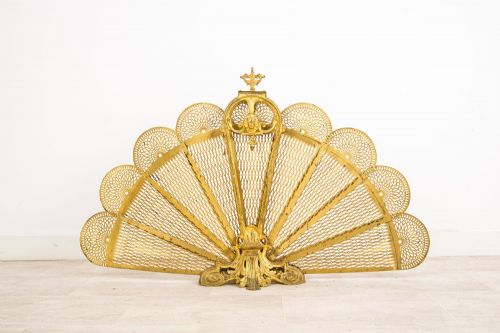
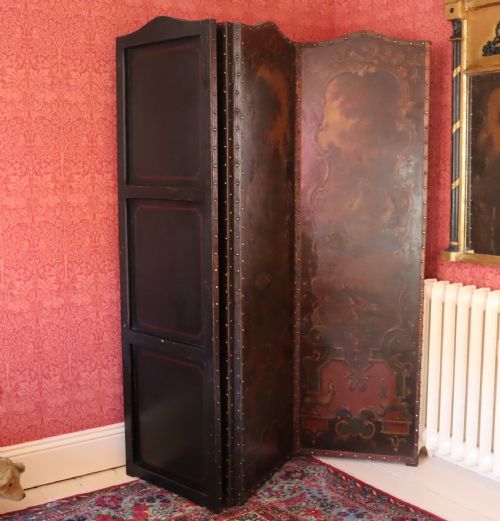


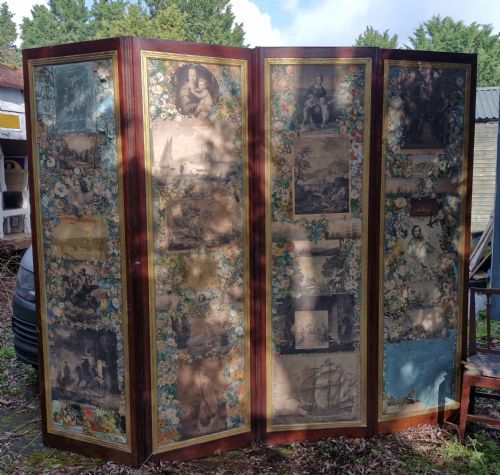


19th Century Folding Screen
A 19th century folding screen divides a room, frames a hearth or screens a dressing space with genuine period character.
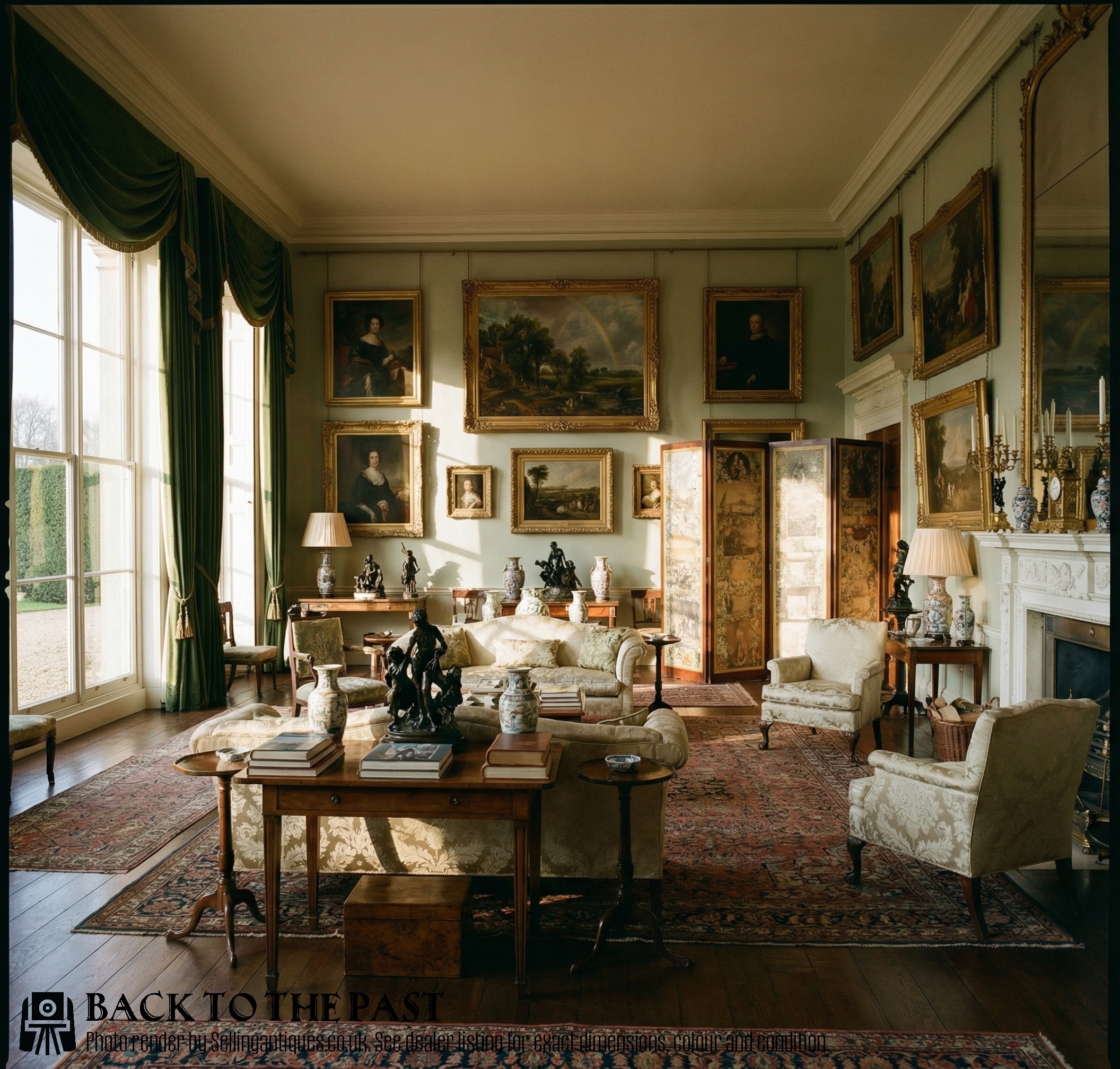
19th Century Folding Screen
A 19th century folding screen serves as a movable partition, room divider or hearth protector across domestic interiors. These panels organise large rooms, block draughts or create privacy when placed around a hearth or vanity space.
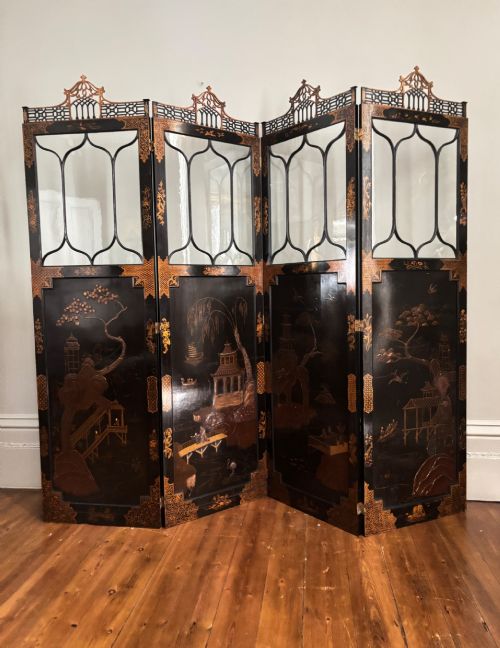
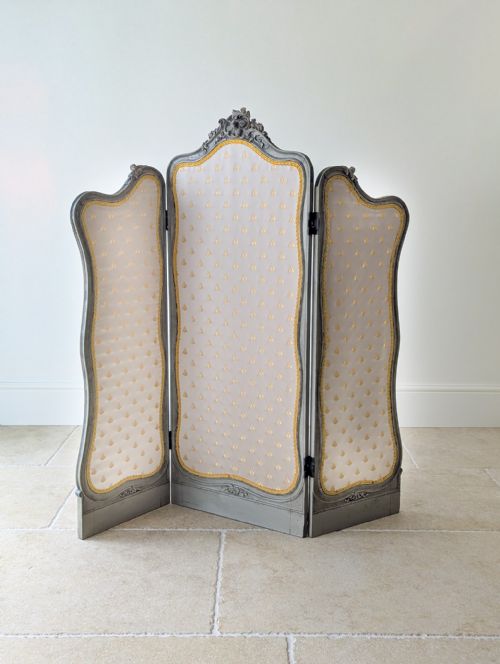
The versions most commonly met on this page span French Rococo Revival, Chinoiserie and Chinese Chippendale styles. Examples range from modest three-fold fire screens to large eight-fold Coromandel and lacquer room dividers.
Makers utilised various formats, including multi-fold leather panels, glazed frames and carved wood structures. Each piece reflects the decorative priorities of the Victorian and Napoleon III periods.
Materials and construction
Wood serves as the primary structural frame, utilising mahogany, oak, walnut and giltwood. Artisans carved these timbers into folding panels, joining them with hinges to allow movement.
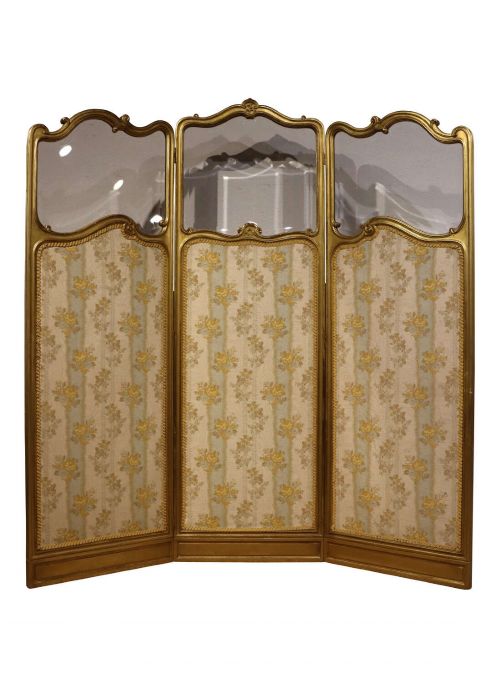
Surface decoration relies on applied lacquer, hand-painted leather, gilt bronze, brass and silk panels. Glazed sections incorporate bevelled glass, while specialist pieces employ decoupage, etching and Aubusson weaving.
Design influences span French Rococo, Chinese Chippendale, Chinoiserie and Napoleon III styles.
Distinguishing quality
Quality rests upon the depth of hand-carving in the wood and the execution of the surface art. Painted leather, lacquer work and gilt bronze ornamentation show varying degrees of dexterity by the original artisan.
Substantial proportions and multi-fold engineering distinguish grand country house pieces from smaller hearth accessories. The choice of materials, such as solid walnut, heavy brass or detailed Coromandel lacquer, elevates the standing of a screen.
The 19th Century Folding Screen Glossary
- Coromandel
- A heavy Chinese carved lacquer technique where motifs are incised into a dark ground and filled with pigment. This finish appears frequently on large multi-fold screens.
- Fire screen
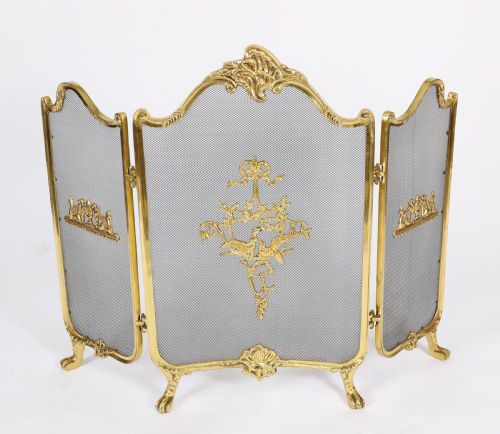
- A smaller screen placed before a fireplace when not in use to block residual drafts or heat. They often feature glass, brass or silk panels.
- Napoleon III
- A French design period spanning the mid-to-late nineteenth century known for eclectic revivals and ornate decoration. Pieces from this era often incorporate gilt bronze and painted finishes.
- Aubusson
- A traditional French tapestry weave used for textile panels. These are integrated into wooden folding frames.
- Chinoiserie
- European decorative style reflecting Chinese artistic traditions. It manifests in lacquer work and painted screens.
19th Century Folding Screen: Frequently Asked Questions
How do I place a folding screen in a modern room?
Position a multi-fold screen against a plain wall to add texture, or use it to segment an open-plan space.
Smaller fire screens sit naturally on the floor before an unused hearth to introduce architectural detail.
What is the difference between a room divider and a fire screen?
Room dividers are tall multi-fold panels designed to partition spaces or screen dressing areas.
Fire screens are compact, single or triple-fold pieces built to shield a room from fireplace heat.
How do I identify a French Rococo revival screen?
Look for asymmetrical C-scrolls, floral carvings and gilded bronze or giltwood frames.
These pieces often incorporate silk panels or bevelled glass.
Can painted leather screens be cleaned safely?
Painted leather requires careful maintenance using dry dusting methods only.
Avoid liquid cleaners that might disturb the historical pigment.