



19th Century Figural Candlesticks
These 19th century figural candlesticks combine illumination with sculptural human and animal forms, bringing character to any mantelpiece.
19th Century Figural Candlesticks
When you search for 19th century figural candlesticks, you find sculptural candle holders shaped as human figures, cherubs, soldiers, maidens and animals. These pieces serve a dual purpose of providing light while acting as decorative mantel pieces.
The selections span the Victorian, Regency, and various Revival styles such as Rococo and Renaissance. Most examples appear as matched pairs, designed to balance symmetrically on a surface.
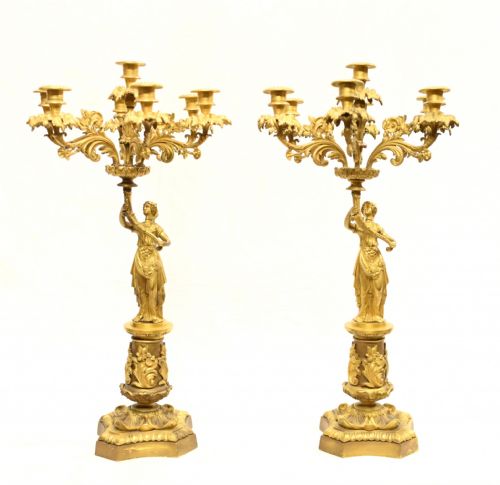
Continental workshops and English makers produced these items extensively across the period. Common forms include single candle holders and multi-branch candelabra supported by figural bases.
Materials and production methods
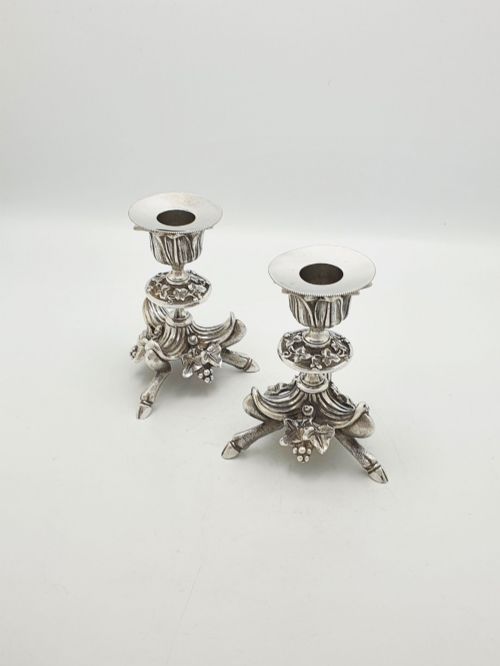
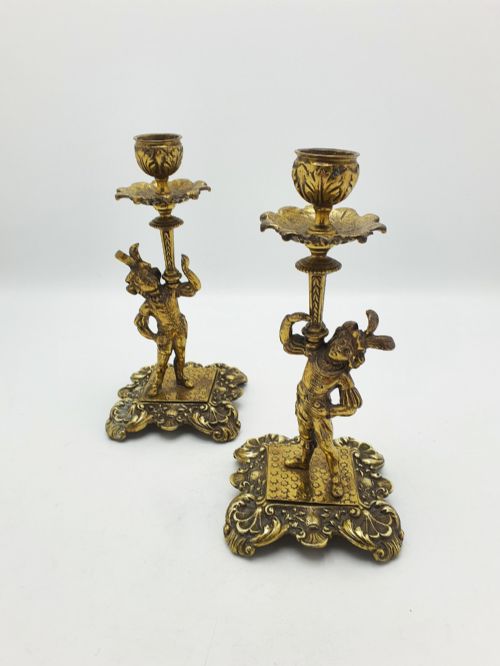
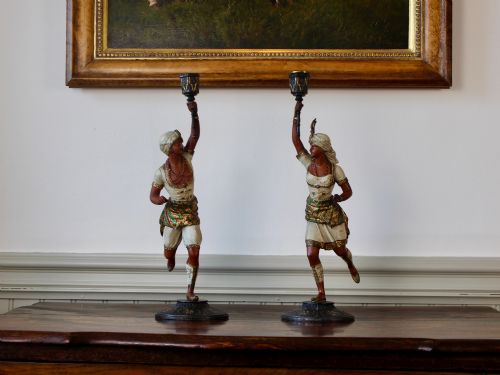
Foundries cast metals such as bronze, brass, spelter, and silver plate, often finishing surfaces with cold painting, patination, or parcel gilt details. Ormolu and gilt bronze bring a bright metallic sheen to French models.
Ceramic factories shaped porcelain and blanc de chine into delicate figures adorned with floral bases and enamel colours. Some pieces combine carved wooden female figures on socle bases or mount metal sculptures upon marble and onyx plinths.
Mermen and dancing cherubs join storks and Renaissance soldiers to hold your candles high.
What drives quality in these figures
The sharpness of the casting defines the better metal examples, where facial expressions, drapery folds, and hair remain crisp and well-defined. Inferior pieces often show softer details and rough seams from hurried production.
Porcelain quality rests in the delicacy of the modelling and hand-painted enamel work, particularly on floral bases and garments. Signed factory marks and well-integrated bases also separate standard production from finer studio output.
Volkstedt Porcelain·Sitzendorf·Royal Worcester·Triebner ENS and Eckert·Meissen
The 19th Century Figural Candlesticks Glossary
- Spelter
- A zinc alloy commonly used as a less expensive alternative to bronze for sculptural figures. It takes patination and cold painting well.
- Ormolu
- A gilded bronze technique applied to metal mounts and figures. This process creates a rich golden appearance on decorative pieces.
- Socle base
- A low plinth or pedestal supporting a figure or candlestick. It provides a stable foundation on flat surfaces.
- Candelabra
- A branched candlestick holder designed for multiple candles. These often feature elaborate figural shafts and arms.
19th Century Figural Candlesticks: Frequently Asked Questions
Are these candlesticks sold as pairs?
Many examples appear as matched pairs intended for symmetrical display on mantelpieces or side tables. Single candlesticks also occur frequently in various metal and ceramic materials.
Buyers often look for matching pairs to complete a decorative scheme on either end of a fireplace. Individual pieces work well as accent items on smaller surfaces.
What materials are used in these figures?
Metals such as bronze, brass, spelter, and silver plate form the structural body of many sculptural candlesticks. Ceramic options utilise porcelain, blanc de chine, and enamel finishes.
Combinations of materials also appear, placing bronze figures on marble or onyx bases. Wooden components sometimes form the main figural shaft.
How do I identify the period?
Stylistic clues such as Rococo Revival curves, Renaissance Revival armour, or Regency proportions help date individual pieces. Factory marks and stamps on ceramic bases provide more precise chronological markers.
Materials and casting techniques characteristic of the nineteenth century also assist in confirming the era of manufacture.
Where were these items made?
Production centres include British potteries and continental European workshops, particularly in France and Germany. French makers often produced ormolu and bronze candelabra.
German porcelain factories specialised in delicate allegorical figures and shepherdess groups. English makers contributed brass and silver plated designs.