

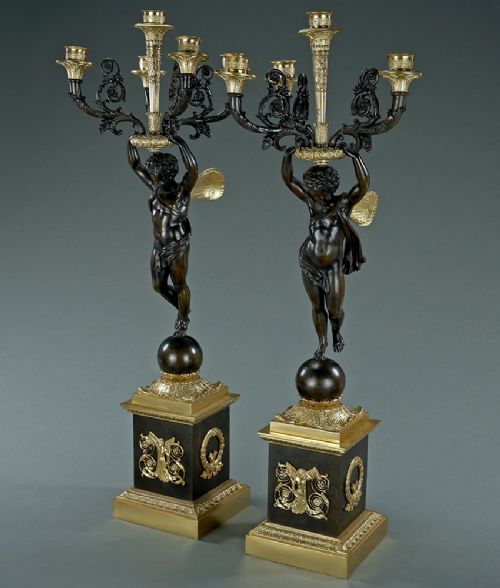


Dark Bronze Figural Candlesticks
These dark bronze figural candlesticks combine sculpture and lighting, bringing classical figures and patinated metal into nineteenth-century interiors.
Dark Bronze Figural Candlesticks
Dark bronze figural candlesticks combine metal sculpture with functional lighting, forming sculptural objects that serve as mantel pieces or table ornaments. Buyers searching for dark bronze figural candlesticks encounter pairs modelled as soldiers, cavaliers, puttis, mermen, and storks.
Most examples originate from the nineteenth century, spanning Regency, Victorian, and revival periods including French Empire, Renaissance, Egyptian, and Venetian styles. The forms range from simple single-light holders to tall multi-branch candelabra and table lamps.
Materials extend beyond pure bronze to include patinated bronze, ormolu, gilt bronze, brass, spelter, and cast iron, frequently mounted on marble or onyx bases. These pieces reflect diverse European workshops, particularly French and Russian manufacturing traditions.
Materials and construction methods
Foundries produced these figural pieces using traditional metal casting techniques, shaping bronze, brass, and spelter into detailed human, animal, and mythological forms. Artisans then applied dark patination to the metal surfaces to create deep tonal contrast.
Many examples incorporate parcel gilding or ormolu highlights alongside the dark patinated bronze, emphasising drapery, armour, and architectural details. Heavier sculptural elements often rest on turned bases of white marble or onyx.
Dark Bronze Figural Candlesticks Retail Price Guide 2026
Typical asking prices for dark bronze figural candlesticks among the pieces listed under this phrase on Sellingantiques today, from the lower quarter to the upper quarter. They describe what is for sale here now, not the wider market.
Storks, mermen, and cavaliers stand shoulder to shoulder, proving that nineteenth-century lighting enjoyed a theatrical sense of character.
Assessing craftsmanship and finish
Material composition also dictates quality, with heavy bronze and genuine ormolu outperforming lighter spelter or brass substitutes. The integrity of the stone bases and the balanced weight distribution complete the assessment of a well-made pair.
The Dark Bronze Figural Candlesticks Glossary
- Patinated bronze
- Bronze that has been chemically treated to darken the surface tone. This finish protects the metal and defines sculptural contours.
- Ormolu
- Gilt bronze created by applying a mercury and gold amalgam to the metal base. This technique produces a bright golden surface alongside dark bronze areas.
- Spelter
- A zinc alloy commonly used as a cost-effective substitute for bronze in nineteenth-century figures. It is softer and lighter than genuine bronze.
- Candelabra
- A branched candlestick holding multiple lights. These larger forms often feature figural stems supporting several candle nozzles.
Dark Bronze Figural Candlesticks: Frequently Asked Questions
How do I date these candlesticks?
Dating relies on stylistic clues, casting methods, and material combinations seen across nineteenth-century revival periods. Regency and Victorian examples often exhibit specific clothing, base designs, and patination techniques typical of their decade.
Examining the underside and fixing methods provides additional confirmation of the period. Older metalwork shows hand-cut screws and genuine wear patterns consistent with nineteenth-century manufacturing.
Are these pieces functional?
Most of these objects were designed to hold wax candles for interior illumination during the nineteenth century. Many pairs retain their original sockets and bobêches for catching wax drips.
Some examples have been converted into electric table lamps over time. Buyers should inspect the wiring status if intending to use them with electricity.
How should I clean bronze figures?
Dusting with a soft, dry cloth is sufficient for routine maintenance of patinated surfaces. Avoid harsh chemical cleaners or abrasive cloths that can strip the original dark patination.
Professional care is recommended if deeper cleaning is required. Preserving the surface finish maintains the historic character of the metal.
What is the difference between bronze and spelter?
Bronze is a durable alloy of copper and tin that takes fine detail and holds a rich patination. Spelter is a zinc-based metal that is softer, lighter, and more prone to surface wear.
Weight and magnetism help distinguish the two materials. Spelter often shows grey metal underneath worn painted finishes, whereas bronze reveals warm copper tones.