



Patinated Metal Candle Holders
Patinated metal candle holders bring warmth and historical weight to a room, ranging from refined Regency bronzes to bold Victorian figural spelter pieces.
Patinated Metal Candle Holders
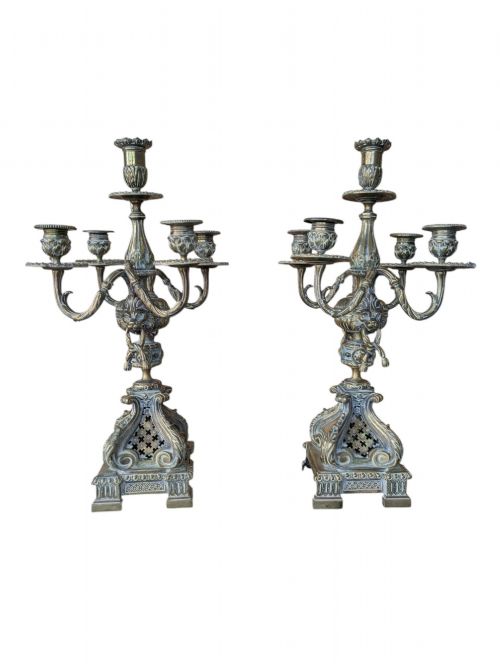
Patinated metal candle holders encompass candlesticks, candelabra, garniture sets, table lights, and wall lights designed to burn candles securely. When you search for patinated metal candle holders, you encounter functional lighting pieces that double as sculptural objects, shaped by various historical aesthetics.
The selections span several centuries, with pieces originating from the eighteenth, nineteenth, and early twentieth centuries. Regency and Victorian examples dominate the available offerings, reflecting both neoclassical restraint and later ornamental exuberance.
Makers produced these works in diverse stylistic idioms, including French Empire, Art Nouveau, Gothic Revival, and Renaissance Revival. English, French, and continental workshops each contributed distinctive interpretations to the form.
How they were made
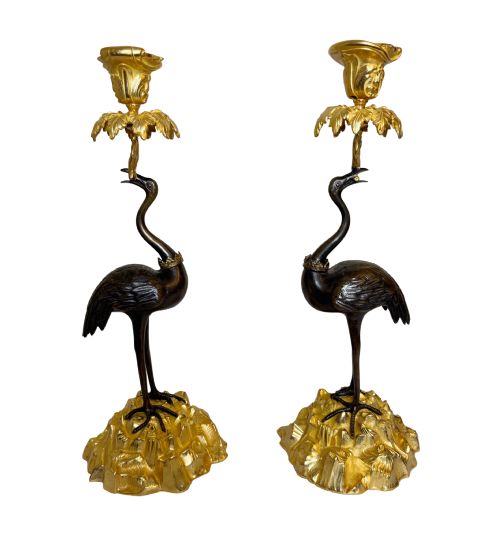
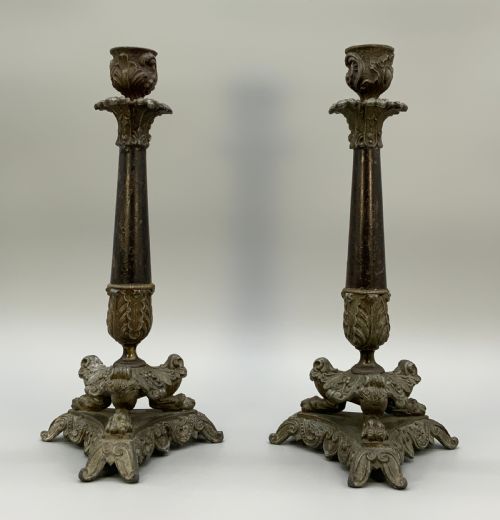
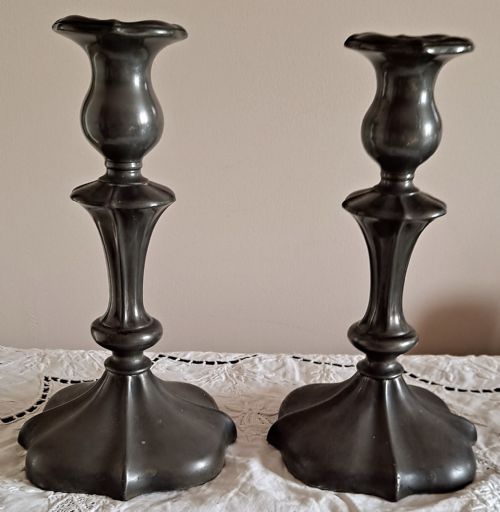
Artisans employed casting techniques in bronze, brass, spelter, iron, and pewter to create the structural body of each holder. Many items combine multiple metallic elements, such as patinated bronze paired with gilt highlights or slate bases.
Makers achieved the characteristic dark finish through chemical patination, while other surfaces received applied fire gilding or ormolu treatment. Hand-chasing and fine detailing refined the cast surfaces, adding crispness to motifs like foliage, figures, and architectural details.
Patinated Metal Candle Holders Retail Price Guide 2026
Typical asking prices for patinated metal candle holders among the pieces listed under this phrase on Sellingantiques today, from the lower quarter to the upper quarter. They describe what is for sale here now, not the wider market.
Medieval characters balancing awkwardly on stilts make an unexpected appearance in nineteenth-century spelter.
What varies in quality
The refinement of the casting and the depth of the subsequent chasing set finer examples apart from simpler production items. Superior pieces display crisp relief and careful cleanup of seams, whereas lesser items rely on softer definition and heavier, coarser metalwork.
Material choice also dictates standard, with solid bronze and heavy brass commanding greater respect than softer spelter alloys. The integrity of the patination and the harmony of original components further distinguish exceptional works from later assembled pairs.
Hugo Berger Goberg
The Patinated Metal Candle Holders Glossary
- Patination
- The surface coloration resulting from age, chemical treatment, or controlled oxidation. This process alters the raw metal tone to shades of deep brown, green, or black.
- Spelter
- A zinc-based alloy commonly used as a less expensive alternative to bronze during the nineteenth century. It frequently received a bronze-like coating to imitate more costly metals.
- Ormolu
- Finely ground high-carat gold applied to a bronze base using a mercury amalgamation technique. The method produces a rich, durable golden lustre typical of French Empire pieces.
- Candelabra
- A branched candlestick holding multiple tapers on a single base. These larger lighting fixtures often serve as decorative centrepieces.
- Garniture
- A set of ornamental objects designed to be displayed together on a mantelpiece or sideboard. They typically include matching candlesticks or urns flanking a central clock or vase.
Patinated Metal Candle Holders: Frequently Asked Questions
What is patinated metal?
Patinated metal refers to a surface that has developed a darkened or coloured finish through oxidation, age, or chemical application. This treatment protects the underlying material while giving the object its characteristic antique appearance.
In older pieces, handling and environmental exposure naturally deepen this surface layer, creating subtle variations in tone across the bronze or brass body.
How do I clean patinated holders?
You should clean patinated metal candle holders only with a soft, dry cloth to remove dust. Avoid chemical polishes and abrasive cleaners, as these will strip away the historical patina.
Preserving the original surface skin maintains both the aesthetic integrity and the historical value of the piece.
Are spelter and bronze different?
Spelter is a zinc alloy that is softer and lighter than true bronze. Makers frequently used it in the nineteenth century for figural and decorative items.
Bronze contains copper and tin, offering greater structural strength, sharper cast detail, and a heavier feel in the hand.
How can I date a candlestick?
Dating relies on stylistic clues, casting methods, and construction details such as base weights and assembly screws. Regency pieces display classical restraint, while Victorian items often incorporate heavier ornamentation or figural elements.
Comparing the casting sharpness and material composition against known period examples helps narrow down the decade of production.