




Bronzed Metal Candle Holders
Bronzed metal candle holders bring sculptural weight and warm metallic tones to a room, spanning Regency elegance and Art Deco geometry.
Bronzed Metal Candle Holders
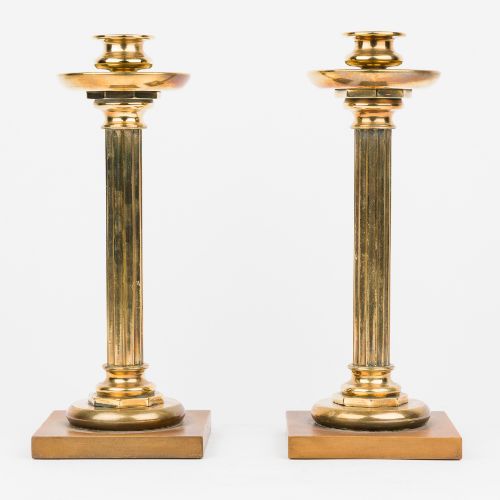
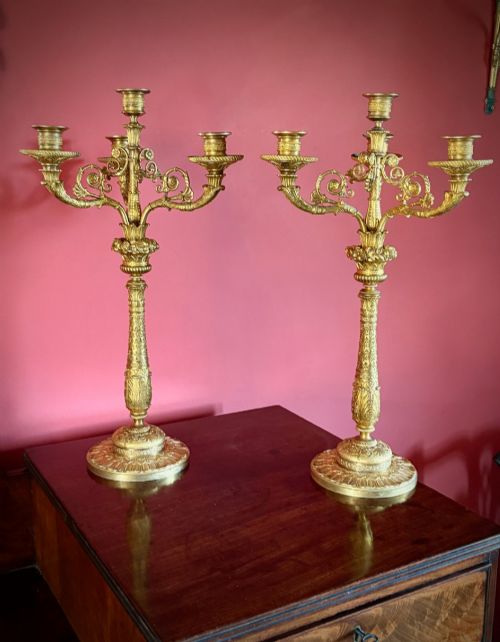
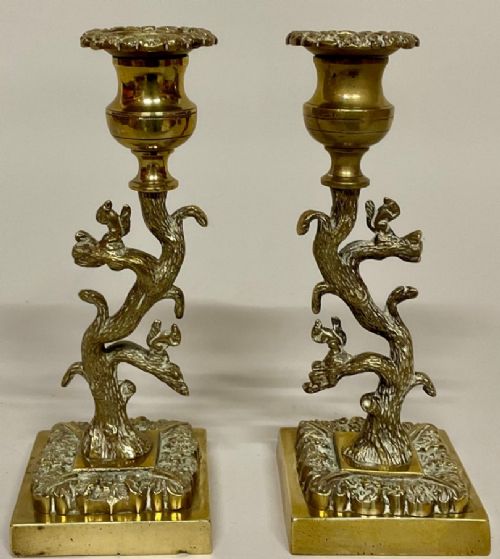
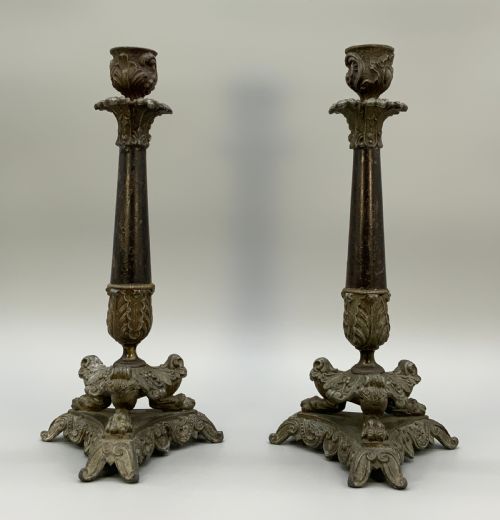
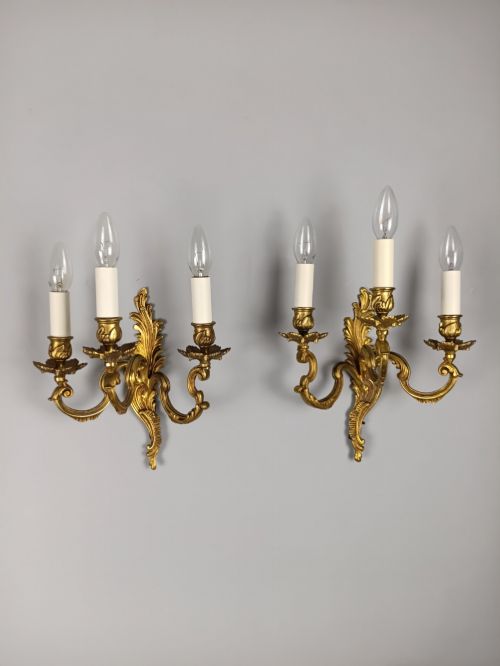
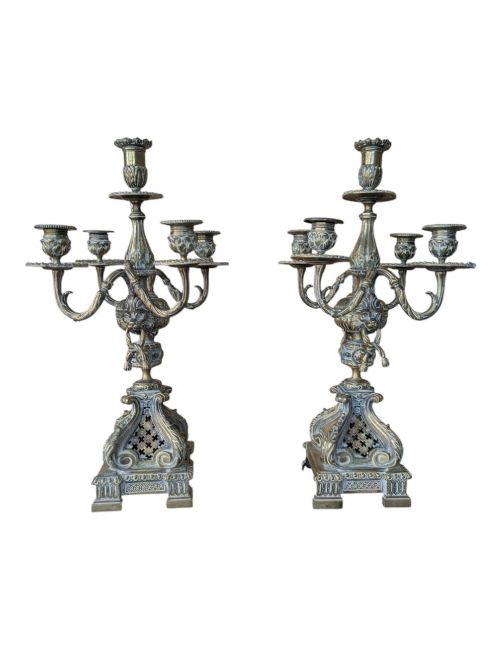
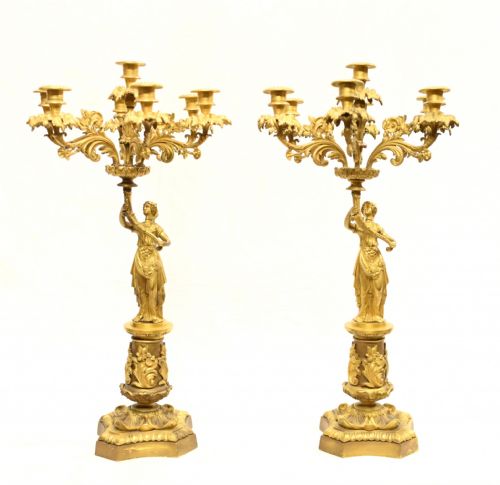
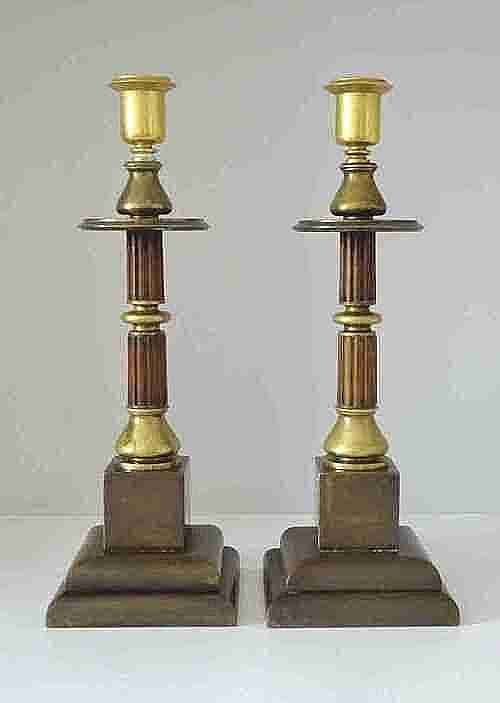
These bronzed metal candle holders encompass candlesticks, multi-arm candelabra, wall lights, and floor stands originating from the eighteenth, nineteenth, and early twentieth centuries.
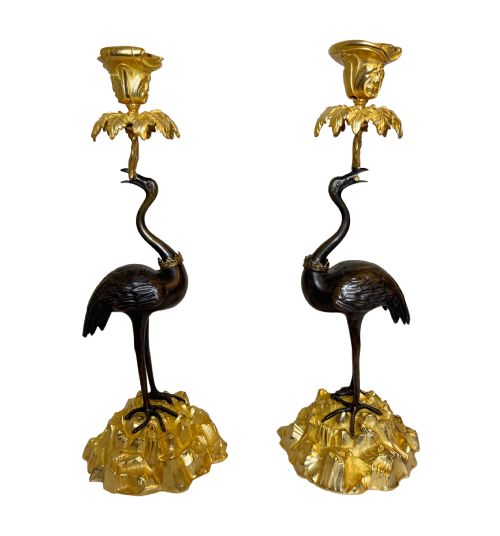
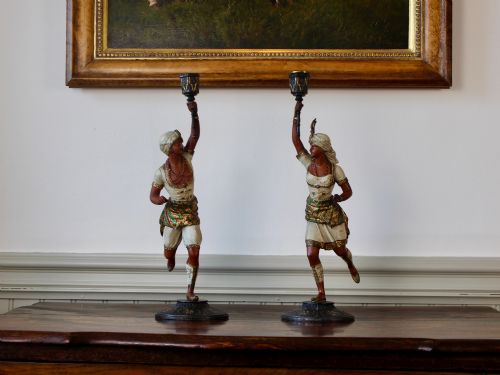
Makers drew on Regency, French Empire, French Rococo Revival, Renaissance Revival, and Orientalist styles to shape cast metal into figures, animals, and architectural columns.
The most common pairings on this page are matched pairs of nineteenth-century candlesticks and candelabra utilising bronze, ormolu, and spelter.
Materials and Casting
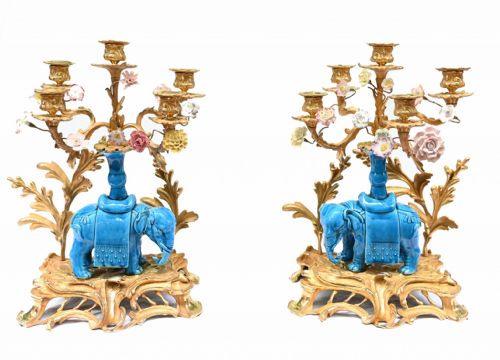
Foundries utilised bronze, brass, bell metal, and spelter, often applying fire-gilding to create ormolu or surface patination to simulate aged bronze.
Many examples combine cast metal elements with contrasting materials such as white marble, slate, and porcelain.
Casting methods produced sharp details in figural elements like cavaliers, soldiers, and animals, which were subsequently chased and finished by hand.
Listings feature items spanning the 18th, 19th, and early 20th centuries, executed in bronze, ormolu, brass, and spelter.
Assessment of Quality
Quality rests upon the crispness of the casting and the depth of the hand-chasing in the metalwork, which separates spirited modelling from soft, blurry details.
The integrity of the original surface patination or fire-gilded ormolu defines the visual presence of the piece.
Integration of secondary materials like marble or slate demonstrates superior construction, ensuring structural stability across multi-branch candelabra.
The Bronzed Metal Candle Holders Glossary
- Ormolu
- Gilded bronze produced by applying a mercury-gold amalgam to a bronze base and heating it. This technique creates a rich, durable golden surface seen on Regency and French Empire pieces.
- Spelter
- A zinc alloy used as a less costly alternative to bronze during the nineteenth century. It frequently received bronze patination or cold-painting.
- Candelabra
- A branched candlestick holding multiple lights. These often feature removable arms to convert into single candlesticks.
- Chasing
- The manual tooling of cast metal with punches and hammers to sharpen details and clean up surfaces. High-quality pieces show distinct, refined chasing.
- Patinated Bronze
- Bronze treated with chemical solutions to alter its surface colour, producing dark brown, black, or green tones.
Bronzed Metal Candle Holders: Frequently Asked Questions
How do I clean bronzed metal candle holders?
Dust gently with a soft, dry cloth to protect patinated surfaces and delicate ormolu. Avoid water, harsh commercial cleaners, and abrasive cloths that strip surface treatments.
For stubborn grime on solid bronze, consult a specialist conservator rather than attempting aggressive polishing at home.
How can I tell the difference between bronze and spelter?
Bronze feels heavier, rings with a clearer tone when tapped, and shows a warm, dense metal underneath any wear. Spelter is softer, lighter, and reveals a greyish metal beneath chipped paint or patination.
Figural candlesticks from the later nineteenth century frequently utilise spelter for economy.
What is a garniture set?
A garniture set consists of a central object, such as a clock or vase, flanked by matching candle holders or candelabra designed for a mantelpiece.
These matching groups create a unified decorative scheme across architectural furniture.