


19th Century Empire Lighting
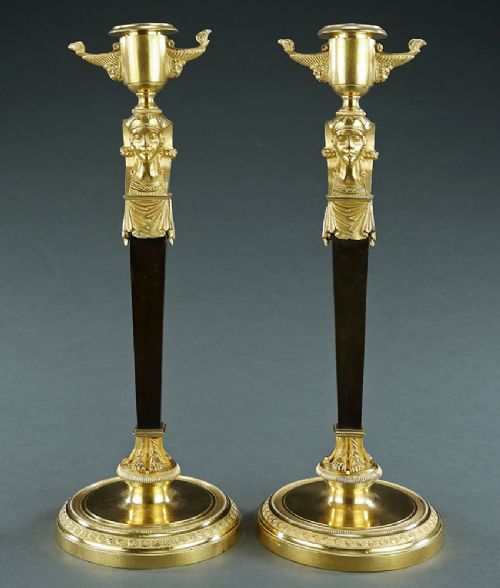
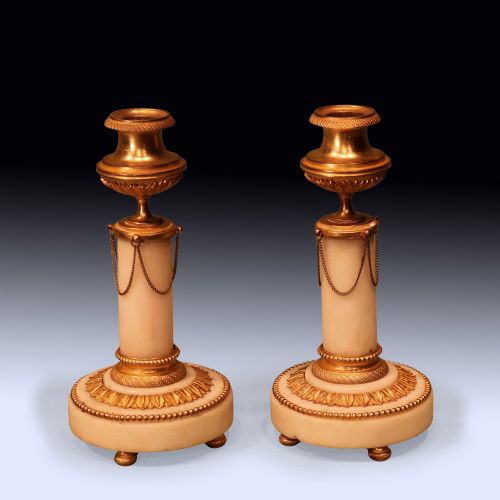
These pieces of 19th century empire lighting bring classical gravitas and heavy metalwork into a room.
19th Century Empire Lighting
When searching for 19th century empire lighting, a buyer examines candelabra, candlesticks, and chandeliers rooted in French Empire and Regency styles. These objects originate largely from nineteenth-century France and England, drawing heavily on neoclassical motifs.
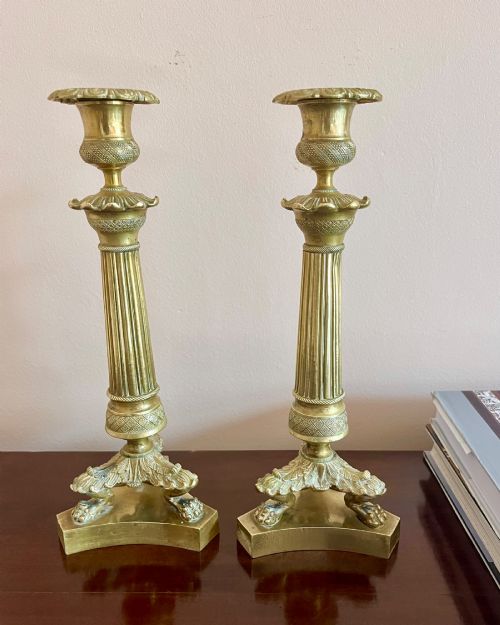
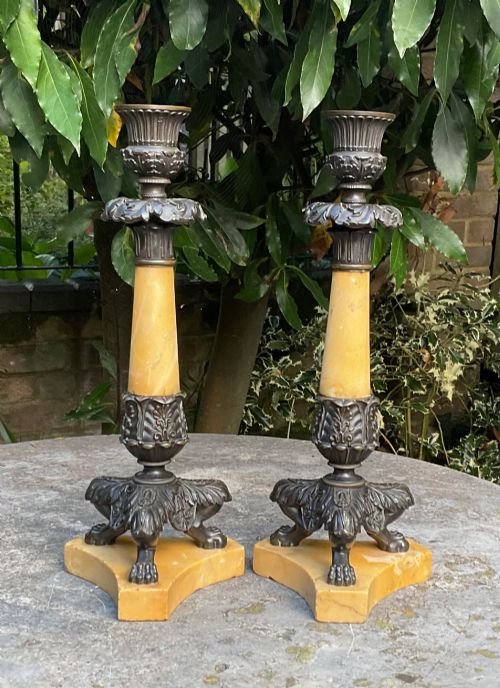
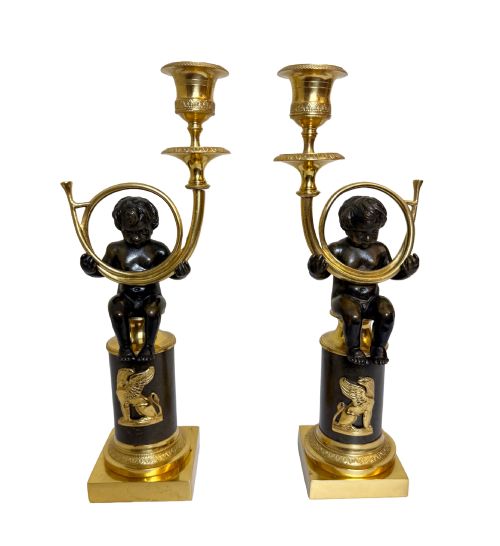
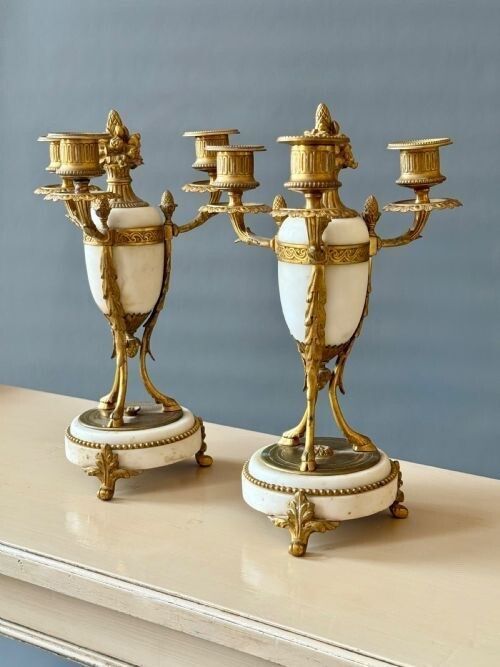
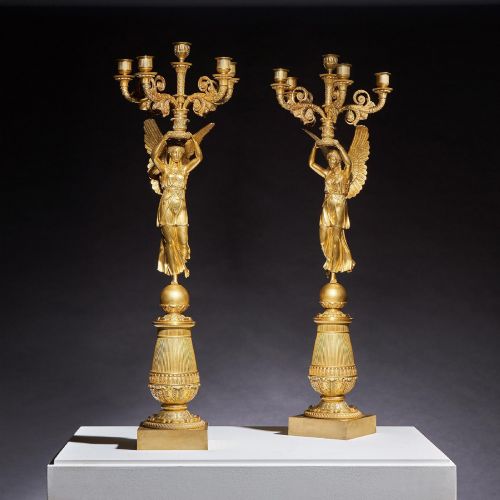
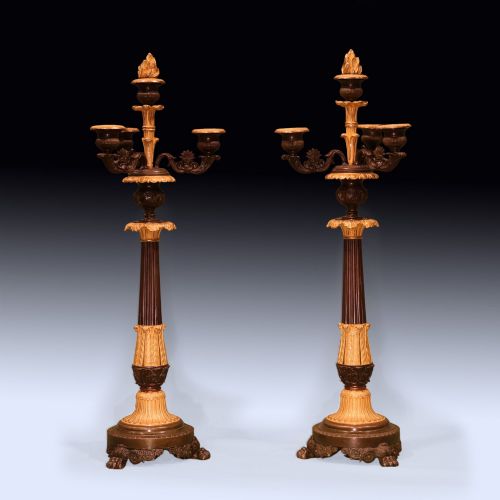
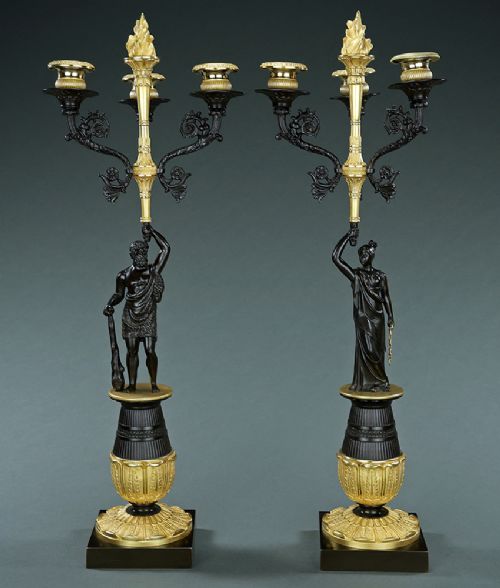
The version most commonly met on this page is the pair of gilt bronze and ormolu candlesticks or candelabra. Many incorporate white or sienna marble plinths, patinated bronze figures, and multi-arm lighting configurations.
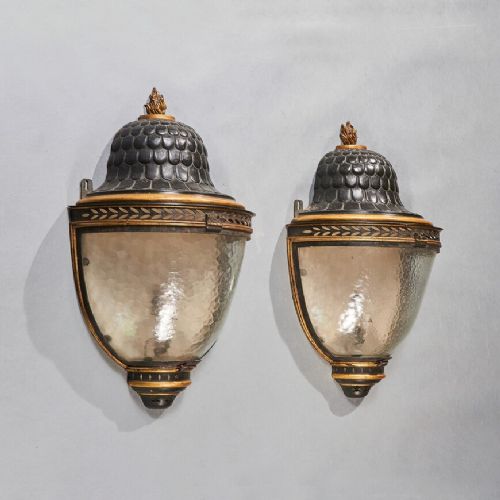
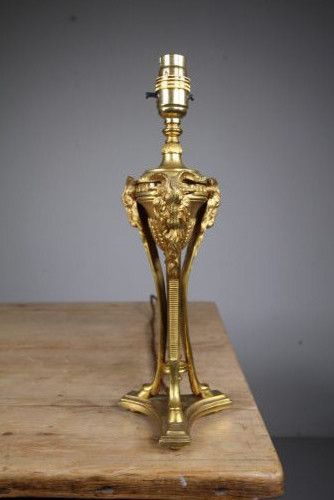
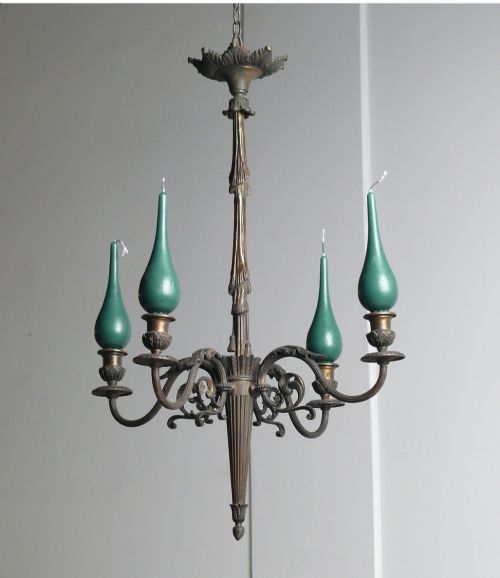
Alongside standard candlesticks, the selection includes wall lanterns, table lamps converted for electricity, and tent chandeliers. Makers and workshops across the nineteenth century adapted classical vocabulary into domestic lighting forms.
How They Were Made
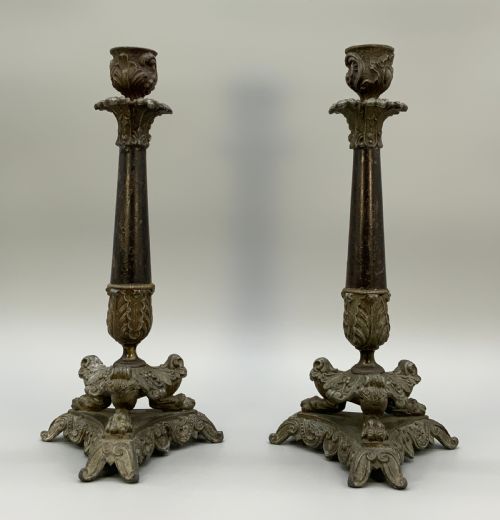
Foundries produced these items using cast bronze, gilt bronze, and ormolu, often combining patinated dark bronze with polished gold-toned metalwork. Artisans chased the cast components by hand to sharpen details on figures, acanthus leaves, and classical drapery.
Plinths and bases frequently integrate white or coloured marble, onyx, and sometimes tole peinte or brass. Components were assembled mechanically using threaded rods and screws hidden within the central shafts of the candelabra and lamps.
Hercules and Hesione occasionally hold up the light.
What Varies in Quality
The integration of materials dictates the overall visual weight. Heavier gauge bronze, substantial marble bases, and original gilding distinguish high-tier examples from lighter cast-metal alternatives.
Pierre Philippe Thomire·Rabiat·Auguste Cain
The 19th Century Empire Lighting Glossary
- Ormolu
- Gilded bronze produced by applying a mercury-gilding amalgam to a cast bronze base. This technique creates a rich, durable golden surface seen on high-status nineteenth-century pieces.
- Patinated Bronze
- Bronze treated with chemical solutions to darken the surface to a deep brown or black tone. It provides contrast against bright ormolu mountings.
- Candelabra
- A branched lighting fixture holding multiple candles. These typically feature a central stem with symmetrical arms spreading outward.
- Lit Bateau
- A French bed style with curving head and footboards resembling a boat. These share decorative vocabulary with empire lighting from the same period.
- Tole Peinte
- Painted sheet metal used for lanterns and shades. It introduces saturated colour and contrasting gilt decoration to lighting fixtures.
19th Century Empire Lighting: Frequently Asked Questions
How do I clean gilt bronze?
Dust gently with a soft, dry brush to remove surface particles.
Avoid chemical polishes that strip historical gilding from the bronze.
Are these lamps wired for modern use?
Some pieces arrive converted into table lamps with contemporary electrical wiring.
Others remain purely configured for candles and require professional rewiring if conversion is desired.
How do I identify French Empire style?
Look for strict symmetry, military motifs, classical figures, and Egyptian revival elements.
Ormolu mounts paired with dark patinated bronze define the visual palette.
Where were these placed originally?
Candelabra sat upon mantelpieces, sideboards, and pier tables in formal reception rooms.
Wall lanterns and chandeliers illuminated hallways and grand staircases.