


Patinated Metal Candlesticks
These patinated metal candlesticks combine sculptural form with period weight, offering substantial illumination and rich surface character for the room.
Patinated Metal Candlesticks
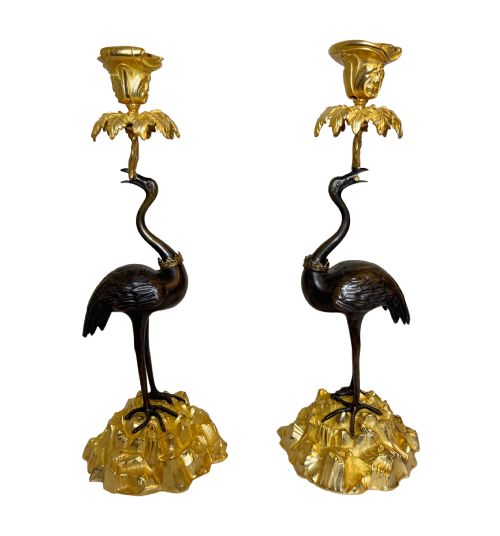
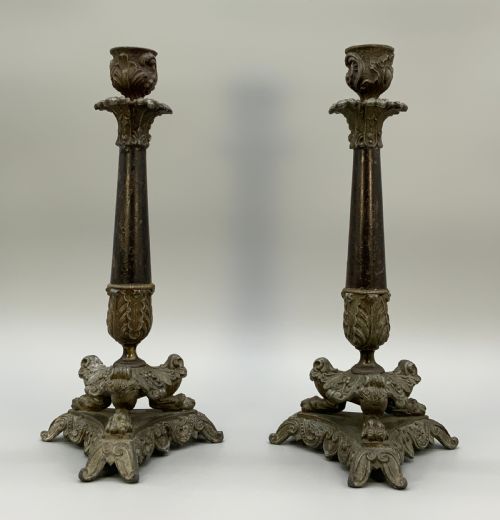
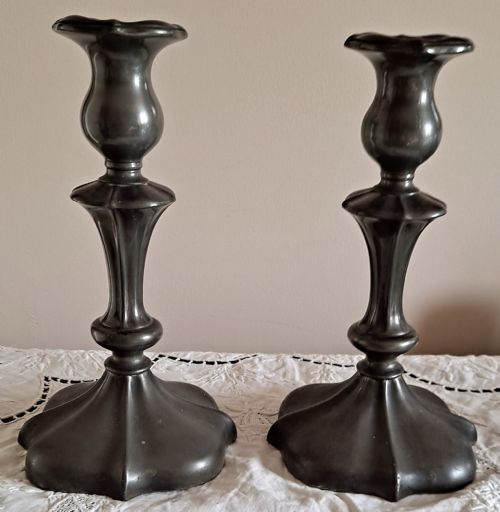
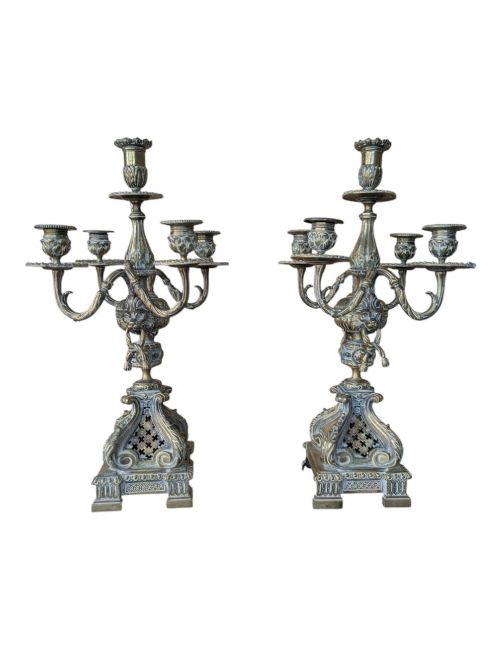
When you search for patinated metal candlesticks, you encounter a wide selection of nineteenth-century lighting, ranging from Regency pairs to Victorian figural designs. The pieces on this page span several decades, featuring cast metal, bronze, brass, and spelter forms.
Most examples appear as matched pairs, designed to sit upon mantlepieces, sideboards, or tables as functional illumination and decorative centrepieces. The selection encompasses single candlesticks, multi-light candelabra, and chambersticks shaped by various historical revivals.
Origins stretch across English workshops, French foundries, and Continental studios, reflecting both neoclassical restraint and later ornamental exuberance. Buyers typically select these items to introduce period atmosphere and tactile warmth into domestic interiors.
How they were made
Maker's workshops relied primarily on metal casting techniques to form the main bodies, columns, and figural bases of these candlesticks. Molten bronze, brass, spelter, or iron was poured into moulds to achieve intricate details such as animal motifs, medieval characters, and classical foliage.
Surface finishes were achieved through chemical patination, gilding, or the application of ormolu to create contrasting tones across the metal. Artisans combined patinated bronze with gilt highlights, slate bases, or pewter components to enhance the visual depth of each object.
Listings feature items from the eighteenth, nineteenth, and early twentieth centuries, spanning Regency, Victorian, and Edwardian periods.
What varies in quality
Quality in these pieces rests upon the crispness of the casting and the depth of the original patination across the metal surface. Finer examples display sharp definition in sculptural elements like figural motifs and foliate scrolls, whereas lesser items suffer from softened details due to worn moulds.
The choice of base materials also divides the range, with solid bronze and heavy brass offering greater durability and substance than lighter spelter alternatives. Superior specimens integrate multiple metals or contrasting slate elements with precise mechanical joins and balanced proportions.
Hugo Berger Goberg
The Patinated Metal Candlesticks Glossary
- Patinated
- Having a surface sheen or colour achieved through age and oxidation, or treated chemically to darken the metal. This finish protects the underlying material while adding visual depth.
- Spelter
- A zinc alloy commonly used as a cheaper substitute for bronze in nineteenth-century figural castings. It is lighter in weight and often painted or bronze-finished to mimic more expensive metals.
- Ormolu
- A technique of applying finely ground high-carat gold to a bronze object using a mercury amalgam. It creates a rich, golden decorative surface frequently seen on French Empire pieces.
- Candelabra
- A branched candlestick holding multiple candles on separate arms. These large lighting fixtures often form part of garniture sets placed centrally on mantlepieces.
- Chamberstick
- A low candlestick fitted with a handle and a drip pan, designed for carrying around a house. They were traditionally used to light the way to bed.
Patinated Metal Candlesticks: Frequently Asked Questions
What is patinated metal?
Patinated metal refers to surfaces that have developed a darkened or coloured skin over time, either naturally through oxidation or artificially through chemical treatments applied by the maker.
This finish protects the underlying material while creating the rich, mellow tones valued by collectors of period metalwork.
How do I clean antique brass?
Antique brass should generally be cleaned with a soft, dry cloth to remove dust without disturbing the historic surface integrity.
Avoid abrasive polishes or harsh chemical dips, which can strip away desirable patination and diminish the antique character of the piece.
Are spelter and bronze different?
Spelter is a softer, lighter zinc alloy, whereas bronze is a durable alloy of copper and tin used for high-end sculptural castings.
Bronze examples typically command greater weight and stability, while spelter pieces require more careful handling due to the brittleness of the metal.
How were candelabra used?
Candelabra provided multi-point lighting for dinner tables, drawing rooms, and formal hallways before the advent of reliable electricity.
Placed on mantlepieces or sideboards, they also served as decorative status objects, often matched with mantel clocks in garniture sets.