

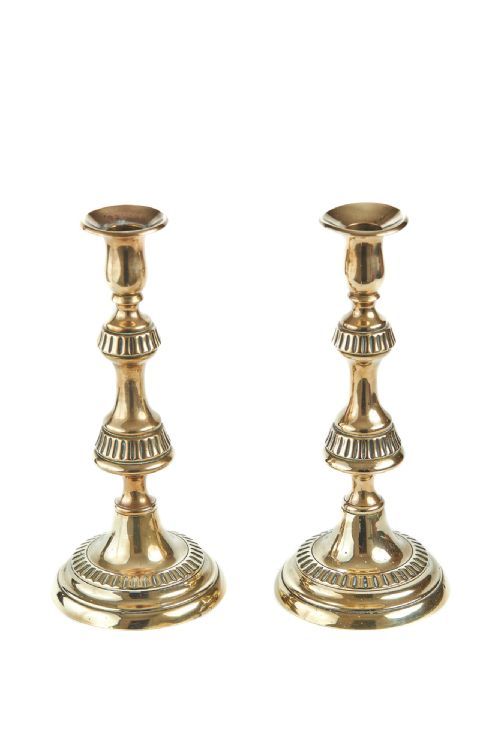
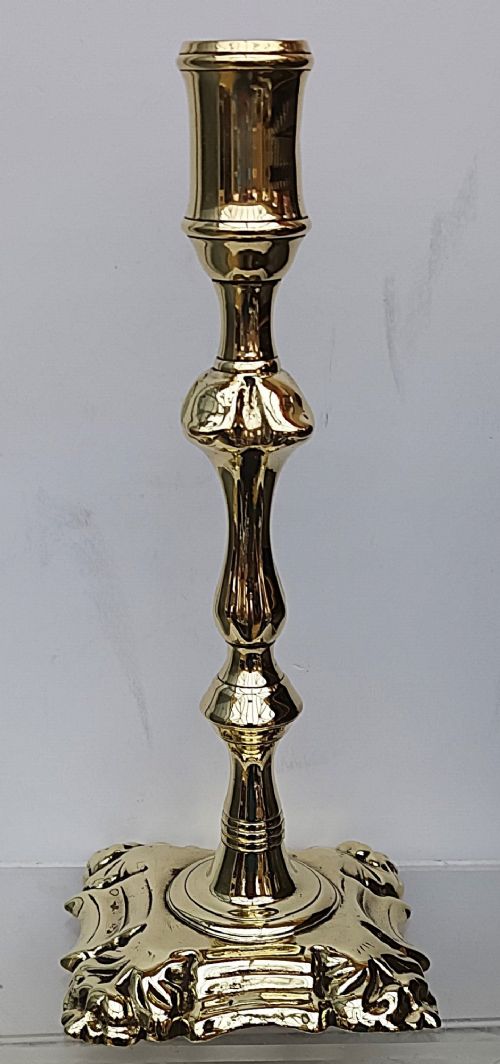


Cast Metal Candle Stands
Cast metal candle stands bring substance and period character to a room, ranging from Georgian brass to French Empire gilt bronze.
Cast Metal Candle Stands
Cast metal candle stands encompass candlesticks, table lights, and floor candelabras produced across the eighteenth and nineteenth centuries. Buyers searching for cast metal candle stands typically encounter pairs of brass candlesticks from the Georgian and Victorian eras.
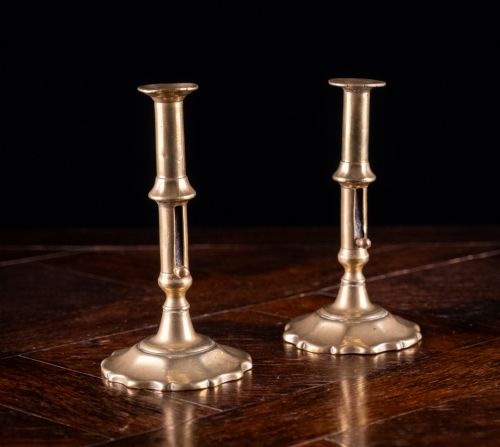
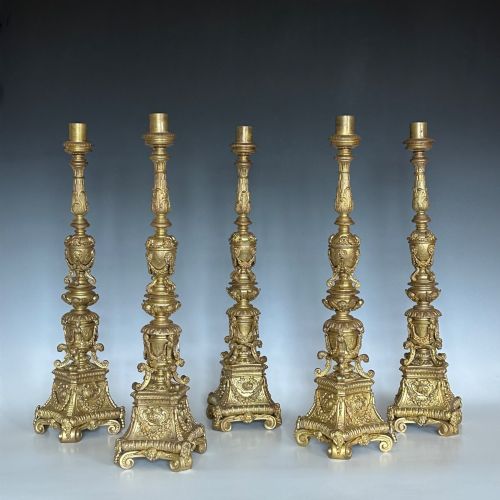
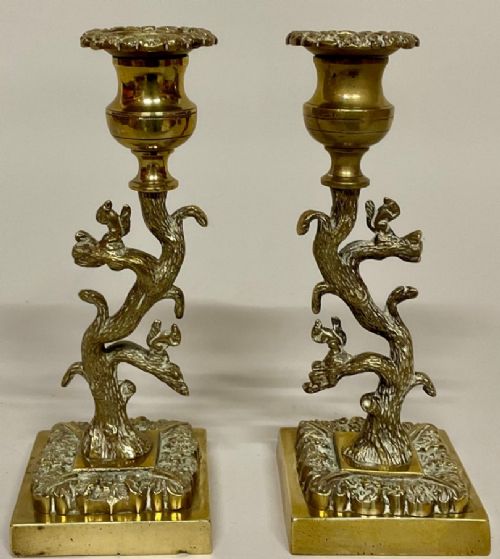
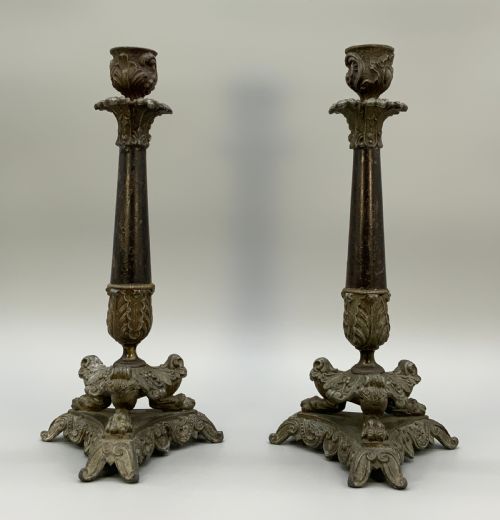
The selection includes continental examples such as Venetian gilt bronze pieces alongside English brass ejector designs and French Empire styles. Forms range from simple column shapes to sculptural figures on square bases and rococo revival patterns.
How they were made
Production relied on casting metals into moulds, utilising brass, bronze, spelter, and paktong. Seamed brass examples reveal the historical two-part casting process common in earlier workshop practice.
Finishes vary from polished surfaces to bronze patination and gilt highlights on ormolu. Metalworkers applied chasing and engraving by hand to define details on the cast components.
The listings span the seventeenth century through to the early twentieth century, featuring materials from standard brass to bell brass, paktong, and spelter.
What varies in quality
Quality depends on the crispness of the casting and the weight of the metal used in the stand. Finer pieces retain sharp surface ornament and well-balanced proportions without distortion from worn moulds.
The integrity of the construction and the retention of original surface patination distinguish superior examples from later reproductions or heavily polished items.
The Cast Metal Candle Stands Glossary
- Ejector
- A mechanism inside the shaft of certain brass candlesticks designed to push out the remaining candle stump. This internal device typically uses a small slide button.
- Spelter
- A zinc alloy frequently used as a substitute for bronze in decorative figures during the nineteenth century. It often carries a bronze patination to simulate a heavier metal.
- Paktong
- A copper-nickel-zinc alloy originating in China and prized in eighteenth-century Britain for its bright, silvery appearance. It was cast and worked similarly to brass.
- Ormolu
- Gilt bronze created by applying a finely ground gold-mercury amalgam to cast bronze. The technique produced a rich golden finish on French and English decorative objects.
- Campana
- A bell-shaped socket form found at the top of many classical candlesticks. The shape mimics ancient Roman pottery vessels.
Cast Metal Candle Stands: Frequently Asked Questions
How do I clean old brass?
Historic metal surfaces benefit from gentle dusting with a soft cloth rather than aggressive chemical polishing. Preserving the natural oxidation maintains the age and character of the piece.
Avoid abrasive cleaners that remove the underlying patination built up over centuries. Professional conservation advice is useful for heavily tarnished or fragile gilt surfaces.
What is bell brass?
Bell brass refers to a specific alloy formulation traditionally used for casting bells due to its resonant properties. It contains a higher proportion of copper and tin than standard utilitarian brass.
Items cast in bell brass often exhibit a warmer tone and exceptional durability. This metal appears in Swedish and English candle stands from earlier periods.
Are these stands for everyday use?
Most antique candle stands function adequately with standard taper candles, though uneven bases require care on flat surfaces. Ensuring the candle fits securely in the sconce prevents wax spillage.
Many collectors prefer to display these pieces as decorative objects rather than burning candles regularly. The older metal components can be sensitive to heat if left unattended.
How do I date a brass candlestick?
Dating relies on manufacturing techniques, base construction, and stylistic markers associated with specific periods like the Georgian or Victorian eras. Seams, tool marks, and base profiles provide key evidence for age.
Earlier eighteenth-century examples often feature solid cast bases and heavier weight compared to lighter nineteenth-century production. Comparing proportion and decorative motifs helps narrow the decade.