
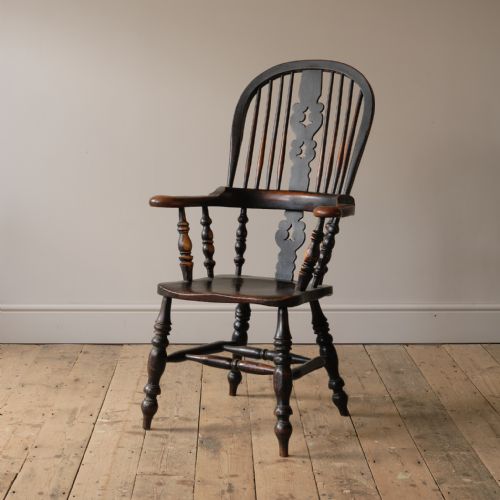
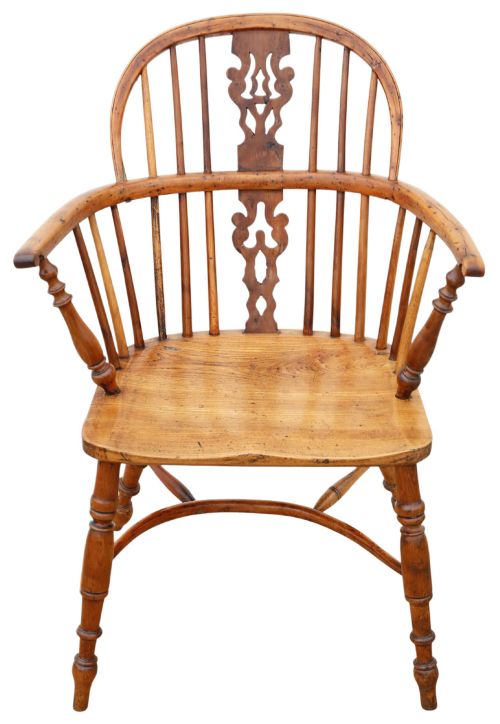
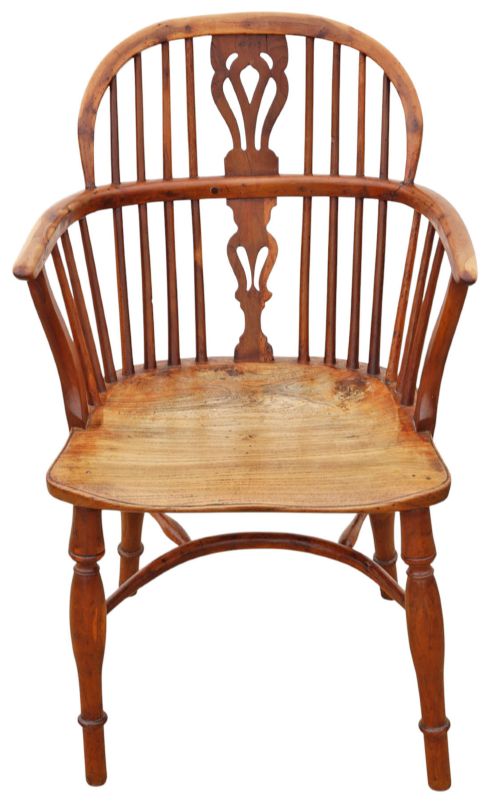

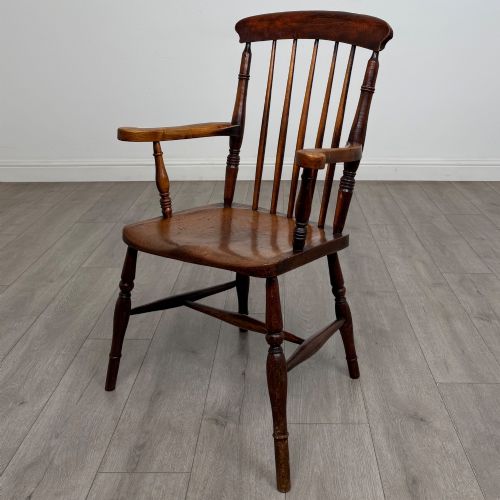
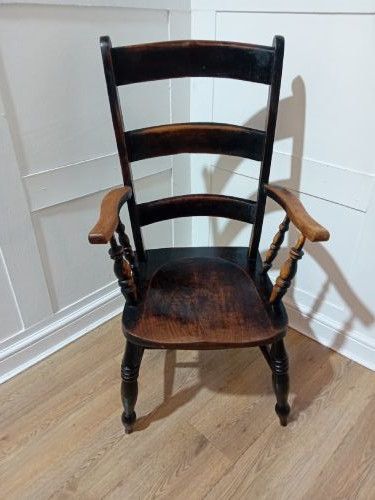
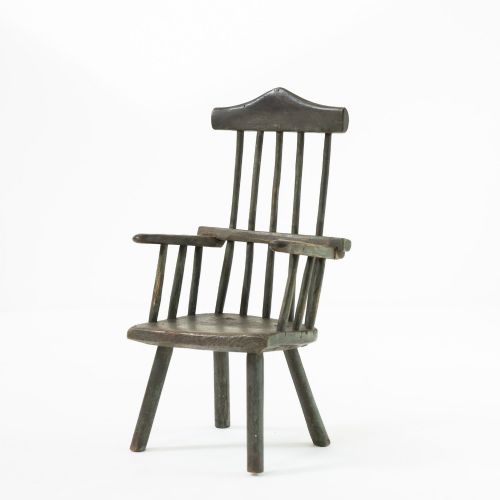
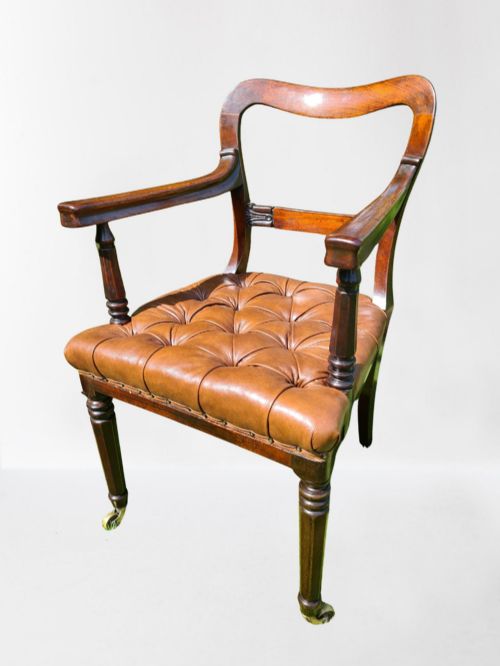
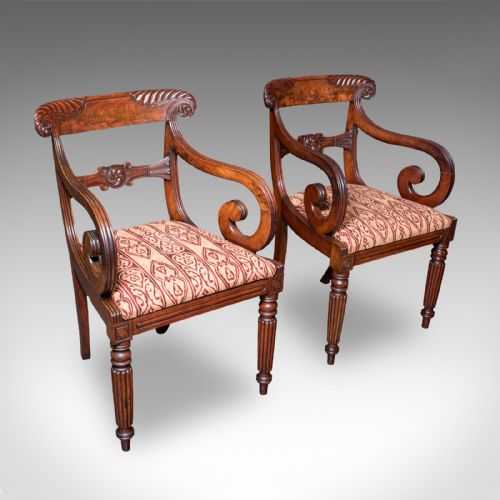
19th Century Elbow Chair
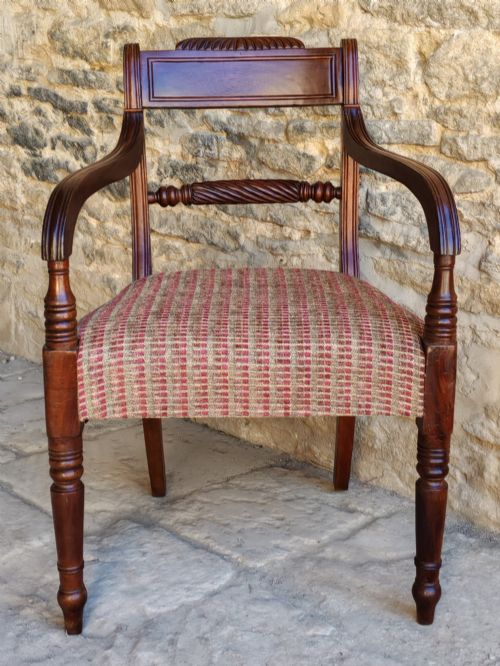
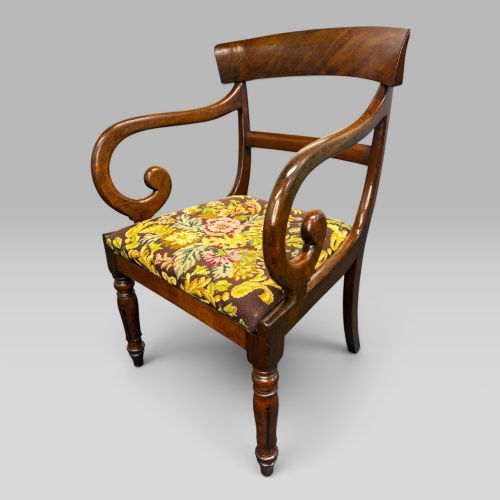
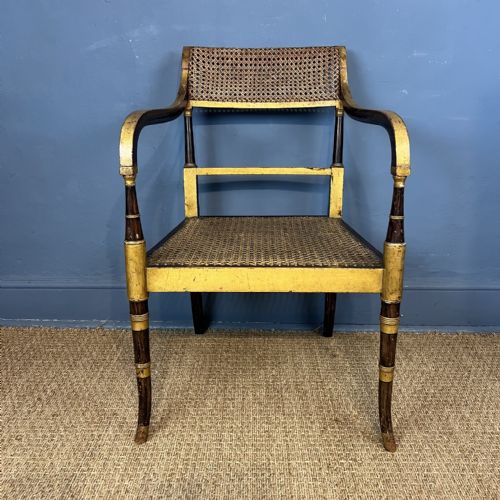
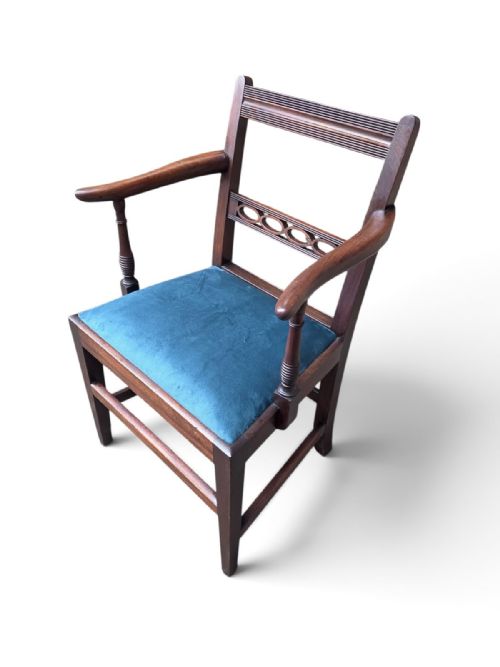
A 19th century elbow chair brings both architectural presence and practical comfort to a room.
Materials and construction
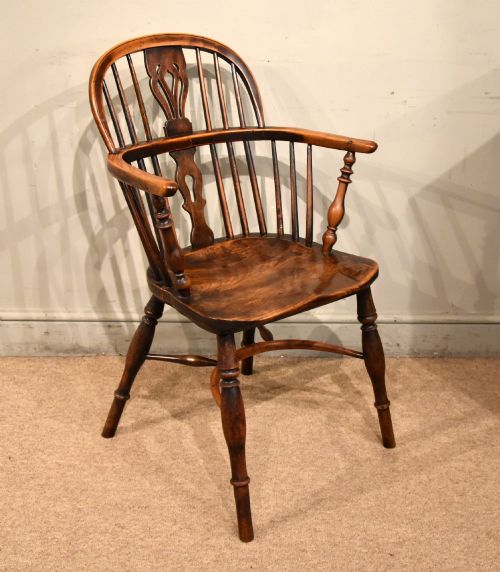
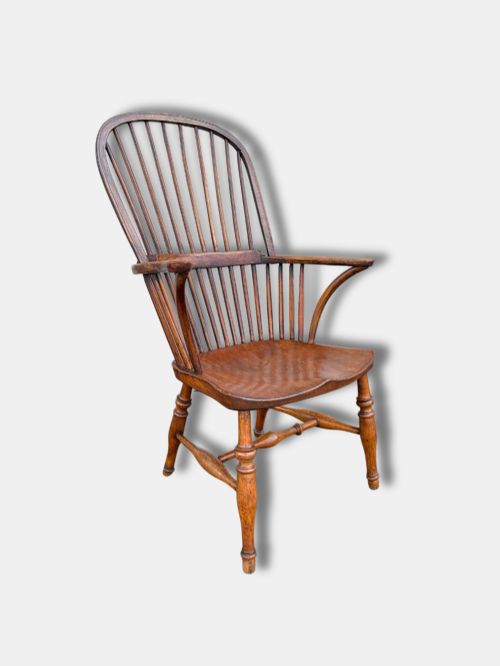
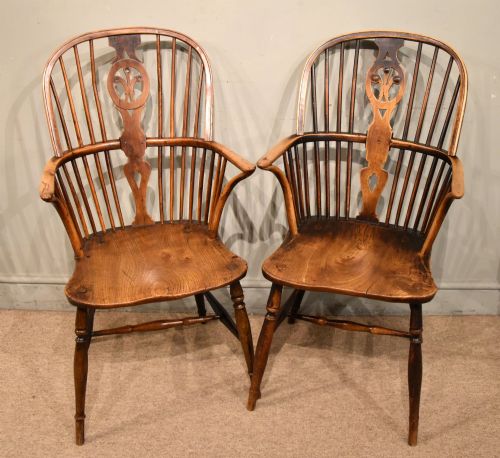
Cabinetmakers and country joiners utilised timber appropriate to the intended function, selecting dense mahogany and rosewood for formal drawing room seats, while turning to resilient ash, elm, and beech for country stick-back and Windsor forms. Brass inlay and marquetry occasionally adorned high-status urban pieces.
Joinery methods combined traditional mortise and tenon joints with steam-bending techniques for curved backs and armrests. Rush seating, drop-in fabric upholstery, and leather pads provided the primary surfaces for comfort.
Assessing quality and distinction
Quality rests upon the crispness of carved details, the choice of timber figuring, and the structural integrity of the arm supports. Superior examples exhibit harmonious proportions and uncompromised joinery where the arms meet the uprights.
Provenance and originality dictate distinction, separating standard utility furniture from pieces retaining their original surface patination, upholstery foundations, and brass embellishments.
Retail Price Guide 2026
Typical UK retail prices for 19th century elbow chair, calculated from the Sellingantiques database of over a million retail prices indexed since 2003. This retail price guide relies exclusively on Sellingantiques data; no external sources or auction records are used, so the figures do not describe the wider market.
Listings feature mahogany, elm, ash, and rosewood across Regency and Georgian periods.
The 19th Century Elbow Chair Glossary
- Elbow chair
- An armchair featuring structural supports for the arms, historically used in studies, dining rooms, and parlours. It provides a comfortable seating option distinct from a standard side chair.
- Windsor
- A traditional chair construction method where legs and back spindles are wedged directly into a solid wooden seat. These pieces frequently combine ash and elm.
- Carver
- A term applied to an armchair designed to match a set of dining chairs, typically positioned at the head of a table. These chairs share the stylistic traits of the accompanying dining set.
- Bar-back
- A chair design featuring a horizontal wooden slat across the upper backrest, often curved for lumbar support. This form frequently appears in Regency dining and office seating.
- Rush seat
- A woven seating surface made from dried marsh grasses twisted into cords. It appears commonly on country vernacular chairs of the period.
Frequently Asked Questions
What is an elbow chair?
An elbow chair is an armchair designed with supports for the arms, positioned typically at desk height or as part of a dining set.
These pieces offer a wider seat and greater support than standard side chairs without the full bulk of an upholstered armchair.
How do I date a 19th century chair?
Dating relies on identifying stylistic markers, timber types, and construction methods characteristic of periods like the Regency or Georgian eras.
Tool marks, timber shrinkage, and wear patterns also help establish the age of the piece.
Were these chairs used for dining?
Many elbow chairs served as carvers placed at the ends of dining tables, while others functioned as desk or library seating.
The specific height and arm clearance usually indicate the intended room and use within a historic home.
How do I care for antique wood?
Maintain antique timber by keeping it away from direct heat sources and sudden humidity changes to prevent wood splitting.
Apply traditional wax sparingly and buff with a soft cloth to preserve the natural patina.