


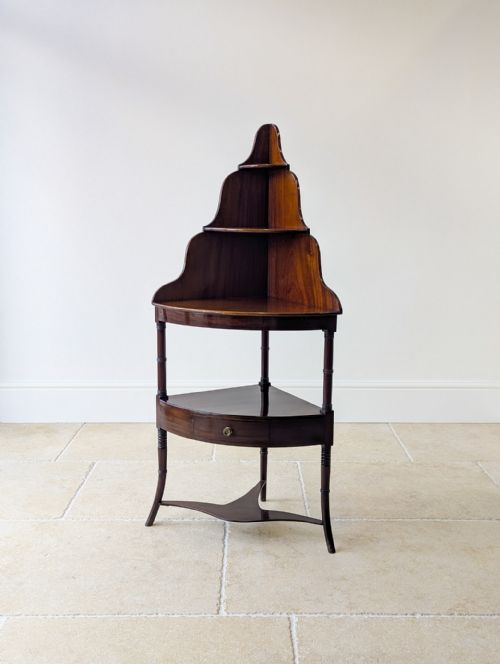
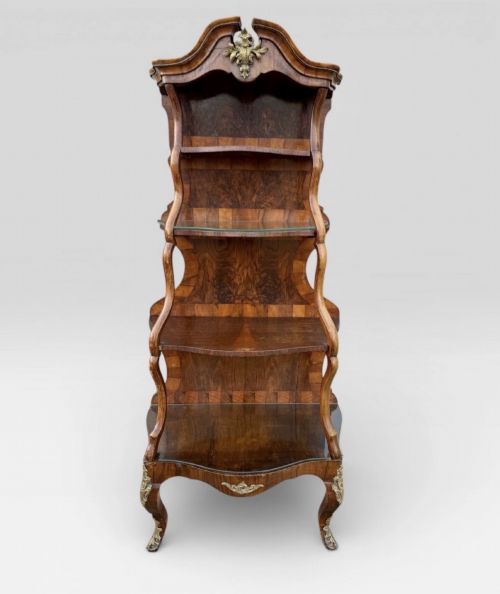
19th Century Corner Stand
A 19th century corner stand provides practical storage and display while making clever use of awkward room junctions.
19th Century Corner Stand
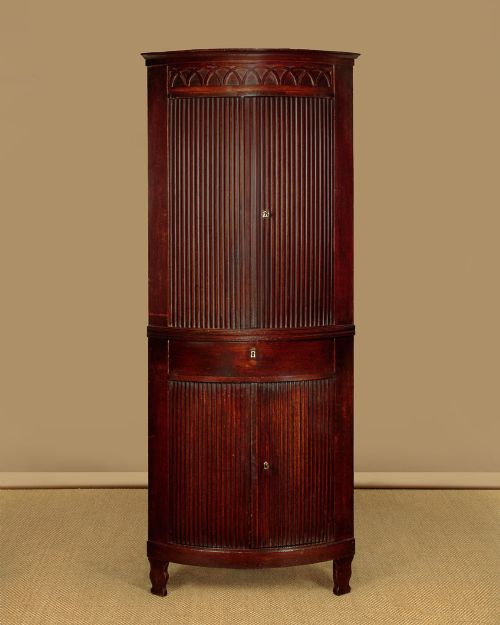
When searching for a 19th century corner stand, a buyer encounters a diverse group of fitted furniture designed to occupy unused room angles. These pieces range from floor-standing corner cupboards and multi-tiered whatnots to washstands and display cabinets produced across the Georgian, Regency, and Victorian periods.
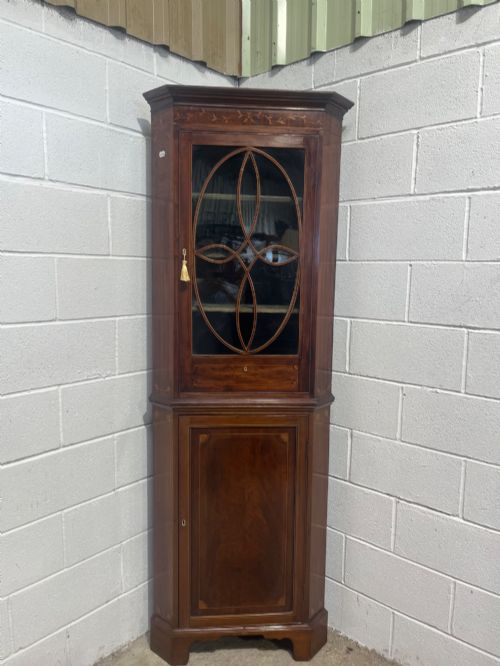
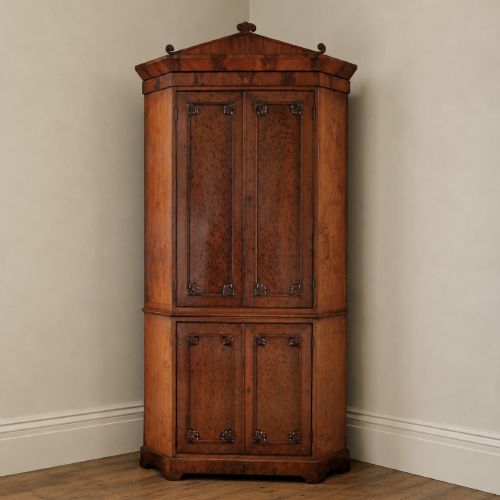
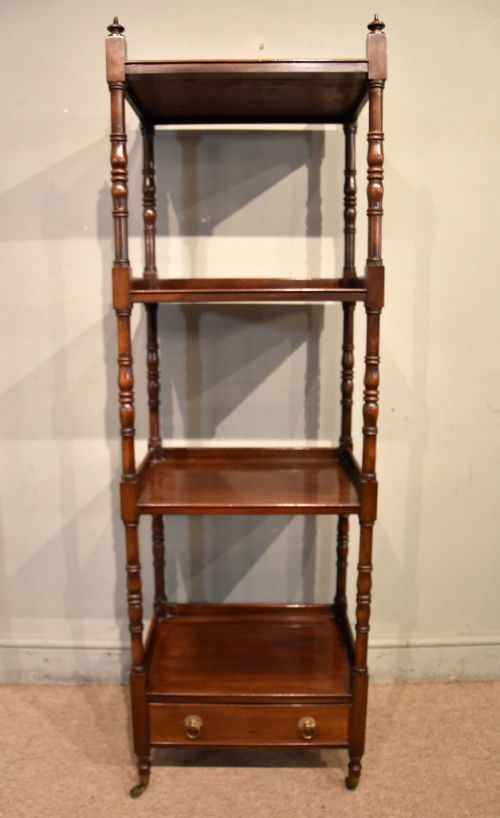
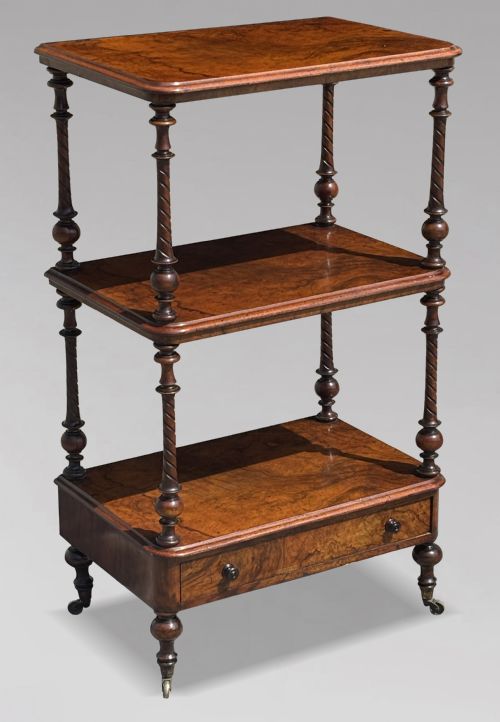
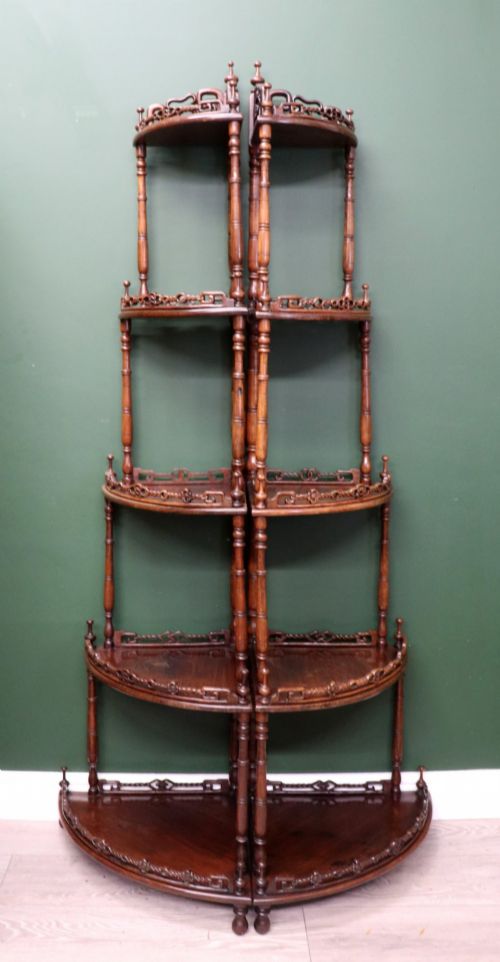
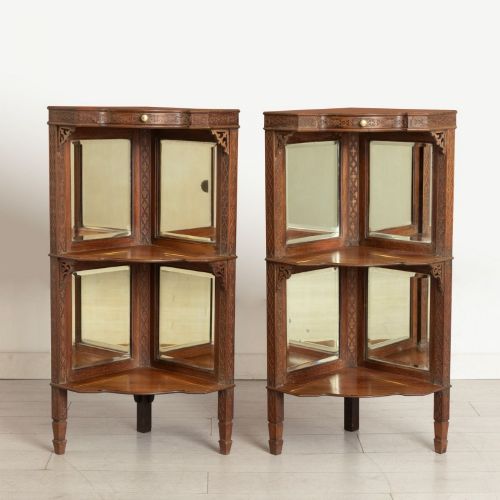
The version most commonly met on this page is the mahogany or walnut tiered étagère or corner cupboard. These freestanding designs utilise vertical space efficiently, offering multiple shelves or enclosed storage behind panelled doors while fitting snugly into right-angled walls.
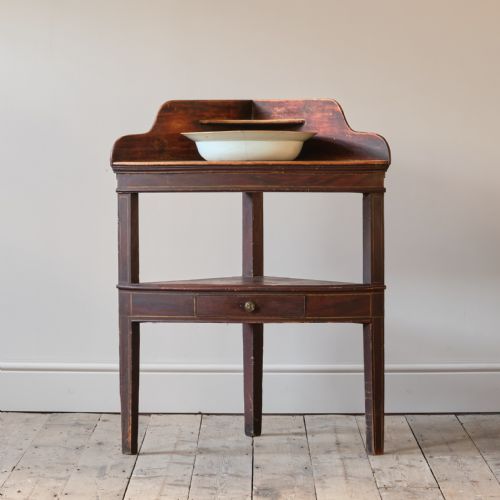
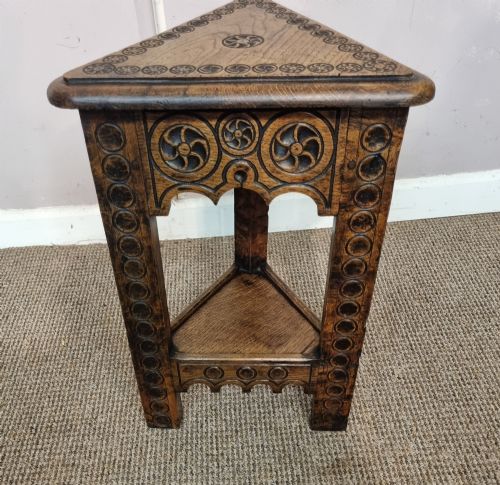
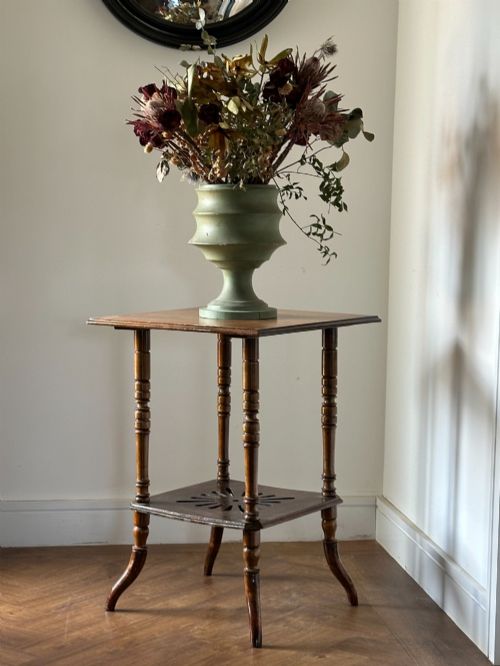
Makers from the era also adapted the form into specialised pieces such as washstands with triangular lift-top tables or stick stands incorporating brass elements. Styles span simple vernacular oak constructions to highly decorative inlaid walnut and rosewood iterations.
Materials and construction
Cabinet makers relied heavily on timber selections such as mahogany, walnut, and burr walnut, often applying decorative veneers or intricate inlay work to accentuate the grain. Oak and pine served as sturdy secondary woods for internal framing and structural backing.
Construction techniques involved precise joinery suited to angled requirements, including dovetailed shelving and sturdy corner posts. Details such as gilt metal mounts, brass fittings, and original painted finishes completed the manufacture of these architectural items.
Listings feature woods including mahogany, walnut, burr walnut, rosewood, oak, and ebony-finished timber.
Distinctions in quality
The standard of timber selection largely dictates the standing of a piece, with figured flame mahogany, rich burr walnut, and exotic rosewood marking out superior examples. Finer items exhibit meticulous attention to matched wood grains and subtle string inlay rather than plain secondary timber.
Construction depth also separates workshop output, seen in the sophistication of internal shelving, original hardware, and well-executed turned supports or carved detailing. The integration of glazed doors or harmonious tiered tiers demonstrates greater ambition from the cabinet maker.
Edwards & Roberts·Liberty & Co
The 19th Century Corner Stand Glossary
- Whatnot
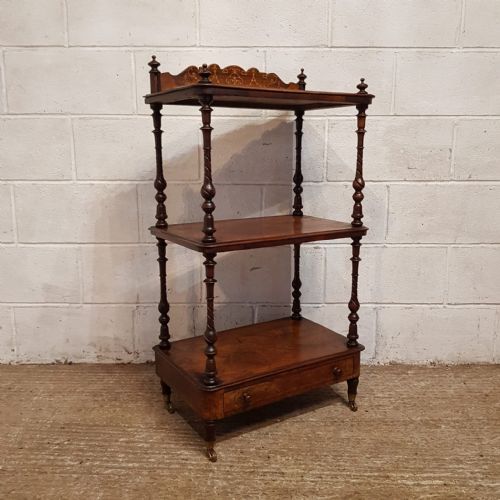
- A piece of furniture consisting of open shelves used for books, ornaments, or general storage. They frequently appear in three or four-tier configurations.
- Serpentine
- A curved line of furniture fronting that undulates outward and inward. This shape requires advanced carpentry skills to construct accurately.
- Washstand
- A specialised table designed to hold washing basins and pitchers. Many examples include triangular tops or tiled splashbacks tailored for corner placement.
19th Century Corner Stand: Frequently Asked Questions
Where should I place a corner stand?
These items fit neatly into unused room angles, transforming empty junctions into functional display or storage areas.
They work particularly well in drawing rooms, hallways, or dining spaces where floor space is limited.
How were corner cupboards used?
Historical examples provided enclosed storage for dining ware, glassware, or valuables within domestic interiors.
Lower sections often housed bulkier items, while upper glazed or open shelves displayed prized porcelain.
What is a whatnot shelf?
A whatnot is a tiered open shelving unit designed for holding decorative objects, books, and curiosities.
They gained popularity throughout the nineteenth century as domestic spaces welcomed more ornamental items.
How do I identify a Regency piece?
Regency items often display classical restraint, incorporating rich mahogany timbers and understated brass details.
Construction from the early nineteenth century frequently emphasises clean architectural lines and balanced proportions.