


19th Century Comports
These 19th century comports are elevated service vessels and display pieces designed to anchor a formal table or sideboard.
19th Century Comports
When you search for 19th century comports, you encounter pedestal dishes, tazzas, and centrepieces created for Victorian and Regency dining. These pieces functioned primarily as dessert service elements or decorative fruit bowls, standing higher than surrounding tableware to create verticality on the table. The forms range from single footed dishes to multi-tiered cake stands and mounted bronze vessels.
The selection on this page demonstrates origins across English, French, German, and Italian workshops. You find porcelain from factories such as Swansea, Worcester, and Meissen alongside glass crystal, marble, and alabaster structures. They appear individually, in pairs, or as part of larger dispersed dessert services.
Stylistic influences span from French Rococo Revival and Chinese Export to Victorian naturalism and classical Regency lines. Forms utilise pedestal feet, handles, and tiered frameworks to lift decorative bowls above the surface. A buyer meets everything from delicate hand-painted bone china to heavy bronze and ormolu mounts.
Materials and Techniques
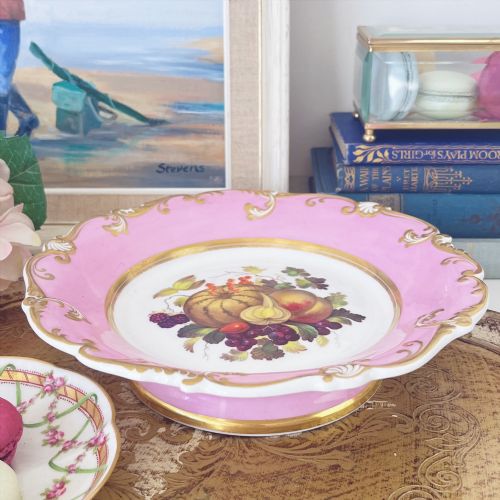
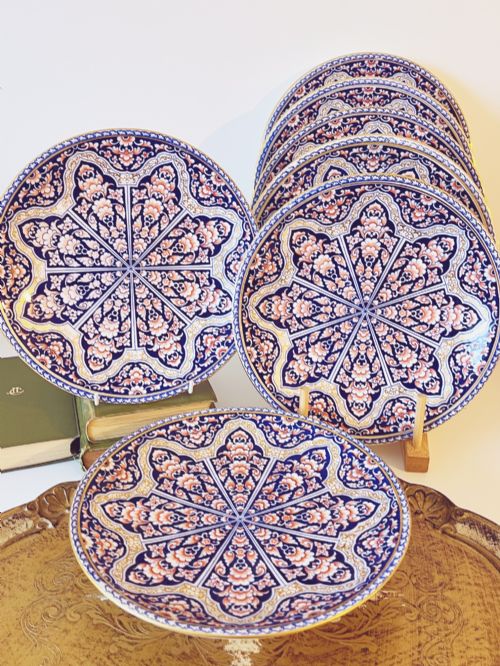
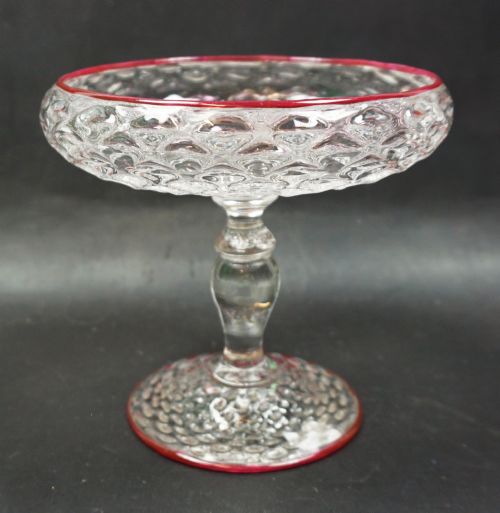
Potters and ceramists shaped porcelain and bone china, often applying hand-painted fruits, Chinoiserie patterns, or Imari designs before firing. Glassmakers employed hand-blowing, moulding, cutting, and etching techniques to produce crystal tazzas with red cane or honeycomb patterns. Metalworkers cast bronze and brass, finishing surfaces with ormolu, heavy silver plating, or gilding.
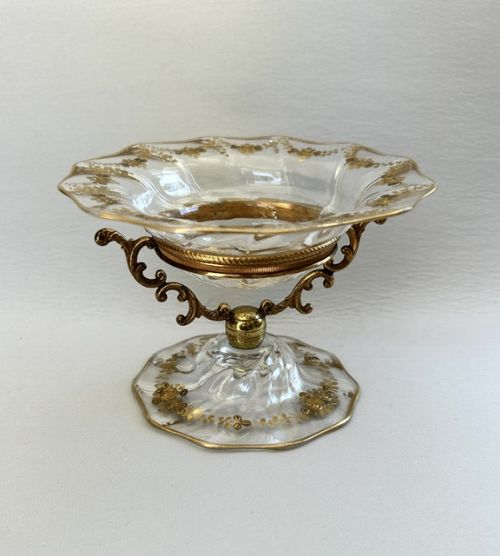
Assembly often involved mechanical joining, such as securing marble, alabaster, or Limoges enamel plaques into metal stands using pins and mounts. Pietra dura inlay integrated hardstones into brass and alabaster structures, while mother-of-pearl provided iridescent dish inserts. Artisans combined these disparate materials to build stable, decorative centrepieces capable of supporting fruit or sweetmeats.
Listings feature porcelain, crystal glass, ormolu, marble, and bronze, spanning the early nineteenth century through the Victorian era.
Markers of Distinction
The standard of painting on porcelain sets certain pieces apart, particularly where hand-painted fruit or detailed Chinoiserie motifs demonstrate superior brushwork. Crispness in mould work, such as the depth of crystal cutting or the clean casting of ormolu cherubs and bronze mounts, distinguishes finer examples. Material integration also dictates worth, where secure mountings of marble, alabaster, or pietra dura show deliberate craftsmanship.
Completeness within sets shifts the interest for a collector, as isolated dishes compare differently to pairs or surviving elements of a wider dessert service. The weight and clarity of hand-blown crystal or the richness of gilding and enamel work provide immediate visual evidence of a maker's investment in the object.
H & R Daniel·Royal Crown Derby·Swansea Porcelain·Flight Barr and Barr·Meissen
The 19th Century Comports Glossary
- Comport
- A raised vessel used for serving fruit or sweets at the table. It typically stands on a central foot or pedestal.
- Tazza
- A shallow saucer-like dish set upon a pedestal, frequently used interchangeably with the term comport.
- Ormolu
- Gilded bronze used extensively in French and English decorative mounts during the nineteenth century. It provides a bright metallic finish to structural elements.
- Pietra dura
- An inlay technique using cut and fitted polished coloured stones to create geometric or pictorial designs. It appears on stone and metal desk or table wares.
- Imari
- A decorative style of Japanese porcelain featuring a palette of underglaze blue, iron red, and gold, widely copied in European Victorian ceramics.
19th Century Comports: Frequently Asked Questions
What is a comport used for?
These vessels served as elevated presentation dishes for fruit, nuts, and sweetmeats during formal nineteenth-century dessert courses. Placed centrally or symmetrically along a dining table, they broke up the flat plane of the setting.
Today, they function as decorative centrepieces on sideboards or coffee tables, retaining their capacity to hold fruit or small display items.
How do tazzas differ from comports?
In historical and dealer terminology, the two words largely describe the same object type: a shallow dish elevated on a central foot or pedestal. A tazza often implies a flatter, saucer-like profile reminiscent of classical coin-dishes.
A comport can sometimes describe a deeper bowl form, though nineteenth-century makers and retailers applied both names interchangeably to pedestal tableware.
Are these pieces safe for food?
While nineteenth-century porcelain, bone china, and crystal were designed for dining use, older glazes and lead glass formulations require cautious consideration.
Most buyers choose to use these pieces for dry display, decoration, or holding fruit rather than serving wet or acidic foods.
How can I date a nineteenth-century comport?
Dating relies on identifying maker's marks, factory ciphers, and registration stamps stamped or painted on the underside of ceramic bases. Stylistic clues, such as the heavy gilding of Regency pieces or the vibrant polychrome of Victorian Revival styles, narrow down the decade.
Material composition, including the weight of lead crystal or the style of bronze casting, further assists in placing the object within the century.