



Antique Shell Dishes
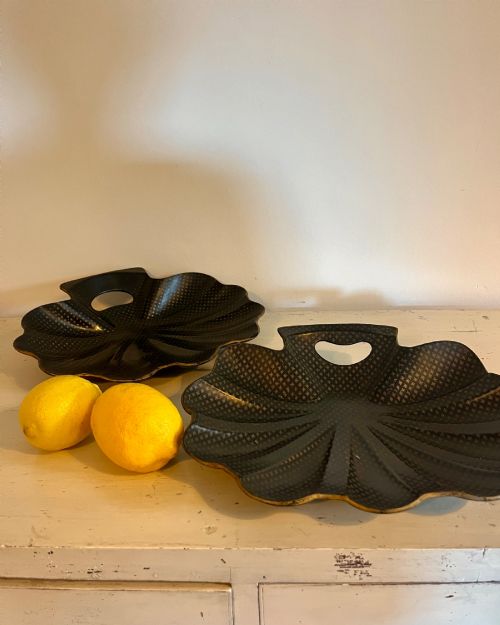
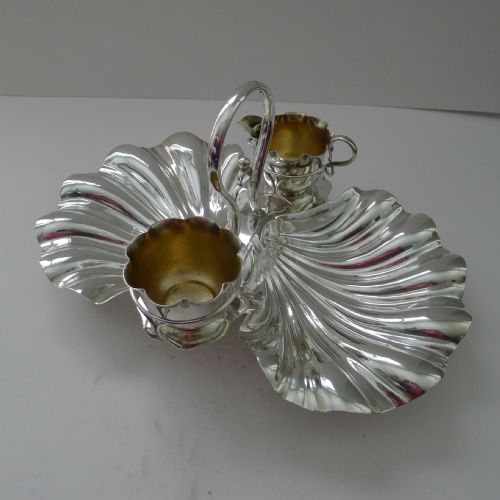
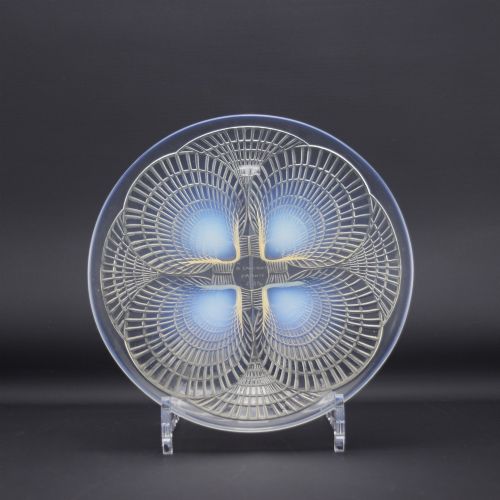
Antique shell dishes appear in sterling silver, porcelain and opalescent glass, shaped to bring marine form to the table.
Antique Shell Dishes
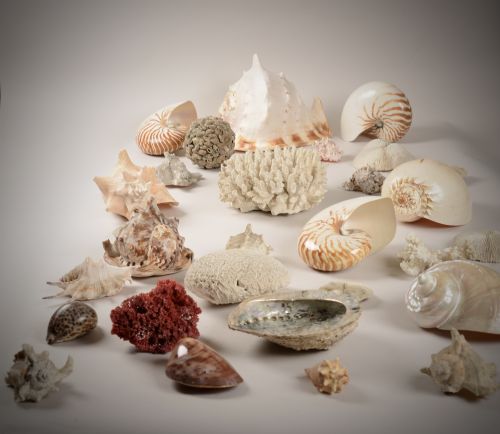
When you search for antique shell dishes, you encounter items designed in the realistic contour of natural scallop and clam shells, executed across multiple centuries. The selection spans utilitarian butter dishes and salt cellars to decorative centrepieces and dessert plates.
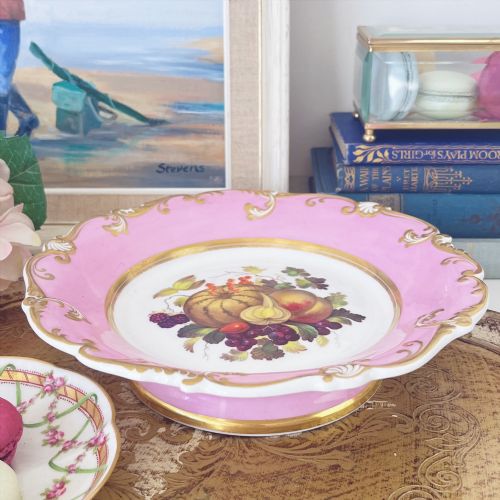
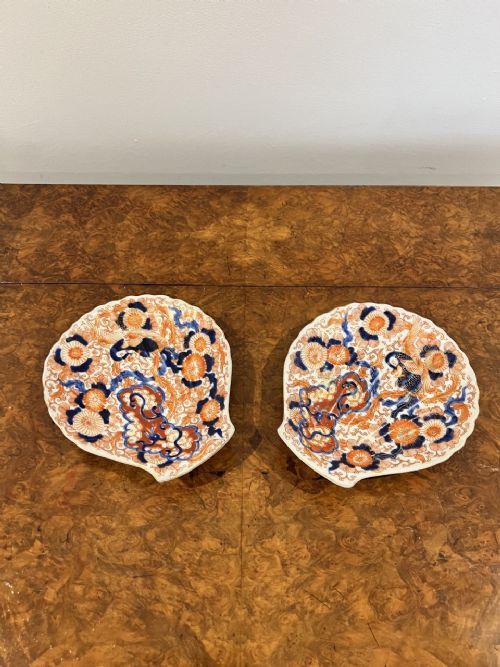
Porcelain examples from English factories like Worcester sit alongside solid silver butter dishes from the Georgian and Victorian eras. Glass versions in opalescent finishes also appear, alongside Japanese Imari porcelain shaped to the same marine profile.
Materials and Techniques
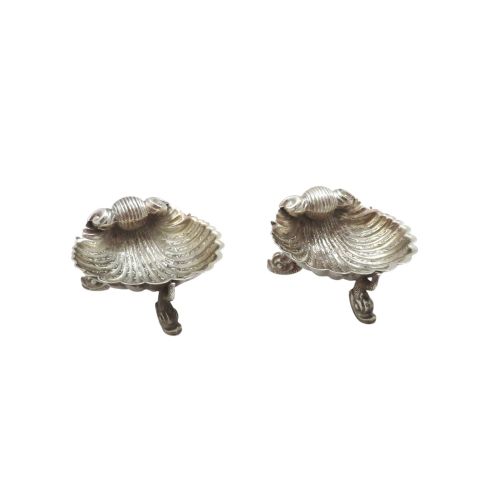
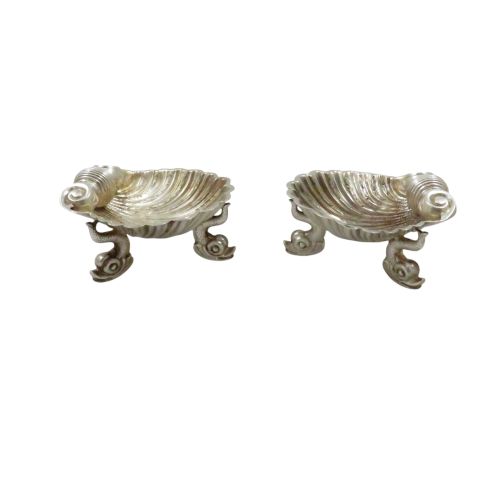
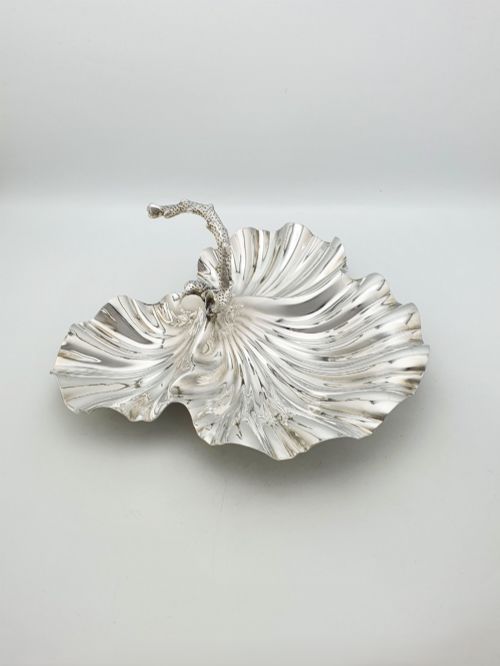
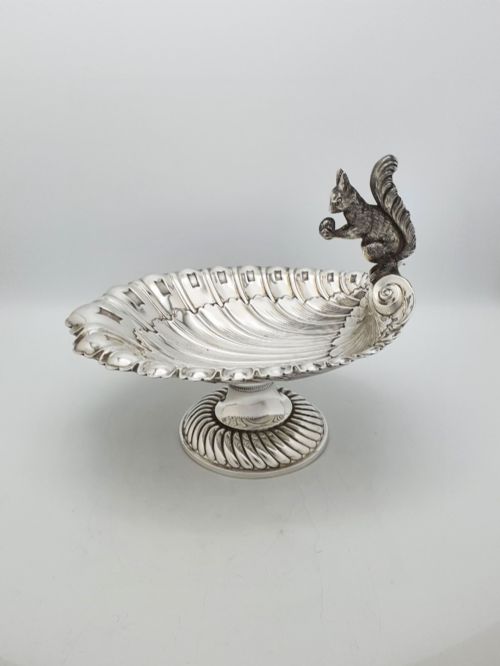
Silversmiths formed metal dishes by casting, hammering and chasing sterling silver or silver plate, frequently adding naturalistic details such as dolphin feet, coral handles or gilded interiors.
Potters shaped soft-paste and hard-paste porcelain over ribbed moulds before applying hand-painted botanical sprays, underglaze blue, or polychrome enamels with gilt edges.
Glassmakers utilised pressing techniques to achieve the milky, iridescent quality seen in opalescent shell plates from the early twentieth century.
Squirrels and dolphins make unexpected appearances as handles and feet.
Distinguishing Quality
Quality rests upon the crispness of the ribbing and the naturalism of the hinge or handle, where finer pieces retain sharp, detailed casting rather than smoothed, worn surfaces.
Hand-painted ceramics show distinction in the precision of the brushwork, the depth of the floral or landscape enamel, and the integrity of the gilding along the fluted rim.
H & R Daniel·William Plummer·Goldsmiths & Silversmiths·Daniel Arter·Rene Lalique·Barr Flight and Barr·WMF·Royal Worcester·Edward Farrell·Royal Dux·Mappin & Webb·Meissen·Chamberlain Worcester·Mary Sibley & Richard Sibley·Josiah Williams & Co·Atkin Brothers
The Antique Shell Dishes Glossary
- Comport
- A raised dish or bowl on a foot, frequently utilised for serving fruit or sweets at the table.
- Butter dish
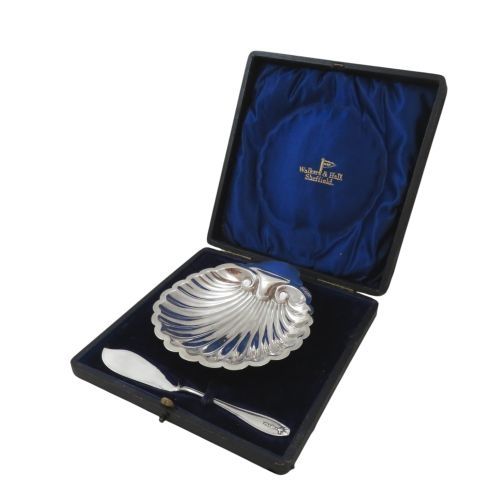
- A small vessel designed specifically to hold and present individual portions of butter, often accompanied by a fitted lid or resting within a presentation case.
- Salt cellar
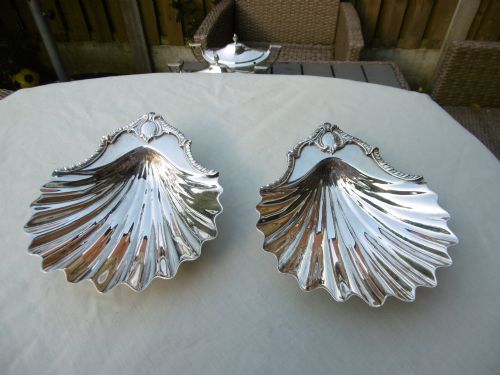
- A small open bowl used to hold salt at the dining table, frequently cast in the form of a resting shell supported by tiny feet.
- Opalescent glass
- Glass containing agents that create a milky, semi-translucent appearance with shimmering blue or orange highlights when caught by the light.
- Vide-poche
- A small decorative tray or dish intended for emptying pockets of small items like coins and keys.
Antique Shell Dishes: Frequently Asked Questions
What were antique shell dishes used for?
These pieces served practical dining functions, holding butter, salt, or seafood at formal meals. Smaller versions functioned as sweetmeat dishes or receptacles for condiments.
Over time, many transitioned into decorative table centrepieces, trinket trays, or cabinet plates displayed for their sculptural form.
How do I care for antique silver shell dishes?
Sterling silver and silver-plated examples require gentle cleaning with a specialised silver cloth to remove tarnish without abrading the surface. Avoid harsh chemical dips that strip away original patination and detail.
Store them away from damp environments and wrap cased sets carefully to protect the interior lining and hinges.
How do I date an antique porcelain shell dish?
Dating relies on identifying factory marks stamped, painted, or impressed on the underside of the ceramic body. Stylistic indicators, such as the palette of the hand-painted enamels and the presence of gilding, also help narrow the production period.
Comparison with documented pieces from factories like Worcester provides a reliable window of manufacture.
Are glass shell dishes fragile?
Opalescent glass and pressed glass pieces demand careful handling to prevent chipping along the delicate fluted rims and scalloped edges. Display them on stable surfaces away from heavy foot traffic.
Wash them by hand in lukewarm water using mild soap, avoiding sudden temperature changes that can stress old glass.