


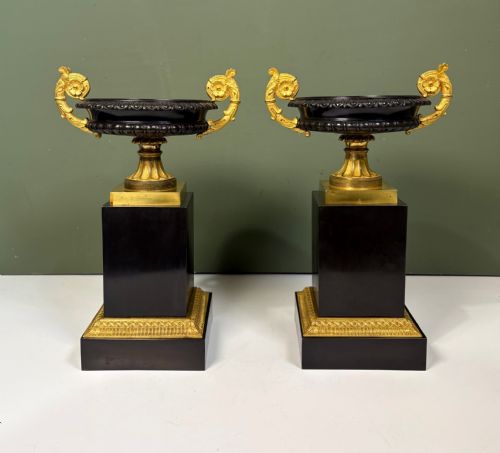


Pair of Bronze Tazzas
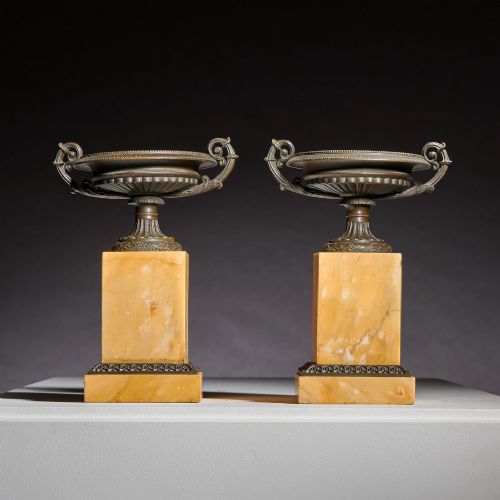
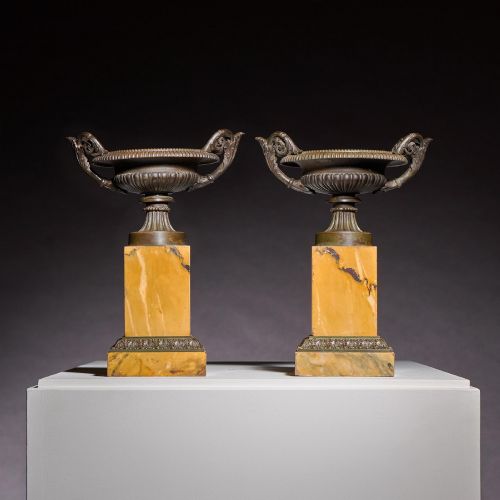
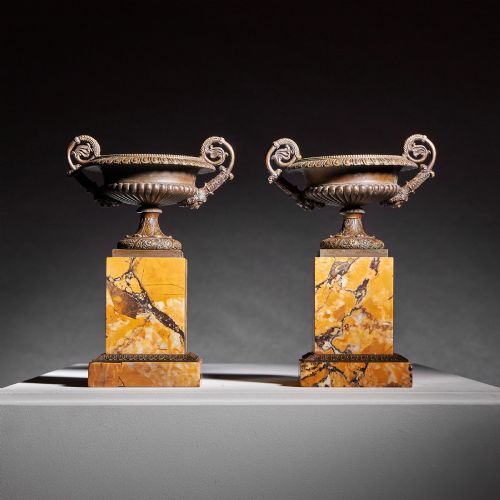
These pair of bronze tazzas combine classical form with rich material contrast, offering a striking display piece for classical and neoclassical interiors.
Pair of Bronze Tazzas
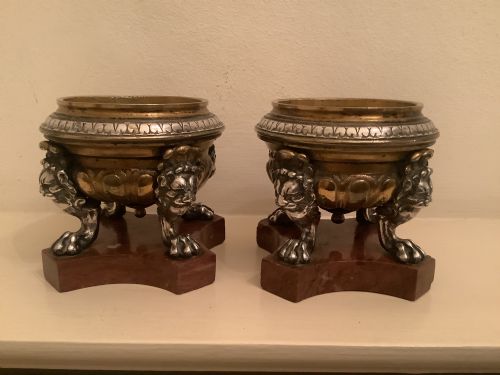
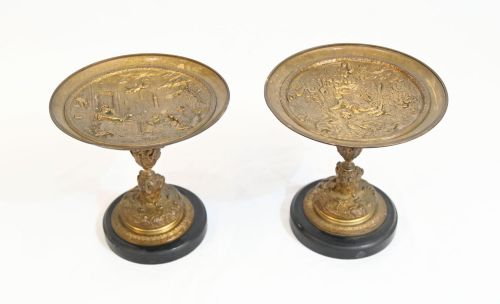
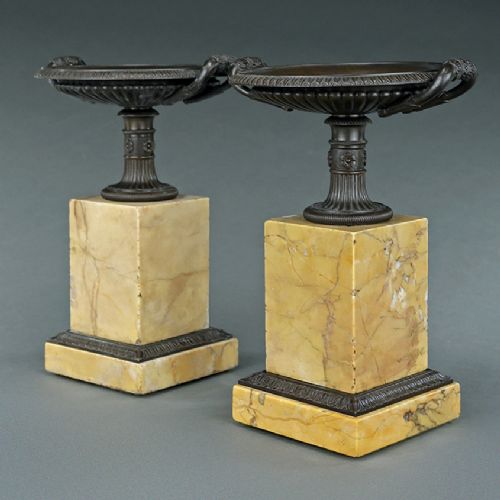
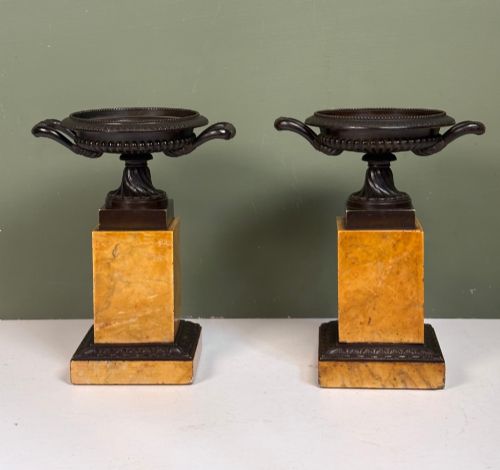
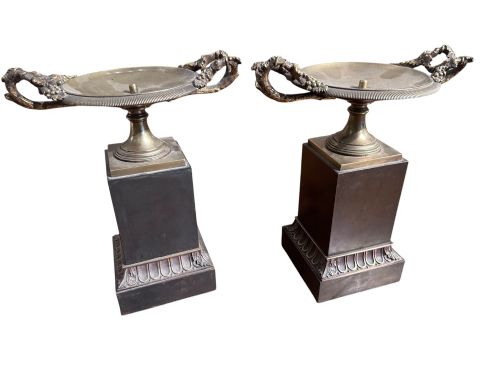
When searching for a pair of bronze tazzas, a buyer encounters ornamental shallow bowls or dishes raised on stems and plinths, most frequently originating from the nineteenth century. These decorative objects emerge primarily in French Empire, Regency, and Grand Tour styles, often combining metalwork with classical stone elements. The examples seen on this page range from patinated and gilt bronze compositions to mixed media designs incorporating marble bases and shell or mother-of-pearl dishes.
The dominant forms follow classical antiquity, drawing inspiration from excavated roman and greek vessels used for libations or dining. On this page, the pieces appear predominantly as decorative objects, library tazzas, and compotes rather than utilitarian tableware. Many examples integrate architectural plinths in Siena marble, black marble, or rouge marble beneath cast metal bowls.
How they were made
The construction of these pieces relies on the pairing of cast bronze with carved natural stone bases. Founders utilised both patinated and gilt bronze, often combining dark patination with bright ormolu mounts to create visual contrast. Stonework components such as Siena marble, giallo antico, and onyx were turned and polished to form supportive plinths and columns.
Additional decorative techniques recorded in the evidence include cloisonné enamel, silvering, and the incorporation of organic materials like shell and mother-of-pearl dishes. Metal elements were cast, chased, and occasionally gilded, then secured to marble or stone pedestals using traditional mechanical fixings.
Pair of Bronze Tazzas Retail Price Guide 2026
Typical asking prices for pair of bronze tazzas among the pieces listed under this phrase on Sellingantiques today, from the lower quarter to the upper quarter. They describe what is for sale here now, not the wider market.
Listings for pair of bronze tazzas span the nineteenth century, encompassing Regency, French Empire, and Victorian periods.
What varies in quality
The distinction between standard and superior examples rests upon the crispness of the bronze casting and the depth of the chasing work. Finer pieces display sharply defined details in the foliage, figural mounts, or classical motifs, whereas lesser examples show softer, blurred contours from worn moulds. The choice and integration of materials also set the tiers apart, with select pieces using choice Siena or giallo antico marbles paired with fire-gilt ormolu rather than plain patinated bronze.
Proportion and architectural balance dictate the overall success of the design. The relationship between the shallow bowl, the stem, and the marble plinth requires harmonious scaling, where heavier stone bases properly anchor the metal upper section. Superior items often exhibit ambitious multi-part construction and thoughtful patination that remains stable and rich across both the metal and stone elements.
The Pair of Bronze Tazzas Glossary
- Tazza
- A shallow bowl or cup mounted on a stem and foot, used historically for display or serving. The plural form is tazzas or tazze.
- Ormolu
- Gilt bronze produced by applying a mixture of finely ground gold and mercury to a bronze base and heating it. This technique creates a durable, luminous golden finish characteristic of French Empire metalwork.
- Grand Tour
- A cultural journey undertaken by wealthy young Europeans in the eighteenth and nineteenth centuries to study classical antiquity. Souvenirs from these travels frequently included bronze models and marble artefacts.
- Siena marble
- A distinctive yellow Italian marble with dark grey or purple veining. It was highly prized for neoclassical and Regency decorative objects.
- Patination
- The surface coloration of metal achieved through age, chemical treatment, or handling. Patinated bronze typically exhibits rich brown or dark green tones.
Pair of Bronze Tazzas: Frequently Asked Questions
What were pair of bronze tazzas used for?
Historically, tazzas originated as ceremonial vessels or serving dishes derived from classical antiquity. In the nineteenth century, the pieces listed on this page served primarily as decorative ornaments on mantelpieces, libraries, and side tables.
They functioned as visual statements of classical taste rather than practical tableware. Their shallow bowls made them suitable for display rather than holding substantial items.
How do I date a pair of bronze tazzas?
Dating relies on examining the casting techniques, the style of the mounts, and the specific type of marble used in the plinths. Nineteenth-century examples often reflect French Empire, Regency, or Grand Tour aesthetics influenced by archaeological discoveries.
Material combinations like ormolu with Siena marble point toward the early nineteenth century and the height of the neoclassical revival. Later nineteenth-century pieces from around 1880 show refined manufacturing methods and distinct patination styles.
Where should I place them in a room?
These decorative objects work well on symmetrical surfaces such as mantelpieces, sideboards, or console tables where a pair can anchor a display. Their architectural proportions and contrasting marble bases allow them to stand out against wood paneling or plain walls.
Because they combine metal and stone, they benefit from placement near natural light sources that highlight the patinated bronze and polished marble surfaces.
Are bronze tazzas fragile?
While bronze and marble are inherently durable materials, these composite pieces require careful handling due to their multi-part construction. The joints where the metal bowl meets the marble stem or plinth represent points of structural sensitivity.
Cleaning should be restricted to gentle dusting with a soft cloth, avoiding abrasive polishes that can damage patination or gilding on the metal surfaces.