


19th Century Coffee Cup
These 19th century coffee cup selections bring together handpainted porcelain and gilt detailing from major European factories for daily use or display.
19th Century Coffee Cup
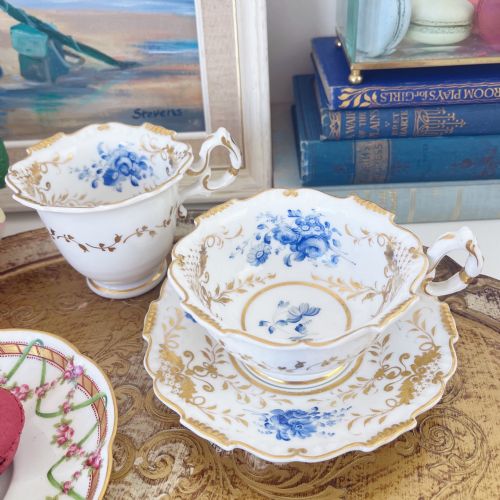
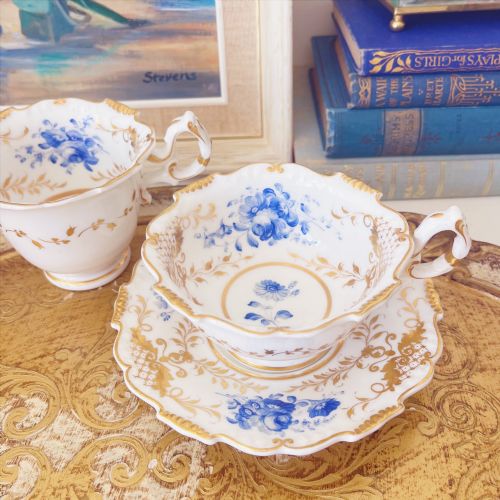
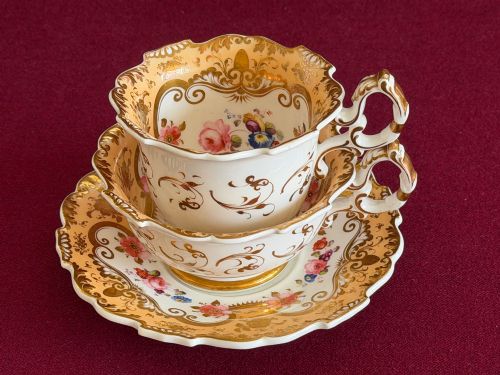
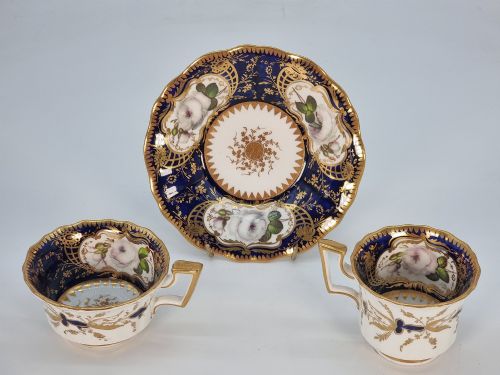
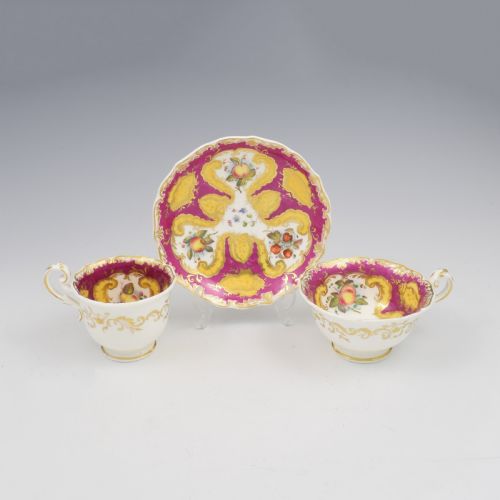
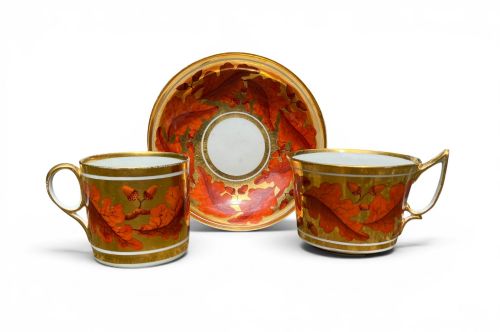
A 19th century coffee cup often appears alongside matching saucers in trios or larger sets, intended for formal dining or polite morning service. The forms range from cylindrical coffee cans to deeper cabinet cups designed for display.
The English and continental works on this page span the Regency, Georgian, and Victorian eras, alongside mid-century French Empire and Old Paris pieces. Meissen, Coalport, and Daniel factories dominate the domestic and cabinet selections.
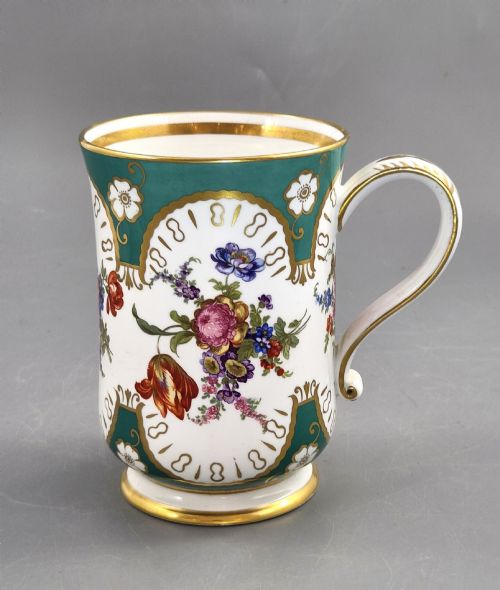
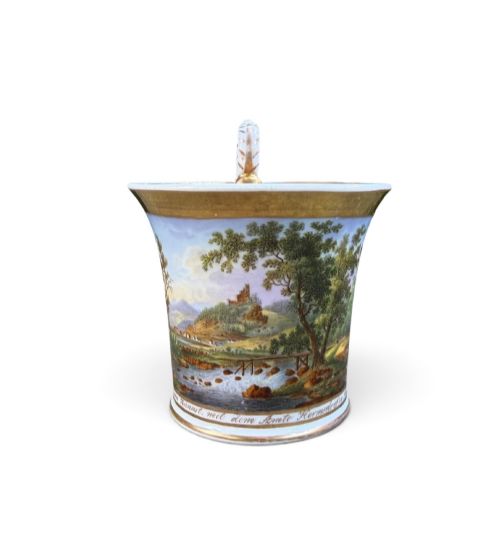
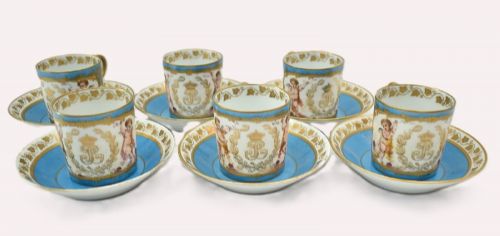
Cabinet cups feature prominent decorative grounds, topographical scenes, or floral motifs rather than everyday service. Buyers frequently encounter French Old Paris porcelain and English bone china or hard-paste porcelain from the early decades of the century.
Materials and production methods
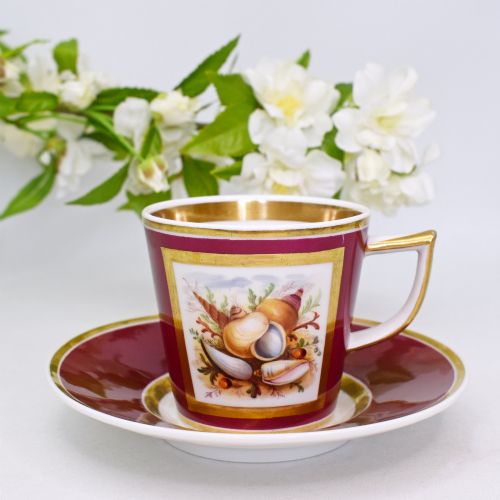
Potters used hard-paste and bone china bodies, shaped on wheels or pressed into moulds to achieve slender handles and crisp rims. Gold leaf and heavy gilding were applied by hand to accent borders and handle terminals.
Decoration relied on handpainted enamel pigments, fired at high temperatures to set botanical, avian, or topographical scenes. Artisans utilised cobalt blue underglazes and rich green or pink ground colours to frame the central motifs.
The listings on this page span porcelain and bone china bodies decorated with handpainted enamels and gold leaf from the Georgian, Regency, and Victorian periods.
Factors of distinction
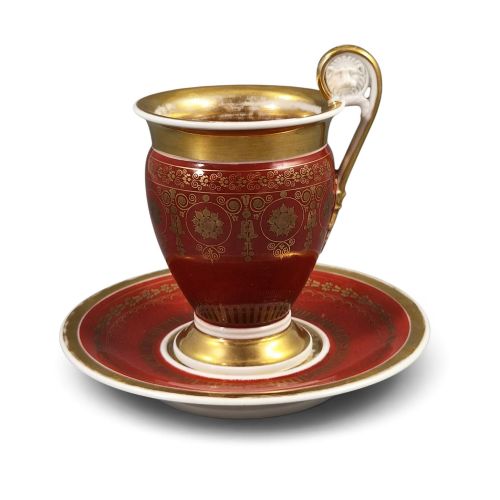
The refinement of the porcelain body and the crispness of the moulded details set exceptional pieces apart from standard wares. Thin-walled hard-paste porcelain and deeply embossed lion mask handles indicate higher factory output.
The precision of the handpainted enamel work and the generosity of the gold leaf application determine the grade of a cabinet cup. Pieces with intact gilding and detailed topographical or floral subjects represent the peak of the maker's skill.
H & R Daniel·Newhall·Coalport John Rose·Sèvres·Berlin·Rockingham·Derby·Spode·Meissen·KPM Berlin·Davenport·Minton·Worcester
The 19th Century Coffee Cup Glossary
- Cabinet cup
- A decorative vessel made for display in a cabinet rather than for regular drinking. These pieces typically feature elaborate handpainted scenes or rich gilding.
- Demitasse
- A small cup used for serving strong black coffee after a meal. The form is smaller than a standard teacup and pairs with a matching saucer.
- Hard-paste porcelain
- A durable ceramic material composed of kaolin and petuntse, fired at high temperatures. It yields a bright white, vitreous body resistant to scratching.
- Trio
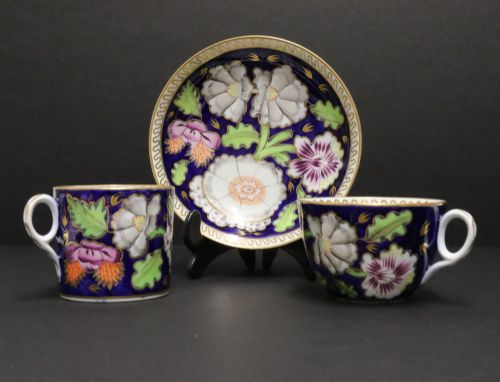
- A matched set consisting of a teacup, a coffee cup or can, and a saucer. This combination was common in English breakfast and tea services.
- Imari
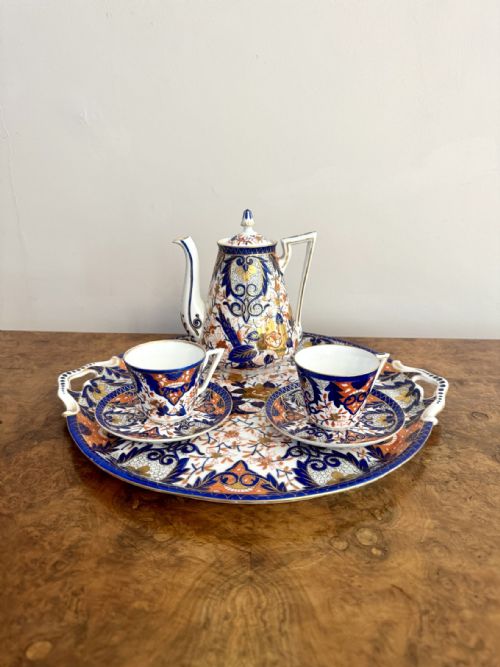
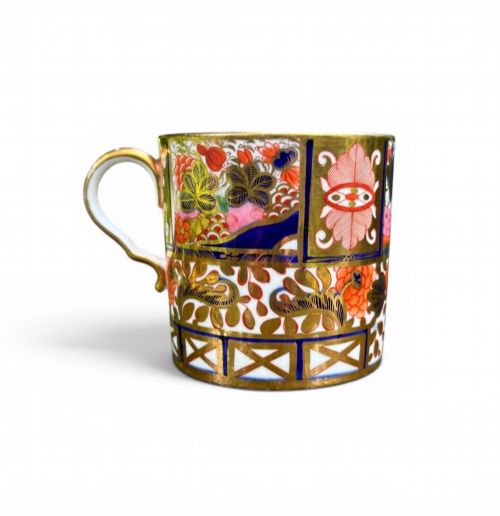
- A decorative style inspired by Japanese export wares, featuring cobalt blue, iron red, and gilt. British factories adopted this palette extensively during the Georgian and Victorian periods.
19th Century Coffee Cup: Frequently Asked Questions
What is a coffee can?
A coffee can is a straight-sided, cylindrical cup designed specifically for drinking coffee during the late eighteenth and early nineteenth centuries. They often feature simple loop handles and sit on matching saucers.
These pieces were part of larger tea and coffee services used in polite drawing rooms. They provide a distinct profile compared to the flared shape of traditional teacups.
How do I identify French Old Paris porcelain?
French Old Paris, or Vieux Paris, porcelain originates from various independent workshops operating in and around Paris during the nineteenth century. These items frequently showcase bright ground colours, heavy gilding, and sculptural elements like lion mask handles.
Markings are often absent or consist of simple pattern numbers rather than factory ciphers. The unglazed foot rims and thick enamel application help distinguish them from Sèvres output.
Can I use these cups for daily drinking?
Most antique cups from this era are delicate and best reserved for gentle use or display. Handpainted enamels and gold leaf gilding can wear away with frequent washing in modern dishwashers.
If you choose to use them, hand washing in warm water without abrasive soaps preserves the finish. Cabinet pieces in particular are structurally better suited to shelves than dining tables.
What does a trio consist of?
A trio comprises three matching ceramic items: a teacup, a coffee cup, and a shared saucer. This configuration allowed households to serve different hot beverages from a unified service.
Finding a complete trio from the early nineteenth century is increasingly uncommon. They offer a comprehensive view of a factory's decorative range across different vessel shapes.