


Gilded Porcelain Saucer Set
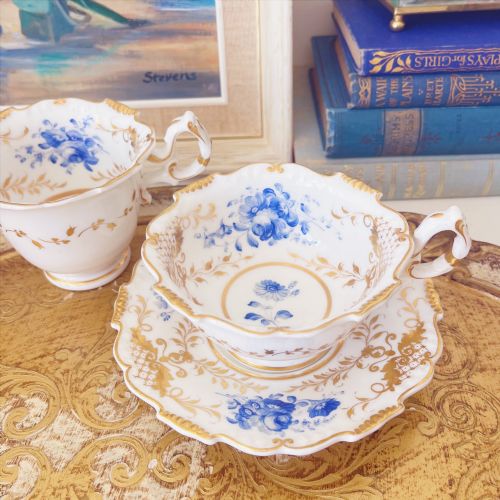
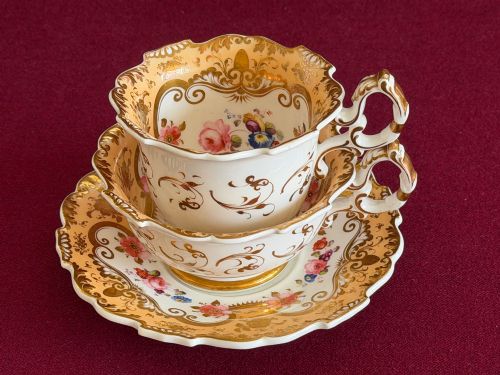
These gilded porcelain saucer sets bring the artistry of Georgian, Regency and Victorian tea services directly to the table.
Gilded Porcelain Saucer Set
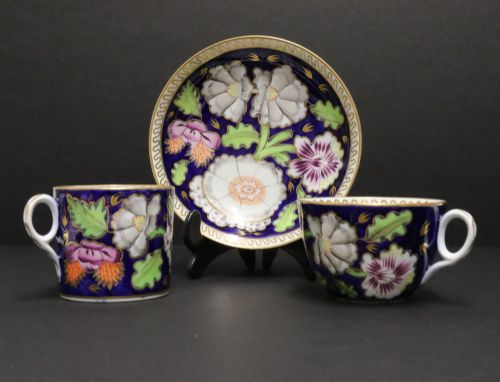
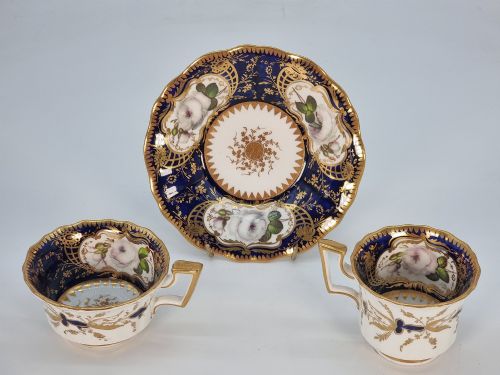
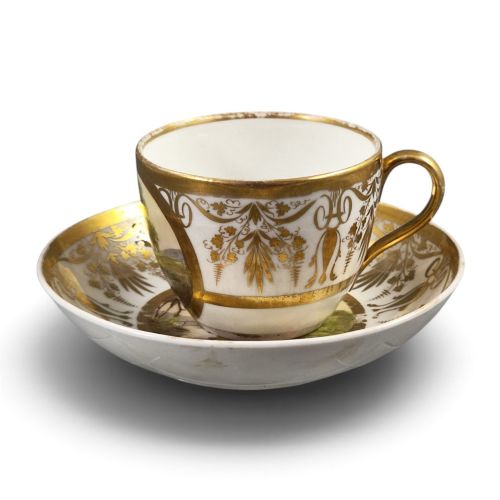
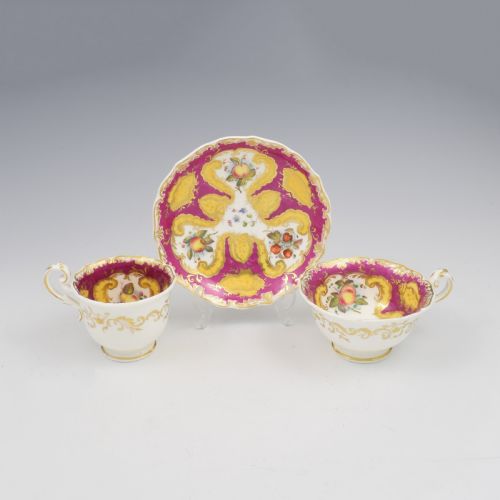
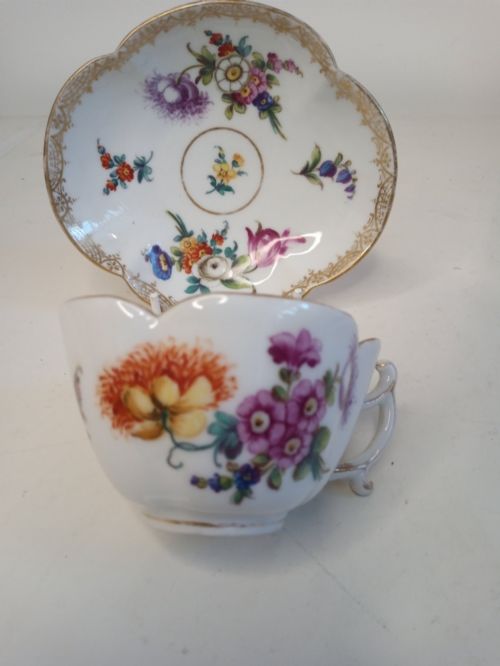
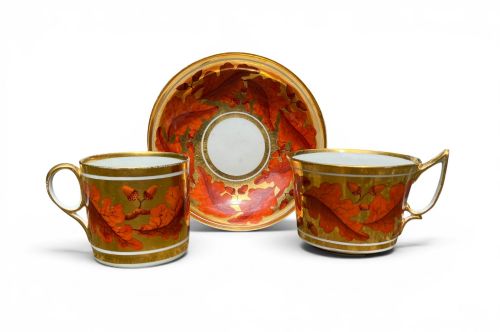
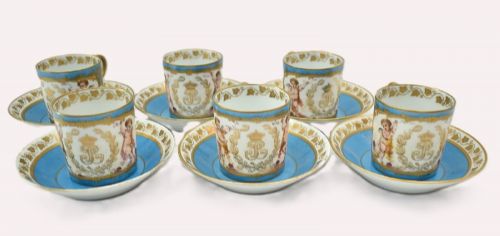
A gilded porcelain saucer set comprises matching cups, saucers and occasionally associated teapots or bowls produced across the eighteenth, nineteenth and early twentieth centuries. These groupings often survive as trios incorporating a coffee cup, teacup and saucer, or as larger afternoon tea services intended for formal hospitality.
The pieces appearing most frequently originate from English factories such as Worcester, Coalport and Derby, alongside continental European makers. Forms range from cabinet cups to complete tea sets, reflecting domestic rituals of consumption across the Georgian, Regency and Victorian periods.
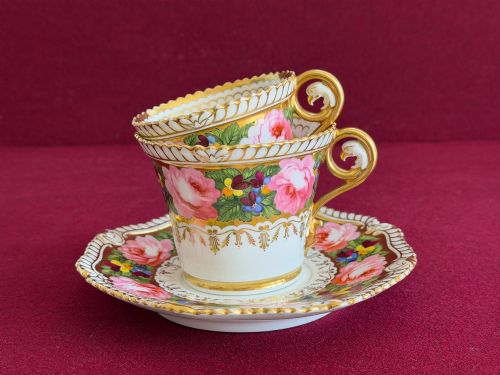
Makers utilised porcelain and bone china as the primary canvas for handpainted landscapes, floral motifs and intricate gilding. Such sets bridge decorative display and functional utility, preserving the ceramic styles of their respective eras.
Factors determining quality
The standard of a gilded porcelain saucer set rests upon the precision of the handpainted decoration and the purity of the ceramic body. Pieces featuring detailed pictorial landscapes or botanical studies by named artists command greater interest than standard factory patterns.
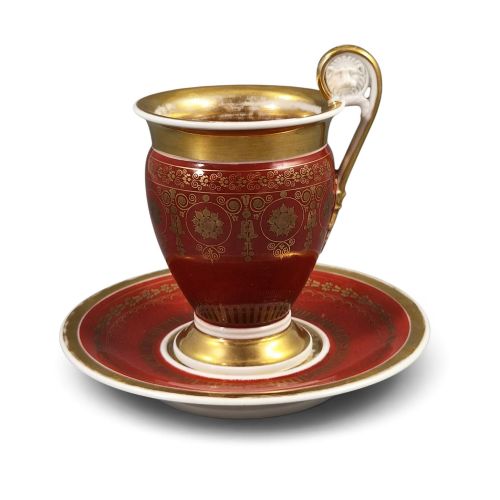
Preservation of the gold leaf and enamel determines the retention of visual impact. Sets showing minimal wear to the gilding along the rims and handles maintain their original aesthetic distinction.
Some nineteenth-century cups feature hidden lion mask handles that peer out quietly from beneath the gold trim.
H & R Daniel·Chamberlain Worcester·Coalport·KPM Berlin·Flight Barr & Barr·Royal Worcester·Minton·Spode·Meissen·Davenport
The Gilded Porcelain Saucer Set Glossary
- Trio
- A matched set consisting of a teacup, a coffee cup and a saucer. This combination was particularly popular during the Georgian and Regency periods.
- Cabinet cup
- A decorative cup and saucer intended primarily for display in a cabinet rather than for daily tea consumption. These pieces often feature handpainted landscapes or portraits.
- Bone china
- A type of soft-paste porcelain incorporating bone ash, developed in England to create a durable, whiter ceramic body. It accepts complex gilding and enamel decoration with exceptional clarity.
- Gilding
- The application of gold leaf or powdered gold to ceramic surfaces. This technique accentuates handles, rims and decorative borders.
- Demitasse
- A small cup used for serving strong black coffee or espresso. These often accompany larger tea sets in nineteenth-century collections.
Gilded Porcelain Saucer Set: Frequently Asked Questions
What is a tea trio?
A tea trio typically consists of a matching teacup, coffee cup and saucer used in nineteenth-century households. This configuration accommodated different hot beverages served during formal gatherings.
Collectors prize complete trios for their unified design and decorative cohesion. They represent the height of Regency and Victorian tableware fashion.
Can I use these sets for tea?
While these sets were originally created for functional use, their age and delicate gold leaf suggest careful handling. Many collectors prefer to use them only for occasional special afternoon teas.
Thermal shock from boiling water poured directly into cold antique porcelain can cause hairline cracks. Warming the cup gently helps prevent such damage.
How do I identify the period?
Period identification relies upon factory backstamps, ceramic body composition, and stylistic cues such as handle shapes and painting techniques. Regency pieces often exhibit classical motifs, while Victorian items feature richer, heavier gilding.
Comparing pattern numbers and glaze characteristics against known factory archives clarifies the precise manufacturing era. Subtle variations in the paste offer further clues to date.