
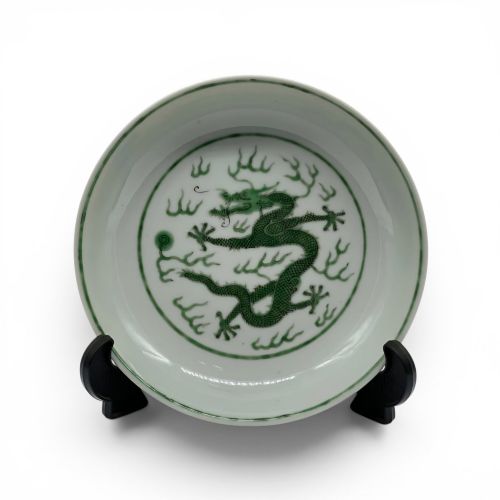
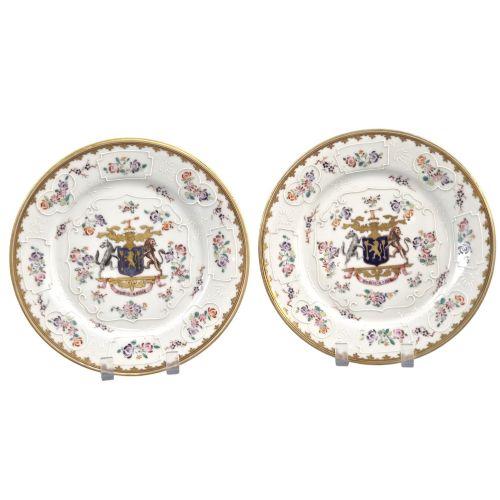


19th Century Chinese Dish
A 19th century chinese dish brings hand-painted porcelain and intricate enamelwork into a room, offering a direct link to Qing Dynasty craftsmanship.
19th Century Chinese Dish
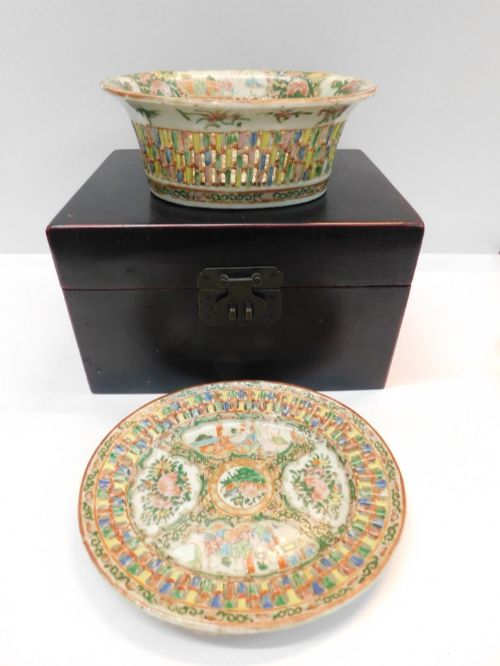
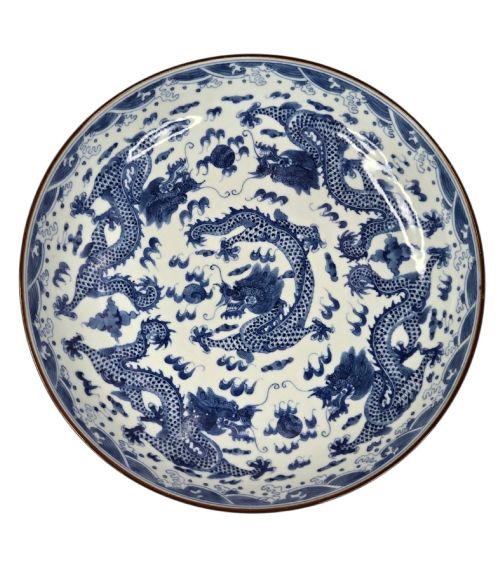
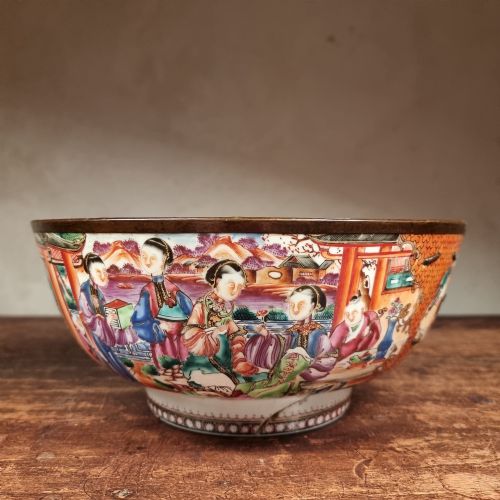
Makers utilised traditional techniques during the Qing Dynasty, producing items decorated with floral motifs, figures, and dragons. Buyers frequently encounter pieces associated with the Famille Rose and Famille Verte palettes, as well as celadon glazes.
Origins span regional Chinese kilns and workshops, supplemented by European interpretations such as Victorian Chinoiserie and French adaptations. The inventory mixes utilitarian serving vessels with decorative plates and baskets intended for display.
How they were made
Porcelain serves as the primary medium, shaped by hand or moulded before receiving cobalt underglaze decoration or being fired with transparent glazes. Earthenware and brass also appear across the selection.
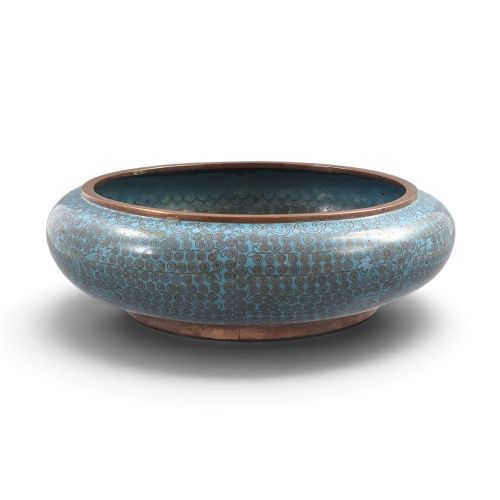
Surface ornamentation relies heavily on overglaze enamel work, gilding, and hand-painted details. Cloisonné pieces incorporate metal wire cells soldered to a base and filled with enamel pastes before firing.
Listings include porcelain, earthenware, and brass objects utilising cobalt underglaze, overglaze enamel, and gilding across the 19th century.
What varies in quality
The precision and detail of the hand-painting set individual pieces apart, particularly in complex figural scenes and botanical motifs. Finer examples display crisp cobalt underglaze lines and carefully applied enamels that maintain their clarity across the entire surface.
The weight, throwing consistency of the porcelain body, and the evenness of the glaze application indicate the skill of the original workshop. Superior pieces retain vibrant gilding and well-preserved surface textures without blurring.
Elkington
The 19th Century Chinese Dish Glossary
- Famille Rose
- A palette of opaque enamel colours dominated by pink or rose hues, introduced during the Qing Dynasty. This style is frequently seen on Canton export porcelain.
- Celadon
- A green or grey-green glaze resembling jade, achieved through iron oxide in the reduction firing. It is typical of Longquan wares.
- Cloisonné
- An enamelling technique where metal strips are soldered to a metal body to form compartments that hold enamel paste. These are then fired and polished smooth.
- Underglaze Cobalt
- A blue pigment applied directly to the raw clay body before glazing and high-temperature firing. This method protects the pigment beneath a glossy coat.
- Canton
- A style of export porcelain decorated in southern China with colourful panels of figures, birds, and flowers. It is also known as Canton Famille Rose.
19th Century Chinese Dish: Frequently Asked Questions
How are Canton dishes identified?
Canton pieces typically feature bright, compartmentalised enamel decoration showing figures, court scenes, birds, and butterflies. They originate from southern China and were produced primarily for the export market during the Victorian era.
Buyers should examine the palette for the characteristic pinks of Famille Rose alongside green and gold accents. The porcelain body beneath is often heavy and white.
What is blue and white porcelain?
Blue and white porcelain uses cobalt oxide painted directly onto the clay before applying a clear glaze and firing at high temperatures. This technique creates a durable finish where the blue design rests beneath the surface gloss.
Designs on these dishes range from traditional dragon motifs to landscape scenes. The depth and tone of the blue indicate the purity of the cobalt and the skill of the kiln firing.
What does celadon mean?
Celadon refers to pottery featuring a pale green or grey-green glaze that mimics the appearance of jade. The colour results from iron oxides reacting within the kiln during a reduction firing.
These pieces often display carved or moulded patterns beneath the translucent glaze. The subtle finish pairs well with minimalist interiors and traditional collections alike.