


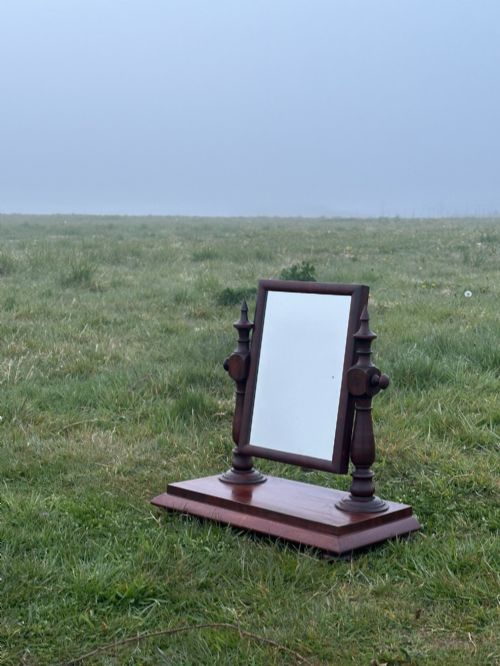


19th Century Cheval Glass
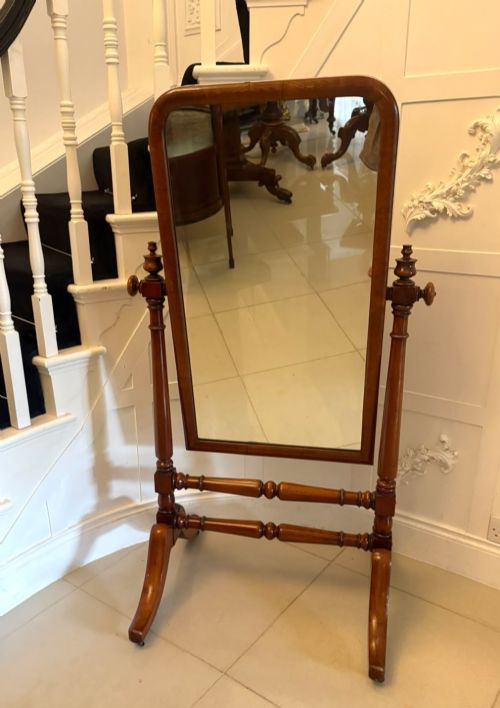
A 19th century cheval glass provides a full-length reflection in a heavy freestanding frame that pivots on vertical pivots.
19th Century Cheval Glass
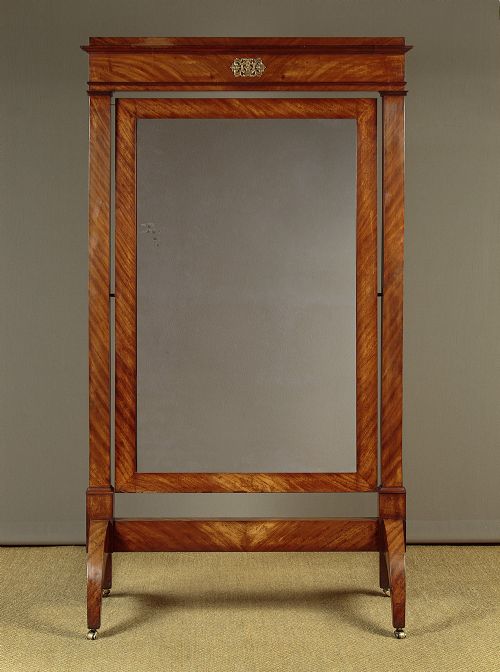
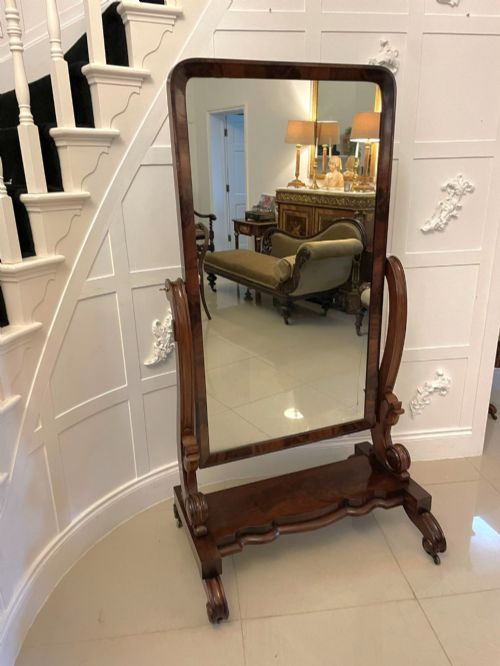
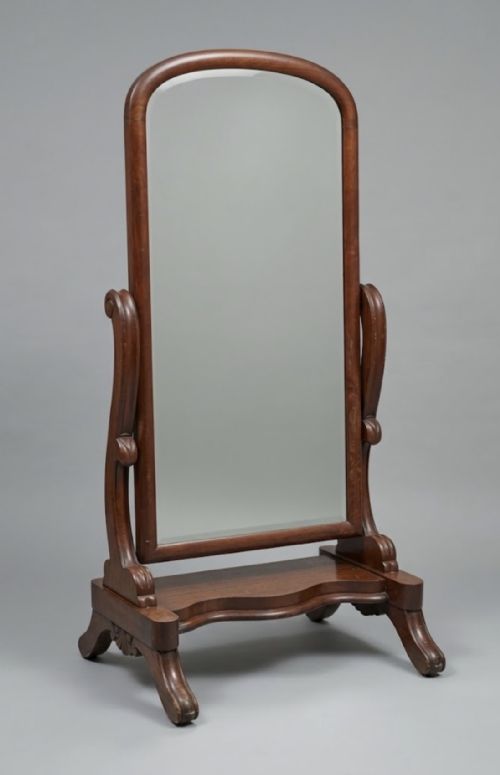
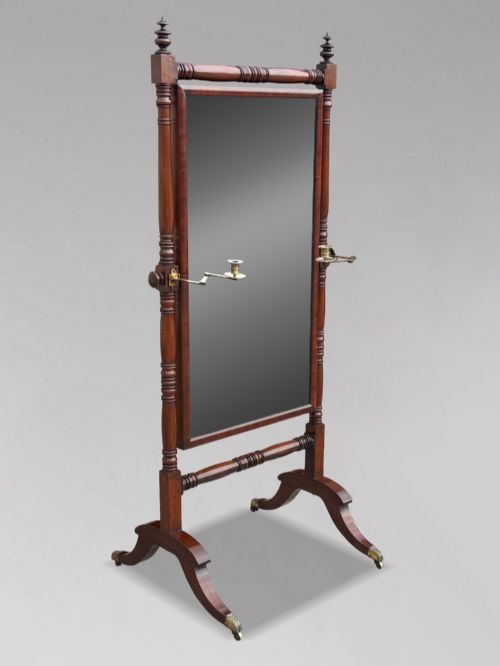
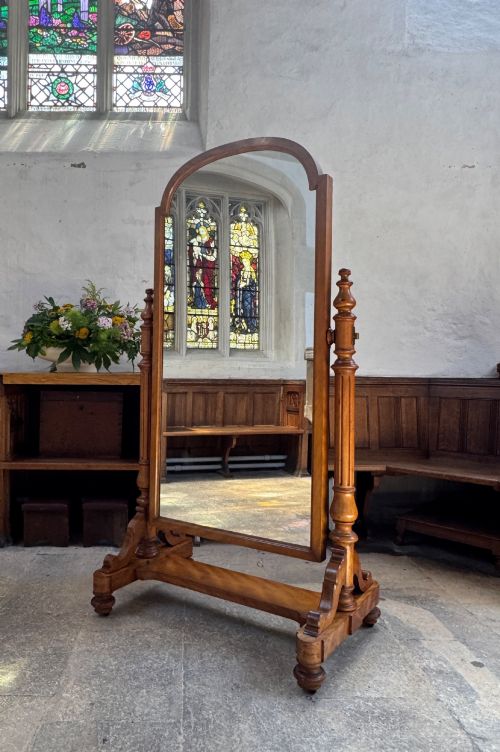
A 19th century cheval glass is a tall floor-standing swing mirror designed to allow a full-length view of attire. The form appears across the Regency, William IV, and Victorian periods, often framed by substantial upright supports or pillars.
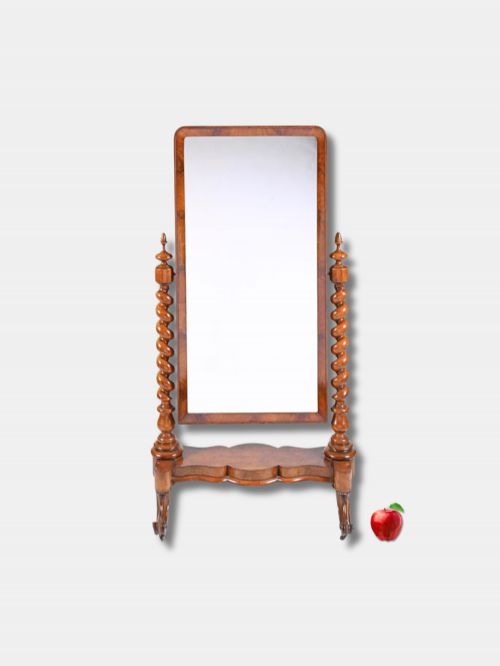
Most pieces encountered on this page are constructed from mahogany, though examples also appear in satin birch, walnut, and giltwood. The mirror glass itself is typically mounted within a pivoting frame, supported by either scroll feet, trestle bases, or barley twist columns.
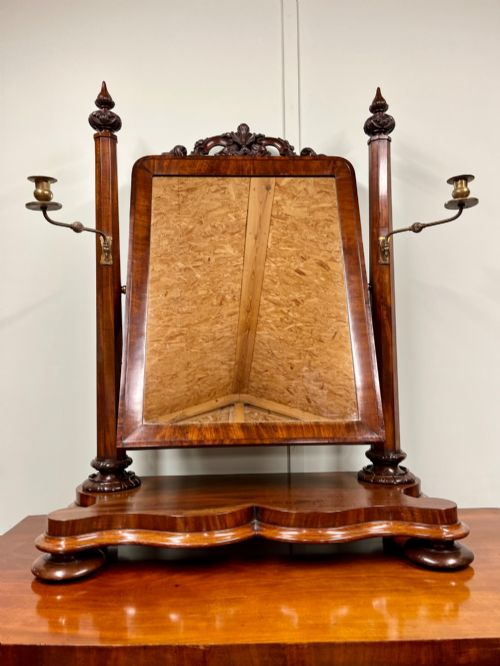
While many examples stand independently as large floor pieces, smaller variations such as dressing table mirrors and toilet mirrors also emerge within the category. These function on a similar swing mechanism but sit upon surfaces rather than the floor.
Assessing Quality and Execution
The distinction between standard examples and the finest pieces rests upon the selection of timber and the sophistication of the joinery. Figured flame mahogany and rich satin birch indicate higher workshop standards than plain utility timbers.
Proportion and stability dictate the merit of a standing mirror, where heavier brass mounts and well-balanced swing frames ensure the glass remains secure at any angle. Elaborate carving, such as French Rococo or French Empire detailing, separates ornamental reception pieces from simpler bedroom furniture.
19th Century Cheval Glass Retail Price Guide 2026
Typical asking prices for 19th century cheval glass among the pieces listed under this phrase on Sellingantiques today, from the lower quarter to the upper quarter. They describe what is for sale here now, not the wider market.
One recorded mirror once belonged to an American general, proving that military commanders also needed to check their uniform alignment.
The 19th Century Cheval Glass Glossary
- Cheval glass
- A tall mirror designed to stand on the floor within a movable frame that allows it to swing. This form became essential for full-length dressing during the Georgian and Victorian eras.
- Swing mirror
- A glass plate hung on pivots between two upright posts to adjust the tilt. It appears on both large floor-standing cheval frames and smaller table-top dressing glasses.
- Flame mahogany
- Timber sliced to reveal a distinctive, flamy wave pattern in the grain. Cabinet makers utilised this veneer on high-status 19th-century furniture for decorative impact.
- Barley twist
- A turned wooden column carved in a helical screw pattern. This decorative support is frequently found on Victorian frames and stands.
- Giltwood
- Wood coated with a thin layer of gold leaf or gilt paint. It is typical of grand decorative mirrors from French and English revival styles.
19th Century Cheval Glass: Frequently Asked Questions
What is a cheval glass?
A cheval glass is a freestanding floor mirror suspended on vertical pivots within a sturdy frame. This allows the user to tilt the glass and check a full-length outfit.
The term cheval derives from the French word for horse, referencing the four-legged frame or trestle supports that typically hold the pivoting mirror.
Where were these mirrors used?
These mirrors were primarily placed in bedrooms, dressing rooms, and hallways of 19th-century homes. Their mobility allowed them to catch optimal natural light for dressing.
Grand reception rooms and hallway spaces also accommodated decorative variations, particularly giltwood or pier-style designs intended to reflect interior light.
How do I date a 19th century mirror?
Dating relies on identifying the prevailing stylistic cues, such as Regency scroll supports, William IV proportions, or Victorian turned columns. Timber choices like flame mahogany or satin birch also align with specific decades.
Construction details, including the type of brass hardware used for the pivots and the assembly of the frame backboards, provide further chronological markers.
Are these mirrors heavy to move?
Most floor-standing mirrors have substantial timber frames and heavy glass plates, making them relatively heavy. They are designed to remain stationary once positioned in a room.
The pivoting section can be unbolted from the upright supports if relocation requires separating the frame from the base.