
19th Century Cherub
A 19th century cherub brings winged mythological figures into domestic metalwork, porcelain, and clocks.
19th Century Cherub
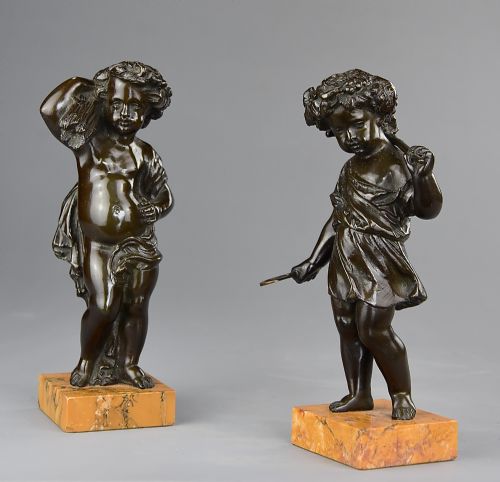
The 19th century cherub category encompasses winged infant figures, often referred to as putti, rendered in European decorative arts and sculpture. These sculptural and functional items include mantel clocks, candlesticks, bronze figures, wall lights, and porcelain vases from Victorian and continental workshops.
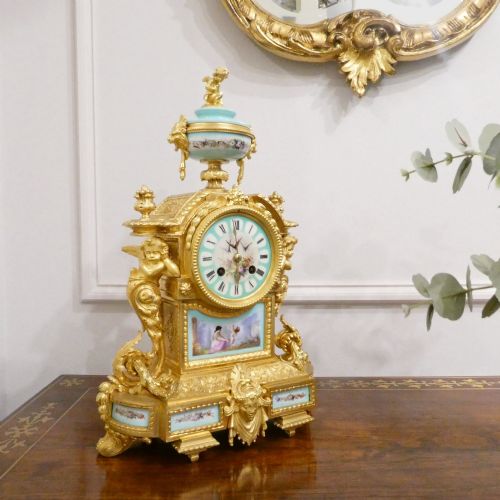
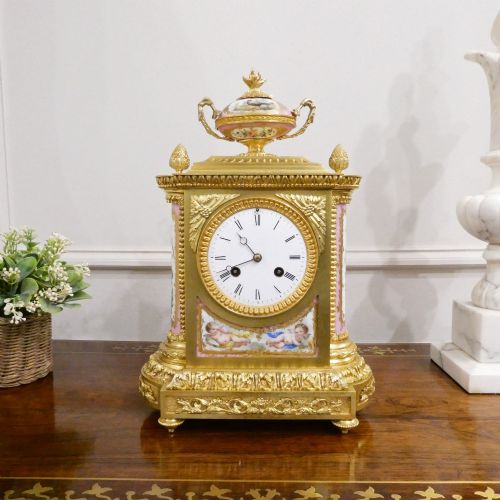
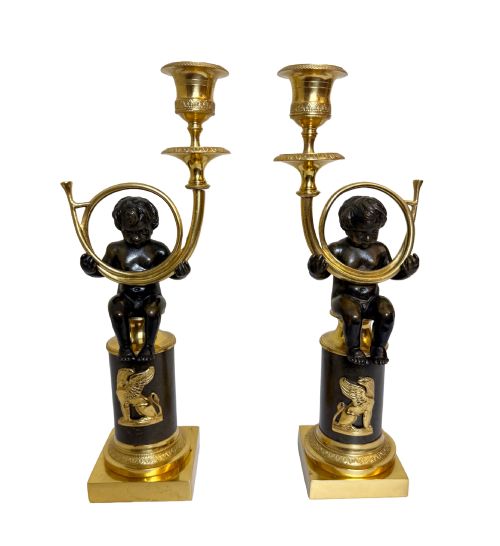
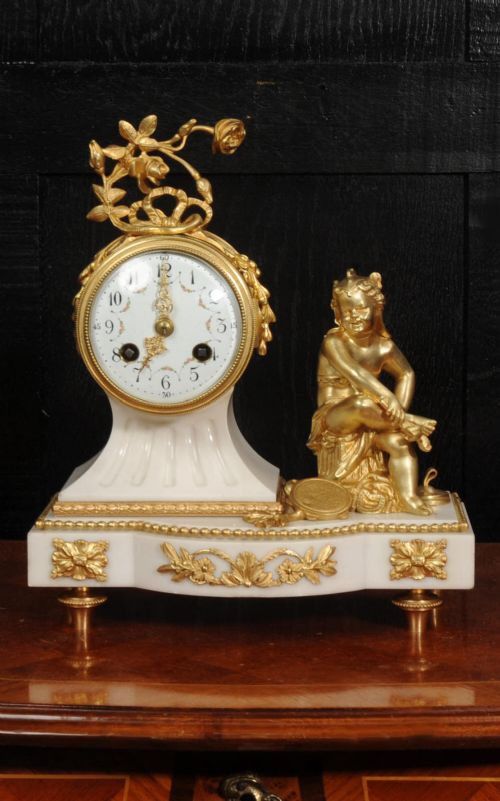
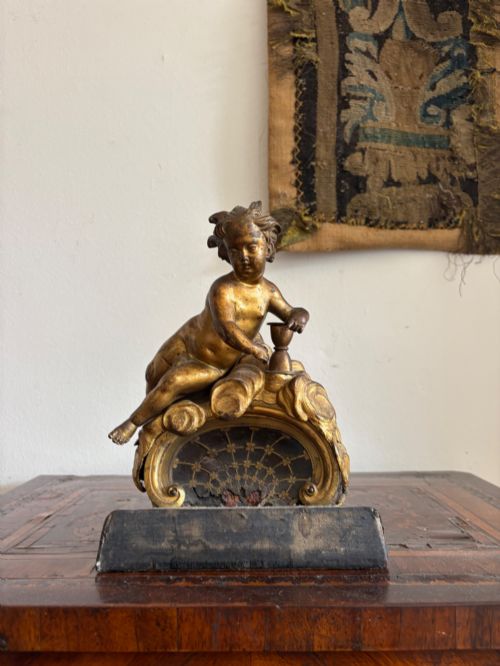
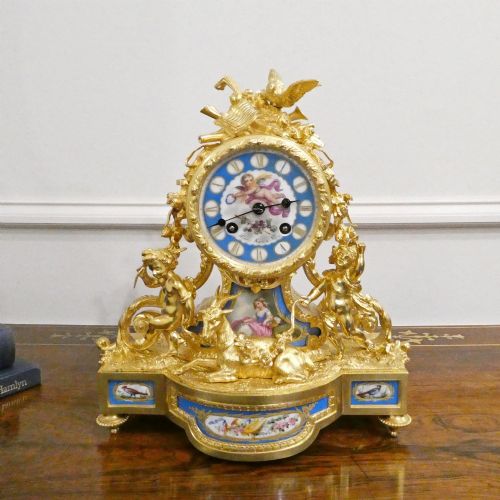
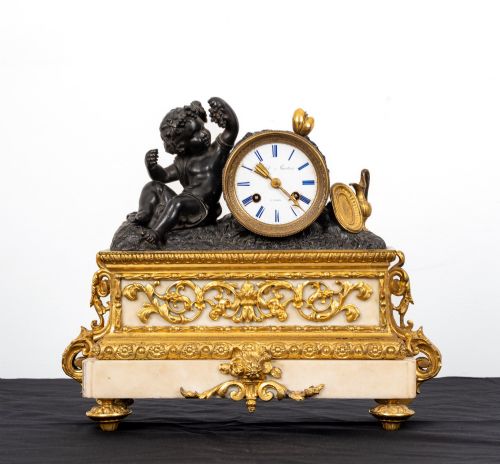
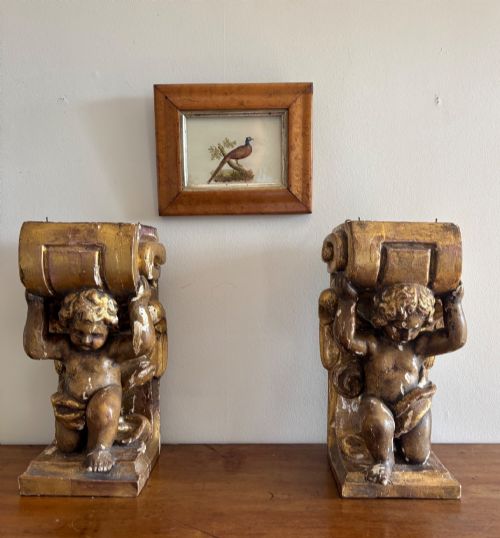
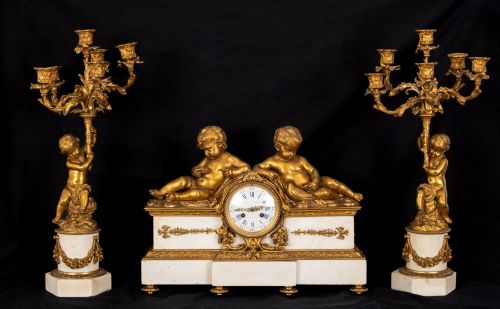
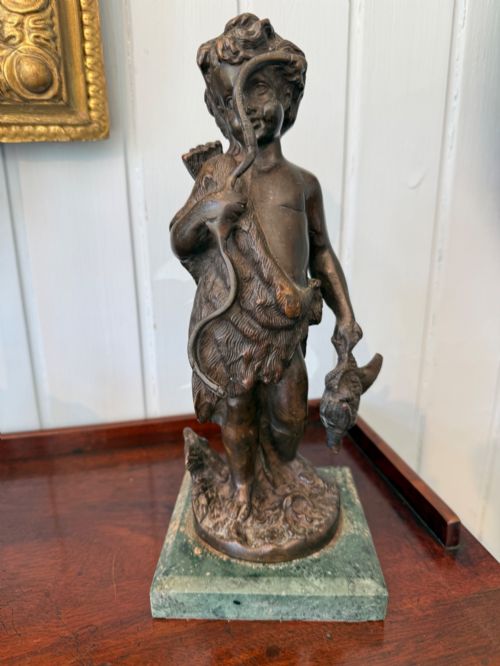
Buyers frequently encounter French gilt bronze or ormolu mantel clocks and candelabra featuring cast infant figures supporting timepieces or candle nozzles. Italian Grand Tour bronzes and carved wooden wall sconces also appear regularly across the selection.
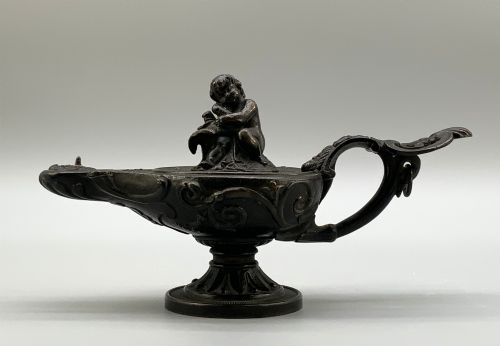
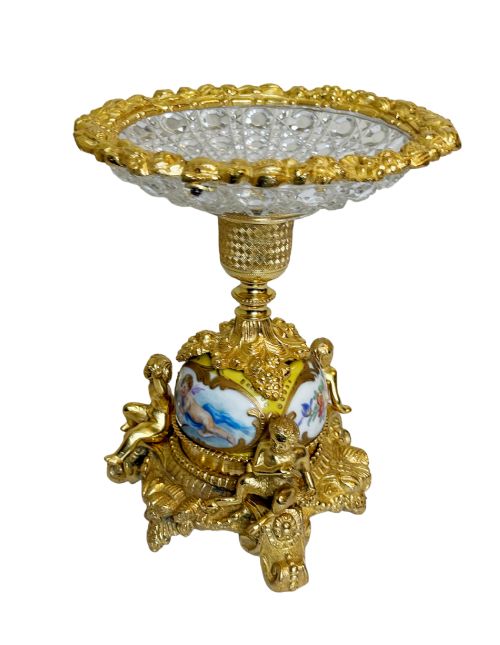
Works range from small domestic ornaments to monumental mantel garnitures and mirrors adorned with winged infant reliefs. Many pieces integrate cherub motifs into functional household objects such as oil lamps, centrepieces, and desk blotters.
Materials and Techniques
Foundries utilised bronze, gilt bronze, and ormolu for figural casts, frequently combining metal components with white or coloured marble bases. Ormolu involved applying a finely ground high-carat gold amalgam to a bronze base, which was then fired to drive off the mercury and leave a rich metallic sheen.
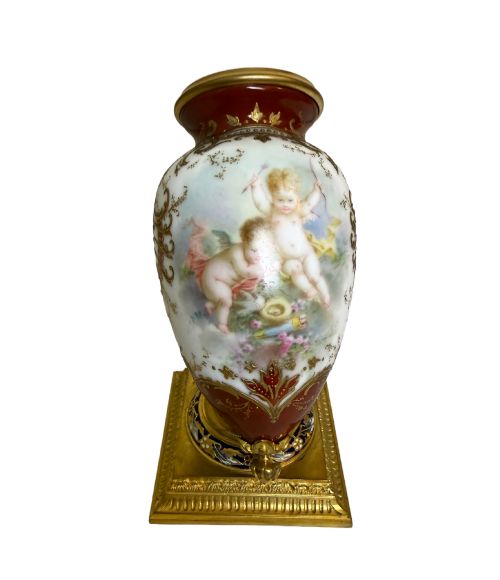
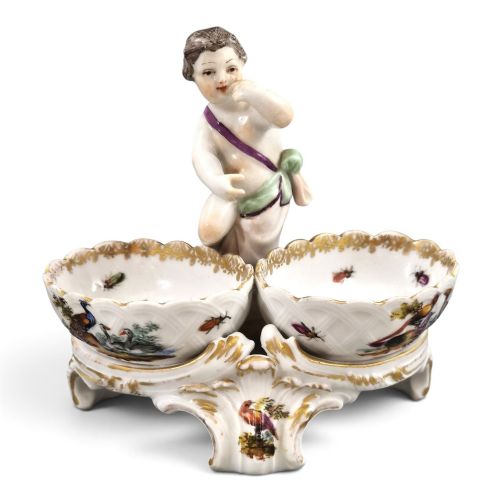
Ceramic pieces incorporate hard-paste porcelain and majolica, decorated with hand-painted details and glazed surfaces produced by continental factories like Sèvres, Meissen, KPM Berlin, and Samson Paris. Carved items showcase timber such as walnut, limewood, and oak, alongside cast spelter and patinated brass.
Listings feature 19th-century pieces spanning gilt bronze, ormolu, marble, porcelain, and carved wood across mantel clocks, sculptures, and wall lights.
Assessing Quality and Execution
The integration of materials dictates overall grade, such as heavy fire-gilded ormolu paired with genuine statuary marble versus lighter brass elements on composite bases. Signed movements by notable clockmakers or documented foundry marks provide additional assurance of period execution.
Japy Freres·Henry Marc·Siffel Cartier·Clement Messier·Antonio Canova·KPM Berlin·Minton·Samson Paris
The 19th Century Cherub Glossary
- Ormolu
- Gilt bronze produced by applying a mercury-gold amalgam to cast bronze and heating the piece to vaporise the mercury. This technique creates a durable, warm golden finish characteristic of French decorative items.
- Putto
- A plump, often winged infant motif derived from classical art and widely adopted during the Renaissance and later revival periods. In 19th-century works, putti appear singly or in pairs supporting clocks, candelabra, and mirrors.
- Spelter
- An alloy of zinc and lead cast as a lower-cost alternative to bronze, frequently painted or bronzed to imitate heavier metal. It is commonly found in 19th-century sculptural ornaments and urns.
- Garniture
- A set of matching ornamental objects for a mantelpiece or sideboard, typically comprising a central clock flanked by matching candelabra or vases. These sets frequently incorporate figural cherub mounts.
- Campana
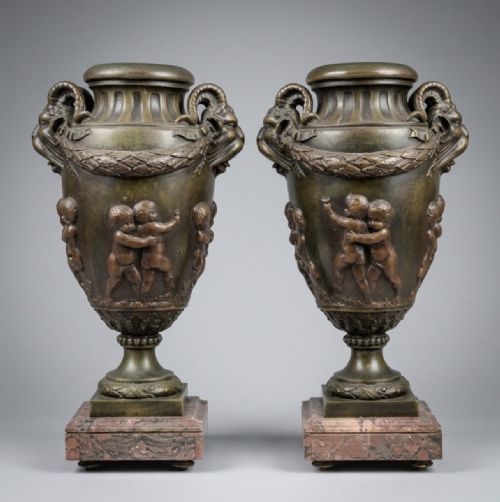
- A classical bell-shaped urn form derived from ancient Roman pottery. These vessels appear frequently in 19th-century bronze and iron work decorated with cast handles or relief cherub friezes.
19th Century Cherub: Frequently Asked Questions
What is the difference between a cherub and a putto?
Art historical terminology distinguishes between religious cherubim and secular putti, though 19th-century makers used both terms interchangeably for winged infant figures. Putti derive from classical mythology and appear in decorative contexts like harvest allegories and love scenes.
Religious cherubim stem from biblical imagery, yet marketplace items from this era predominantly feature the secular, playful putto form across clocks, mirrors, and candelabra.
How do I care for gilt bronze and ormolu?
Gilt bronze and ormolu require gentle dusting with a dry, soft microfibre cloth to prevent accumulation of particulate matter. Avoid abrasive cleaners, polishes, or chemical solvents that strip the delicate gold surface.
If the metal requires deeper cleaning, consult a specialist conservator rather than attempting DIY metal polishes, which can permanently damage fire-gilding.
Were these clocks originally working?
Nineteenth-century French mantel clocks operated via pendulum movements driven by spring or weight mechanisms, often signed by makers such as Japy Freres or Henry Marc. Many retain functional movements requiring professional setup and periodic servicing by a horologist.
Some listings offer fully working movements, while others note mechanical status clearly for buyers intending decorative display.
How do I identify French pieces from English ones?
French production often favours fire-gilded ormolu, Sevres porcelain panels, and intricate Rococo or Empire revival styling on clocks and candelabra. Makers marks stamped on clock movements or bronze bases usually indicate Parisian foundry origin.
English pieces from the same era frequently utilise limewood, cast iron, or silvered overmantle mirrors, often displaying characteristic Victorian revival motifs and domestic joinery methods.