
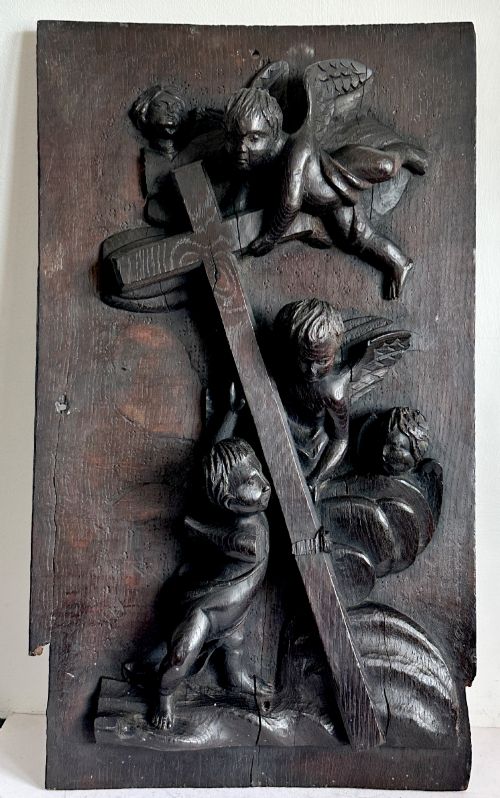


Carved Church Cherub
These carved church cherub figures bring devotional history straight into a room, offering genuine antique character.
Carved Church Cherub
When someone searches for a carved church cherub, they are looking at religious sculptures, wall reliefs, and architectural fragments taken from European ecclesiastical settings. These objects range from single cherub heads and putti to large angels and reading stands.
The versions most commonly met on this page date from the seventeenth, eighteenth, and nineteenth centuries. They appear in forms such as wall sculptures, pricket sticks, and lecterns, reflecting Baroque, Gothic, and Victorian stylistic influences.
How they were made
Carvers shaped these figures primarily from timbers such as oak, limewood, and general carved wood, working by hand with chisels and gouges. The choice of wood dictated the depth of the relief and the crispness of the final detail.
Many surfaces received applied finishes like gold leaf, gesso, polychrome paint, or giltwood to enhance the visual impact under candlelight. Metal elements such as brass work occasionally integrated with the timber structures.
Italian and French Baroque styles dominate the sculptural forms recorded in these listings.
What varies in quality
The survival of original surface treatments, whether polychrome paint or gold leaf, heavily influences the integrity of a piece. Later overpainting or stripped timber alters the original visual relationship between the wood and its finish.
The Carved Church Cherub Glossary
- Putto
- A figure of a small winged infant, frequently appearing in art from the Renaissance onwards. They are often synonymous with cherubs in secular and religious contexts.
- Polychrome
- Painted in several colours, typically applied to wood or stone sculpture. This technique added realism and devotional emphasis to ecclesiastical carvings.
- Gesso
- A plaster-based mixture used as a smooth surface preparation for gilding or painting on wood. It allows for fine detail work beneath gold leaf.
- Pricket stick
- A type of candlestick featuring a sharp metal spike at the top to secure a candle. They often form part of altar furnishings.
- Giltwood
- Wood that has been covered with a thin layer of gold leaf or gold paint. This finish provided a rich, reflective quality in dim church interiors.
Carved Church Cherub: Frequently Asked Questions
What is a carved church cherub?
A carved church cherub is a wooden sculptural representation of an angelic infant or head, originally created for religious architecture or furnishings. These pieces served devotional and decorative roles within European churches.
They appear as wall reliefs, freestanding figures, or decorative elements on liturgical furniture like lecterns and alter structures.
How were these cherubs used originally?
Ecclesiastical cherubs and angels were integrated into church interiors to inspire devotion and signify heavenly presence. They adorned altars, rood screens, choir stalls, and reading stands.
Over time, many of these architectural elements were detached from their original settings and preserved as standalone works of art.
How do I live with an antique cherub?
Displaying a carved church cherub works well on a mantelpiece, mounted securely on a wall, or placed on a sturdy surface where the carving can be appreciated up close. Keeping them away from direct heat sources protects the aged wood and delicate finishes.
Pairing these historic wooden sculptures with simple modern interiors creates a striking contrast between old craftsmanship and contemporary space.
How can I tell the centuries apart?
Seventeenth-century pieces often display robust Baroque forms carved from heavy oak or limewood, showing deep tool marks. Eighteenth-century examples frequently feature dynamic movement and elaborate gilding or polychrome surfaces.
Victorian interpretations often draw on Gothic revival styles, combining historic motifs with nineteenth-century manufacturing techniques and brass elements.