


19th Century Ceramic Tableware
These pieces of 19th century ceramic tableware offer a tangible connection to the dining rooms of the Georgian, Regency, and Victorian eras.
19th Century Ceramic Tableware
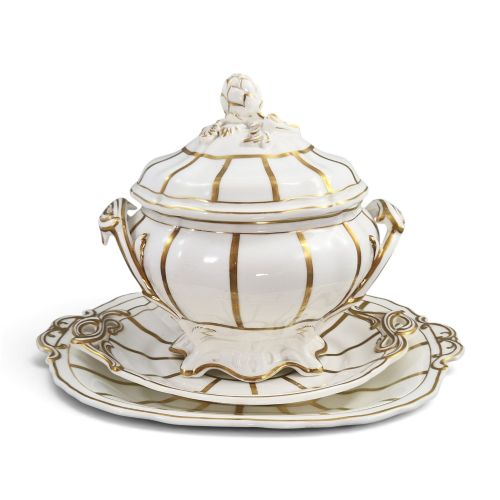
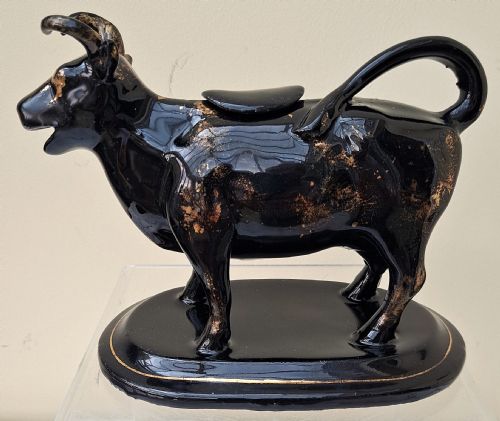
When searching for 19th century ceramic tableware, a buyer encounters a diverse array of utilitarian and decorative items designed for formal dining and display. These items include large dinner services, dessert sets, serving platters, soup tureens, and specialised vessels such as spoon warmers and cheese dishes.
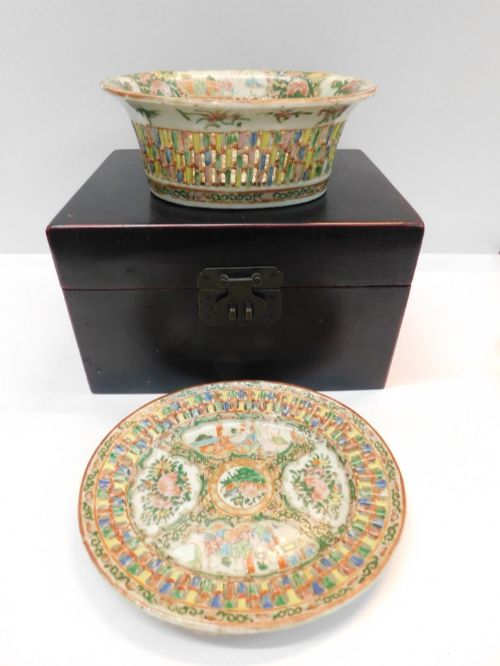
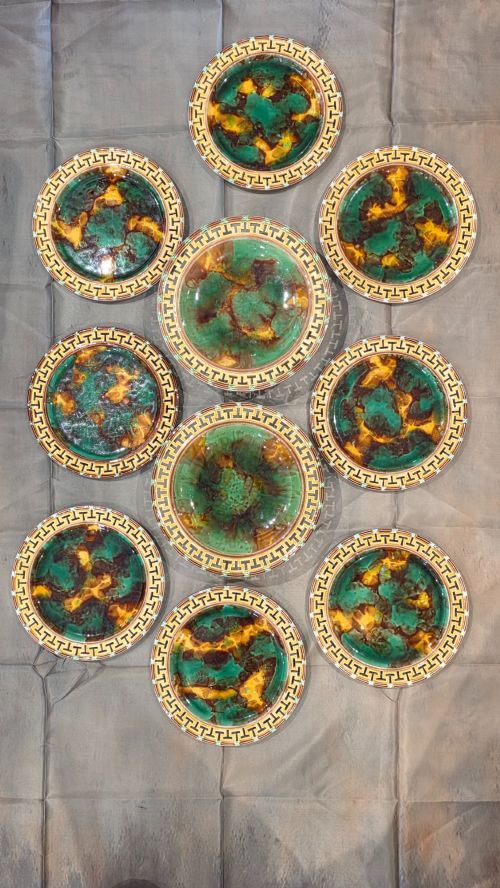
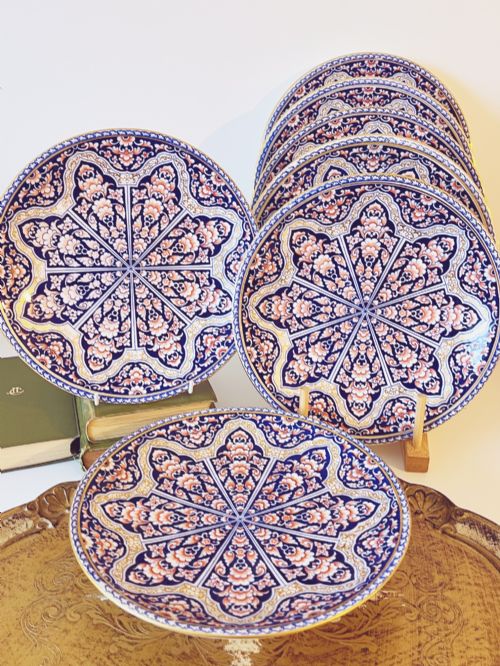
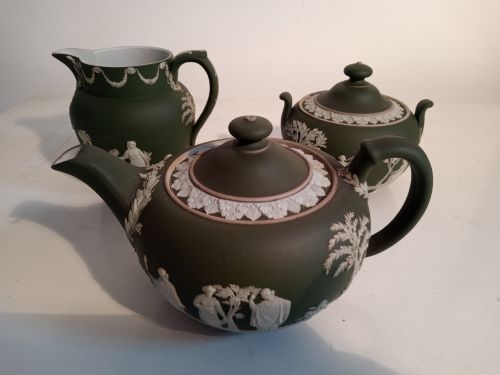
The objects originate from major English potteries alongside continental and Asian workshops, spanning the Georgian, Regency, and Victorian periods. Most frequently, this selection provides porcelain, ironstone, and earthenware pieces decorated with hand-painted motifs, transfer printing, and majolica glazes.
How they were made
Potters of the 19th century utilised earthenware, bone china, porcelain, and heavy ironstone bodies to shape practical vessels for the table. Artisans then applied colourful glazes, enamel decoration, and gold leaf highlights to enhance the visual appeal of the ceramics.
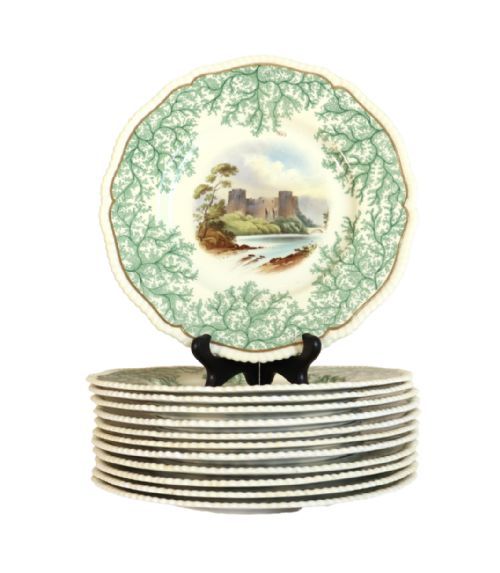
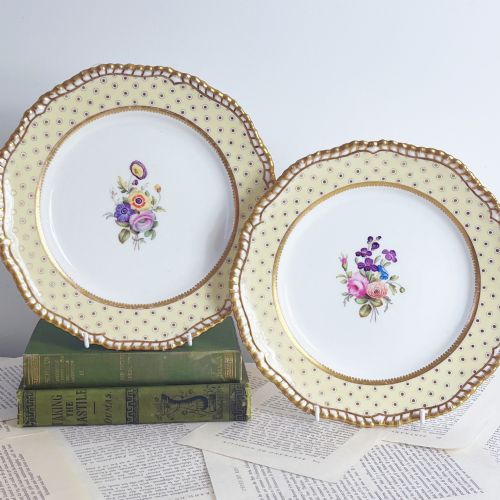
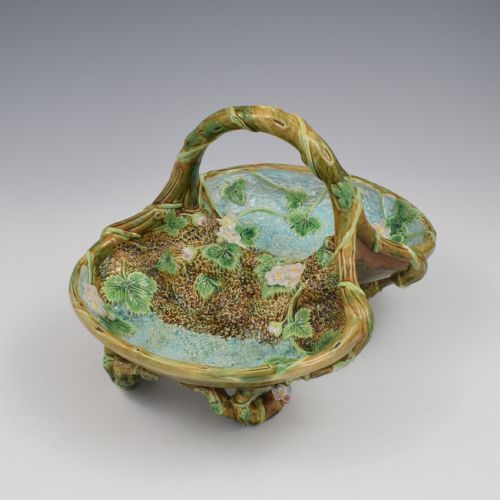
Techniques ranged from transfer printing in blue and white to intricate hand-painted botanical or floral scenes, often finished with moulded relief details in styles such as majolica and Rococo Revival.
Listings feature dessert services, tureens, and plates utilising earthenware, porcelain, ironstone, and majolica across the Georgian and Victorian periods.
What varies in quality
The refinement of the ceramic body and the skill of the hand-painting set exceptional services apart from standard utilitarian ware. Crispness in moulded relief work and preservation of delicate gilt handles or enamel details indicate superior craftsmanship.
Completeness within large sets, such as matching dessert services with matching comports and plates, dictates desirability among collectors.
Grainger Lee And Co·Spode·Wedgwood·Royal Crown Derby·Davenport Bone China·George Jones·Copeland·Mintons·Rockingham Pottery·Coalport·Ridgways China·Royal Worcester·Kuznetsov·Flight Barr And Barr·Jacob Petit·Mason Ironstone·Chamberlain Worcester
The 19th Century Ceramic Tableware Glossary
- Ironstone
- A patented ceramic body developed to be durable and heavy while mimicking porcelain. It became a staple for robust nineteenth century dinner services.
- Majolica
- A pottery style featuring colourful, lead-glazed earthenware with moulded naturalistic or sculptural relief. It gained immense popularity during the Victorian period.
- Comport
- A raised dish or bowl placed centrally on a table to serve fruit or small desserts. These often form the centrepiece of a nineteenth century dessert service.
- Transfer printing
- A method of applying intricate designs to ceramics by engraving a copper plate and transferring the ink via tissue paper. This technique allowed for consistent patterned tableware.
- Felspar
- A type of porcelain body introduced by manufacturers to improve durability and translucency. It frequently appears in dessert and tea wares from the early nineteenth century.
19th Century Ceramic Tableware: Frequently Asked Questions
How were soup tureens used?
Soup tureens served as the central vessel for holding and presenting broth or soup at the dining table during formal meals. Servants would ladle the contents from the tureen directly into individual soup plates for guests.
These large covered containers often sat on matching stands to protect the table linens from heat and drips. Many surviving examples retain matching ladles designed specifically for serving.
What is a cheese dish used for?
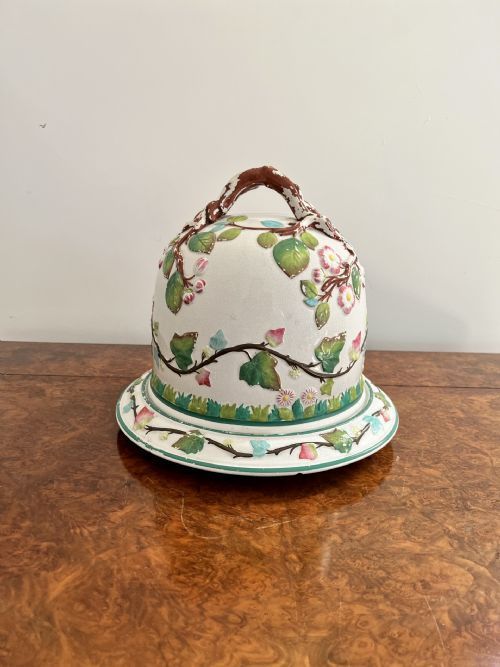
Cheese dishes and domes functioned to keep wedge-shaped blocks of cheese fresh on the Victorian sideboard or dining table. The heavy ceramic cover trapped moisture and protected the cheese from insects and dust.
Often decorated with vibrant majolica glazes and naturalistic plant motifs, these pieces served both a practical preservation role and an ornamental display function.
How do I identify a dessert service?
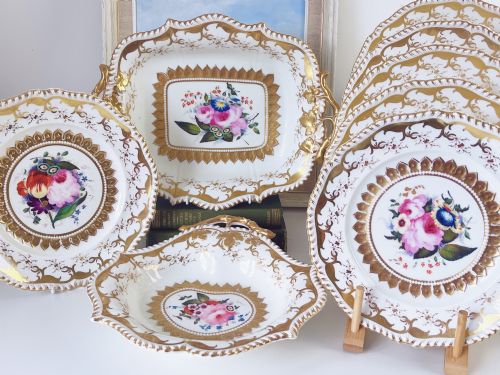
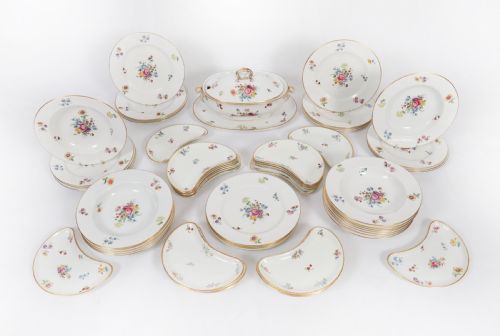
A dessert service typically comprises a collection of matching plates accompanied by raised comports or serving baskets. These sets were brought out at the conclusion of a formal dinner for the final sweet course.
Evidence often shows matched sets featuring hand-painted floral designs, botanical specimens, or rich borders designed to impress dining guests.
How can I tell ironstone from porcelain?
Ironstone presents a heavier, opaque ceramic body designed for robust daily use in nineteenth century dining rooms. Porcelain generally offers a thinner, more translucent wall that lets light pass through when held up.
Ironstone also tends to ring with a duller thud compared to the high-pitched chime of fine porcelain.