


Georgian Porcelain Service
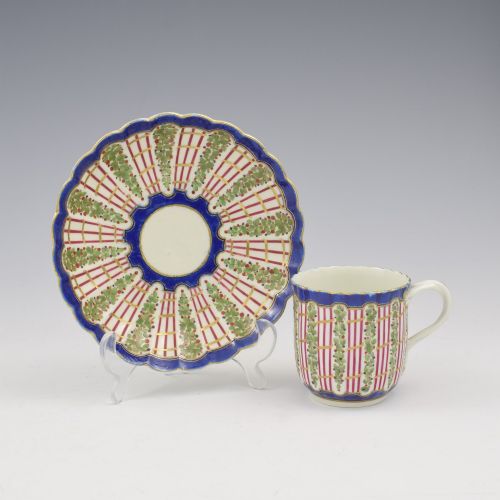
A georgian porcelain service brings tea and dessert tables alive with handpainted enamels, gilt highlights and translucent bodies.
Georgian Porcelain Service
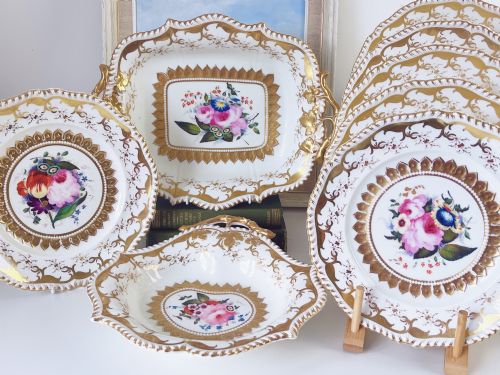
A georgian porcelain service comprises matching sets of tableware designed for social dining and tea rituals across the eighteenth and nineteenth centuries. The pieces on this page span the Georgian, Regency, and early nineteenth-century periods, capturing an era of domestic refinement.
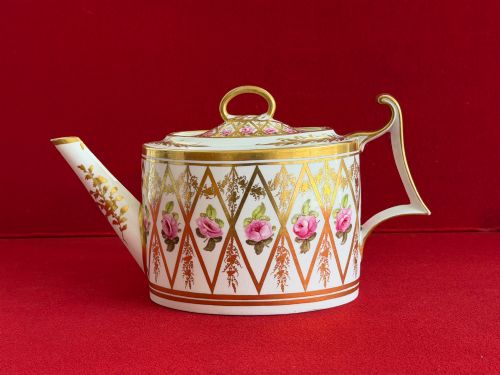
Buyers will encounter functional table components such as teapots, sucriers, dessert services, sugar bowls, and sauceboats. These range from individual cups and saucers to extensive multi-piece dinner and dessert services.
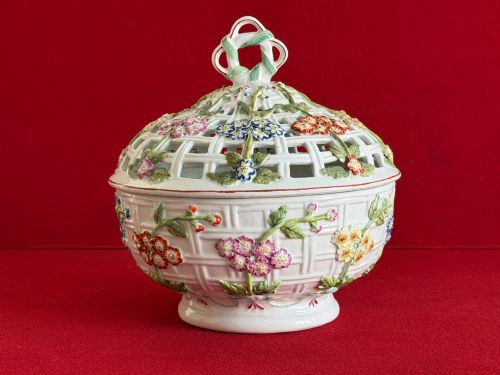
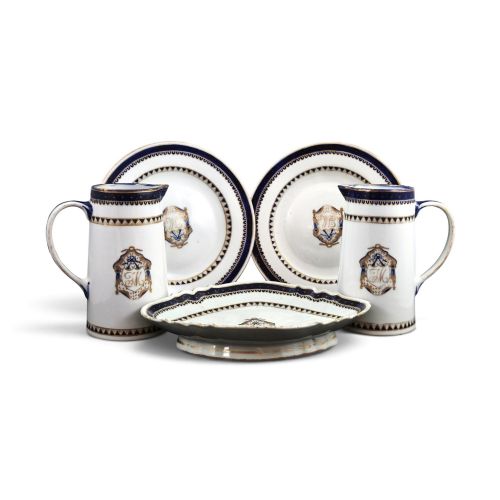
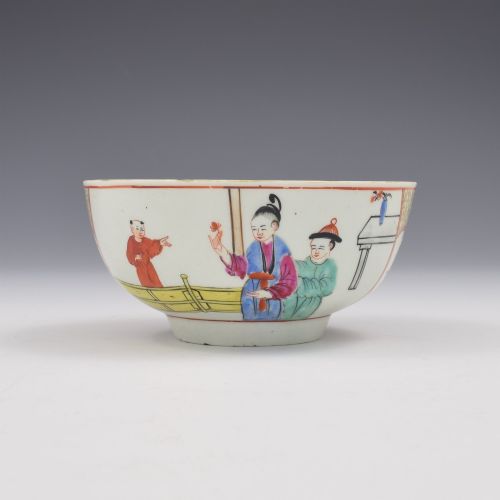
Origins include notable English factories alongside Chinese export pieces made for Western markets. Forms vary from traditional round teapots to triangular platform sauceboats and chestnut baskets.
Materials and construction methods
Maker workshops utilised soft-paste porcelain, earthenware, and ceramic bodies before standard hard-paste formulas dominated. Artisans applied handpainted enamel colours, blue and white transfer printing, and fluid gold leaf gilding to decorate the surfaces.
Specialised techniques involved potting delicate forms like basket weave patterns and shell dishes, followed by precise kiln firings. Overglaze enamels and underglaze blue painting required steady hands and expert furnace control.
Gentlemen in the eighteenth century apparently required dedicated bowls just for slops.
Assessing quality in early ceramics
Quality separates routine factory output from exceptional works through the precision of the potting and the skill of the painting. Handpainted floral panels by named artists command attention over standard transfer-printed sheet patterns.
The crispness of the moulding, the purity of the porcelain body, and the richness of the gilding define the upper tier. Heavier ironstone and earthenware sit alongside translucent soft-paste porcelain bodies, each showing distinct manufacturing ambition.
Grainger Lee & Co·Derby Porcelain·Chamberlains Worcester·Minton·Spode·Rockingham Pottery·Thomas Wolfe·Wedgwood·Coalport
The Georgian Porcelain Service Glossary
- Soft-paste porcelain
- An artificial porcelain composition fired at lower temperatures than true hard-paste porcelain. It yields a warm, slightly creamy body favoured by early English factories.
- Sucrier
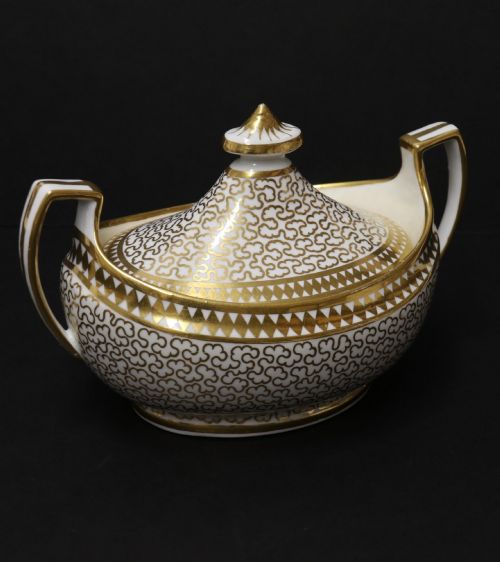
- A covered sugar bowl or sugar box designed to hold loose sugar for tea service. These pieces frequently feature matching covers and decorative knops.
- Enamel
- Opaque vitreous colours fused to the porcelain surface in a muffle kiln. Artisans painted botanical subjects, figures, and patterns using these vibrant mineral pigments.
- Gilding
- The application of gold leaf or gold paint to rims, handles, and borders. Superior examples feature burnished gilding that catches the light.
- Transfer printing
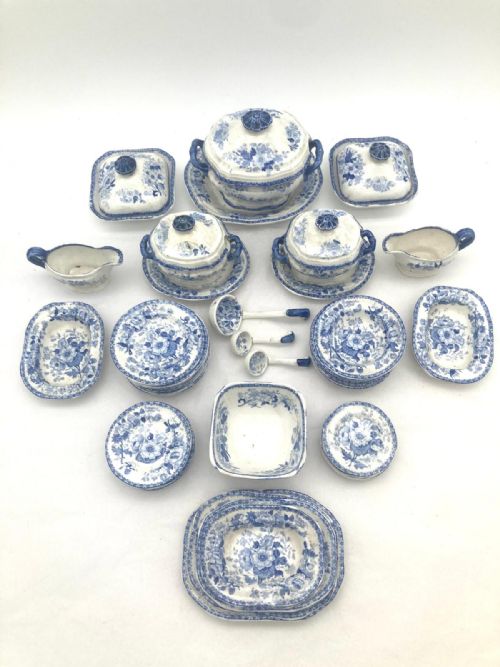
- A mechanical method of applying complex designs to ceramic bodies using engraved copper plates and tissue paper. This technique allowed consistent patterns across large services.
Georgian Porcelain Service: Frequently Asked Questions
How do I date a georgian porcelain service?
Dating relies on factory marks, paste composition, and stylistic shifts between rococo flourishes and regency restraint. Comparing pattern numbers and known operational dates of the manufactory narrows the timeline.
Changes in handle shapes, foot rims, and gilding styles further distinguish eighteenth-century pieces from those produced around eighteen-twenty.
Can I use these services for dining?
These antique ceramics are fragile historic objects best reserved for display or careful, infrequent handling. Thermal shock from hot liquids can stress eighteenth-century soft-paste bodies.
Hand washing in lukewarm water without harsh detergents protects the overglaze enamels and delicate gold leaf from fading over time.
What is the difference between tea and dessert services?
Tea services comprise teapots, cups, saucers, and sucriers intended for beverage service. Dessert services focus on plates, chestnut baskets, and tall dishes for serving fruit and sweet courses.
Dessert plates often feature elaborate handpainted botanical or scenic reserves designed to impress guests during the final course of a meal.