


19th Century Card Box
These 19th century card box pieces are parlour containers for gaming items, holding everything from visiting pasteboards to whist counters.
19th Century Card Box
A 19th century card box serves as a specialised receptacle for gaming accessories and visiting pasteboards. The selection centres on Victorian, Regency, and Georgian forms designed for domestic parlour use.
Most examples appear in woods such as burr walnut, satinwood, and treen, alongside carved sandalwood and sterling silver. These containers range from fitted games boxes to portable card cases.
How they were made
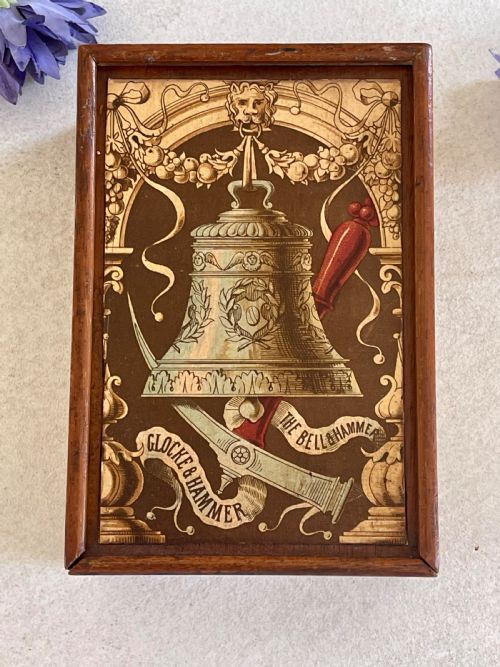
Craftsmen utilised figured timbers like burr walnut and satinwood, often accentuating the grain with brass bindings and hinges. Surface decoration includes hand-painted floral motifs and deep carving seen on Cantonese export sandalwood.
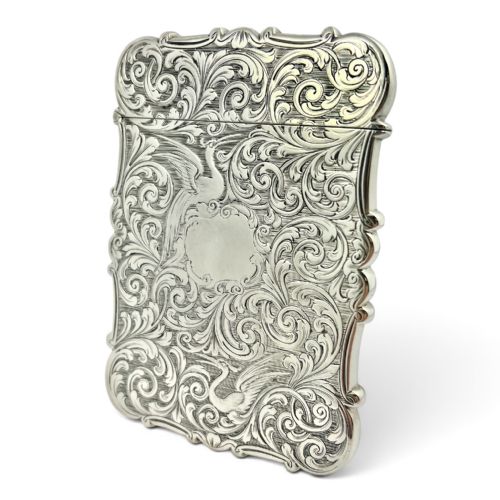
Silver items employ intricate castle top engraving techniques, while specialised wooden containers incorporate Tunbridge-ware mosaic work. Interior arrangements rely on fitted silk and leather linings to secure counters and cards.
One surviving game set comes complete with instructions, ensuring modern owners can finally settle arguments over nineteenth-century rules.
What varies in quality
Quality rests upon the depth and crispness of the carving, particularly on Chinese sandalwood and treen surfaces. Superior brass binding and well-figured timber distinguish finer cabinet work from simpler vernacular pieces.
The integrity of interior fittings, including original silk linings and complete sets of whist counters, elevates an object. Signed maker details and precise joinery separate standard workshop output from exceptional examples.
Nathaniel Mills·George Betjemann
The 19th Century Card Box Glossary
- Treen
- Small handmade wooden domestic objects. These items showcase traditional turning and carving skills.
- Tunbridge-ware
- Small wooden objects decorated with mosaic woodwork. Tiny wood tiles form geometric and pictorial patterns.
- Cantonese Export
- Goods manufactured in China specifically for Western markets. These pieces feature characteristic deep carvings of figures and gardens.
- Castle Top
- A style of silver card case featuring a raised depiction of a famous building. Nathaniel Mills famously produced these detailed pieces.
- Ecarte
- A card game popular in the nineteenth century. Boxes specified for this game often contain fitted compartments for counters.
19th Century Card Box: Frequently Asked Questions
What fits inside a card box?
These boxes accommodate playing cards, visiting pasteboards, bone or porcelain whist counters, and occasionally dice. Interiors often feature partitioned wooden sections to keep gaming accessories organised during parlour use.
Smaller cases protect thin visiting cards from bending, while larger boxes house complete sets for evening games.
How do I identify a Regency box?
Regency boxes typically exhibit clean neoclassical lines, painted floral decorations, and lighter wood veneers such as satinwood. They predate the heavier carved walnut styles popular in later decades.
Hardware on these earlier pieces tends to be restrained and elegant.
What is treen?
Treen refers to small, functional wooden household items shaped by turning on a lathe or by hand carving. In card boxes, this term describes utilitarian holders made from plain or painted woods.
These pieces value simple utility alongside natural grain patination.
Why are some boxes brass bound?
Brass banding reinforced the corners and edges of high-end games boxes against heavy use. This metalwork also provided a decorative contrast to dark timbers like walnut.
Cabinets with robust brass work usually indicate better workshop construction.