

19th Century Candelabrum
When choosing a 19th century candelabrum, you select a sculptural metal lighting piece designed to bring layered illumination and nineteenth-century grandeur to a room.
19th Century Candelabrum
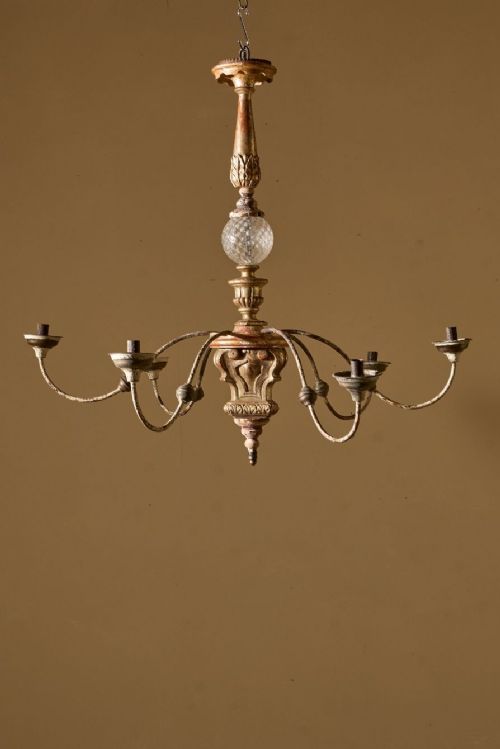
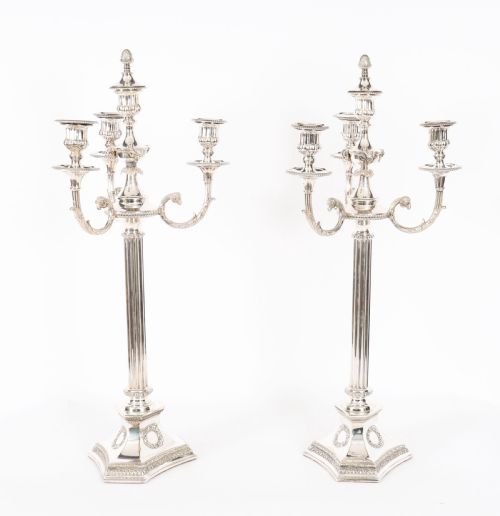
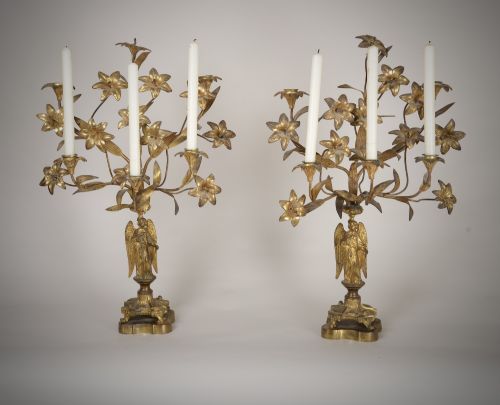
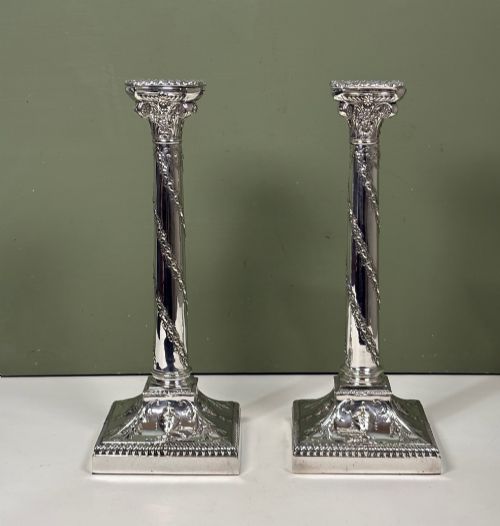
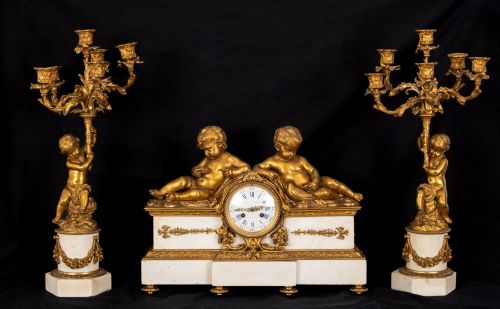
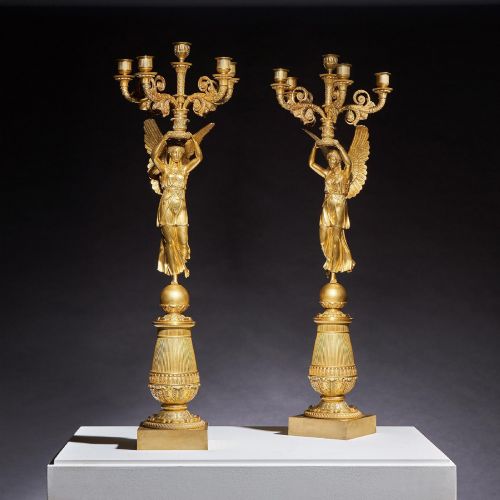
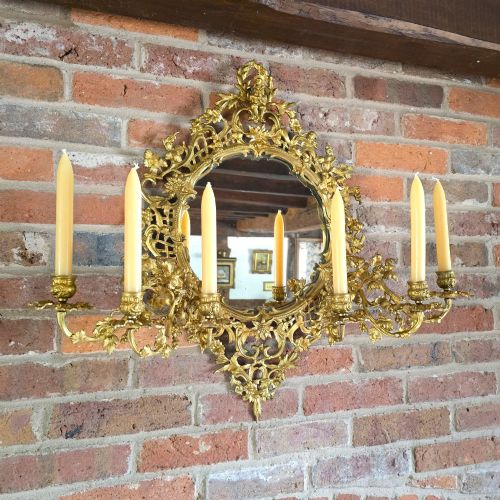
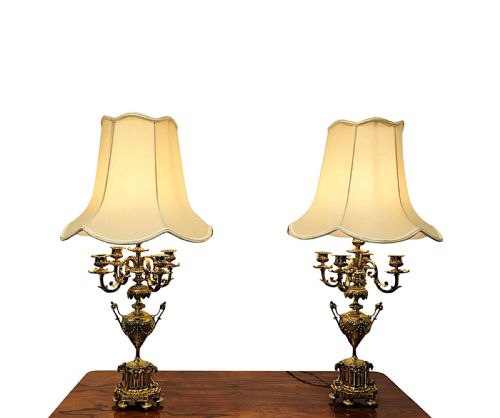
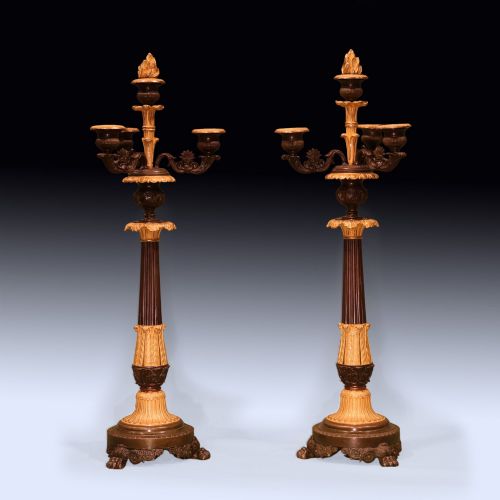
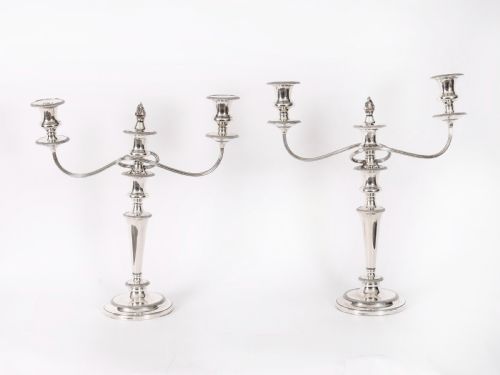
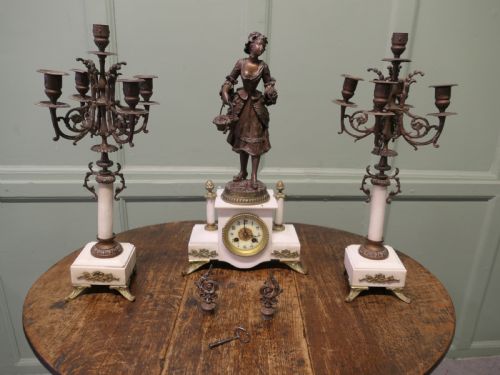
A 19th century candelabrum provides multi-branched lighting and frequently appears alongside matching garniture clocks in pairs. The forms seen here span French Empire, Rococo Revival, Gothic Revival, and Regency styles, reflecting the diverse aesthetic tastes of the period.
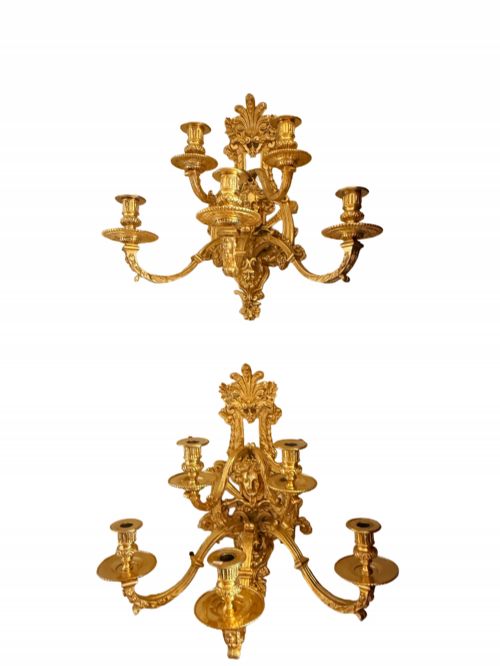
Most examples originate from French workshops or English makers, taking the form of free-standing table pieces, wall sconces, or clock garniture components. They range from simple two-branch brass designs to monumental sixteen-light chandeliers and bronze figures.
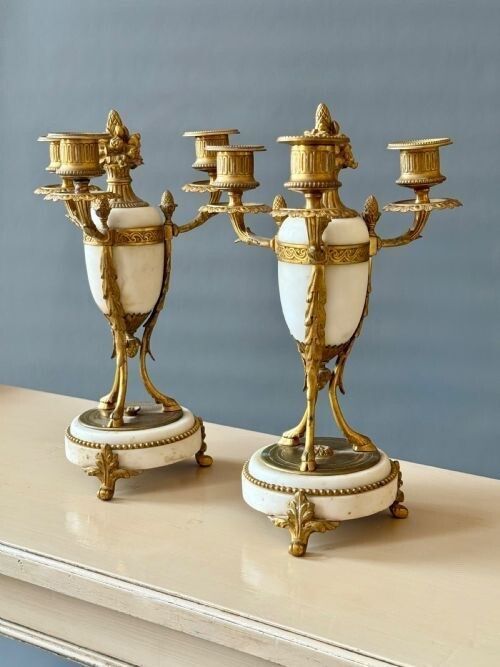
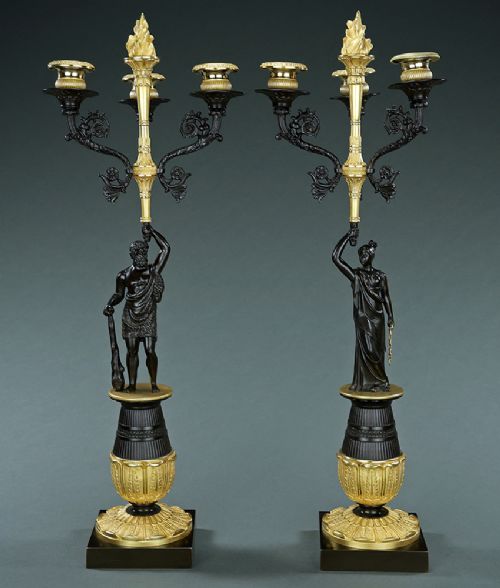
Buyers encounter materials such as gilt bronze, ormolu, marble, and patinated bronze, often formed as cherubs, classical figures, or animals. These branched candle holders served both practical illumination and decorative display within nineteenth-century interiors.
Materials and construction methods
Metalwork forms the core of these pieces, employing bronze, brass, and silver plating shaped through casting and chasing. Gilt bronze and ormolu applications provide a golden surface finish through the mercury gilding process or electroplating.
Combination with other media is frequent, utilising white marble bases, enamel details, champleve work, and glass elements such as Murano drops. Components are typically cast in sections and secured together with threaded pins and bolts.
Stag and doe figures occasionally support the candle sockets, bringing woodland creatures to the mantelpiece.
Factors determining quality
The integration of mixed materials also signals quality, such as heavy statuary marble plinths, substantial bronze weight rather than hollow thin brass, and well-preserved mercury gilding that retains its varied matte and burnished textures.
Pierre Philippe Thomire·Garrard & Co·Rabiat
The 19th Century Candelabrum Glossary
- Ormolu
- Gilt bronze created by applying a mixture of gold and mercury to a bronze base, then heating to drive off the mercury. This technique produces a durable golden finish characteristic of French decorative arts.
- Garniture
- A set of matching decorative objects designed to be displayed together on a mantelpiece. These sets typically comprise a central clock flanked by matching candelabra or urns.
- Pricket
- A sharp metal spike on a candlestick or candelabrum designed to impale the base of a candle. This form appears frequently on early examples and ecclesiastical lighting.
- Champleve
- An enamelling technique where troughs or cells are hollowed out in the metal surface and filled with vitreous enamel powder before firing. The resulting coloured patterns decorate the bronze framework.
- Retour d'Egypte
- A design style inspired by Napoleon's campaign in Egypt, incorporating motifs such as sphinxes, pharaohs, and classical military trophies. It forms an early nineteenth-century subset of the Empire style.
19th Century Candelabrum: Frequently Asked Questions
What is a candelabrum?
A candelabrum is a decorative branched lighting fixture designed to hold multiple candles simultaneously. Unlike a standard candlestick with a single nozzle, these pieces feature arms spreading from a central stem.
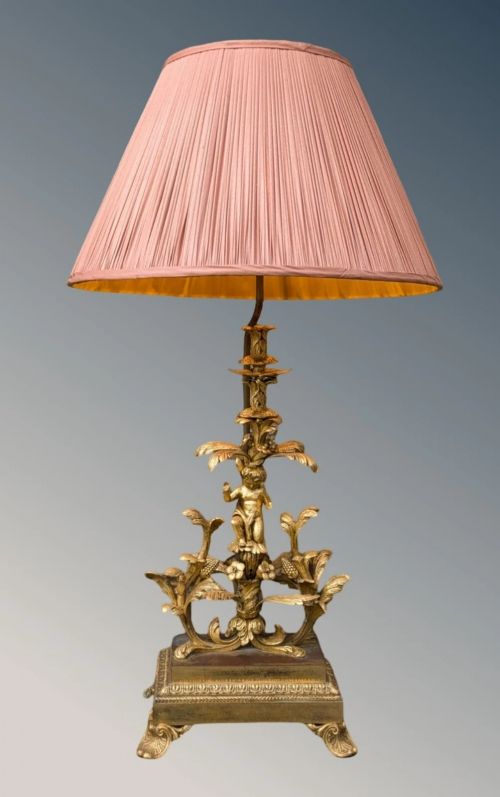
Nineteenth-century versions often incorporate figural bases, such as cherubs or mythological figures, supporting several candle cups. They were manufactured as decorative focal points for dining tables, sideboards, and mantelpieces.
How were they used?
These pieces provided ambient lighting in grand interiors before the widespread adoption of electricity. Placed in pairs on mantelpieces or console tables, they reflected candlelight off mirrors and polished surfaces.
Many surviving examples formed part of garniture sets flanking mantel clocks. In modern settings, they continue to function as decorative table centrepieces or candle holders.
How do I identify French styles?
French nineteenth-century lighting often follows distinct historical revivals such as Louis XVI, Rococo, or Empire. Empire pieces display military motifs, classical drapery, and patinated bronze figures contrasted with ormolu.
Rococo revival designs feature asymmetrical scrolling foliage, naturalistic curves, and shell motifs. Examining the cast ornamentation and material combinations reveals the specific design vocabulary employed by the maker.
Can they be electrified?
Many nineteenth-century lighting fixtures have been converted to table lamps or wired for electric bulbs over time. Converted pieces retain their original bronze or brass structure while accommodating internal wiring.
Buyers find both unconverted candle-holding examples and those adapted for modern electrical use. Professional rewiring allows historic metalwork to serve safely as functional lighting.