

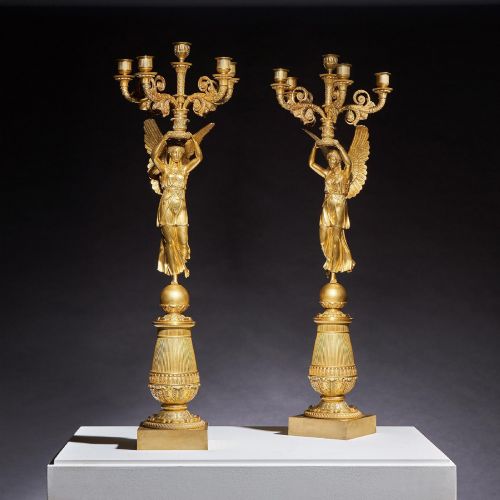
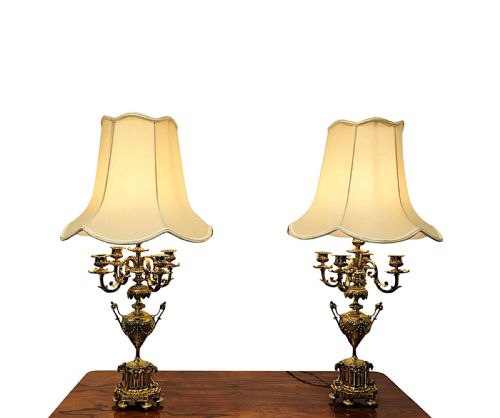
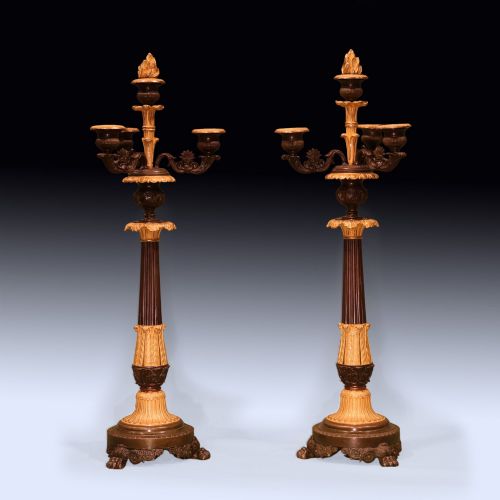
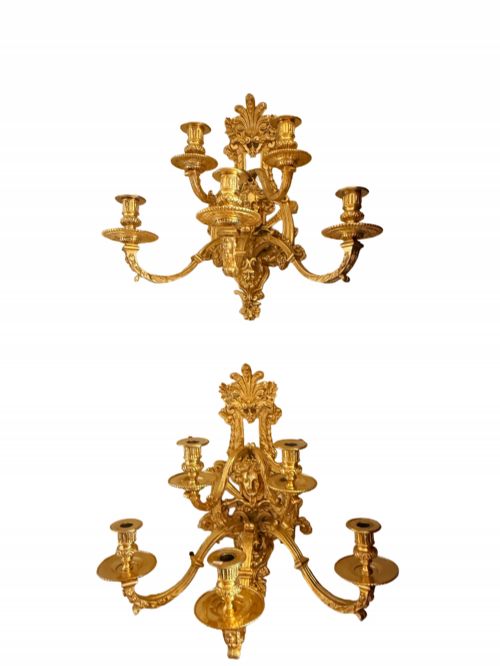
19th Century Candelabra Pair
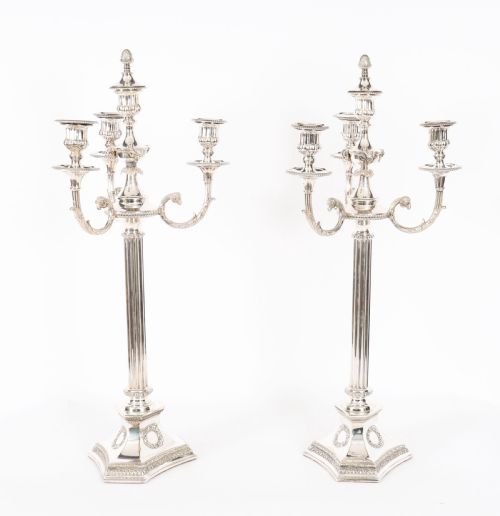
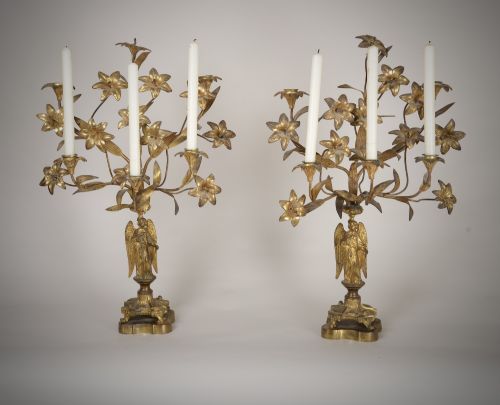
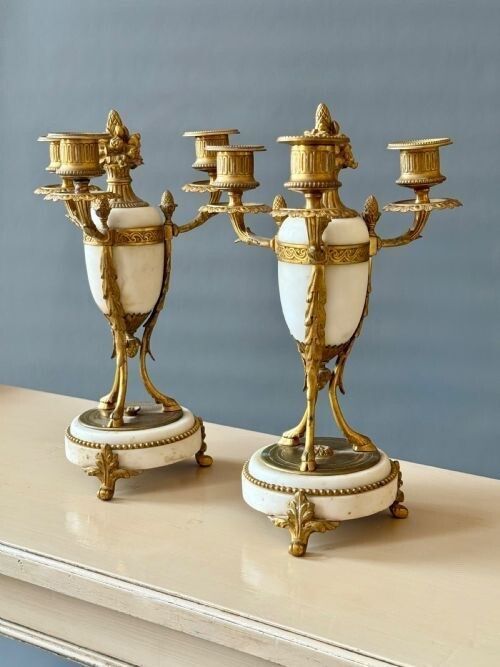
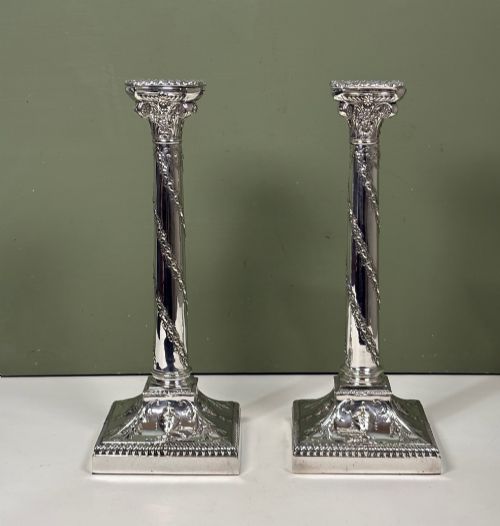
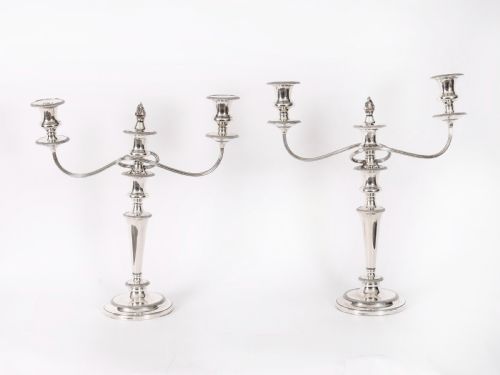
These 19th century candelabra pair pieces bring sculptural presence and period illumination to a mantelpiece or side table.

19th Century Candelabra Pair
A 19th century candelabra pair consists of matched multi-light candleholders designed for formal display and illumination during the Victorian and Regency periods.
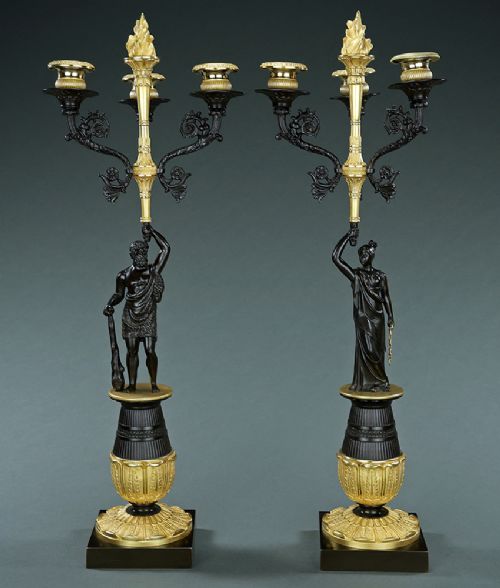
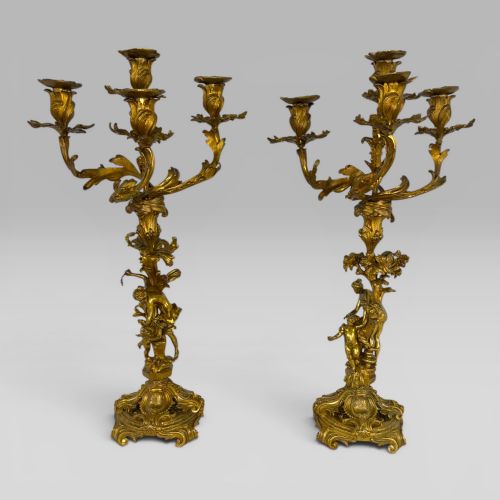
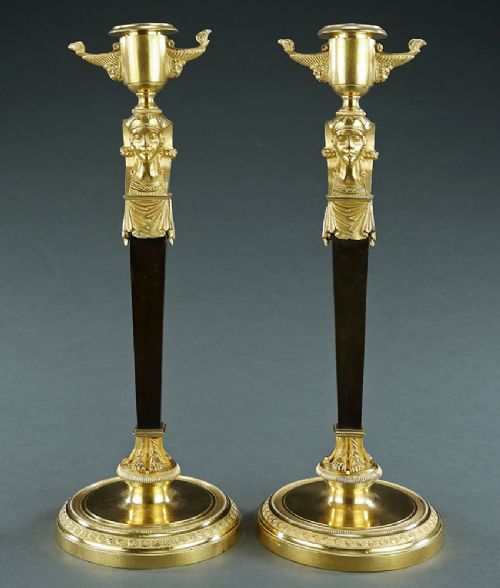
The selections on this page span French Empire, Gothic Revival, and Rococo styles, executed in forms ranging from simple branch arrangements to figural groupings.
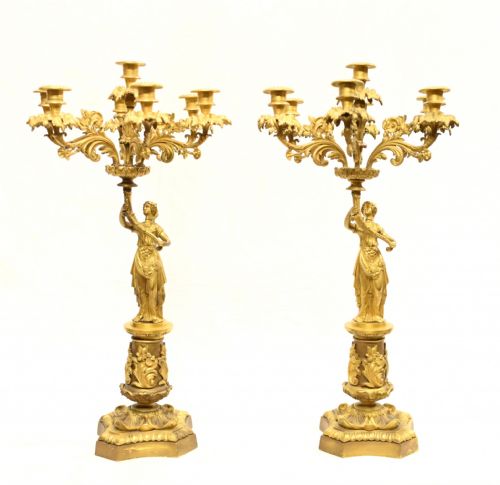
Buyers frequently encounter candelabra featuring cast bronze, gilded brass, or porcelain figures standing upon architectural marble bases.
How they were made
Makers utilised metal-casting techniques such as lost-wax casting to produce intricate bronze and brass components, later finishing surfaces with mercury gilding or applied patination.
Many examples combine heavy cast metals with carved white marble, slate, or porcelain elements, held together by internal threaded rods and securing nuts.
Details like leaves, cherubs, and animal forms were hand-chased after casting to sharpen edges and add texture before final assembly.
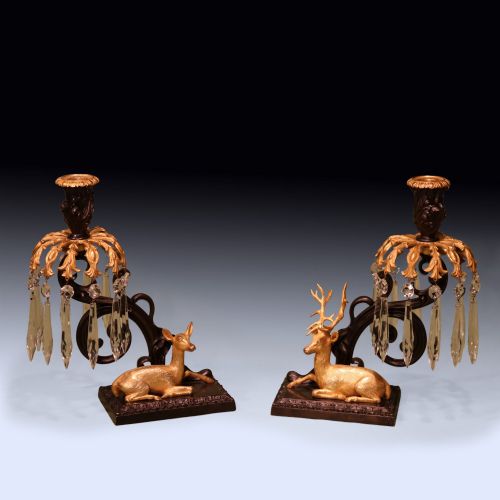
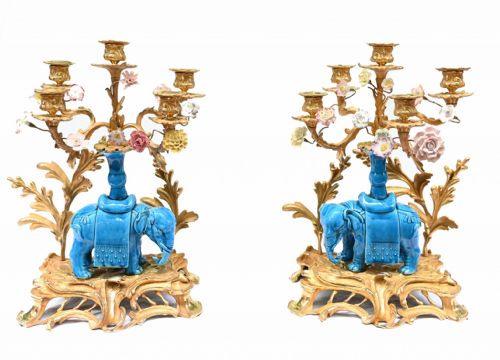
Certain candelabra pairs feature porcelain elephants and stag-and-doe figures serving as the central stem for candle branches.
What varies in quality
The crispness of the chasing and the depth of the original mercury gilt separate mass-produced items from superior workshop productions.
Substantial weight from dense bronze or solid brass components indicates better construction, contrasted with thin stamped metal or hollow substitutes.
Attribution to documented makers or specific periods relies on the precision of the casting and the integration of secondary materials like marble and porcelain.
Pierre Philippe Thomire·Garrard & Co·Rabiat·Elkington & Co
The 19th Century Candelabra Pair Glossary
- Ormolu
- Gilded bronze, produced by applying a mercury and gold amalgam to a bronze base and heating it until the mercury vaporised. This finish yields a warm, deep yellow lustre distinctive of high-end French decorative objects.
- Patinated bronze
- Bronze treated with chemical solutions to darken or colour the surface deliberately. It provides contrast against bright ormolu mountings in figural and architectural designs.
- Champleve
- An enamelling technique where troughs are dug into a metal surface and filled with vitreous enamel powder before firing. It appears on decorative stems and bases in late period pieces.
- Girandole
- A branched wall sconce or candelabrum featuring reflective backplates or glass crystal drops. These elements multiply the ambient light cast by the candles.
- Candelabrum
- A branched candlestick holding multiple lights from a single central stem. The plural form candelabra is commonly used for both single pieces and matched pairs.
19th Century Candelabra Pair: Frequently Asked Questions
How can I tell if a pair is French Empire style?
French Empire pieces typically display strict symmetry, classical motifs derived from ancient Greece and Rome, and strong contrasts between dark patinated bronze and bright ormolu.
Subjects often include mythological figures, military trophies, and severe architectural plinths made of marble or slate.
Were these candelabra ever converted to electricity?
Many surviving examples have been adapted to table lamps by running electrical wiring through the central shaft or drilling the original bases.
Conversion methods varied widely over the decades, though reversible fittings preserve the underlying metal components without permanent alteration.
How do I clean nineteenth century gilt bronze?
Gilt bronze requires minimal intervention beyond dusting with a soft dry brush to prevent accumulation in recessed chased areas.
Harsh commercial polishes will strip the fragile gold surface away from the bronze base beneath, permanently ruining the finish.