

19th Century Bronze Lights
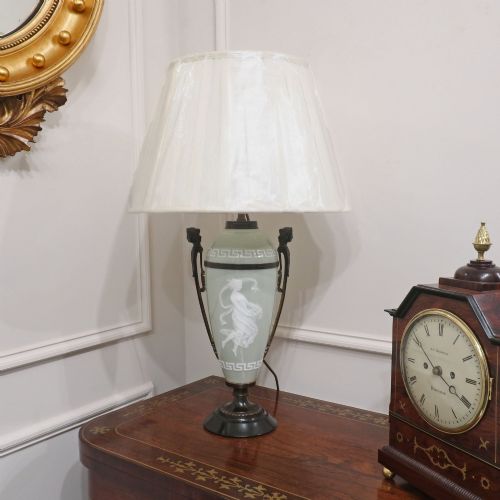
These 19th century bronze lights bring heavy metal casting, gilt finishes and classical form together to illuminate period interiors with warmth.
19th Century Bronze Lights
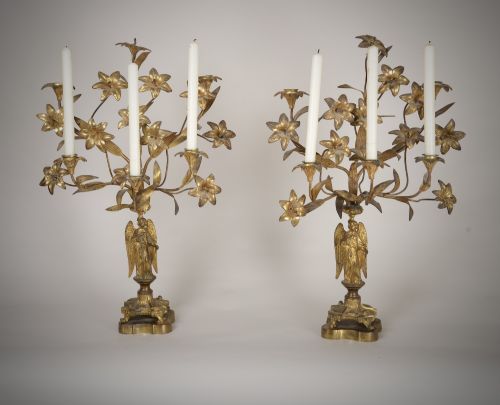
When you search for 19th century bronze lights, you encounter everything from grand chandeliers and multi-arm candelabra to modest desk candlesticks and wall sconces. The pieces surviving today span the Regency period through to the close of the century, showing heavy French influence in styles like Empire, Rococo Revival and Louis XVI.
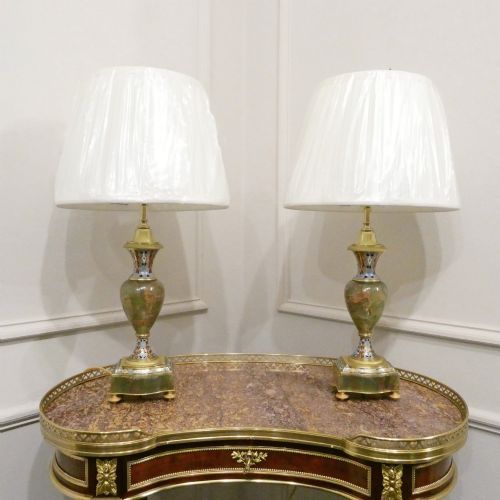
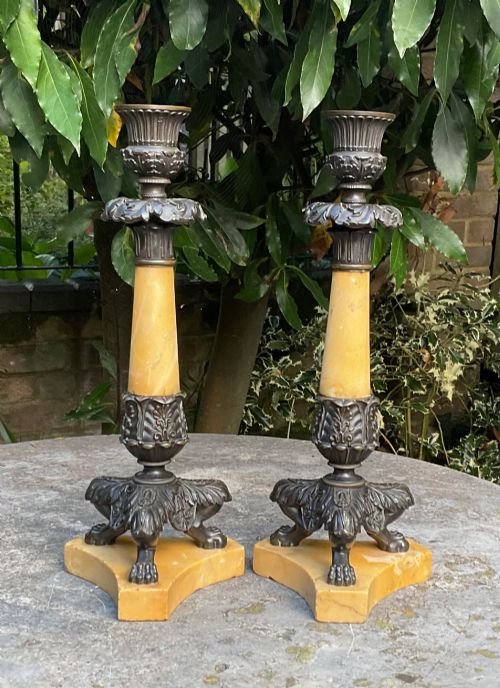
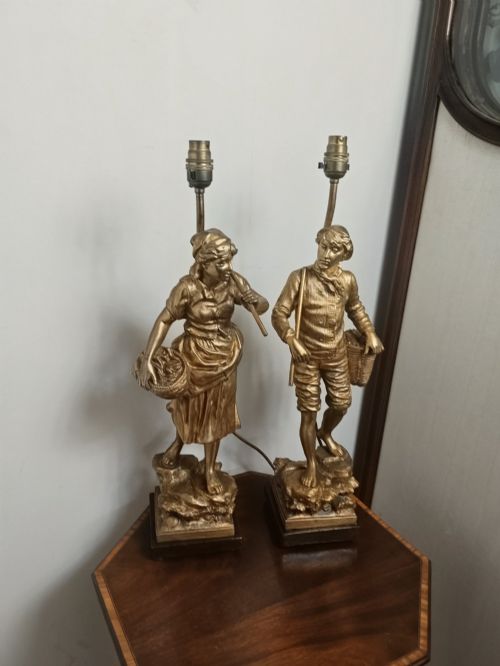
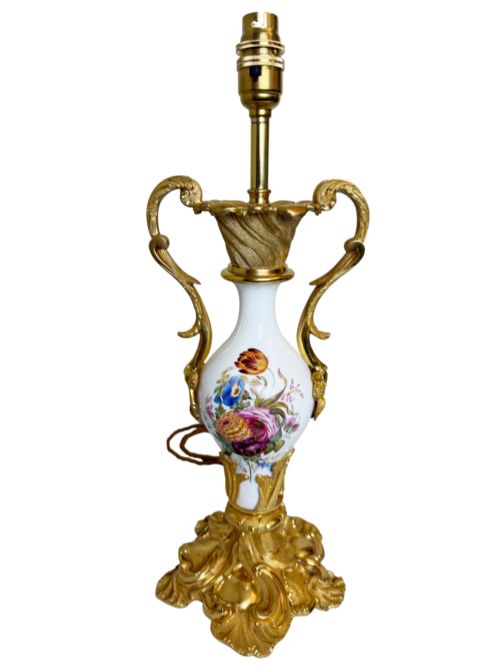
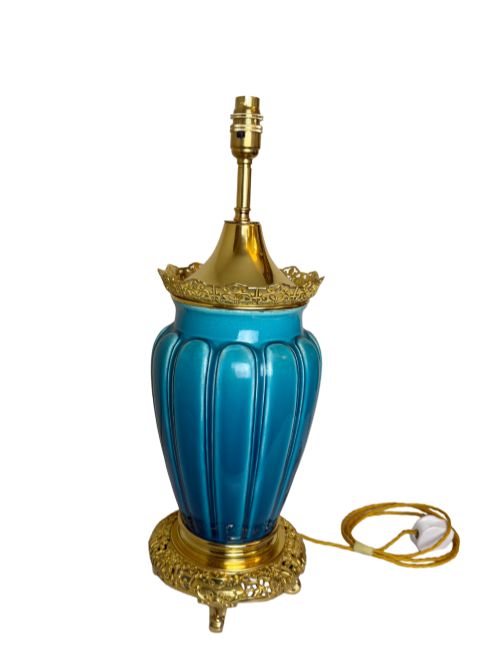
The most common examples met on this page are pairs of gilded bronze or ormolu candlesticks and table lamps, often mounted on white marble or onyx bases. French workshops produced a vast share of these survivors, frequently incorporating porcelain elements such as Sevres-style bodies or champleve enamel details into the metal frames.
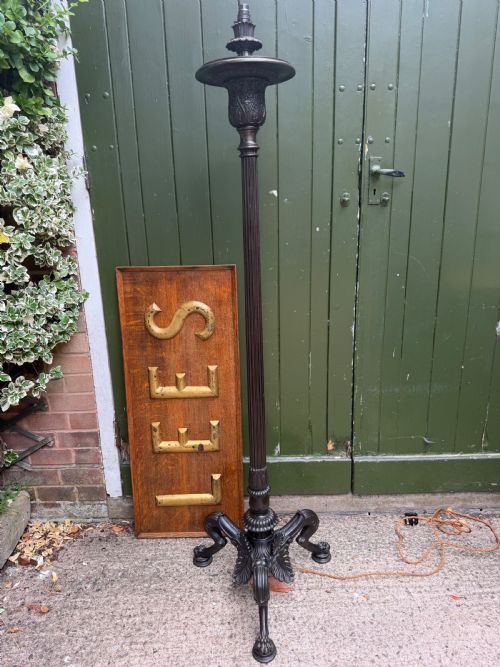
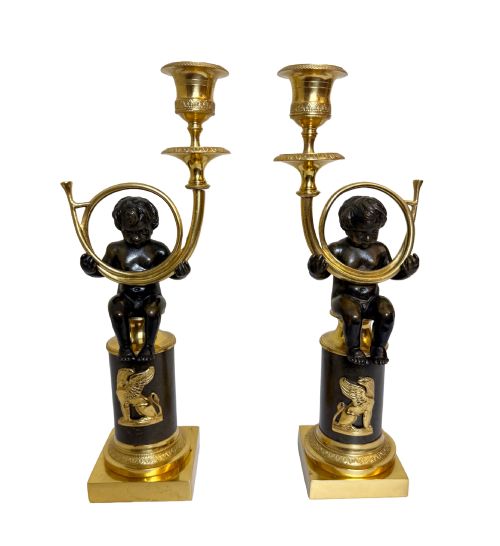
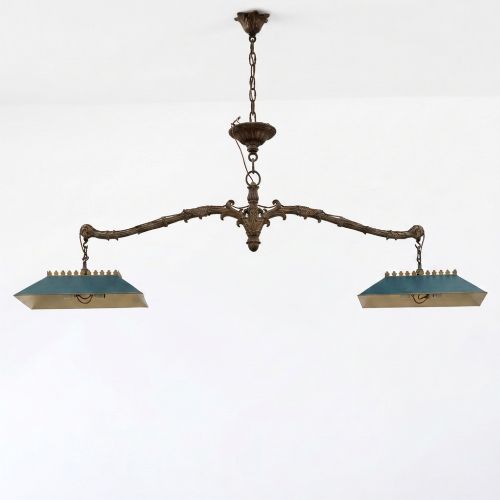
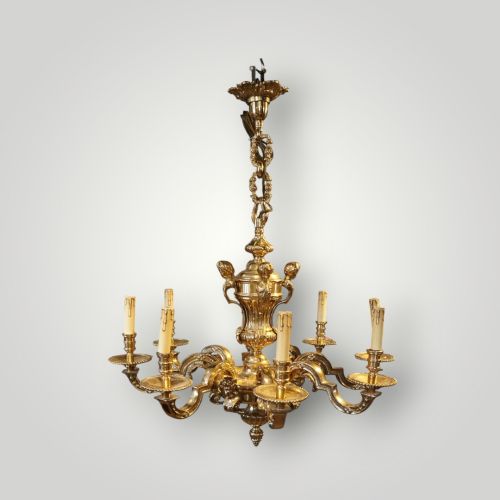
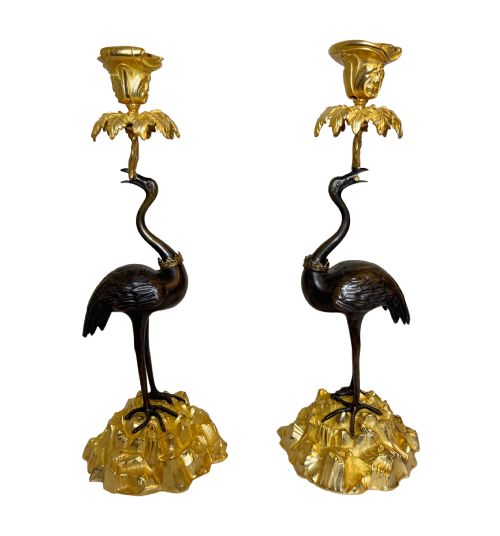
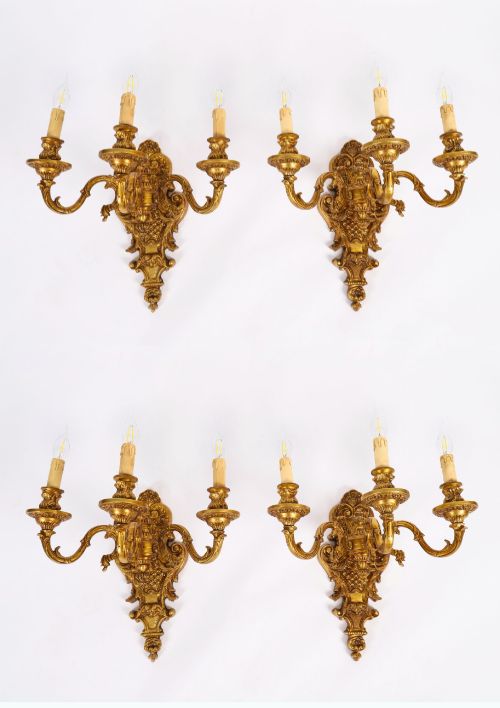
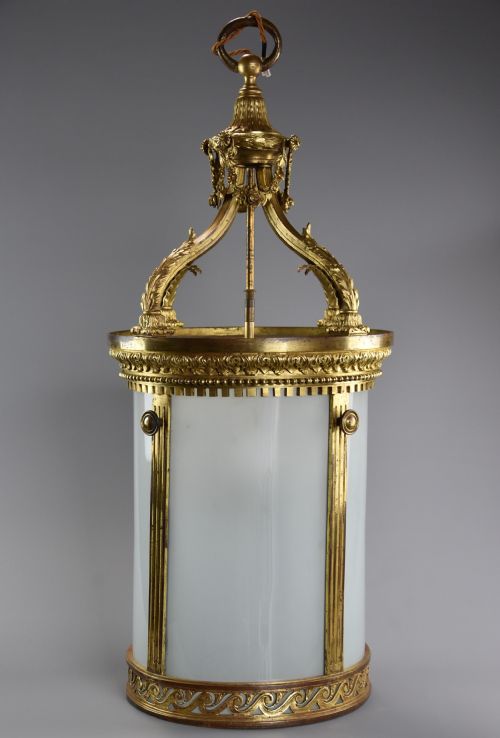
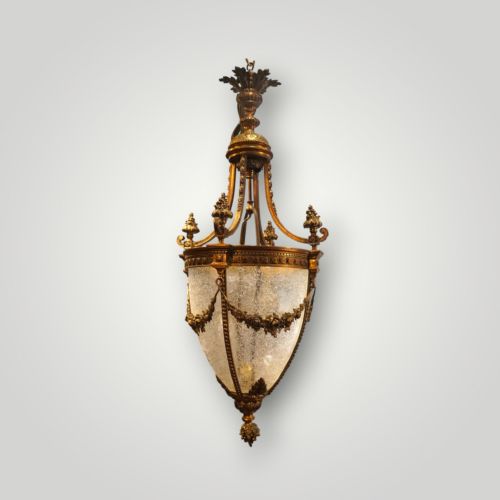
Larger architectural forms, including hanging hall lanterns and multi-light chandeliers, appear alongside floor-standing standards and wall appliques. Whether cast with figural cherubs, animal motifs like flamingos and rams' heads, or severe classical lines, these fixtures served both practical illumination and decorative display.
Materials and Construction
Foundries created these pieces using traditional sand casting or lost-wax techniques, working primarily with bronze, brass and patinated metal surfaces. Artisans applied mercury gilding or modern electroplating to achieve the rich ormolu and gilt finishes that catch the light.
Makers integrated mixed media directly into the metal armature, combining carved marble, onyx, cut glass, and painted porcelain into the bodies of lamps and candelabra. Structural joins relied heavily on threaded bronze rods, pins and visible manual assembly rather than modern welding.
Listings feature 19th-century bronze lights spanning French Empire, Rococo Revival, and Regency styles alongside materials like Sevres-style porcelain and marble.
Assessing Quality and Execution
Weight and stability also dictate grade, where heavier cast bronze elements, substantial marble bases and thick cut glass components signal better material investment. Inferior examples often substitute lighter cast metals and rely on thin surface plating that wears down rapidly over time.
Pierre Philippe Thomire·E Rousseau
The 19th Century Bronze Lights Glossary
- Ormolu
- Gilt bronze produced by applying a finely ground mercury and gold amalgam to a bronze object before firing. This historic technique creates a deep, durable golden lustre distinct from modern electroplating.
- Champleve
- An enamelling technique where troughs are dug into a metal surface and filled with vitreous paste before firing. It frequently decorates the stems and bases of later nineteenth-century French lighting.
- Candelabra
- A branched candlestick designed to hold multiple candles simultaneously. In nineteenth-century examples, these arms are often removable or pivoted to allow varied arrangements.
- Applique
- A French term for a wall-mounted light fixture or sconce designed to fix directly to wood panelling or masonry. They typically feature two or more arms projecting forward from a decorative backplate.
- Patinated Bronze
- Metal treated with chemical solutions to produce a controlled surface oxidation ranging from deep brown to verdigris green. This finish protects the underlying alloy while offering a subdued aesthetic.
19th Century Bronze Lights: Frequently Asked Questions
How do I wire a 19th century bronze light?
Conversion for modern electrical use generally requires running internal flex through the original hollow casting channels without altering the exterior metalwork. Professional restorers thread modern wiring through the central core while preserving historical lampholders where possible.
Care must be taken to ensure that delicate porcelain bodies, marble bases or antique patination are not damaged by heat or tight clamping during the rewiring process. Using low-heat LED bulbs helps protect fragile internal components from thermal stress.
What is the difference between bronze and brass?
Bronze is an alloy primarily composed of copper combined with tin, yielding a heavy, durable metal that accepts patination and gilding readily. Brass substitutes zinc for tin, resulting in a brighter yellow metal that is traditionally softer and more prone to tarnish.
Many nineteenth-century fixtures use both metals simultaneously, casting structural frames in sturdy bronze while employing brass for threaded components or smaller decorative mounts.
How do I identify French Empire style?
French Empire lighting draws heavily from ancient Roman, Greek and Egyptian motifs, featuring symmetrical designs, strict geometry and patinated bronze figures contrasted with bright ormolu mounts. Common decorative elements include sphinxes, winged victories, laurel wreaths, and classical claw feet.
This aesthetic flourished during the early nineteenth century and saw revivals later in the decades, often manifesting in heavy candelabra and figural floor standards.