



19th Century Bronze Garniture
A 19th century bronze garniture brings symmetry and striking presence to a mantelpiece, pairing a central clock with matching candelabras or urns.
19th Century Bronze Garniture
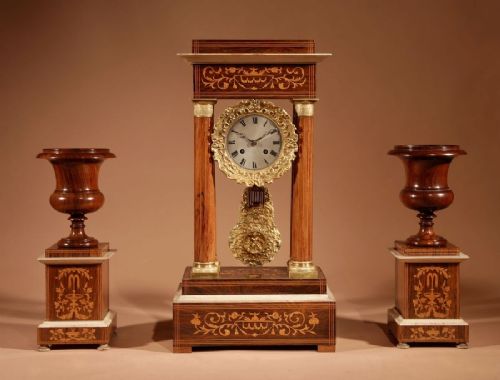
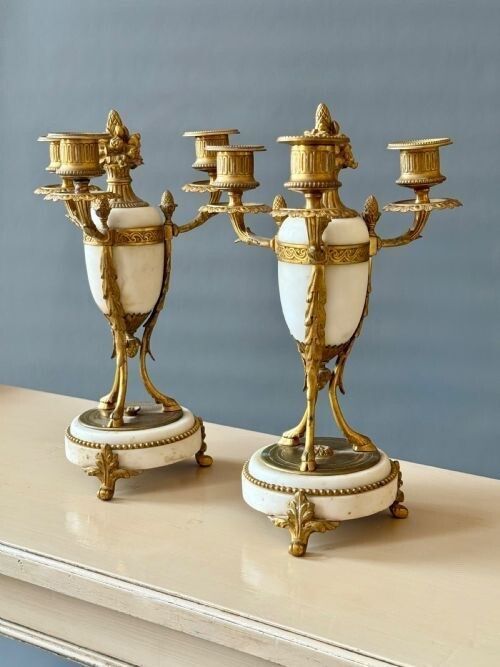
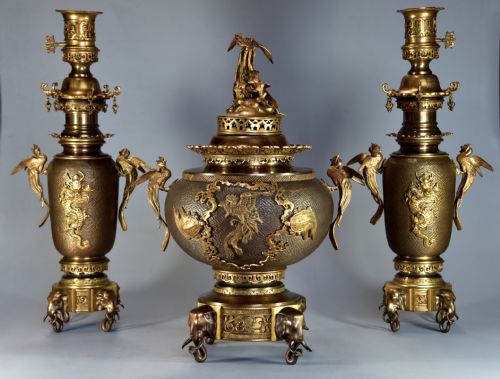
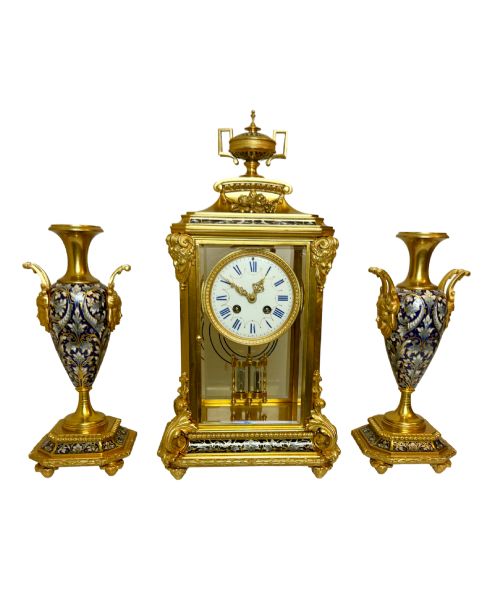
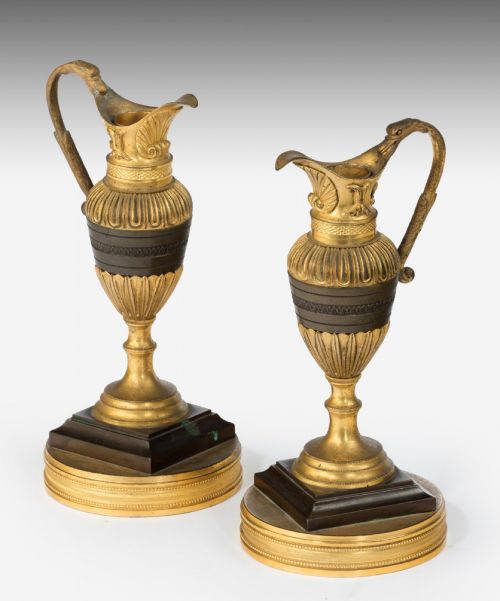
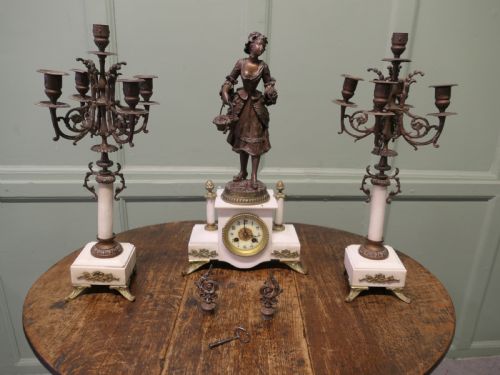
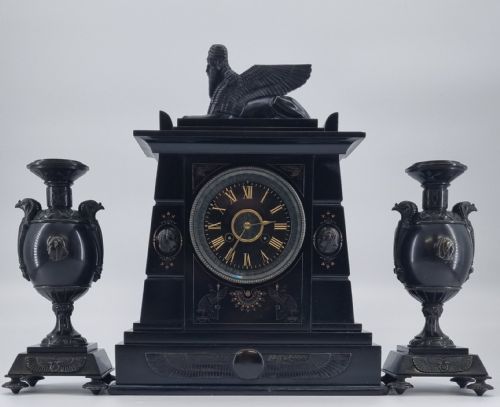
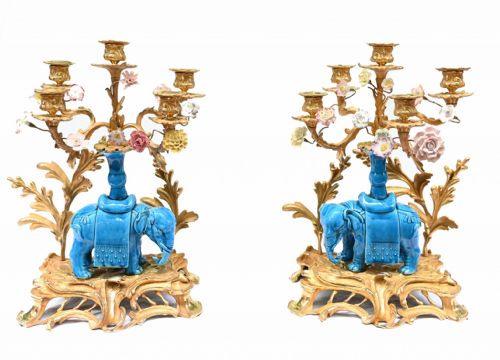
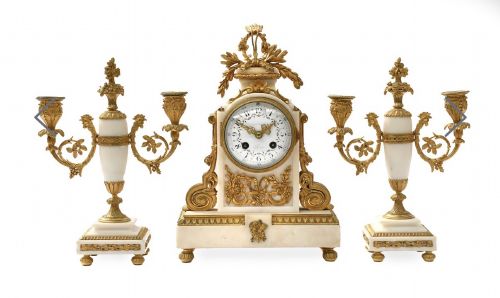
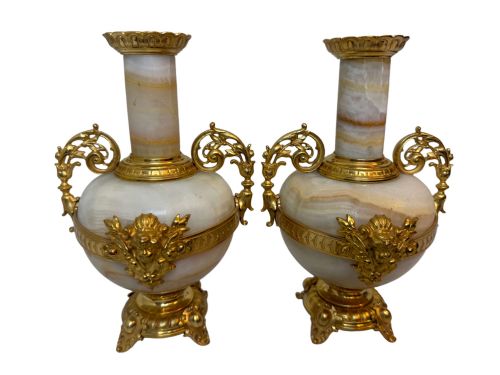
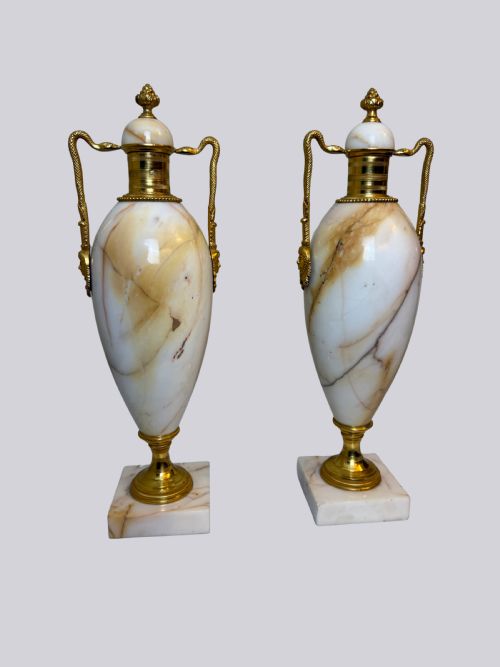
A 19th century bronze garniture typically comprises a central mantel clock flanked by a matching pair of decorative urns, cassolettes, or candelabras. These three-piece sets were designed to create a balanced, unified display across a fireplace mantel or console table. The pieces found here lean heavily towards French manufacture, embracing decorative revivals from the nineteenth century.
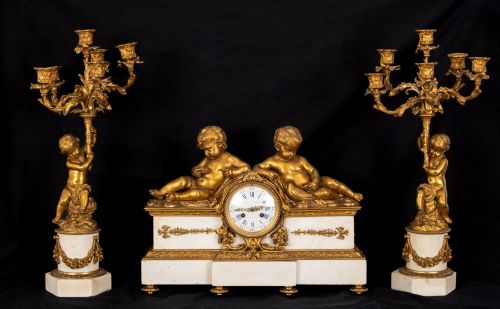
Mantel clocks form the heart of these groupings, accompanied by side pieces that share identical ornamentation, metalwork, and stonework. The overarching aesthetic draws from French Rococo Revival, Louis XVI style, Neoclassical, and Second Empire tastes. Forms range from strict architectural portico clocks to elaborate arrangements featuring cherubs, porcelain panels, and intricate enamel work.
Materials and construction methods
Metalwork forms the primary vehicle for these objects, utilising cast bronze, gilded bronze, and ormolu alongside polished brass. Gilt bronze and ormolu finishes provide the bright, reflective highlights characteristic of French decorative arts from the period. Patinated bronze often contrasts sharply against these gilded surfaces to create depth and visual weight.
Stone and ceramic elements frequently anchor the metal components, incorporating white marble, red marble, onyx, and porcelain. Skilled artisans combined these heavy mineral bases with detailed metal castings, sometimes integrating champlevé or cloisonné enamel directly into the bronze framework. Glass domes occasionally accompany these sets to protect delicate components from dust.
The documented object forms span mantel clocks, candelabras, cassolettes, and decorative urns across Victorian revival styles.
Markers of distinction in manufacturing
Quality rests upon the crispness of the bronze casting and the precision of the chasing work applied to finished surfaces. Superior sets display sharp relief in ornamental motifs like acanthus leaves and cherubs, whereas lesser examples show softened details from worn moulds. The depth and evenness of the gilt or ormolu application further distinguish high-end studio output from standard commercial production.
Materials selection dictates the tier of the piece, with dense, unblemished marbles and finely painted porcelain panels elevating the status of a garniture. Maker signatures inscribed on movements or bronze cases indicate workshop prestige, as seen in pieces produced by prominent French makers. The integration of complex movements, such as eight-day striking mechanisms, adds mechanical complexity to the visual appeal.
Henry Dasson·A.D Mougin
The 19th Century Bronze Garniture Glossary
- Garniture
- A set of ornamental objects designed to match and display together, usually consisting of a clock and a pair of vases or candelabras.
- Ormolu
- Finely ground high-carat gold mercury-gilded to a bronze object, creating a bright metallic finish that resists tarnishing.
- Cassolette
- A decorative vessel that functions as a vase or an incense burner, often featuring a reversible lid.
- Champlevé
- An enamelwork technique where troughs are carved into the metal surface and filled with vitreous paste before firing.
- Portico clock
- A mantel clock built within an architectural frame supported by columns, popular during the mid-nineteenth century.
19th Century Bronze Garniture: Frequently Asked Questions
What is included in a garniture set?
A standard garniture set consists of a central mantel clock accompanied by two matching side pieces, such as candelabras, urns, or vases.
These three items are designed to share identical materials, styles, and decorative motifs to create a unified visual display.
How were garniture sets used?
These sets were placed on mantelpieces above fireplaces, or upon large console tables in formal nineteenth-century drawing rooms.
They served both a practical purpose, through telling the time with the central clock, and a decorative role by projecting status and refined taste.
How do I identify Louis XVI style pieces?
Louis XVI style pieces feature classical symmetry, straight architectural lines, and restrained ornamentation drawn from ancient Roman and Greek art.
Look for motifs such as laurel wreaths, urns, ribbons, and fluted columns executed in gilt bronze against white marble.
How should I care for marble and bronze?
Dust bronze surfaces gently with a soft cloth and avoid chemical cleaners that can strip the delicate gilt or ormolu layers.
Marble and onyx components require simple wiping with a damp cloth, taking care to keep moisture away from exposed clock movements and enamel.