


19th Century Bronze Casket
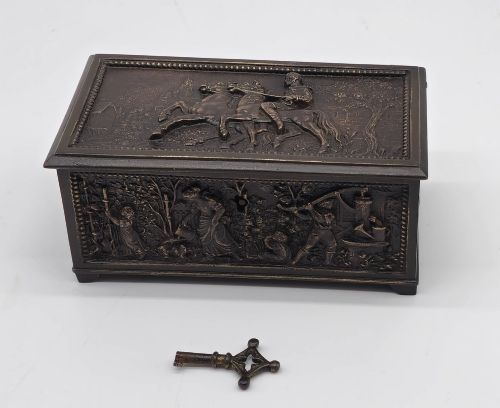
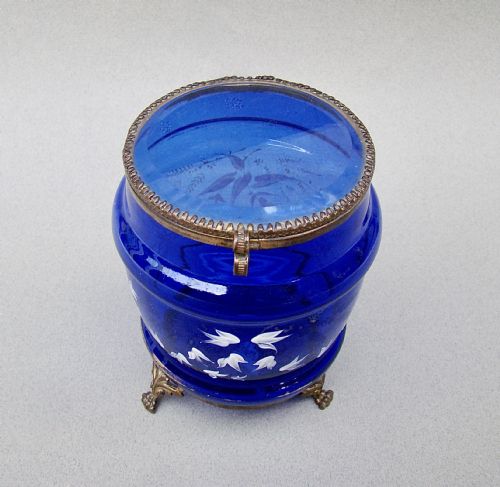
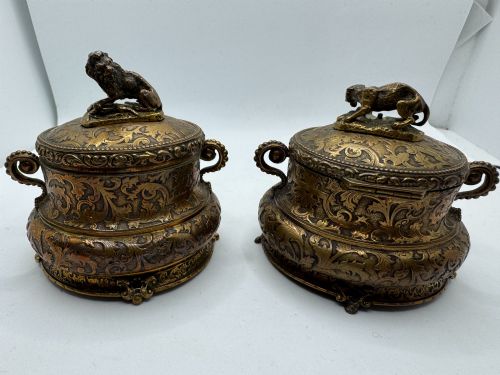
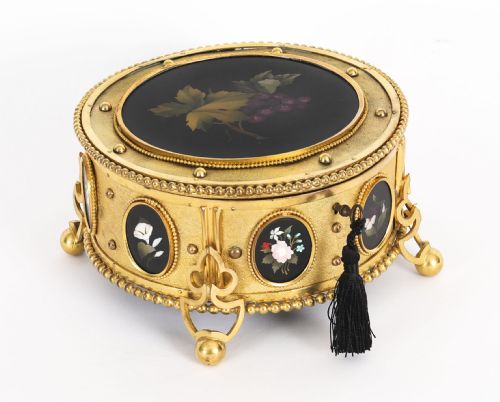
These 19th century bronze caskets bring heavy French and Italian metalwork, porcelain plaques and glass into the home to hold small valuables.
19th Century Bronze Casket
A 19th century bronze casket serves primarily as a container for jewellery, trinkets, tea or stationery, combining utility with ornamental display. Buyers searching this phrase encounter receptacles ranging from modest trinket boxes to large table cabinets.
French workshops dominate the surviving output, often drawing on Rococo Revival, Napoleon III and Second Empire styles. Pieces from this period frequently integrate gilt bronze or ormolu mounts with glass, porcelain or stone.
Alternative origins appear alongside the French majority, including Italian pietra dura pieces, Viennese enamel cabinets and English brass or bronze designs. These variations provide distinct regional interpretations of the domestic container.
Materials and Construction
Foundry-cast bronze and ormolu form the structural and decorative skeleton for many of these boxes, frequently finished with fire-gilding or silvering. Makers combined these metals with inset panels of Sevres or Limoges porcelain, Baccarat or Bristol blue glass, and polished marble or onyx.
Wood carcasses appear in specific formats such as oak tea caddies, kingwood display boxes and marquetry stationery caskets, reinforced with bronze hinges, locks and decorative mounts. Enamel work and champleve techniques add colourful detail to smaller surfaces.
Materials recorded across the inventory include bronze, ormolu, porcelain, marble, onyx, glass, brass and marquetry wood.
Distinctions in Quality
The sophistication of the casting and chasing separates standard production from exceptional work, visible in the crispness of foliage, animal finials and figural scenes. Heavy gauge bronze and substantial ormolu mounts indicate superior output from established makers.
The integration of secondary materials defines the tier of a piece, such as hand-painted porcelain plaques, genuine pietra dura stone inlay, or thick cut glass panels. Cohesion between the metal chassis and these decorative inserts marks the work of skilled Parisian and regional ateliers.
Tahan of Paris·AB Paris
The 19th Century Bronze Casket Glossary
- Ormolu
- Gilt bronze produced by applying a mercury-gilding amalgam to cast bronze. This technique creates a durable, warm golden finish characteristic of French decorative arts.
- Pietra dura
- An Italian technique of inlaying cut and fitted polished coloured stones to form pictorial images. It appears frequently on Florentine and Italian boxes.
- Champleve
- An enamelling technique where troughs are dug into the metal surface and filled with vitreous enamel powder before firing. It creates vibrant patterns on bronze boxes.
- Sevres
- Porcelain produced by the French royal manufactory, known for painted panels inset into bronze mounts. These plaques often depict rural scenes or portraits.
- Trinket box
- A small container designed for holding rings, pins or small personal items. They share construction methods with larger jewellery caskets.
19th Century Bronze Casket: Frequently Asked Questions
What did people store in a 19th century bronze casket?
These boxes held valuable personal possessions including rings, necklaces, loose gemstones and pocket watches. Larger variants accommodated stationery, tea leaves or bottled perfumes.
Interior compartments often featured silk or velvet linings to protect delicate items from shifting during use on a dressing table or desk.
How do I distinguish French pieces from English ones?
French examples from this period typically rely on ormolu, Sevres porcelain plaques and elaborate Rococo or Napoleon III revival styling. Makers in Paris focused heavily on decorative luxury items.
English boxes tend to feature solid brass or bronze construction, sometimes incorporating timber frames like oak with simpler, sturdier forms and dog finials.
Are these caskets lined on the inside?
Many retain their original fabric interiors, which were usually made from quilted silk, velvet or satin to cushion jewellery. Some stationery and tea caddies feature partitioned wooden or mirrored interiors instead.
Original linings frequently show wear from use, which remains normal for objects of this age.
Where were these boxes placed in a Victorian home?
Owners displayed them prominently on drawing room tables, mantelpieces and bedroom dressing tables where guests could admire the craftsmanship. They functioned as both decorative art objects and practical storage.
Smaller novelty boxes often sat on occasional tables as conversation pieces during afternoon calls.