


Victorian Ormolu Casket
A victorian ormolu casket is a heavy, gilt-metal container made to hold jewellery, trinkets, or stationery on a nineteenth-century desk.
Victorian Ormolu Casket
A victorian ormolu casket is typically encountered in various nineteenth-century styles, including French Napoleon III and Italian work, reflecting the international tastes of the period. These decorative boxes serve primarily as jewellery caskets, trinket boxes, and stationery boxes for the affluent Victorian interior.
The objects combine heavy cast metal frames with inset panels of glass, porcelain, marble, or stone. Many pieces originate from French workshops rather than strictly British ones, though all are gathered under nineteenth-century trade terms.
Formats range from small trinket boxes designed for a dressing table to large stationery boxes and scent caskets fitted for desk use. The internal compartments often retain original linings of silk or velvet.
Materials and construction
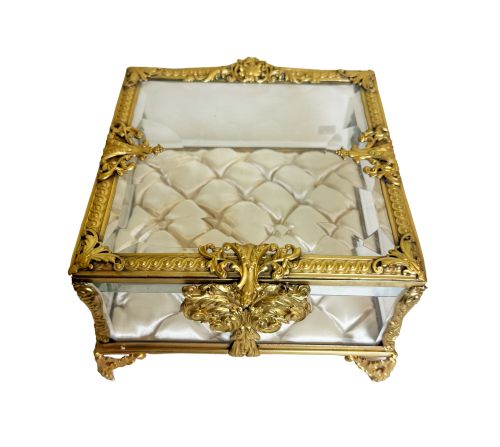
The primary structural element is ormolu, brass, or gilt bronze, formed through casting and chiselling to create ornate mounts and frames. This metalwork provides the rigid skeletal structure that holds decorative panels in place.
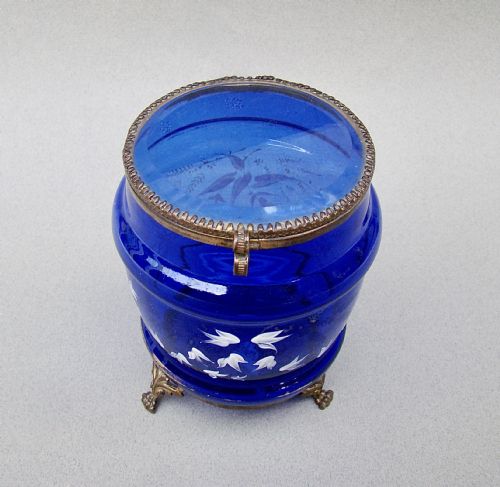
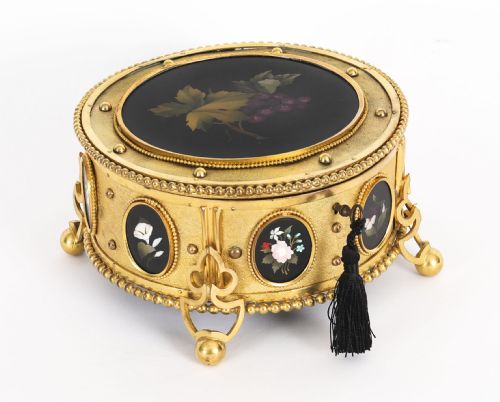
Panels of Bristol blue glass, crystal, Sevres porcelain, Limoges enamel, and pietra dura are integrated into the metal frames. Marquetry wood and coromandel also appear as body materials, mounted with gilt bronze.
Interiors are lined with textiles such as silk, providing a soft bed for stored items. Hinges and lock plates are integrated directly into the cast bronze framework.
Listings feature materials including ormolu, brass, glass, porcelain, enamel, silk, and marble across nineteenth-century forms.
Judging quality and execution
Quality rests upon the crispness of the bronze casting and the precision of the chiselling applied to the surface after it leaves the mould. Finer pieces display deep, sharp relief in the floral and scroll ornament rather than soft, muddy outlines.
The integration of specialist panels dictates the tier of the piece, with hand-painted Sevres porcelain plaques or detailed pietra dura stone insets marking superior workshop output. Plain glass or simple brass stamping represents more standard commercial production.
The Victorian Ormolu Casket Glossary
- Ormolu
- A gilded bronze or brass finish applied to decorative metalwork. The technique involves creating a mercury gilding or modern electroplating to give a rich golden surface.
- Pietra dura
- An artistic technique using cut and fitted polished coloured stones to create geometric or pictorial inlays. It appears on Italian caskets of the nineteenth century.
- Sevres
- A type of porcelain associated with French royal and elite production. Plaques of this porcelain are frequently mounted into the sides and lids of boxes.
- Coromandel
- A dense, dark timber imported from Asia, often used for the solid wooden bodies of nineteenth-century desk boxes and stationery caskets.
- Limoges miniature
- A small painted enamel plaque produced in the French city of Limoges. These often feature portrait miniatures set into the lids of gilt metal caskets.
Victorian Ormolu Casket: Frequently Asked Questions
What did they use ormolu caskets for?
These boxes were utilised in the nineteenth century to store valuable personal items such as rings, brooches, and loose trinkets on dressing tables. Larger examples served as stationery boxes or held glass scent bottles for the desk.
Their presence in a room signalled refined taste and wealth, keeping intimate possessions secure under lock and key.
How do I clean an ormolu mount?
Ormolu requires gentle dusting with a soft brush to prevent the accumulation of dirt in the recesses of the casting. Harsh metal polishes should be avoided entirely, as they strip away the historic gilt surface.
If the metal requires more attention, professional conservation advice ensures the protective layer remains intact.
Are all these boxes French?
While many pieces reflect French Napoleon III and Second Empire styles, the listings also encompass Italian and English work from the nineteenth century. Makers across Europe adopted French aesthetic models for luxury desk accessories.
Materials like coromandel point towards English desk furniture, whereas pietra dura indicates Italian craftsmanship.
What is inside a scent casket?
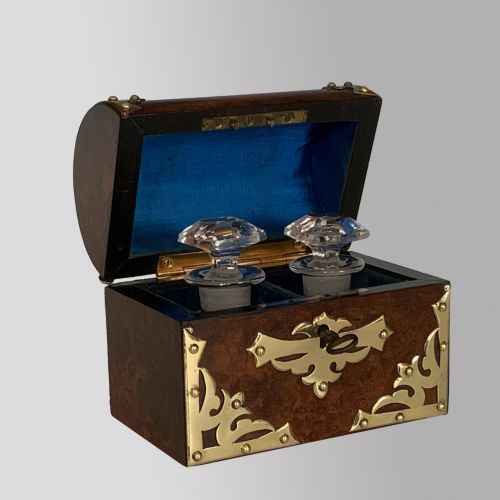
A scent casket typically houses a fitted interior containing several small glass bottles intended for perfumes or essences. These bottles are often cut crystal with matching stoppers.
The surrounding frame holds the glass securely in place while displaying the decorative mounts on the exterior.