
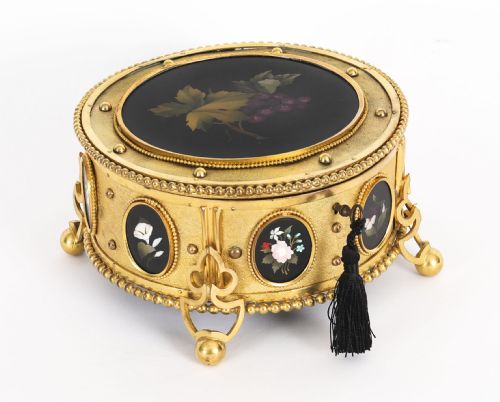


Victorian Bronze Jewellery Box
These victorian bronze jewellery box pieces combine heavy cast metalwork with glass, porcelain and velvet interiors to secure your most treasured trinkets.
Victorian Bronze Jewellery Box
A victorian bronze jewellery box is a substantial tabletop container designed to hold precious trinkets, rings and keepsakes safely on a dressing table or desk.
The selections available range from French ormolu caskets and Italian pietra dura boxes to English brass and bronze strong boxes spanning the nineteenth century.
Makers often drew inspiration from French styles like Napoleon III and Palais Royal, incorporating decorative elements such as Sevres porcelain panels, Limoges miniatures and glass inserts.
How they were made
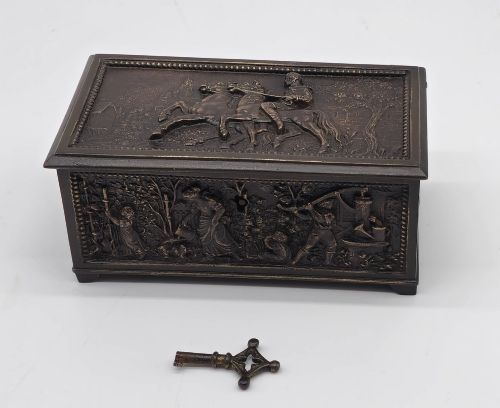
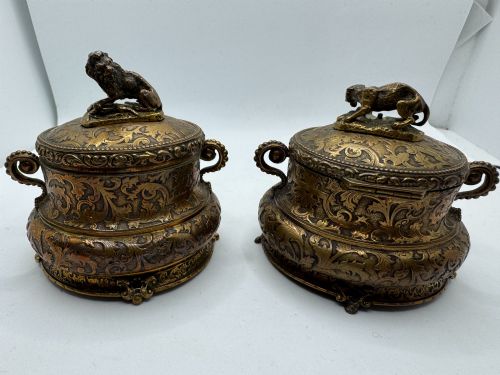
These items rely heavily on bronze, brass and ormolu frames cast with ornamental details, geometric patterns or figural motifs.
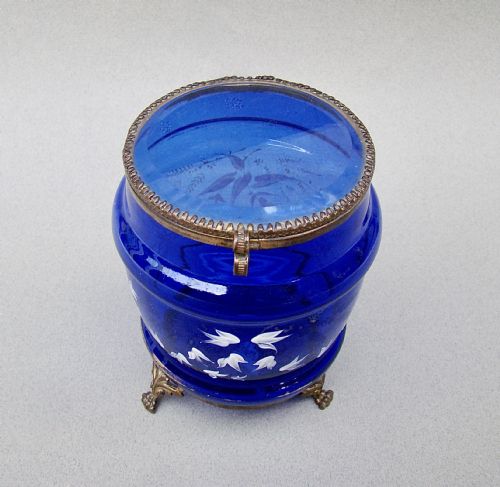
Many examples combine the cast metal structure with contrasting materials like Bristol blue glass, marble, rosewood and champleve enamel.
Interior compartments frequently retain their original silk or velvet linings, whilst exterior surfaces sometimes integrate painted porcelain plaques or inlaid stone panels.
Materials span ormolu, bronze, brass, glass, enamel, marble, porcelain and silk across nineteenth-century English, French and Italian designs.
What varies in quality
The refinement of the casting work dictates the visual appeal, where crisp detailing on ormolu mounts and figural elements separates superior items from simpler productions.
The integration of specialist decorative components, such as hand-painted porcelain plaques, inlaid pietra dura work or champleve enamel, elevates the status of a casket.
The survival of original internal silk linings and operational locking mechanisms with matching keys contributes significantly to the integrity of the piece.
The Victorian Bronze Jewellery Box Glossary
- Ormolu
- Gilt bronze produced by applying a finely ground high-carat gold mercury amalgam to a bronze object, creating a rich golden surface finish.
- Pietra dura
- An artistic technique using cut and fitted polished coloured stones to create geometric or pictorial mosaic designs on panels.
- Champleve
- An enamelling technique where troughs or cells are carved into the surface of a metal object and filled with vitreous enamel before firing.
- Sevres
- A type of fine porcelain produced by the French national porcelain manufactory, frequently mounted into decorative metal frames.
- Bijouterie table
- A glass-topped display table designed specifically for showcasing small valuable objects and jewellery within a room.
Victorian Bronze Jewellery Box: Frequently Asked Questions
How were antique jewellery boxes used?
These boxes served as secure, elegant receptacles for storing rings, brooches and precious keepsakes on dressing tables.
Wealthy owners placed them prominently in boudoirs or drawing rooms to display both their jewellery and their refined taste.
Where were most bronze caskets made?
A significant portion of these decorative containers originated in French workshops, particularly during the nineteenth century under Napoleon III.
English and Italian makers also produced notable examples, often incorporating local materials like pietra dura or rosewood.
What materials line the inside?
Interiors are commonly fitted with plush velvet, satin or silk linings designed to protect delicate items from scratches.
Many surviving boxes retain these original fabric inserts, although some have been relined over the decades of use.
How do I identify French nineteenth-century boxes?
Look for distinct stylistic indicators such as heavy ormolu mounts, Palais Royal novelties or inset Sevres porcelain plaques.
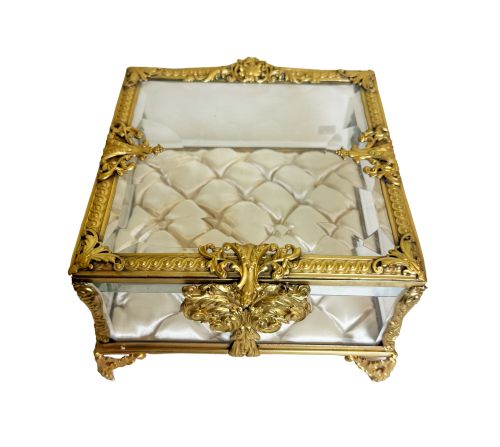
French pieces frequently employ gilt bronze alongside bevelled glass or painted panels depicting rural or romantic scenes.
Are these boxes suitable for daily use?
Their sturdy bronze and brass construction makes them well-equipped for holding modern trinkets and everyday jewellery.
Care should be taken with fragile glass panels, enamel work and delicate historical silk interiors during regular handling.