




19th Century Bronze Box
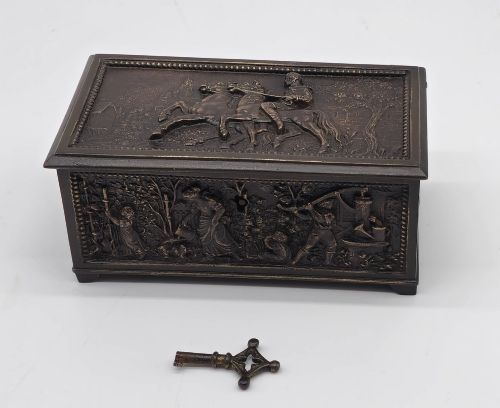
A 19th century bronze box brings heavy cast metal, glass and porcelain together to hold letters, jewels or trinkets on a dressing table.
19th Century Bronze Box
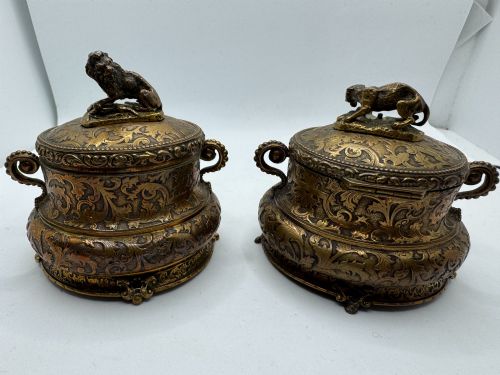
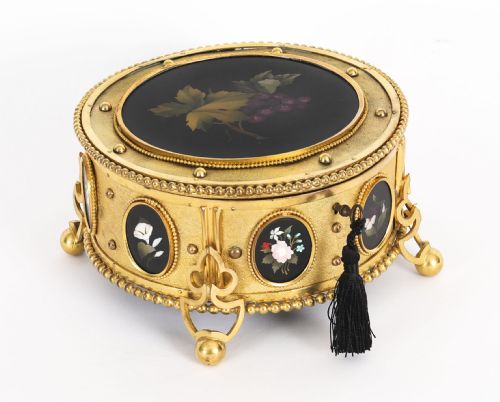
Every 19th century bronze box on this page serves a specific function, appearing most frequently as a jewellery casket, trinket box, or decorative container originating from French workshops during the Victorian era and the Second Empire. Makers shaped these pieces into French Rococo Revival and Napoleon III styles, alongside display tables and sewing companions mounted with gilt metal.
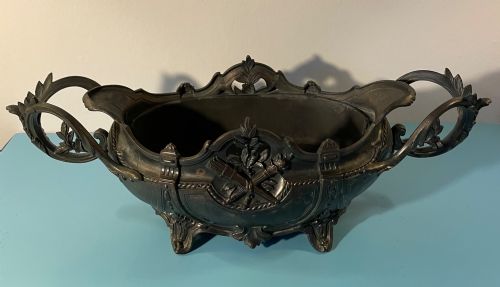
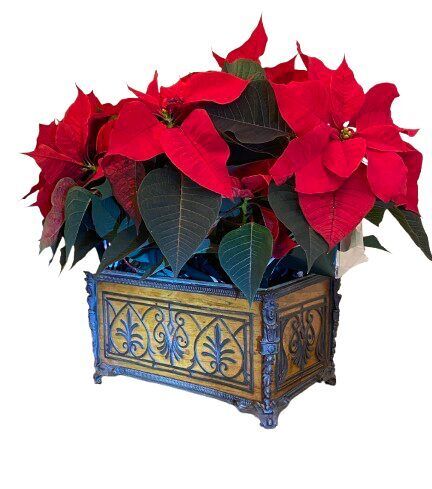
Beyond standard caskets, the selection includes tea caddies, desk boxes, carriage clock cases, and larger planters or jardinieres. Regional variations span from English brass and bronze dog boxes to Austrian Viennese enamel cabinets and Mindanao silver-inlaid betal containers.
The materials paired with the bronze structure define the character of each object, incorporating porcelain plaques, panels of glass, marble, onyx, and polished hardwoods like olive wood, oak, and kingwood.
Materials and Techniques
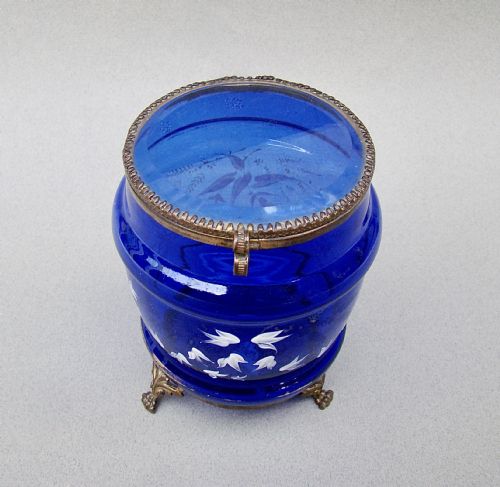
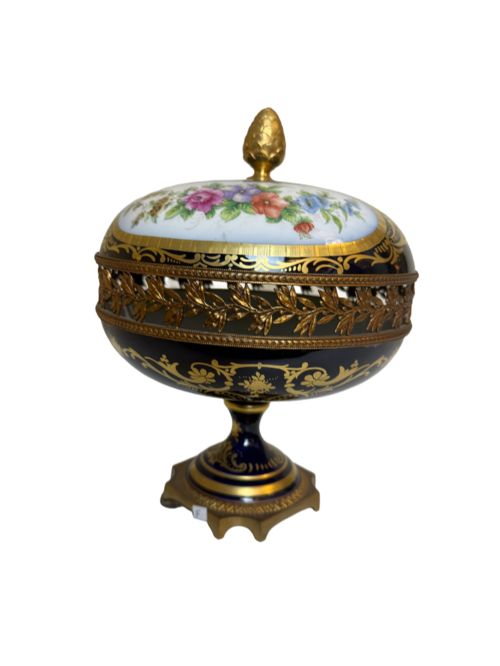
Foundries cast the primary frames in bronze, brass, and ormolu, applying mercury gilt or chemical finishes to achieve the characteristic warm metallic sheen. Artisans then fitted these heavy metal mounts around panels of hand-painted porcelain, including Sevres and Limoges plaques, or set them against transparent sections of Baccarat, Bristol blue, and opaline glass.
Cabinetmakers constructed the internal wooden carcases from exotic timbers such as kingwood and ebonised wood, often employing intricate marquetry and parquetry patterns. Specialised enamel work, notably champleve and Viennese techniques, alongside inlaid pietra dura stone and hand-carved marble or onyx bases, completed the complex assemblies.
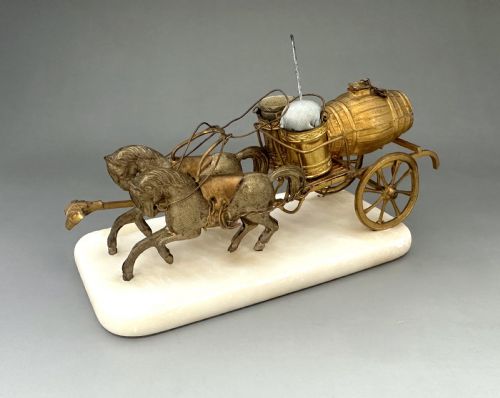
A miniature bronze coach and horses pulls an opaline egg trinket box across the desk.
Determining Quality
The crispness of the bronze casting separates standard items from exceptional examples, revealing sharp relief in chased foliage, figures, and architectural mounts rather than soft, muddy edges. Superior execution relies on the integration of secondary materials, where hand-painted porcelain panels show meticulous detail and glass or stone inserts fit flush into the metal framing without excess adhesive.
Construction methods dictate longevity, marked by sturdy interior linings, well-fitted hinges that hold the lid firm at any angle, and precise joinery on wooden and leather elements. Signed pieces and makers bearing recognised foundry stamps demonstrate the higher tiers of period production.
Tahan of Paris
The 19th Century Bronze Box Glossary
- Ormolu
- Gilt bronze mounted on decorative objects and furniture, created by applying a gold and mercury amalgam to cast brass or bronze. The technique was widely utilised in French workshops during the 19th century to add rich golden highlights.
- Champleve enamel
- A technique where troughs or cells are hollowed out of the bronze surface and filled with vitreous enamel powder before firing. The piece is then ground smooth and polished to sit flush with the surrounding metal lines.
- Bijouterie table
- A display cabinet or table featuring a glazed top and sides, designed specifically to showcase small valuable items like jewellery and trinkets. These pieces frequently incorporate detailed ormolu mounts and silk-lined interiors.
- Pietra dura
- An artistic inlay method using cut and fitted polished coloured stones to create pictorial designs, commonly found on Florentine and Italian caskets. Hardstones such as lapis lazuli, agate, and jasper form intricate floral or geometric patterns.
- Sevres
- Porcelain produced by the royal French manufactory, recognisable by hand-painted scenes and rich cobalt blue grounds. These fine plaques were frequently set directly into the lids and sides of gilt bronze caskets.
19th Century Bronze Box: Frequently Asked Questions
What were 19th century bronze boxes used for?
These decorative containers served multiple purposes in the nineteenth-century home, primarily functioning as secure caskets for precious jewellery, letters, and small trinkets. Wealthy owners placed them on dressing tables, mantelpieces, and boudoir desks to store personal valuables.
Larger variants accommodated sewing accessories, stationery, or pocket watches, while specialised forms operated as tea caddies or desk accessories. Their dual role as practical storage and ornamental showpieces made them central to period interior decoration.
How do I date a bronze box?
Dating relies on examining the stylistic cues, construction methods, and materials characteristic of specific decades within the century. Pieces reflecting Napoleon III or French Rococo Revival tastes typically point towards the middle and later decades of the period.
Maker marks, registration numbers, and the specific type of gilding or glass used also provide reliable chronological markers. Comparing the casting sharpness and fastener styles helps distinguish earlier handmade pieces from later mass-produced alternatives.
Are these boxes fragile?
While the cast bronze frames possess robust structural integrity, the inset components require careful handling. Glass panels, porcelain plaques, and enamel work are susceptible to cracking or chipping under sharp impacts.
Internal silk or velvet linings also degrade over time and demand gentle maintenance. Regular dusting with a dry, soft cloth preserves the metal surfaces without wearing away delicate gilt finishes.
How do I clean ormolu mounts?
Maintenance requires minimal intervention to protect the original gilt layer from abrasive wear or chemical stripping. Gentle dusting with a soft brush removes debris from recessed chased details safely.
Harsh metal polishes and water must be avoided, as they permanently damage mercury gilding and underlying bronze. Professional conservation remains the safest choice for removing heavy tarnish or grime.