


Bronze Jewellery Casket
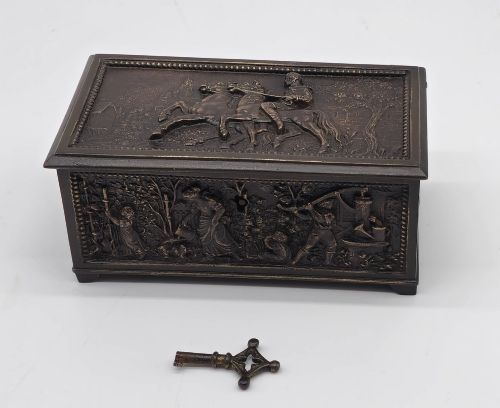
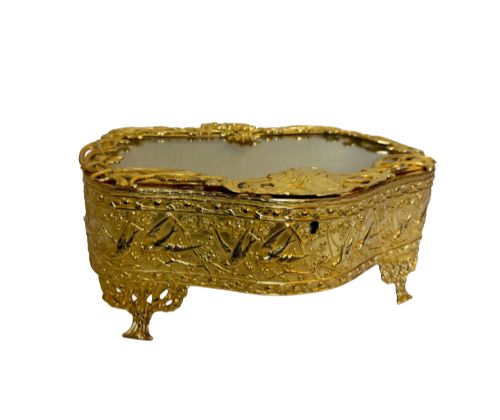
A bronze jewellery casket stores precious keepsakes behind heavy metal mounts and glass panels, bringing nineteenth-century craftsmanship directly onto a dressing table.
Bronze Jewellery Casket
A bronze jewellery casket combines heavy metal frames with glass, porcelain, or stone panels to create secure, decorative storage for small valuables. The versions found on this page span the nineteenth century, with French workshops producing many of the surviving examples in styles ranging from Rococo Revival to Art Nouveau.
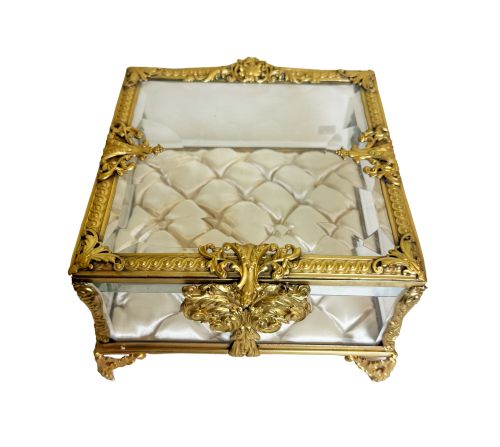
Buyers will encounter various forms including trinket boxes, table cabinets, and glass caskets supported by ormolu mounts. Many pieces incorporate inset materials such as Sevres porcelain, Limoges miniatures, or panels of onyx, malachite, and cut crystal.
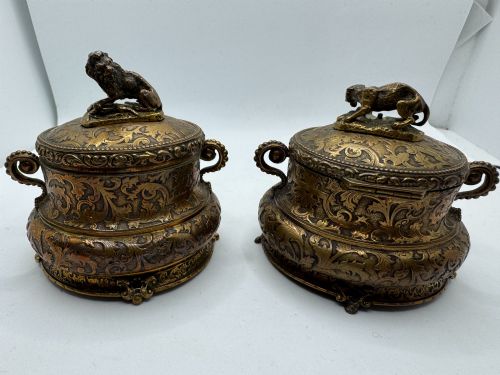
The nineteenth-century selection leans heavily toward French production, alongside English, Italian, and Austrian pieces. These containers frequently utilise cast bronze or brass frames finished with gilding, silvering, or patination.
Materials and Technique
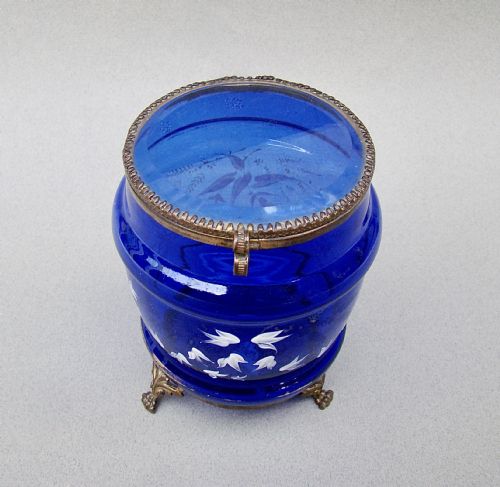
Foundries produced the structural framework of these caskets using cast bronze, ormolu, and gilt metal, often shaping the metal into elaborate scrollwork, architectural motifs, or figural finials. Skilled artisans then combined these metal mounts with transparent or coloured glass, including Baccarat and Bristol blue panes, secured tightly within the bronze framework.
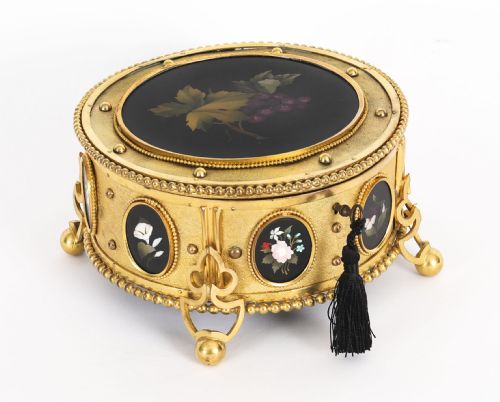
Surface decoration frequently involved intricate additions such as champleve enamel, hand-painted porcelain plaques, and inset panels of marble or pietra dura. Metal components received applications of gold gilding or silvering to enhance the decorative finish of each box.
Listings feature nineteenth-century French, Italian, and English boxes constructed from ormolu, gilt bronze, Sevres porcelain, and cut crystal.
Assessing Quality
Quality in a bronze jewellery casket rests upon the crispness of the metal casting and the precision of the assembly. Superior pieces display deeply chased surface details on the ormolu mounts, well-fitted glass or porcelain panels, and sturdy hinges that support the lid without sagging.
The integration of specialised decorative elements like hand-painted Limoges miniatures, Viennese enamel, or genuine pietra dura separates standard production containers from exceptional cabinet pieces. Heavier gauge metal and substantial overall weight generally indicate superior manufacturing standards.
S Theeman·Belinda Gentle
The Bronze Jewellery Casket Glossary
- Ormolu
- Gilt bronze created by applying a finely ground high-carat gold-mercury amalgam to a cast bronze object and heating it to drive off the mercury. This technique produces a durable, rich golden finish characteristic of nineteenth-century decorative items.
- Sevres
- A French porcelain manufacturing town whose soft-paste and hard-paste plaques frequently adorned luxury metalwork. These hand-painted ceramic inserts often feature floral or figurative scenes.
- Pietra dura
- An artistic technique using cut and fitted polished coloured stones to create geometric or pictorial designs. These inlaid stone panels appear on the lids of select nineteenth-century Italian and French caskets.
- Champleve enamel
- A method where troughs or cells are hollowed out of a metal surface and filled with vitreous enamel powder before firing. The resulting coloured glass designs sit flush with the surrounding bronze partitions.
- Baccarat
- A renowned French crystal manufacturer whose high-clarity glass panels and cut-crystal bodies form the transparent walls of luxury boxes. These heavy glass sections give the caskets substantial weight and brilliance.
Bronze Jewellery Casket: Frequently Asked Questions
What were bronze jewellery caskets used for?
These containers served as secure, highly decorative receptacles for rings, brooches, and small personal valuables on nineteenth-century dressing tables and sideboards.
Wealthy owners displayed them prominently in domestic interiors to showcase refined tastes alongside storing precious trinkets.
How do I date a bronze jewellery casket?
Dating relies on stylistic markers such as Rococo Revival curves, Second Empire proportions, or sweeping Art Nouveau lines. Material combinations like Sevres porcelain panels and ormolu mounts also point to specific decades within the nineteenth century.
Construction details, including the thickness of the cast metal and the style of hinges, help narrow down the period of manufacture.
Are these caskets fragile?
While the cast bronze and brass frames are robust, panels made from glass, porcelain, or enamel require careful handling to avoid chipping or cracking. The structural integrity is generally sound, but the inset materials demand gentle placement on stable surfaces.
Lids with heavy stone or crystal inserts should be opened slowly to protect the original brass or ormolu hinges.
Where were most of these caskets made?
A large proportion of surviving examples originated in French workshops, particularly around Paris, which dominated the luxury bronze and ormolu trade during the nineteenth century.
Other notable production centres included England, Italy, and Austria, each contributing distinct regional styles such as pietra dura work or Viennese enamel.