


19th Century Bow Armchair
Solid timber and generous proportions define the 19th century bow armchair, a sturdy seating choice built for comfort and daily use.
19th Century Bow Armchair
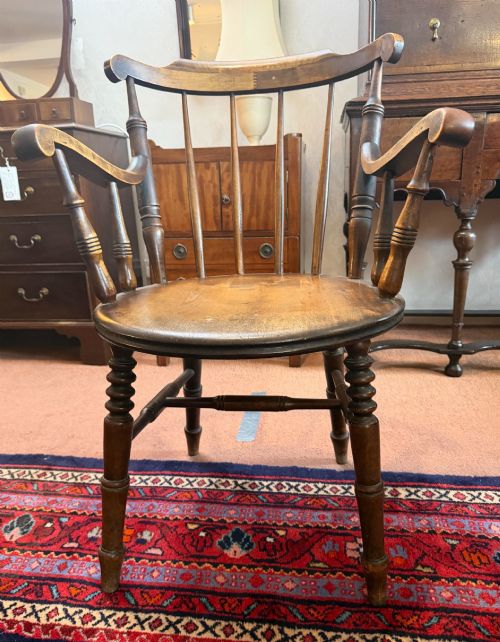
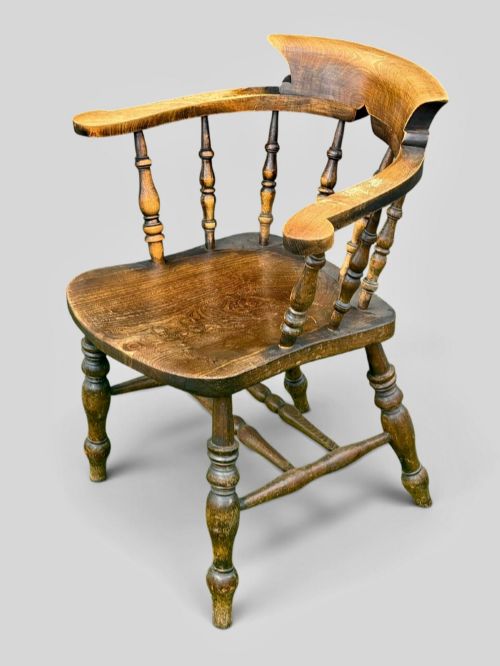
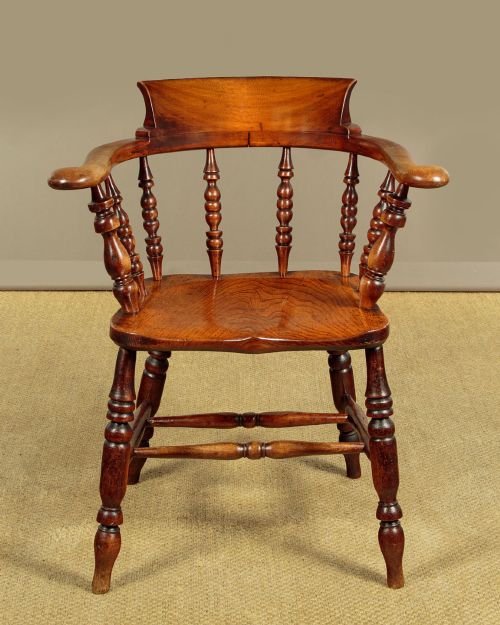
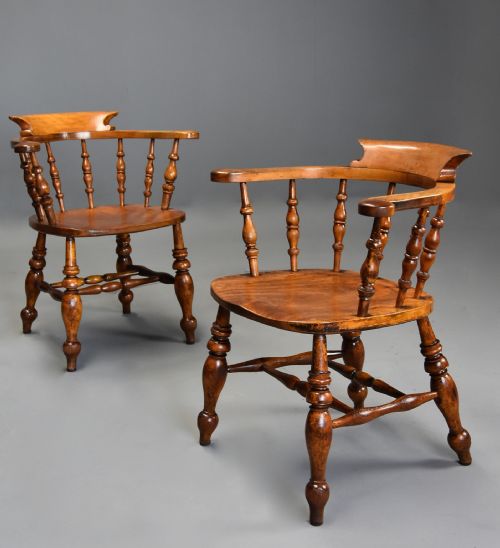
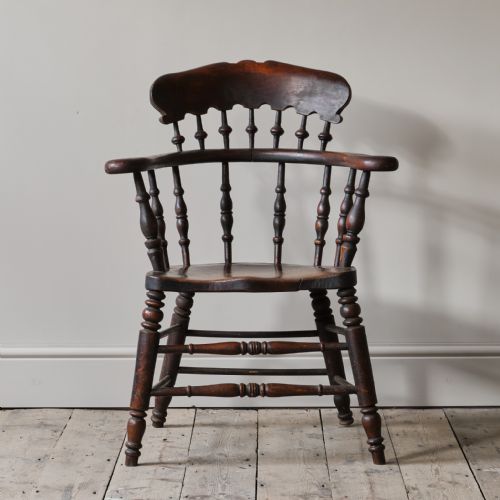
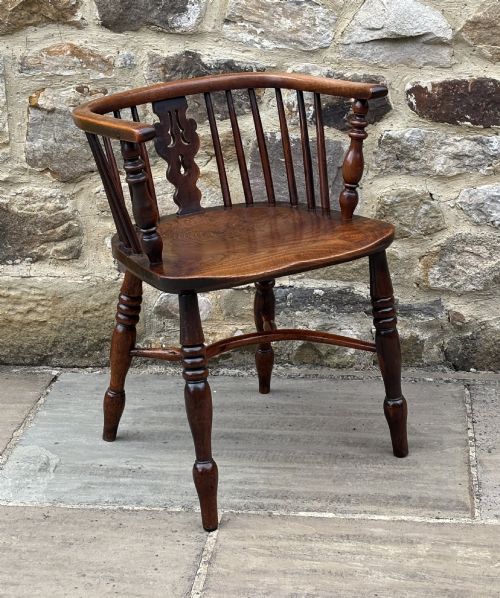
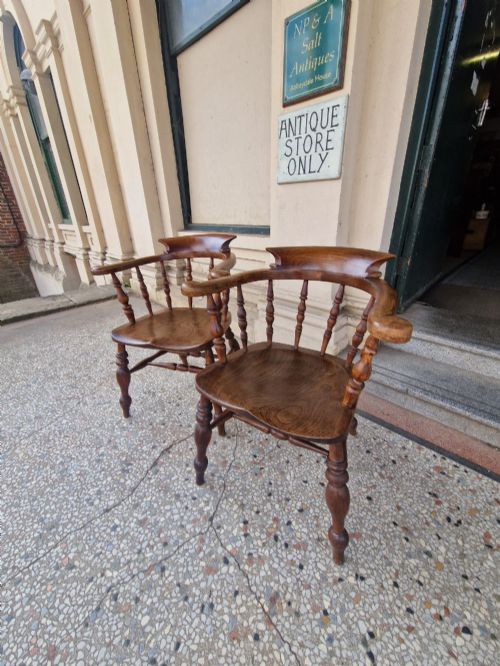
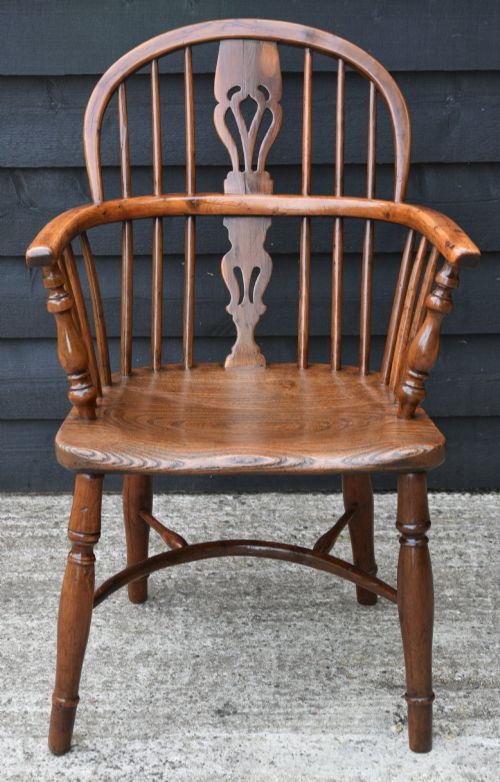
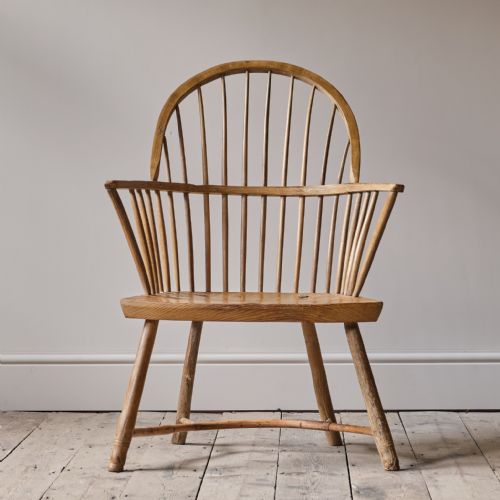
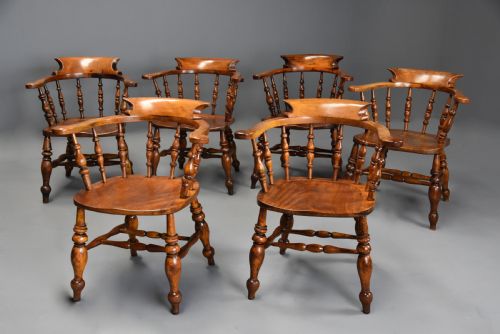
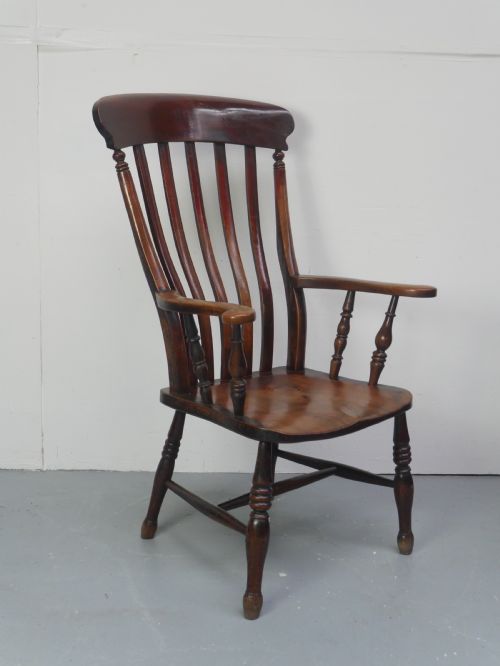
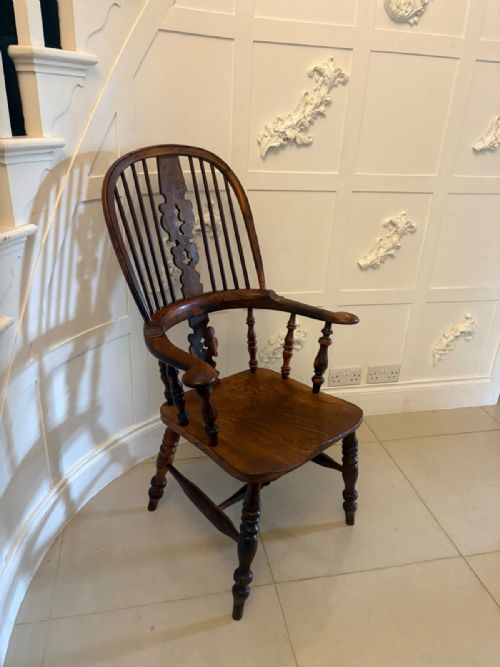
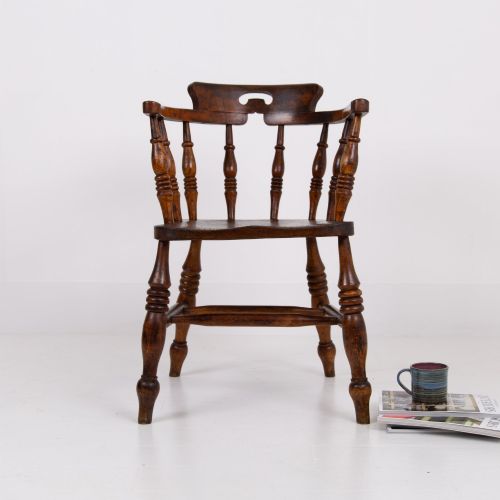
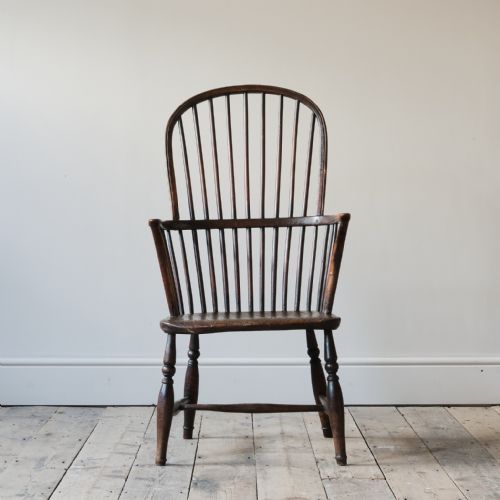
A 19th century bow armchair typically appears as a smoker's bow, a captain's chair, or a traditional Windsor style with a rounded back rail. These low-back or high-back seats served everyday roles in farmhouses, offices, and country homes throughout the Victorian era.
Most examples found in current collections pair a shaped elm seat with ash, beech, or yew spindles and framing. Makers constructed these chairs to withstand heavy daily use, resulting in sturdy proportions and practical elbow supports.
Variants include desk chairs fitted for office work, child-sized armchairs, and matching pairs originating from provincial English workshops. The common thread across these forms is the continuous bentwood bow that forms the armrests and back.
Construction and Materials
Cabinet makers and bodgers relied on native hardwoods, combining tough elm for solid, saddled seats with pliable ash, beech, or yew for steam-bent bow rails and turned spindles. This multi-wood construction placed resilient timbers where stress concentrated most.
Joinery methods involved traditional wedged tenons passing through the seat board alongside turned legs secured by stretchers. Makers shaped the seats using adzes and scorps to create deep, comfortable hollows before assembling the undercarriage.
Current listings feature woods such as elm, ash, beech, yew, oak, and walnut alongside leather and brass fittings.
Judging Quality and Character
Quality rests in the selection of timbers and the crispness of the turning on the spindles and legs. Chairs built with highly figured yew wood or rich ash grain sit at the upper end of the scale compared to plain utility elm and beech versions.
Surface wear reveals the history of a piece, where decades of handling produce a warm, timeworn patina across the wood. Superior examples retain their original structural integrity without excessive replacement parts or loose joints in the bow.
The 19th Century Bow Armchair Glossary
- Smoker's bow
- A low-backed Windsor armchair featuring a rounded, continuous wooden arm rail and turned spindles, commonly used in domestic and public interiors.
- Captain's chair
- A sturdy desk or office armchair with a low enclosing back, often fitted to accommodate writing tasks in 19th century studies.
- Windsor chair
- A wooden chair constructed with a solid plank seat into which the legs, back spindles, and bow are separately inserted.
- Patina
- The deep surface sheen and colour developed by aged wood through years of handling, polishing, and natural wear.
19th Century Bow Armchair: Frequently Asked Questions
What is a smoker's bow?
A smoker's bow is a sturdy vernacular wooden armchair featuring a low, curved back rail supported by turned spindles above a shaped seat.
These chairs gained popularity during the nineteenth century for use in homes, offices, and parlours where comfortable seating was required.
How do I care for antique timber?
Maintain these chairs by keeping them away from direct heat sources and sudden humidity changes that cause wood to split.
Apply a traditional beeswax polish occasionally to nourish the dry grain and preserve the aged surface character.
Are these chairs comfortable for daily use?
The saddle-shaped wooden seats and supportive curved arm rails provide surprisingly ergonomic support for extended sitting.
Many buyers utilise them successfully as desk chairs or reading seats in contemporary workspaces and living rooms.
How are different woods identified?
Elm typically displays a distinctive swirling, interlocking grain pattern that makes it resilient and resistant to splitting on the seat.
Ash and beech show straight, pale fibres ideal for steam-bending, while yew exhibits rich reddish-brown tones with prominent growth rings.