


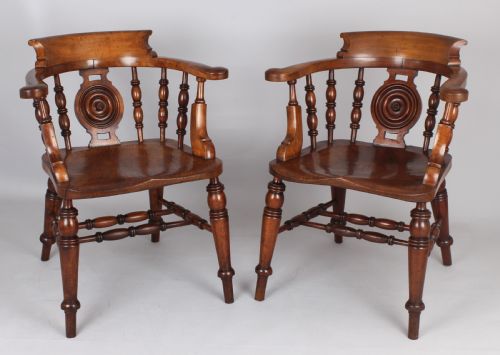
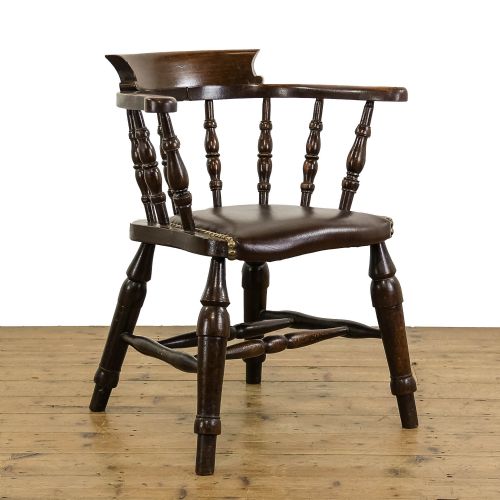


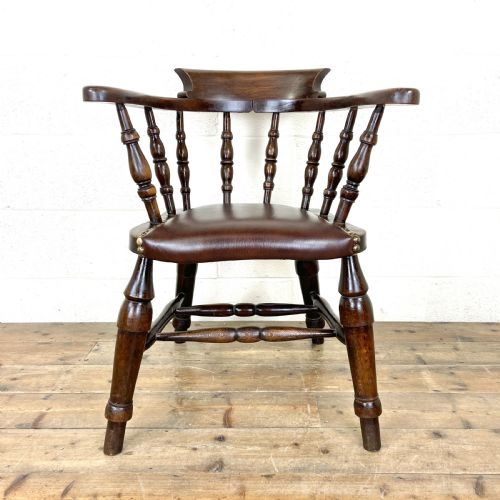
Traditional Pub Armchair
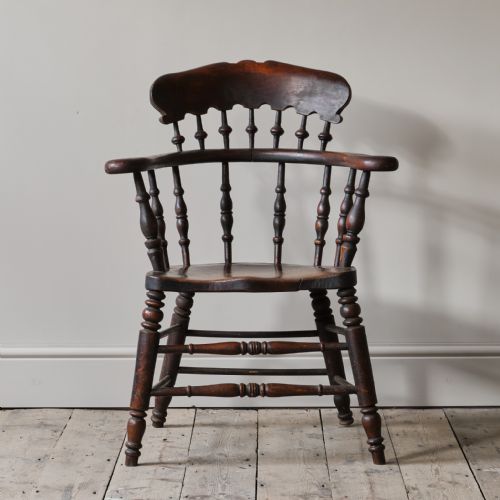
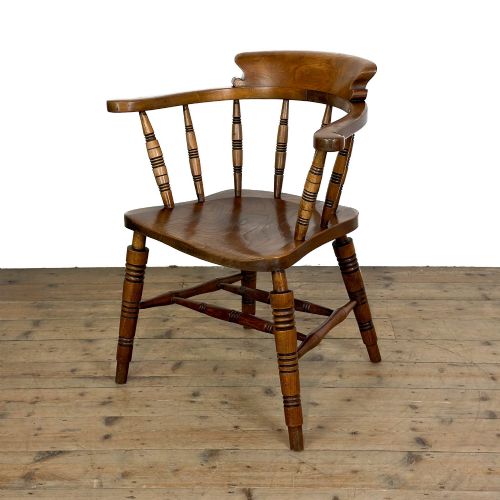
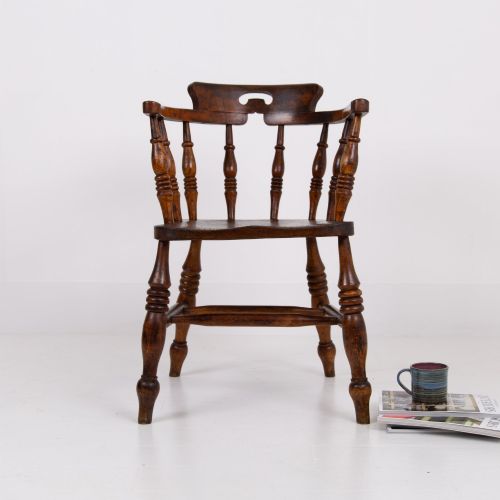
These traditional pub armchairs are solid nineteenth-century seating built for heavy use, offering deep wooden seats and low curved backs that suit daily sitting.
Traditional Pub Armchair
A traditional pub armchair is a sturdy seating form from the nineteenth century, built for public houses and domestic parlours alike. These chairs combine the deep, wide seat of a Windsor with a low, curved back designed for comfort over long hours.
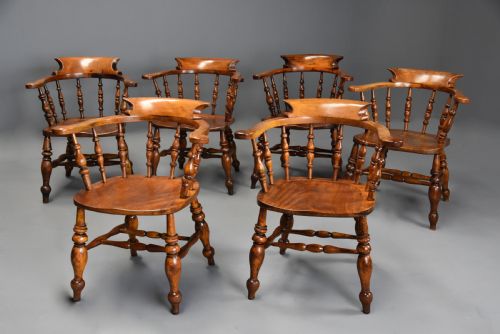
You will most frequently meet nineteenth-century examples on this page, spanning the Victorian and Edwardian periods. They appear both as single pieces and in larger matched sets, suited for dining tables or desks as well as firesides.
How they were made
Maker-joiners built these traditional pub armchairs using native timbers like elm for the thick, saddle-shaped seats and beech or ash for the turned spindles and steam-bent arm rails. Some rarer variants utilise satin birch or alder, showing regional timber choices across England.
Construction relies on traditional Windsor framing techniques, where legs and back spindles lock directly into a solid wooden seat block with wedged tenons. Certain examples incorporate brass fittings or leather seat pads for added utility.
Several armchairs are recorded simply as smoker's bows, carrying the distinct scent of nineteenth-century pipe tobacco deep within their ancient elm grain.
What varies in quality
Quality rests in the selection of timbers and the depth of the sculpted seat. A thicker, single-piece elm seat shaped with deep hollows demonstrates superior craftsmanship compared to a flat, thin board.
The grace of the turned spindles and the clean sweep of the continuous arm rail also separate standard workshop output from finer country pieces. Proportions remain balanced on better examples, ensuring the low back supports the sitter properly.
The Traditional Pub Armchair Glossary
- Smokers Bow
- A low-backed Windsor armchair with a continuous curved arm rail, popular in nineteenth-century pubs and reading rooms. It provides sturdy elbow support without restricting upper body movement.
- Captain's Chair
- A colloquial term for a compact armchair with a low rounded back, often used interchangeably with smokers bow. These chairs served utility roles in offices, public houses, and domestic spaces.
- Comb Back
- A Windsor chair variation where the vertical back spindles extend upward through a top rail to resemble the teeth of a comb. This construction offers additional structural rigidity to the upper back.
- Windsor
- A chair style characterised by spindles inserted into a solid wooden seat rather than a framed back. Country makers adapted this technique across various regional timber combinations.
Traditional Pub Armchair: Frequently Asked Questions
Are these chairs comfortable for daily use?
These chairs feature wide, sculpted wooden seats designed for long hours of sitting. Their low, curved arms provide solid support without feeling restrictive.
Most nineteenth-century examples work well at modern dining tables or desks. Adding a simple pad can increase comfort if you plan to sit for extended periods.
How do I date a traditional pub armchair?
Dating relies on observing wood species, turning styles, and construction wear. Pieces from the early nineteenth century often display deeper hand-sculpted elm seats and simpler, sturdier turnings.
Later Victorian and Edwardian examples may show machine assistance in the spindle turnings and lighter timber selections like beech or satin birch. Examining the underside reveals tool marks that help confirm age.
Where were these chairs originally used?
These sturdy armchairs served primarily in public houses, commercial offices, and country parlours. Their robust construction allowed them to withstand heavy daily wear in public spaces.
Many also saw service in libraries and captain's cabins, earning them alternative names like the captain's chair or smoker's bow.
How should I care for the wooden seat?
Maintain the timber by applying a traditional beeswax polish occasionally to nourish the dry grain. Avoid placing the chair near direct heat sources that could cause the solid elm or beech to split.
Regular dusting with a soft cloth keeps the finish intact. Handle brass or leather elements gently according to their specific material needs.