





Dark Elm Smokers Bow
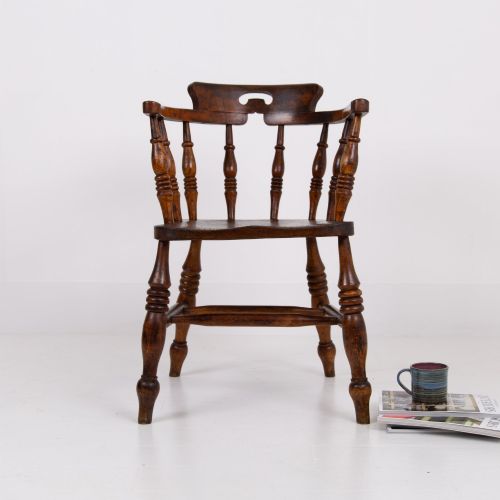
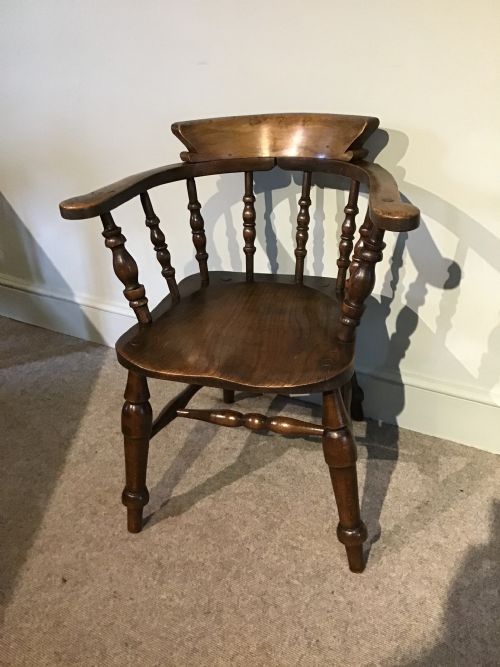
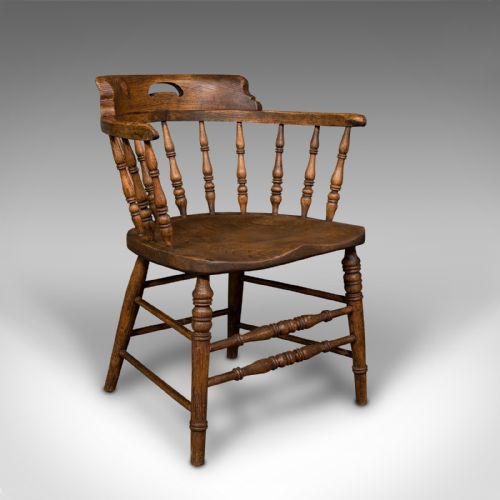
These dark elm smokers bow chairs are sturdy country armchairs built for comfort, and you want one for their rich grain and solid proportions.
Dark Elm Smokers Bow
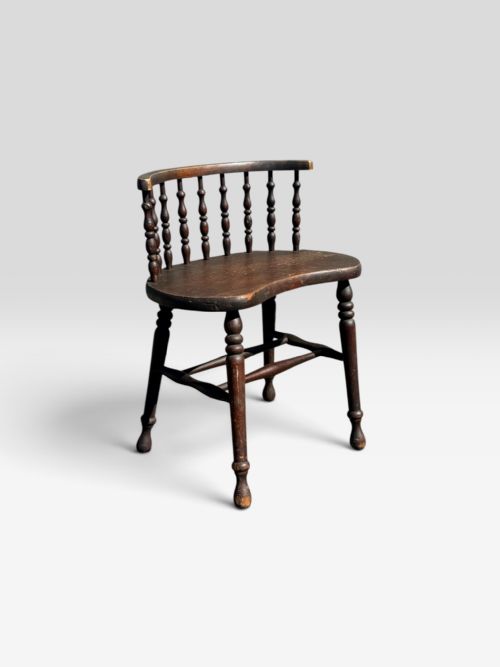
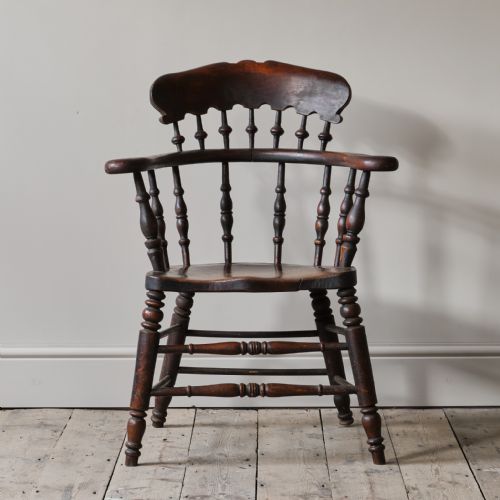
When you search for dark elm smokers bow chairs, you are looking at robust country seating designed with low backs and generous armrests. These pieces belong to the Windsor tradition, combining vernacular comfort with practical utility for domestic and commercial use.
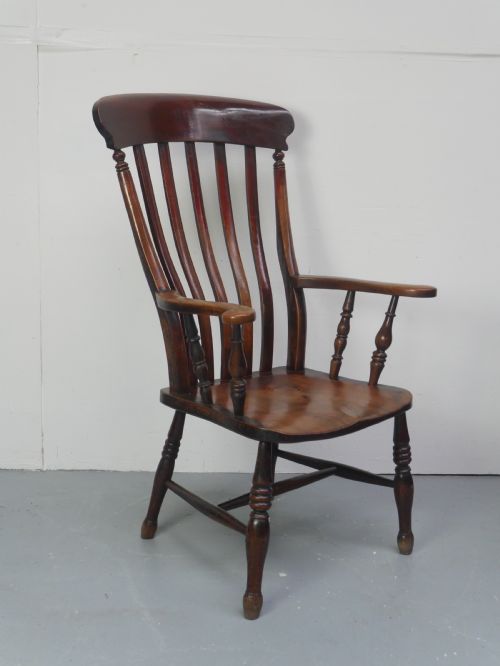
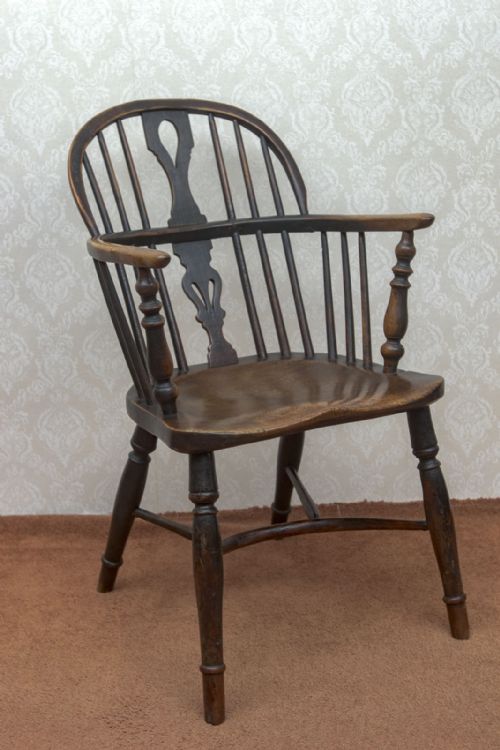
On this page, you are most likely to meet nineteenth-century and Edwardian examples shaped from solid native timbers. The forms include standard armchairs, low-back Windsor variants, and occasional rocking chairs originating from English rural workshops.
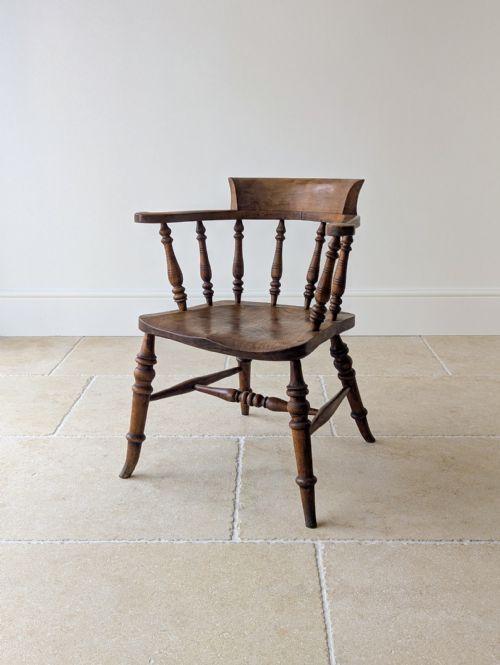
The aesthetic is unpretentious and heavy, defined by bentwood bows and turned spindles supporting the arms. They suit modern studies and farmhouse kitchens alike, offering a tactile connection to historical domestic furniture.
How they were made
The primary material is elm, selected for its tough, interlocking grain that resists splitting under heavy use. Cabinet makers paired this with beech for turned legs and spindles, and sometimes ash or oak for structural elements.
Construction relies on traditional Windsor methods, where shaped seats are bored to receive upright spindles and legs. The distinctive curved arm bow is typically steam-bent from a single piece of dense timber, secured with wedged tenons.
Listings feature nineteenth-century and Edwardian pieces constructed from elm, beech, ash, oak, and yew.
What varies in quality
The distinction between ordinary and superior pieces lies in the figure of the wood and the depth of the seat saddle. Elm planks with rich, undulating grain command attention, whereas plain, flat boards lack visual movement.
Proportion and execution of the turnings also dictate merit. Crisp spindle turnings and balanced arm scrolls indicate skilled provincial joinery, while coarse, hasty shaping lowers the distinction of the piece.
The Dark Elm Smokers Bow Glossary
- Smokers bow
- A sturdy low-backed armchair derived from the Windsor form, historically found in public houses and smoking rooms. These chairs feature continuous arm rails and deep wooden seats.
- Windsor chair
- A chair built with a solid wooden seat into which all other components are directly inserted. They rely on framed construction methods rather than continuous upholstery.
- Steam bending
- A woodworking technique where timber is subjected to steam to soften the lignin, allowing craftsmen to curve wood into tight bows without breaking the fibres.
- Saddle seat
- A wooden seat base carved into a concave, contoured shape for ergonomic comfort. Higher quality examples show deep, hand-chipped depressions that match human anatomy.
Dark Elm Smokers Bow: Frequently Asked Questions
Are these chairs comfortable?
Yes, despite being made entirely of solid wood, they offer genuine physical comfort. The shaped seats and curved arm rails support natural postures during extended sitting.
Adding a loose squab cushion provides extra padding while keeping the timber frame visible. Their ergonomic design has kept them popular for daily use across generations.
How do I date a smokers bow?
Dating relies on timber selection, tool marks, and construction wear patterns. Nineteenth-century examples often display hand-turned components and rich patination developed through decades of polishing.
Later Edwardian versions can exhibit sharper machine turnings and lighter timber tones. Comparing the joint construction and undercarriage reveals the likely period of manufacture.
How do I care for elm furniture?
Elm furniture responds best to regular dusting with a dry cloth and occasional application of natural wax. Avoid placing timber pieces near direct heat sources or strong sunlight, which can dry out the grain.
Maintaining stable room humidity prevents the wood from shrinking or splitting at the joints. Gentle handling preserves the historical surface patination built up over centuries.