
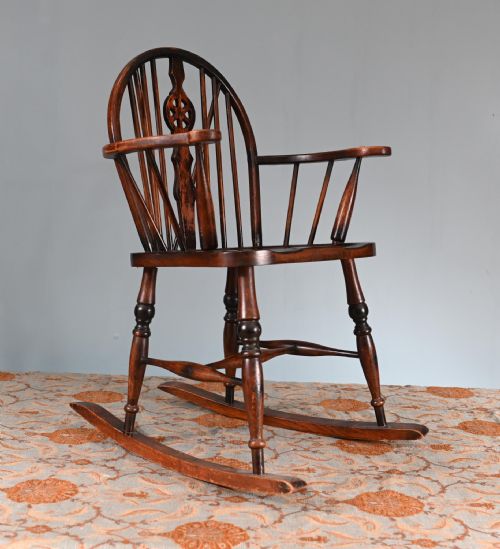
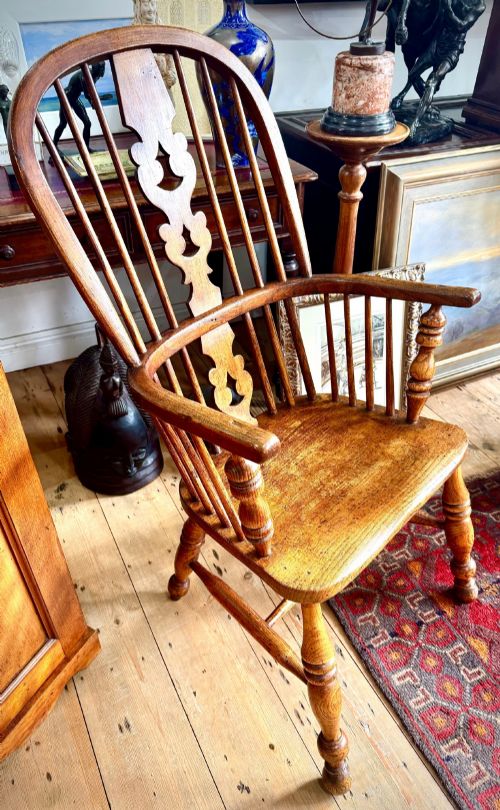
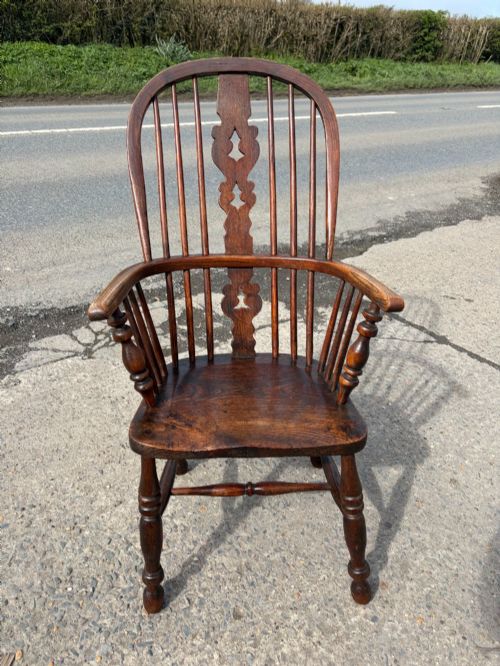


Elm and Beech Armchair
An elm and beech armchair combines vernacular craftsmanship with sturdy domestic seating, offering solid wooden construction suited to everyday interior placement.
Elm and Beech Armchair
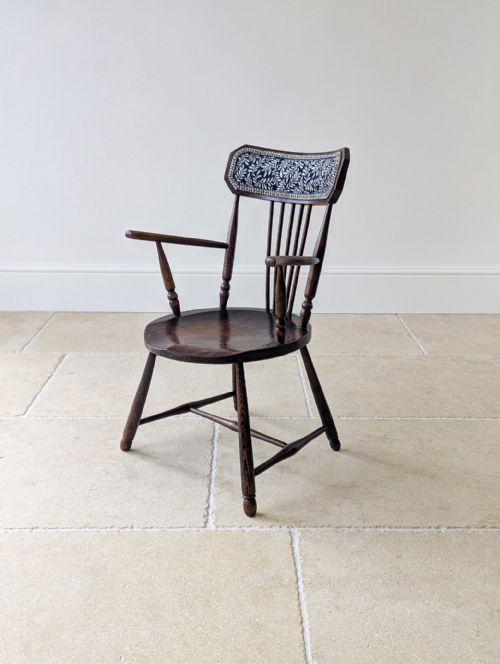
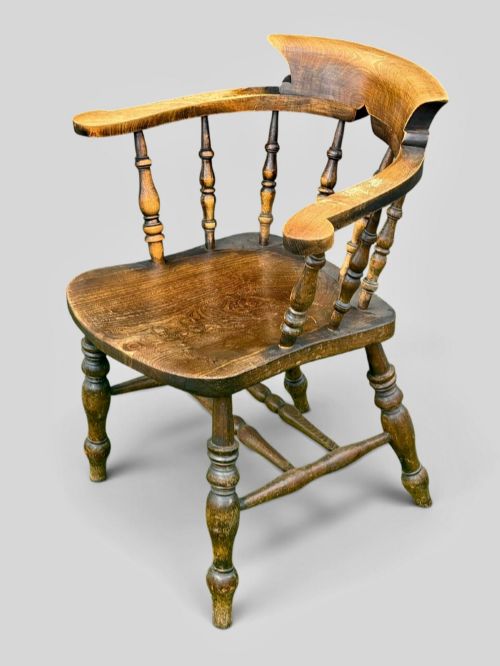
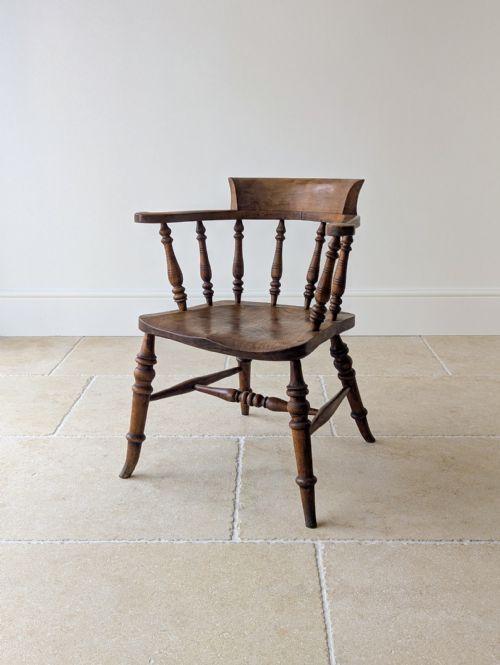
An elm and beech armchair typically manifests as a Windsor, captain's chair, or smoker's bow originating from nineteenth-century or early twentieth-century domestic contexts. These seating forms developed to provide robust comfort for farmhouse kitchens, offices, and parlours, utilising locally sourced timber.
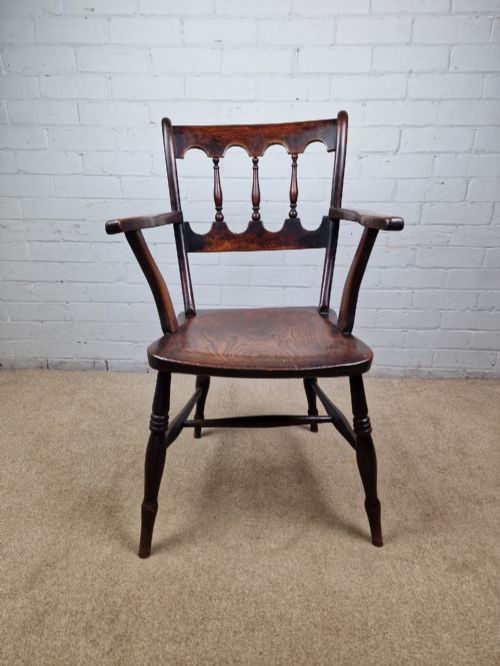
The most common examples on this page are Victorian Windsor and smokers bow armchairs, often constructed with turned spindles or solid wood backs. They appear alongside desk chairs, rocking chairs, and ladderback variations dated across the nineteenth and early twentieth centuries.
Makers designed these chairs for practical utility, pairing durable hardwood frames with shaped wooden seats. Regional variations across English country workshops account for differences in back styles, including wheelback, lath back, and splat back configurations.
Distinctions in quality
Quality rests upon the thickness and figuring of the elm seat, where deeply saddled, single-board timbers demonstrate superior craftsmanship compared to multi-board or flat replacements. Well-defined turnings on the spindles and legs also indicate higher workshop standards.
Structural integrity depends on original joints remaining tight and unaltered by heavy past repairs or replacement legs. Chairs retaining deep patination and minimal surface intervention hold greater integrity than those stripped down to raw timber.
Listings feature Victorian, Edwardian, and early twentieth-century examples constructed from elm, beech, ash, alder, and rush.
The Elm and Beech Armchair Glossary
- Smoker's bow
- A low-backed Windsor armchair featuring a continuous bentwood rail forming the arms and backrest, commonly found in nineteenth-century smoking rooms and offices.
- Wheelback
- A Windsor chair style incorporating a pierced splat shaped like a cartwheel centred in the backrest.
- Saddled seat
- A wooden seat carved into a hollowed, concave shape to improve seating comfort.
- Cracker
- A colloquial term for chairs featuring split wooden elements that have undergone stress over decades of domestic use.
- Stretcher
- A horizontal wooden rod connecting the legs of a chair to provide structural stability and prevent splaying.
Elm and Beech Armchair: Frequently Asked Questions
What is an elm and beech armchair?
An elm and beech armchair is a traditional wooden seat, such as a Windsor or captain's chair, built with a durable elm seat and beech structural supports.
These chairs date primarily from the nineteenth and early twentieth centuries, reflecting regional English country craftsmanship.
How were these chairs used historically?
They served as robust seating in farmhouses, kitchens, offices, and studies for daily domestic tasks.
Their sturdy construction made them suitable for heavy, continuous use across generations.
How do I live with an antique wooden armchair?
Place the chair away from direct heat sources and sudden temperature shifts to prevent timber shrinkage and cracking.
Applying a traditional beeswax polish periodically helps maintain the surface finish and rich patination.
How do I tell different chair periods apart?
Nineteenth-century examples often feature deep hand-turned spindles and heavier elm seats with distinct tool marks from initial shaping.
Later pieces from the early twentieth century show more standardised turning and lighter construction methods.