
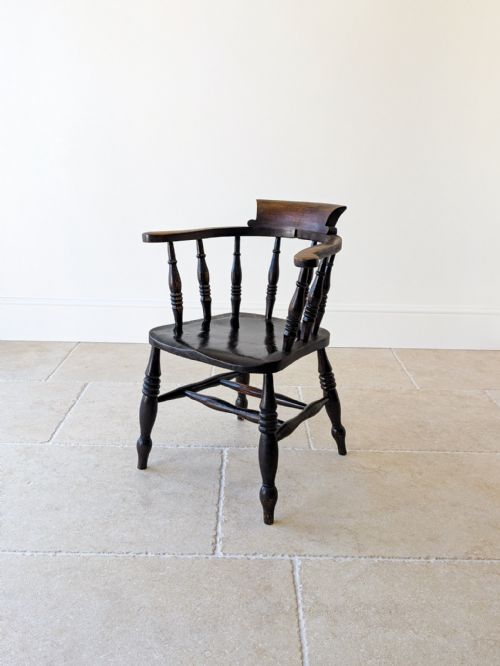
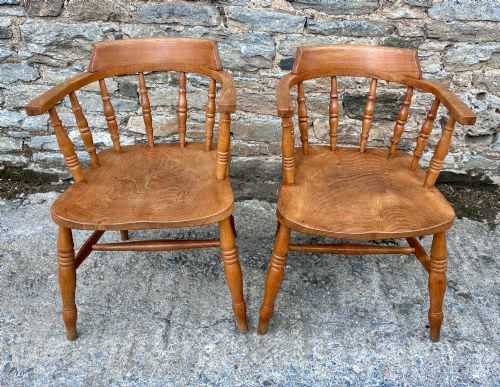
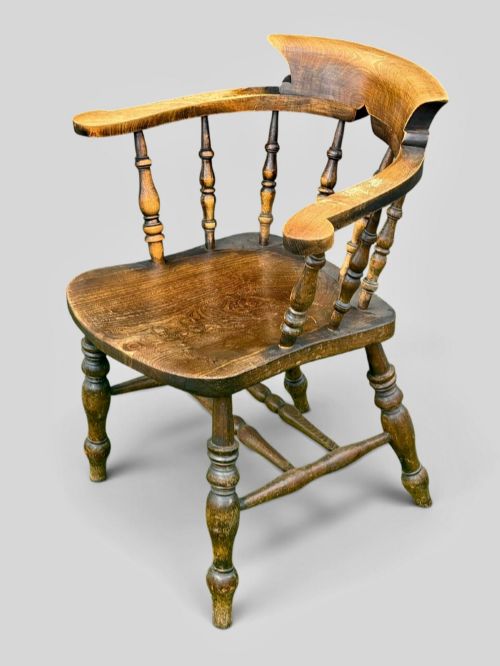
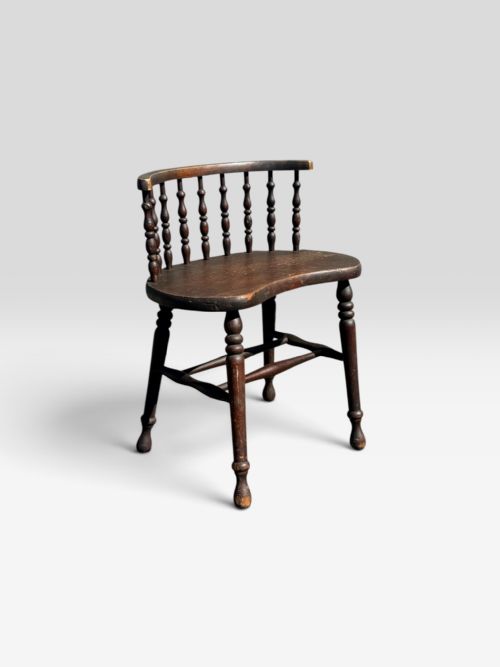
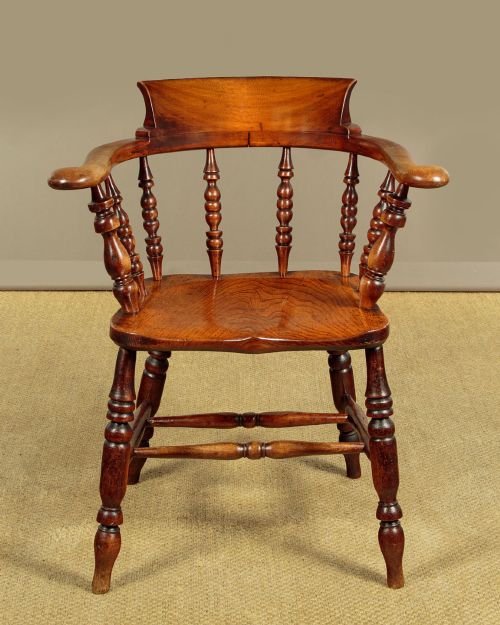
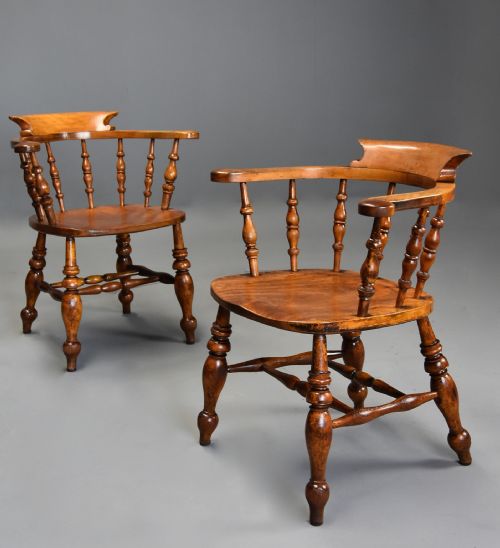
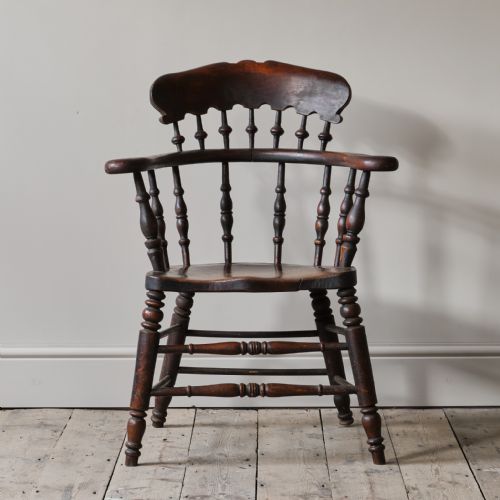
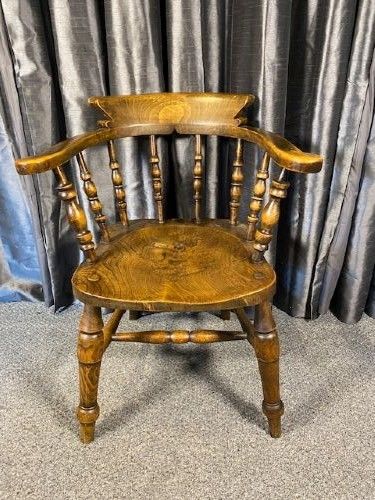
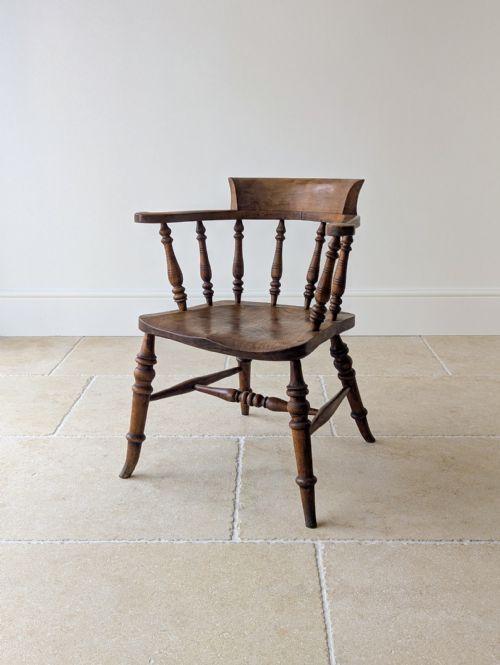
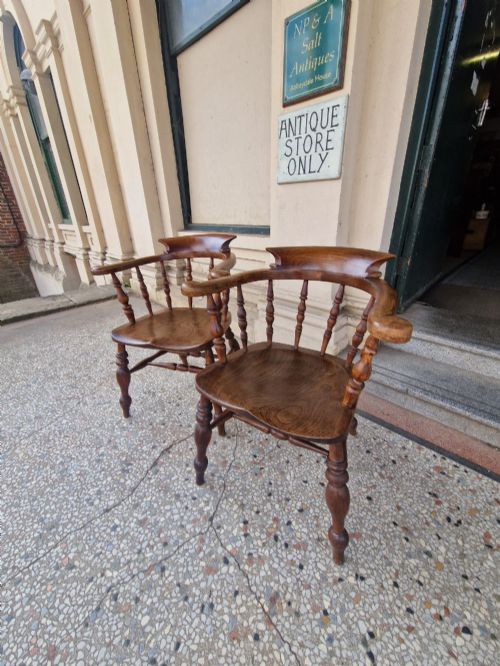
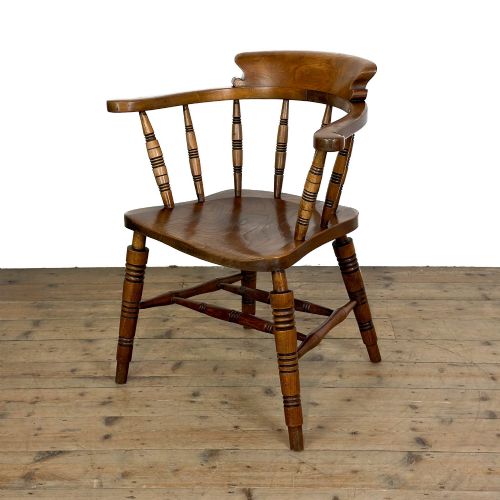
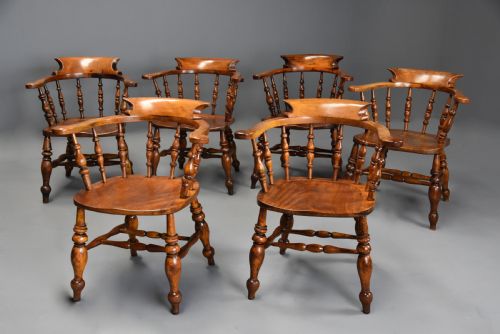
Wooden Tub Desk Chair
These robust wooden tub desk chair examples bring enduring utility and country house character to a study.
Wooden Tub Desk Chair
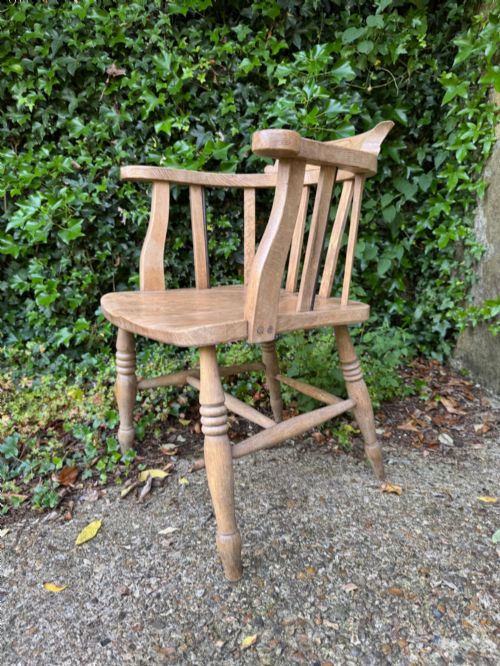
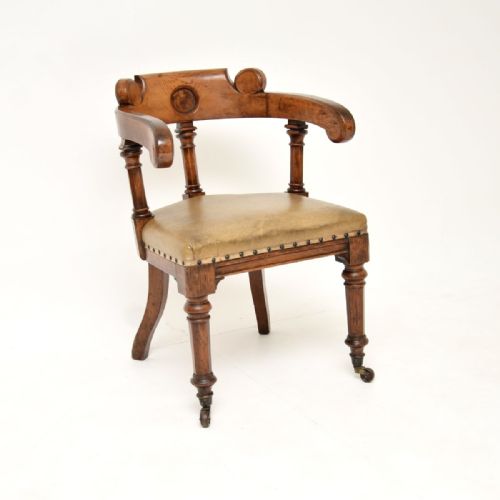
A wooden tub desk chair encompasses sturdy low-backed seating designed for writing tables, featuring heavy timber construction from the Victorian and Edwardian eras. Buyers encounter numerous regional variations including smokers bows, Windsor forms, and captain chairs originating from English country houses and provincial workshops.
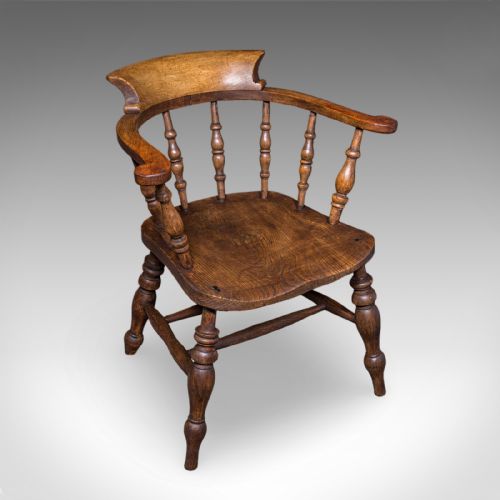
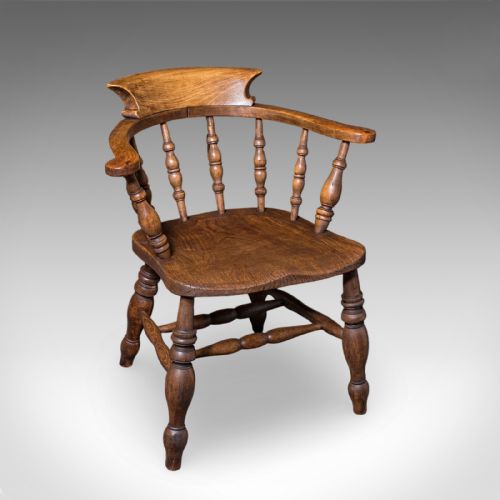
The prevalent examples combine curved wooden arm rails with solid round seats, often supported on turned spindles and rigid legs. Makers produced these pieces in substantial timbers like elm, oak, and beech to withstand daily commercial and domestic use at a desk.
Period variations span the mid-nineteenth century through to the early twentieth century, showing shifts from heavy utilitarian seating to refined library and office armchairs. Surviving pieces frequently retain traces of vernacular craftsmanship, demonstrating local turnery traditions across rural England.
Timbers and construction techniques
Cabinet makers and bodgers utilised native British hardwoods, pairing tough elm for scooped solid seats with resilient beech, ash, or birch for bent arm rails and structural spindles. This combination provided the necessary flex in the curved crest while keeping the seat base stable and heavy.
Traditional joinery relied heavily on steam bending timber to form the continuous tub or bow back, secured to the seat via wedged tenons and interlocking spindles. Workshops occasionally incorporated secondary materials such as brass fittings, leather hide pads, or woven cane panels into the frame.
The inventory records vernacular forms including smokers bows, Captain chairs, and Windsor desk seating.
Judging build integrity and material selection
Superior pieces display thoughtful timber selection, such as figured burr elm or rich yew wood paired with deep grain patterns in the main seat slab. Lesser examples utilise plain utility timbers with heavy repairs or replaced spindles that disrupt the original silhouette.
Construction rigidity separates ordinary seating from exceptional craftsmanship, visible in the tightness of the wedged joints and the smoothness of the steam-bent back rail. The presence of untouched surface patination accumulated over decades of service dictates the desirability of a piece.
The Wooden Tub Desk Chair Glossary
- Smoker's bow
- A low wooden armchair with a continuous curved back rail and turned spindles, closely related to the Windsor chair tradition. These seats appear frequently in domestic studies and country properties.
- Captain's chair
- A sturdy timber armchair designed with a rounded upper back and arm rest assembly supported by vertical spindles. They typically feature a recessed solid wooden seat.
- Windsor chair
- A chair constructed with a solid wooden seat into which the legs and back spindles are directly bored and wedged. Regional variations often include distinct comb pieces or pierced splats.
- Bergère
- An enclosed upholstered armchair featuring cane work panels set into a wooden frame. These styles emerge in later Edwardian examples.
- Patina
- The surface sheen and colour acquired by timber through age, handling, and regular polishing. A deep patina indicates long-term care and organic wear.
Wooden Tub Desk Chair: Frequently Asked Questions
What is a smokers bow?
A smokers bow is a sturdy vernacular wooden armchair featuring a low, continuous curved back rail supported by turned spindles above a solid saddle seat. They share close construction methods with traditional Windsor seating.
Cabinet makers originally designed these pieces for comfort in parlours and offices, making them precursors to standard office armchairs.
How do I date an oak desk chair?
Dating relies on examining construction marks, timber preparation methods, and style indicators such as turnery profiles and rail heights. Mid-nineteenth-century examples often display simpler hand-turned spindles and heavier elm seats.
Edwardian pieces tend to show lighter proportions and occasionally incorporate factory-standardised components alongside traditional joinery.
Are these chairs comfortable for daily work?
Most antique desk chairs feature ergonomically scooped solid wooden seats designed for upright posture during writing tasks. While lacking modern padding, their curved wooden back rails offer natural lumbar support.
Some variants include upholstered leather pads or larger tub dimensions to accommodate extended sitting periods.
What woods were used for these seats?
Craftsmen utilised native British hardwoods, most commonly pairing thick elm for the carved seat base with beech, ash, or oak for the frame and spindles. Occasional luxury models incorporate mahogany, walnut, or yew wood.
This mixed-timber approach ensured that each part of the chair utilised the most suitable physical property for strength or flexibility.