
Carved Wooden Captains Chair
A carved wooden captains chair brings sturdy domestic comfort to a desk or study, combining nineteenth-century practicality with robust local craftsmanship.
Carved Wooden Captains Chair
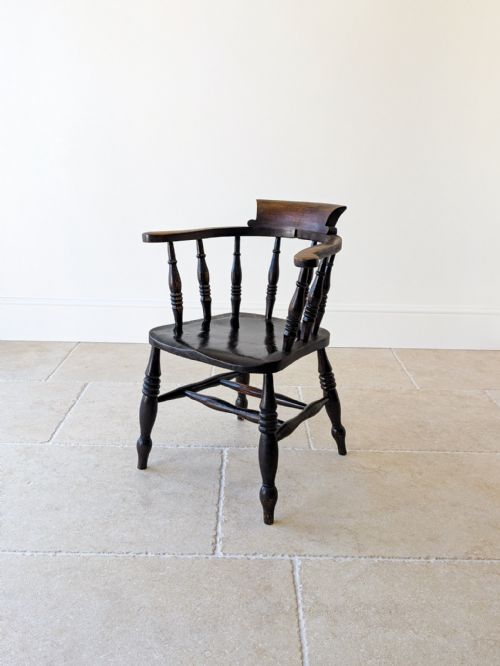
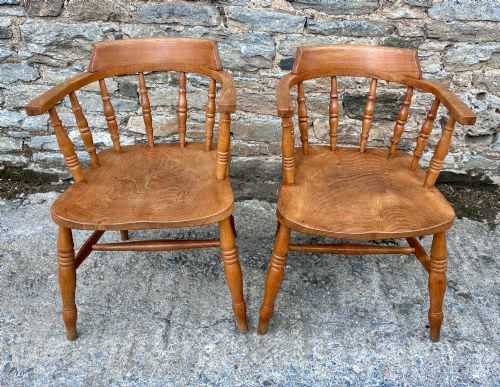
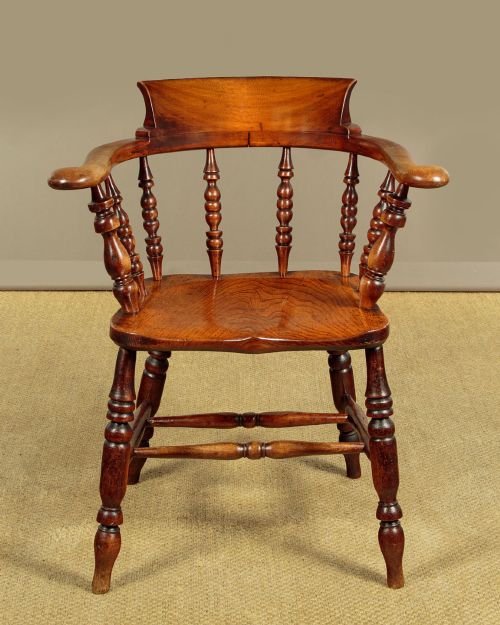
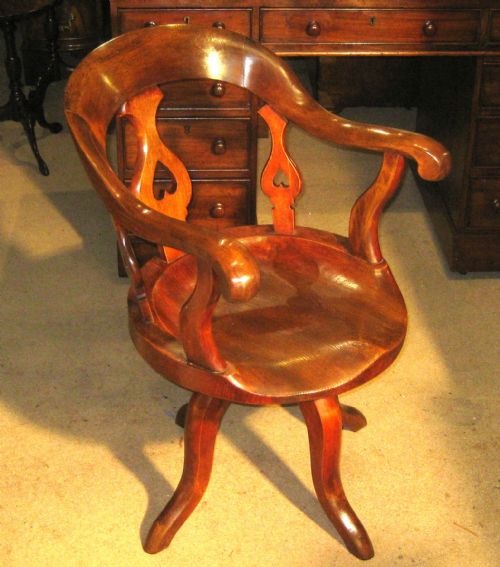
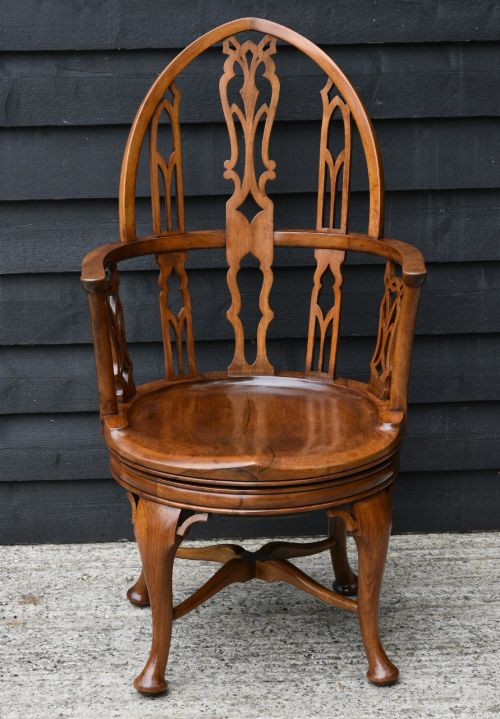
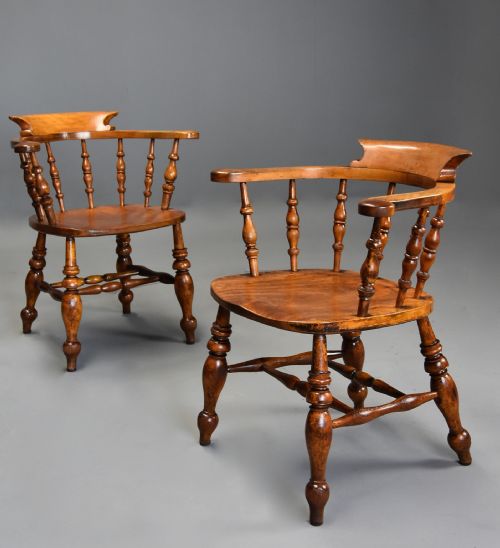
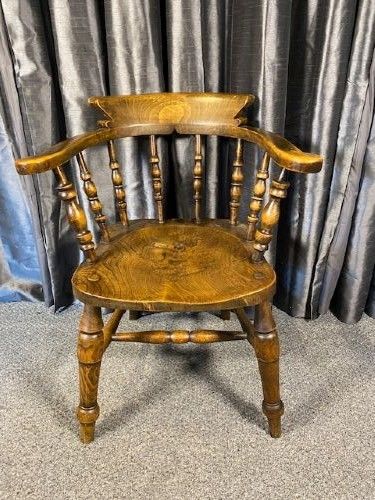
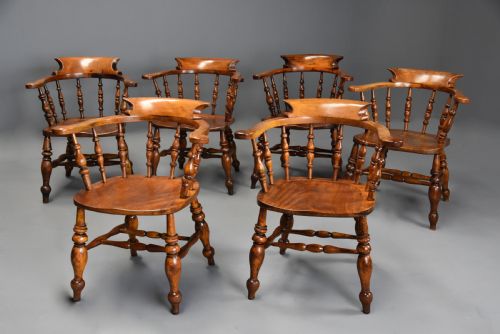
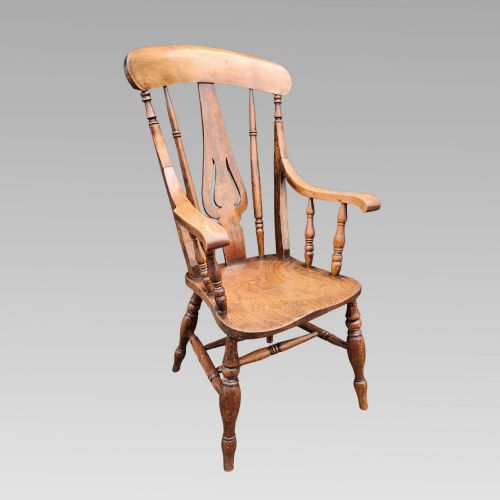
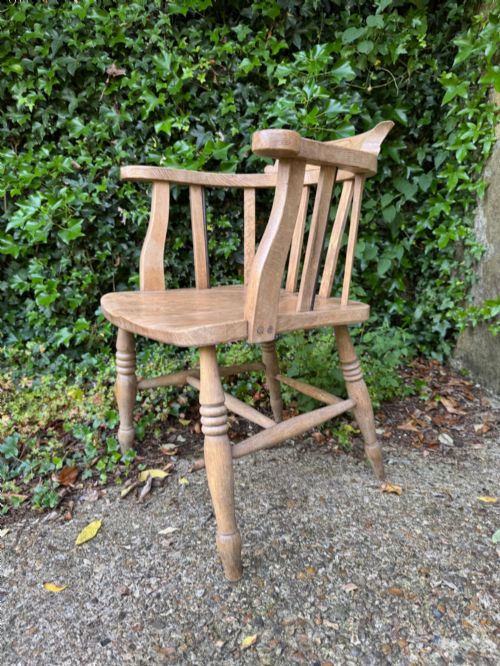
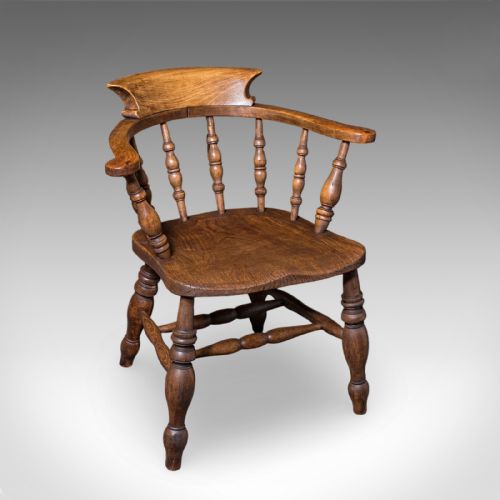
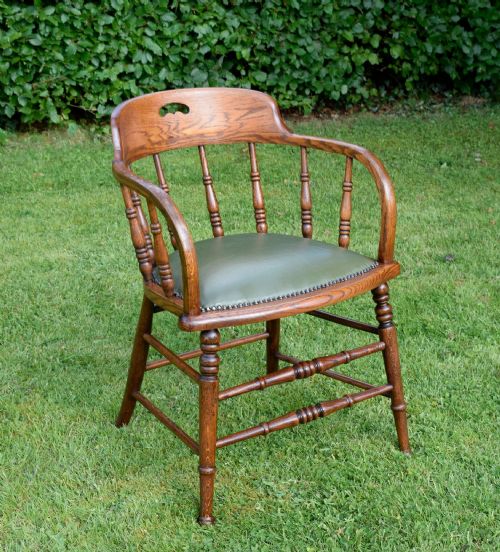
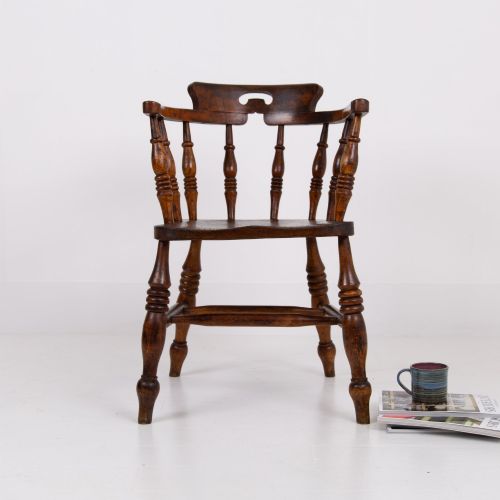
A carved wooden captains chair is primarily found in Victorian and Edwardian iterations, encompassing robust forms like the smoker's bow and the Windsor armchair. These seating options served working rooms, studies, and farmhouse spaces alike, prioritising structural support and daily utility over delicate ornamentation.
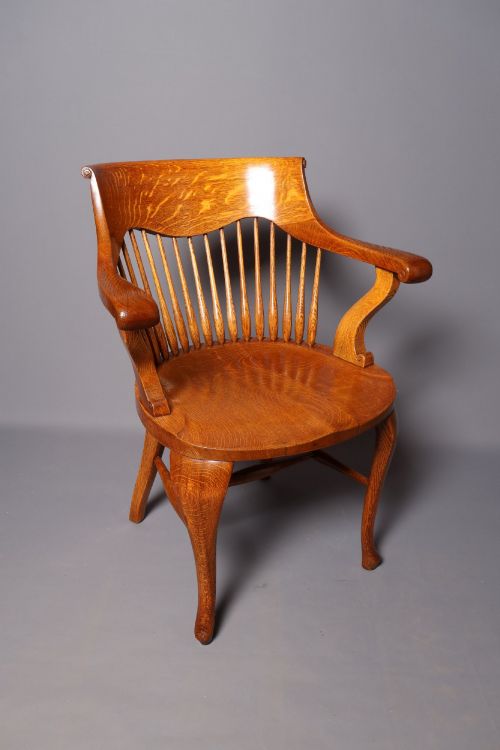
The materials recorded across these examples lean heavily toward native timbers such as elm, ash, and oak, frequently paired with seats shaped from solid blocks of wood. Buyers encounter variations ranging from low-back library armchairs to pivoting office models mounted on revolving bases.
Originating predominantly from English country workshops and regional makers, these chairs reflect enduring traditions of regional joinery. The selection includes both singular statement pieces and matched pairs intended for partner desks or formal libraries.
How they were made
Makers utilised native hardwoods, turning to elm for tough, unyielding seats and ash or beech for resilient spindles and steam-bent backrails. Walnut and mahogany appear in later desk variants, offering a finer grain for formal interior settings.
Construction relied heavily on traditional joinery methods, including pegged mortise and tenon joints alongside steam-bending techniques to shape the continuous arm and back bows. Seats were frequently carved from a single thick plank of timber to create a comfortable, contoured depression.
Carved Wooden Captains Chair Retail Price Guide 2026
Typical asking prices for carved wooden captains chair among the pieces listed under this phrase on Sellingantiques today, from the lower quarter to the upper quarter. They describe what is for sale here now, not the wider market.
Several armchairs retain the faint, wonderful aroma of beeswax and generations of study.
What varies in quality
The integrity of the timber selection dictates much of the distinction between standard workshop output and superior examples, particularly in the figuring of the grain on elm seats or burr walnut panels. Well-chosen materials resist splitting and maintain their structural rigidity through centuries of use.
Refinement in the turning of spindles, the proportion of the arm bow, and the depth of the saddle seat separate ordinary utility seating from masterworks. The subtlety of the hand-carved details and the preservation of the original timber surface finish further define the upper tier of these pieces.
Howard and Sons·Fred Walker Rockley
The Carved Wooden Captains Chair Glossary
- Smoker's bow
- A low-backed Windsor-style armchair featuring a continuous curved armrest rail supported by turned spindles, commonly associated with nineteenth-century public houses and parlours.
- Windsor chair
- A chair built with a solid wooden seat into which the legs and back spindles are directly bored and wedged, celebrated for its sturdy, frame-independent construction.
- Spindle and lyre back
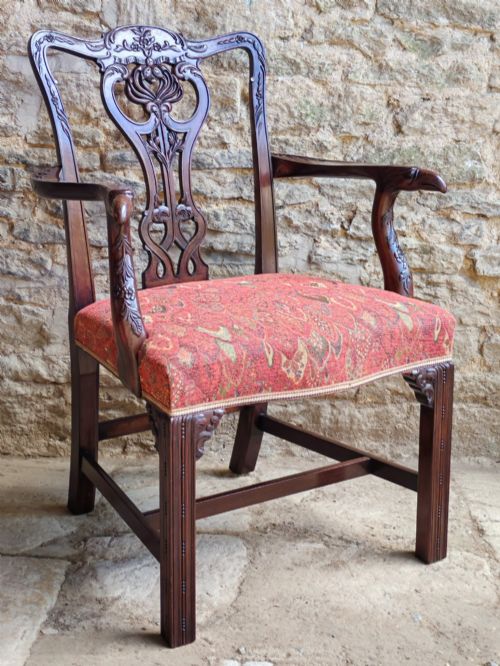
- A decorative backrest configuration incorporating slender turned rods alongside a central pierced splat shaped like a classical musical instrument.
- Gothic Revival
- An architectural and decorative style popular during the Victorian era that reintroduced pointed arches, quatrefoils, and medieval ornamentation into furniture design.
- Patina
- The deep, lustrous surface sheen developed on old wood through decades of handling, exposure to light, and polishing with natural waxes.
Carved Wooden Captains Chair: Frequently Asked Questions
What is a smoker's bow chair?
A smoker's bow is a sturdy, low-backed variant of the Windsor armchair, designed with a continuous wooden rail serving as both backrest and arms.
These pieces were widely used in domestic parlours and offices during the nineteenth century, offering robust support for daily sitting.
How do I identify a Victorian desk chair?
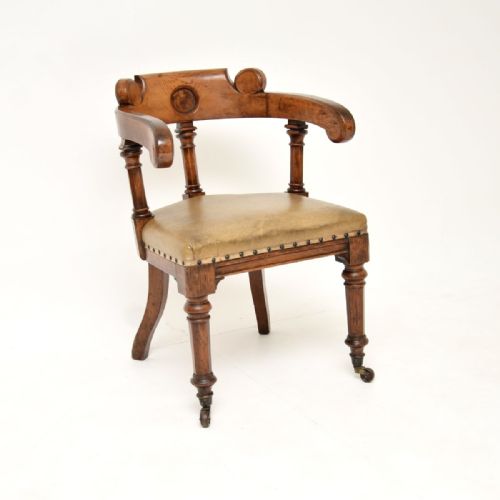
Victorian desk chairs often feature swivel mechanisms, timber frames in oak or walnut, and occasionally leather-upholstered seats for added comfort during long hours of writing.
They frequently display Gothic Revival influences or utilitarian office adaptations from the late nineteenth century.
Are these chairs comfortable for daily use?
Most examples are designed with ergonomically scooped wooden seats and supportive steam-bent back bows that provide surprisingly good lumbar support.
Their solid wood construction makes them exceptionally durable for regular placement at a modern desk or reading table.
What woods were commonly used?
Elm was the preferred timber for seats due to its interlocking grain which prevented splitting, while ash and beech provided strong, flexible material for turned spindles and legs.
Finer versions intended for libraries utilised mahogany or walnut, sometimes enhanced with burr figuring.