


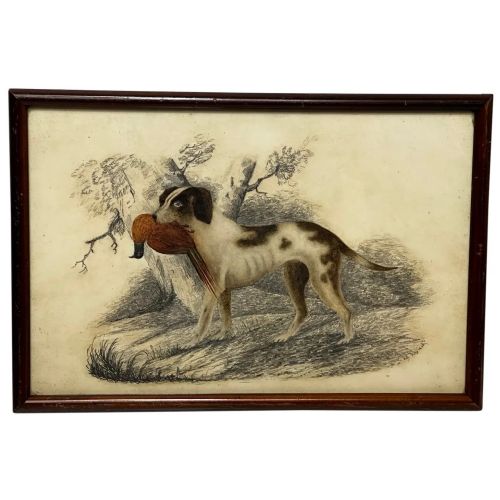


19th Century Bird Prints
These 19th century bird prints bring the meticulous observation of natural history into domestic interiors through hand-coloured engravings, lithographs, and delicate watercolours.
19th Century Bird Prints
When you search for 19th century bird prints, you encounter works spanning natural history illustration and sporting art, created during the Georgian and Victorian eras.
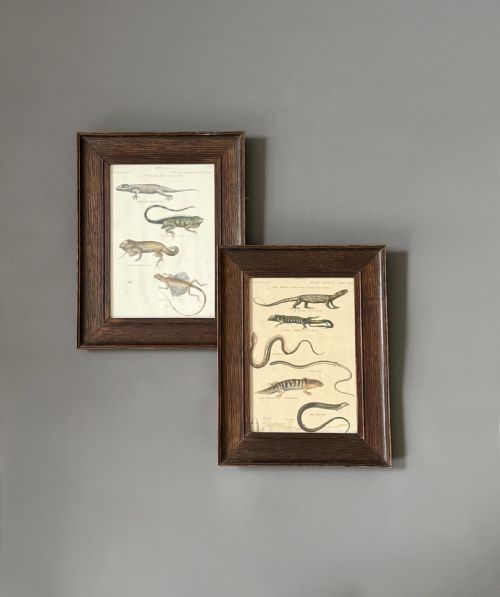
The selections here most frequently comprise framed prints, lithographs, and watercolours produced across the nineteenth century, often grouped in sets or pairs.
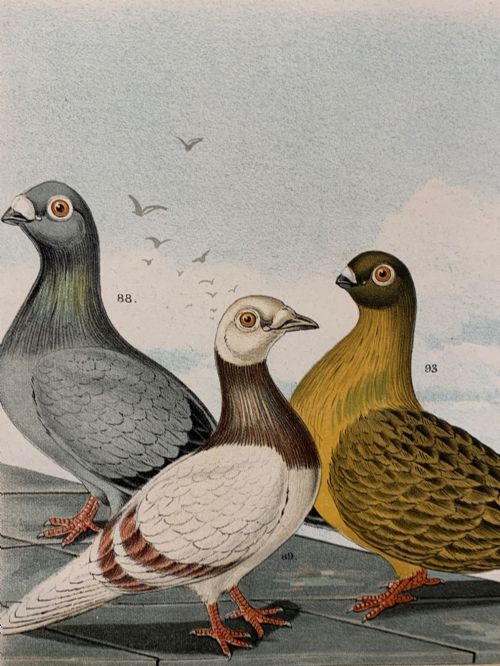
Subjects range from tropical parrots and game birds to pigeons and waterfowl, reflecting the period's intense fascination with ornithology and naturalism.
How they were made
These works rely on paper as a primary ground, marked by ink through engraving or lithography and frequently enhanced with hand-applied watercolour.
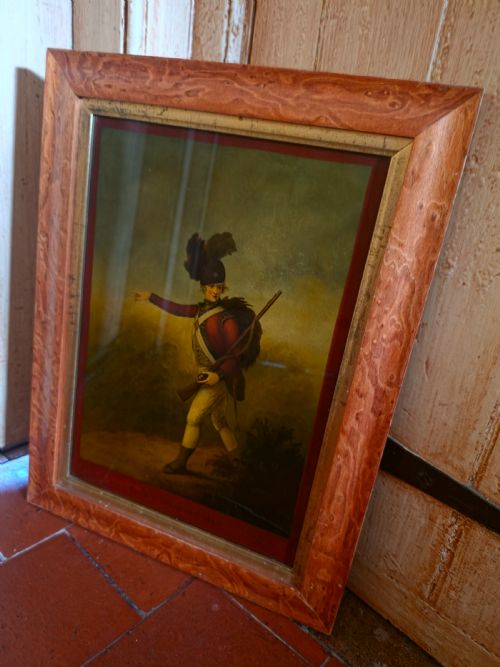
Presentation relies heavily on framing materials such as wood, ebonised moulding, and maple, paired with glass protection and gilt mounts or gold leaf.
Styles span Victorian naturalism, nineteenth-century British production, Georgian traditions, and sporting art depictions of birds.
What varies in quality
Quality rests upon the precision of the initial ink impression and the subtlety of the hand-colouring, which can range from flat application to nuanced washes.
The integrity of the framing materials, from simple wood mouldings to deep giltwood mounts, influences the overall presence and historical survival of the piece.
William Bird MD FLS·Gould·Alken·Arthur Wardle·William Swainson·Edward Lear·John Sherrin·George Lance·Rev B Morris
The 19th Century Bird Prints Glossary
- Lithography
- A planographic printing process using a flat stone or metal plate to produce multiple impressions on paper. This technique allowed for the accurate reproduction of detailed natural history illustrations.
- Engraving
- A printmaking method where an image is incised into a metal plate with a cutting tool. The resulting lines hold ink to create sharp, permanent details on paper.
- Watercolour
- An aqueous painting medium utilising pigments suspended in water-soluble binders. It was widely employed for delicate botanical and ornithological studies.
- Giltwood
- Wood that has been coated with gold leaf or gold paint. This finish frequently highlights the inner mounts and frames of nineteenth-century works.
- Ebonised
- Wood treated to imitate ebony, usually through dark staining or finishing. It provides a stark, contrasting border for framed watercolours and prints.
19th Century Bird Prints: Frequently Asked Questions
How are 19th century bird prints usually framed?
These works often appear in traditional wooden frames, sometimes utilising maple or ebonised mouldings with deep giltwood mounts to enhance the paper.
Protective glass is standard, shielding the delicate ink and watercolour pigments from environmental damage over time.
Are these prints hand coloured?
Many examples feature hand-applied watercolour over a printed base of lithography or engraving, lending individual character to each sheet.
This combination allowed publishers to produce detailed scientific outlines while retaining the artistic nuance of original paintings.
Can I find complete sets of prints?
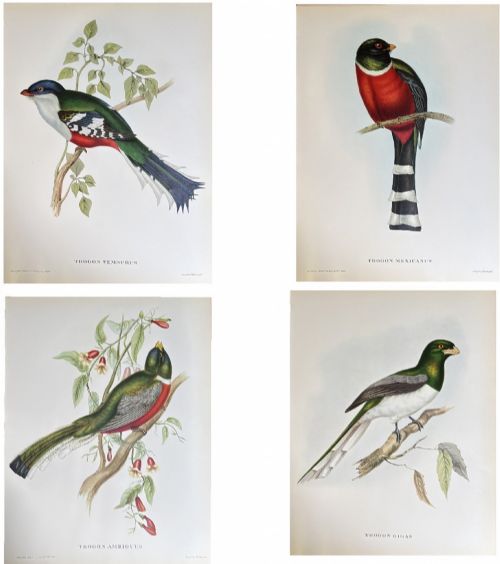
Listings frequently include matched sets or pairs, such as groups of four or six uniform plates issued together.
These series usually depict related species, such as tropical birds, waterfowl, or specific pigeon breeds, intended for collective display.
How do I care for antique paper and watercolours?
Keep these pieces away from direct sunlight to prevent the fading of ink, paper grounds, and delicate watercolour pigments.
Maintain stable indoor humidity levels and ensure the framing remains properly sealed against dust and moisture.