

Framed Bird Art
Framed bird art brings centuries of avian natural history, needlework and painting onto the wall inside traditional timber and glass mountings.
Framed Bird Art
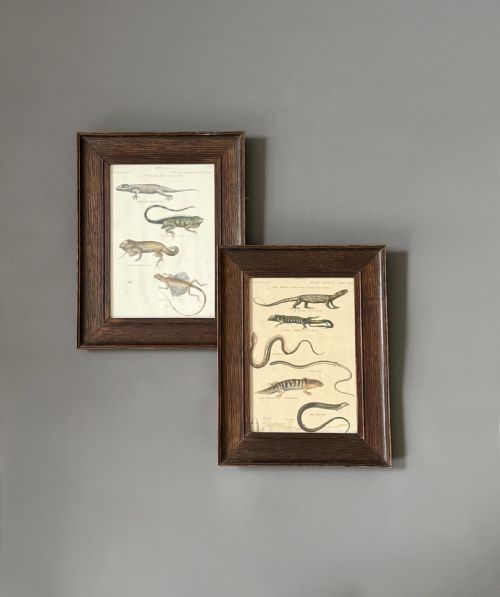
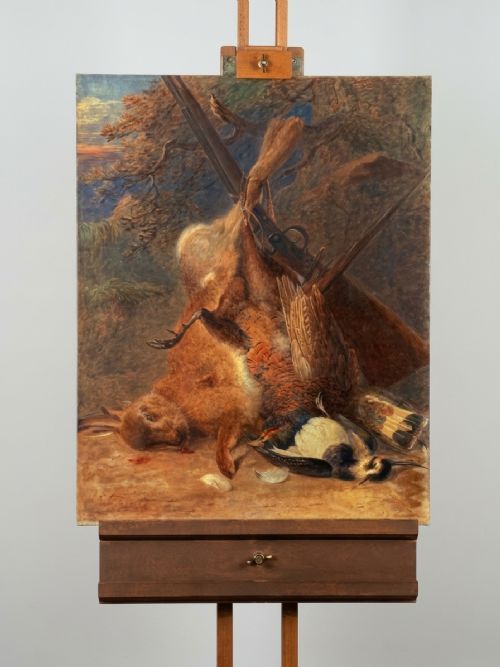
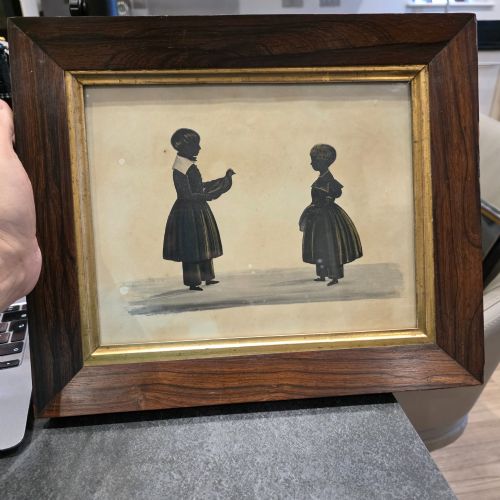
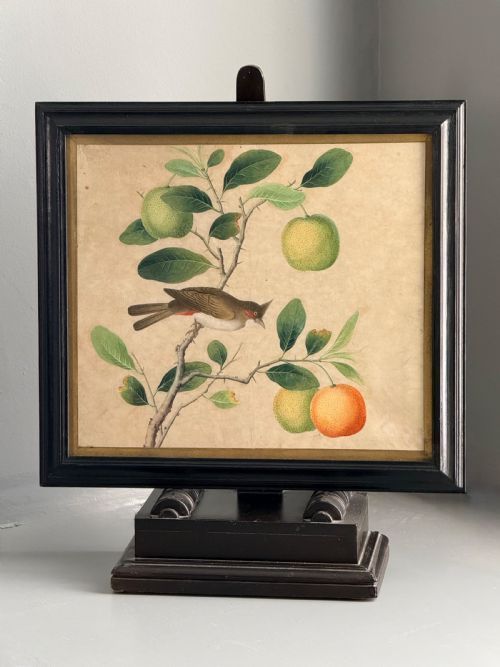
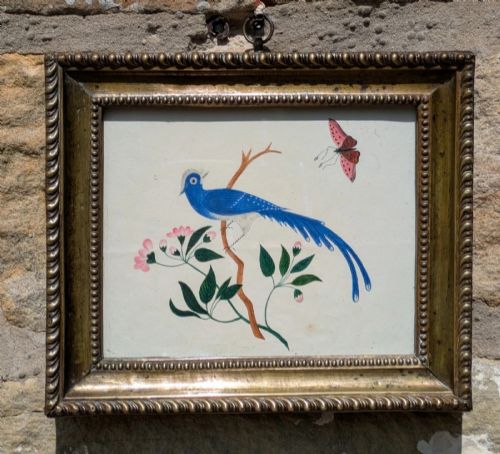
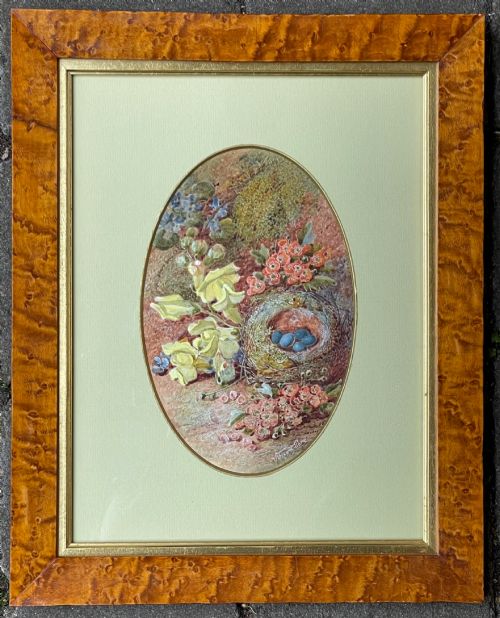
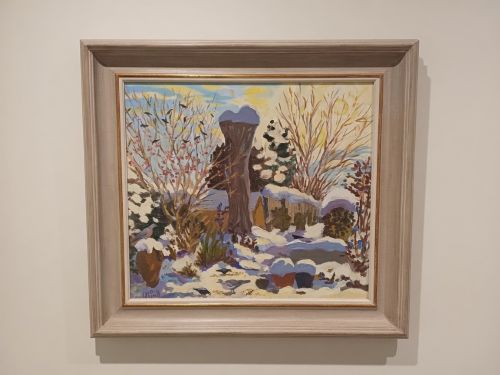
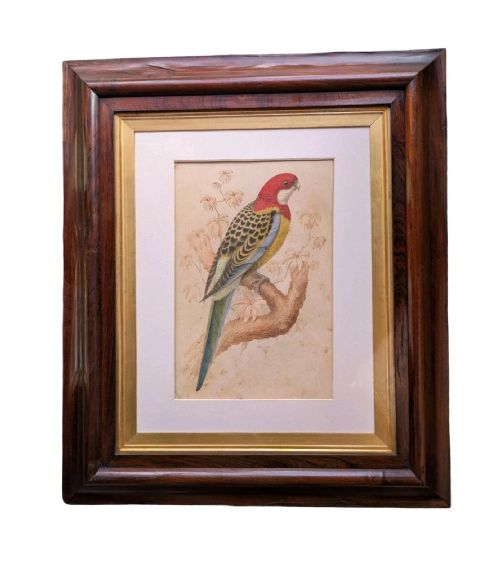
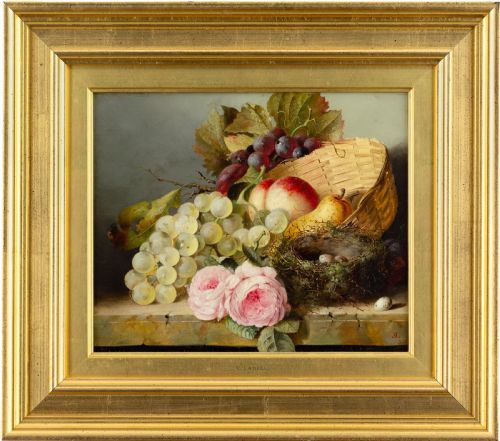
When buyers search for framed bird art, they encounter a diverse range of wall pieces spanning the eighteenth, nineteenth and twentieth centuries. These encompass natural history engravings, watercolours, oils on canvas and panel, needlework silk embroideries, plushwork, and gouache paintings.
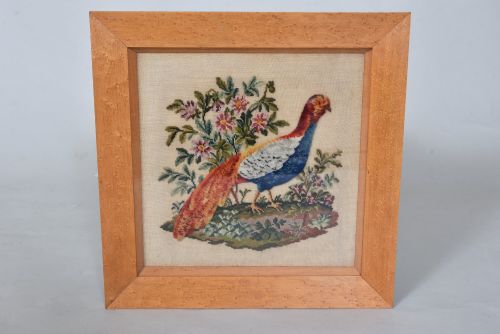
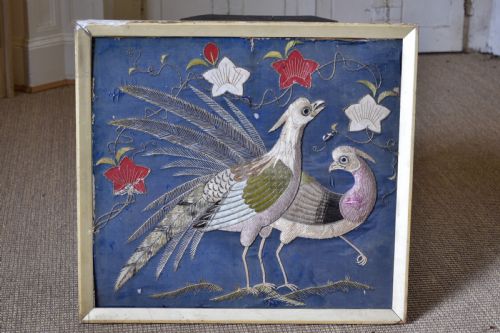
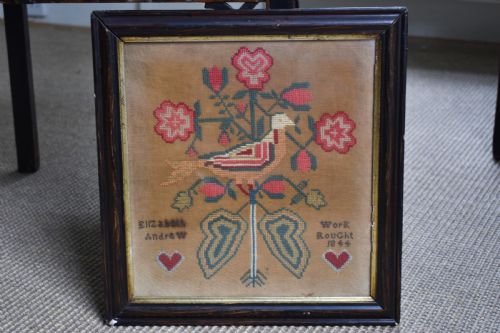
Beyond works on paper and canvas, the selection extends to textile arts such as wool work samplers, silk embroideries of cockerels, and framed Chinese silk rank badges. Each format reflects the prevailing aesthetic sensibilities of its period, from Georgian precision to Victorian natural history study.
Materials and construction
The physical construction of these pieces relies on traditional supports such as paper, canvas, pith paper, wood panels, and silk fabrics. Artists and artisans applied oil paint, watercolour, bodycolour, gouache, and hand-colouring to engravings to achieve depth and naturalistic detail.
Mounting and framing form an integral part of the evidence, utilising wood, glass, gold leaf, gilt wood, and ebonised frames. Techniques such as reverse glass painting, lithography, and detailed embroidery demonstrate the varied workshop methods employed across different centuries.
Object types span oil paintings, watercolours, engravings, silk embroideries, and wool work samplers.
Evaluating quality in framed bird art
Quality in these pieces rests upon the precision of the rendering and the skill with which the avian subject is captured. Works by documented artists or natural history illustrators display anatomical accuracy and finer brushwork or engraving line.
The integrity and originality of the framing contribute significantly to the overall merit of the piece. Period frames utilising gold leaf, gilt wood, or specialised mounts complement the artwork and maintain its historical context.
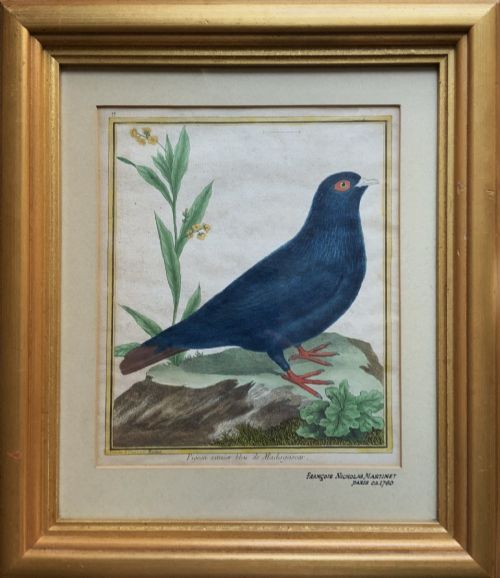
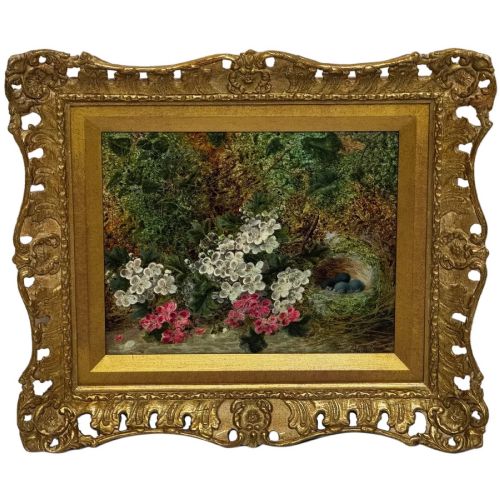
William Bird MD FLS·George Sydney Shepherd·François-Nicolas Martinet·Oliver Clare·Vincent Clare·Lucy Pratt·R. Hurst·Edward Ladell·Michelangelo Meucci·Samuel Dixon·Gaspar Peeter Verbruggen·John Sargent Noble·William Henry Ward·Sir Peter Markham Scott·George Rankin·Frederick Tatham·David Orr Kerr·Ralston Gudgeon·Michael Dahl
The Framed Bird Art Glossary
- Gouache
- An opaque watercolour paint consisting of natural pigment, water, and a binding agent such as gum arabic. It produces a heavier, more saturated surface than transparent watercolour.
- Lithography
- A planographic printing process based on the repulsion of oil and water, used extensively for mass-producing coloured bird prints in the nineteenth century.
- Plushwork
- A textile technique utilising raised, velvet-like pile stitches to create textured depictions of animals and birds. It is particularly characteristic of Victorian needlework.
- Micromosaic
- A fine decorative art form created by assembling tiny coloured glass tesserae into detailed pictorial scenes. These were often set into plaques and framed for display.
- Engraving
- A printmaking technique where an image is incised into a metal plate, holding ink to transfer fine linear details onto paper before hand-colouring.
Framed Bird Art: Frequently Asked Questions
What periods do these pieces cover?
The available selection spans from the seventeenth century through the Georgian and Victorian eras up to the mid-twentieth century. This wide chronological range encompasses shifting artistic styles and mounting techniques.
Earlier items often feature hand-coloured copperplate engravings, while later examples include twentieth-century watercolours and panel paintings.
How were these artworks displayed historically?
Historically, framed bird studies served as both decorative adornments in domestic parlours and scientific records for natural history enthusiasts. Prints and watercolours were selected to bring the outdoors inside.
Needlework pieces and silk embroideries similarly showcased domestic skill while adding colour and texture to period wall spaces.
Are the frames original to the artwork?
Many pieces retain their period frames, which include gold leaf, gilt wood, ebonised timber, and faux tortoiseshell surrounds. These housings frequently reflect the decorative trends of the specific manufacturing decade.
Examining the backing and timber construction helps determine whether a frame has accompanied the artwork since its creation.
What types of birds are commonly depicted?
The artwork records a wide variety of avian subjects, ranging from British garden birds and game species to exotic parrots and raptors. Natural history illustrations focus on precise anatomical representation.
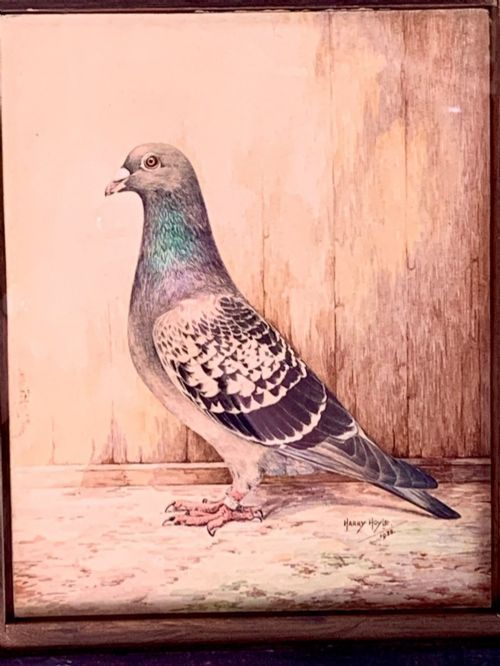
Other representations include racing pigeons, poultry, and songbirds captured in still life compositions or natural habitats.