


Antique Botanical Bird Prints
Antique botanical bird prints bring the meticulous study of ornithology into your rooms through hand-coloured engravings, lithographs, and delicate watercolours.
Antique Botanical Bird Prints
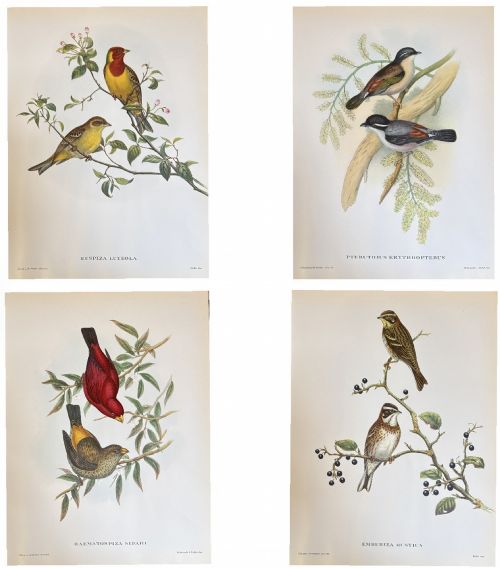
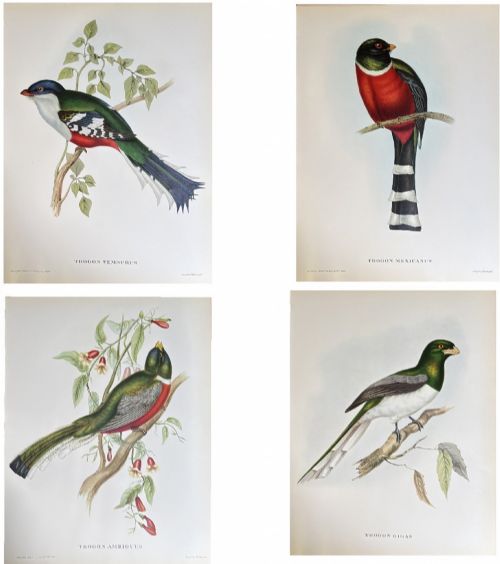
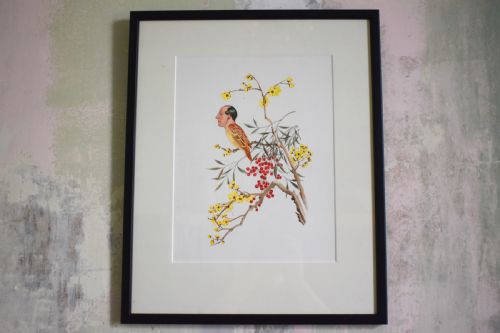
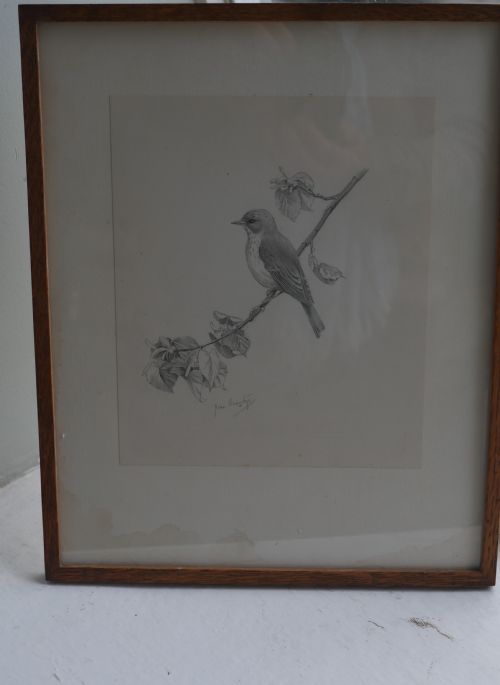
When you search for antique botanical bird prints, you are looking at ornithological illustrations and studies produced across the eighteenth, nineteenth, and twentieth centuries. These works range from framed engravings and lithographs to original watercolours and fine art paintings on paper and canvas.
You are most likely to meet nineteenth century pieces and later mid-twentieth century print sets depicting tropical birds, parrots, and native species. The subjects span structured scientific plates alongside more naturalistic compositions incorporating floral and botanical elements.
The selection includes both individual framed plates and larger sets, often originating from significant natural history publications or standalone artistic studies by named painters and illustrators.
How they were made
The works rely upon paper supports decorated with ink, watercolour, and hand-colouring applied over engraved or lithographic lines. Many are presented behind glass within wood frames, occasionally enhanced with gilt and gold leaf details.
Earlier eighteenth and nineteenth century examples utilise copperplate engraving and lithography, subsequently finished by hand with watercolours to achieve vibrant plumage and botanical accuracy. Later twentieth century interpretations capture these traditional publishing styles on paper sheets.
Original paintings on canvas employ oil mediums to depict birds alongside fruit and foliage, framed within timber mouldings that protect the painted surface.
Parrots, tragopans, and blue tits share the paper alongside stray pineapples and hazelnuts.
What varies in quality
The distinction between tiers of quality rests upon the precision of the initial engraving or drawing and the skill of the hand-colouring. Masterpieces of ornithological illustration exhibit exceptional anatomical accuracy in the bird subjects alongside subtle, lasting pigment applications.
Paper preservation and the crispness of the printed line dictate the visual strength of a print. Stronger examples retain clear plate marks and vibrant tones without excessive fading or discoloration from age.
Framing materials and mount quality also distinguish the presentation, where period wood frames and gold leaf accents complement the artwork rather than overpower the delicate paper sheet.
George Edwards·William Swainson·Arthur Wardle·George Lance
The Antique Botanical Bird Prints Glossary
- Lithograph
- A print produced by drawing on limestone or a metal plate with a greasy substance so that ink adheres only to the drawn areas. This technique allowed for the accurate reproduction of detailed bird studies in multiple colours.
- Engraving
- A printmaking method where an image is incised into a metal plate using a sharp tool, holding ink within the grooves to transfer fine lines onto paper. It formed the basis for many eighteenth and nineteenth century scientific illustrations.
- Watercolour
- A painting method using water-soluble pigments that provides translucent layers of colour. It appears frequently in original bird studies and for hand-colouring printed plates.
- Gilt
- A thin layer of gold applied to wood frames or print details to provide a reflective metallic finish. It highlights the edges of period framing.
- Ornithological
- Pertaining to the scientific study and depiction of birds. These studies combine artistic representation with natural history documentation.
Antique Botanical Bird Prints: Frequently Asked Questions
How are antique bird prints usually framed?
Many examples arrive in period wood frames, occasionally featuring gilt or gold leaf details, paired with glass to protect the paper surface.
Original framing helps preserve the sheet from environmental exposure, though many collectors choose conservation-grade materials when reframing loose plates.
What is the difference between an engraving and a lithograph?
An engraving relies on lines cut into a metal plate, resulting in crisp, defined outlines that were frequently hand-coloured afterwards. Lithography uses a flat stone or metal surface to capture broader tonal gradations and painterly effects.
Both techniques were standard for reproducing natural history illustrations before modern photography.
Can I find complete sets of bird prints?
Listings often include matched sets of four or more plates sharing identical subjects or publishing origins. These groupings are typically sourced from historical ornithological volumes.
Single plates also appear frequently, allowing collectors to curate their own gallery walls.
How do I care for antique paper and watercolours?
Keep works out of direct sunlight to prevent the watercolour pigments and coloured inks from fading over time. Maintaining stable indoor humidity levels also protects the paper supports and prevents warping.
Ensure framing is sealed properly against dust and moisture.