

19th Century Accent Chair
A 19th century accent chair brings period character and practical seating to a room, combining traditional craftsmanship with enduring style.
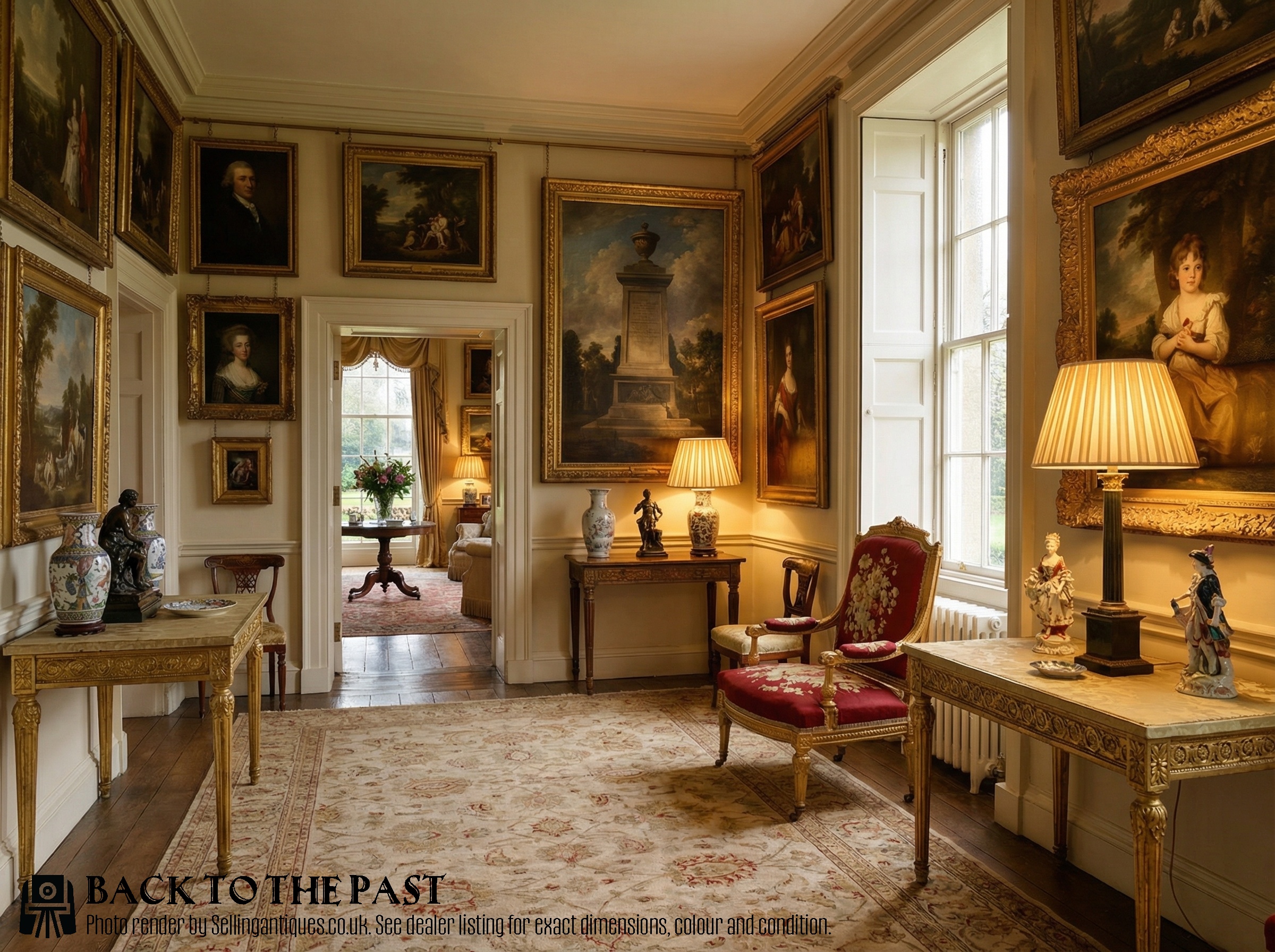
How They Were Made
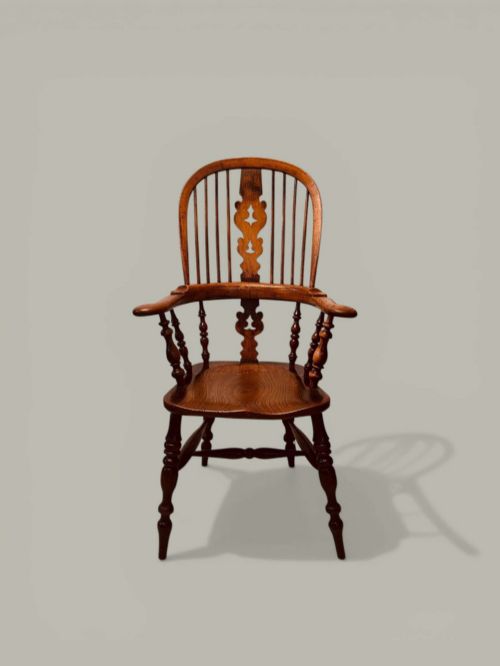
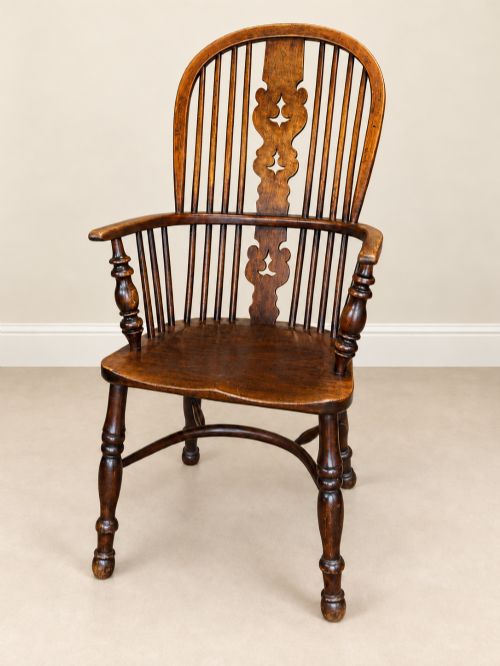
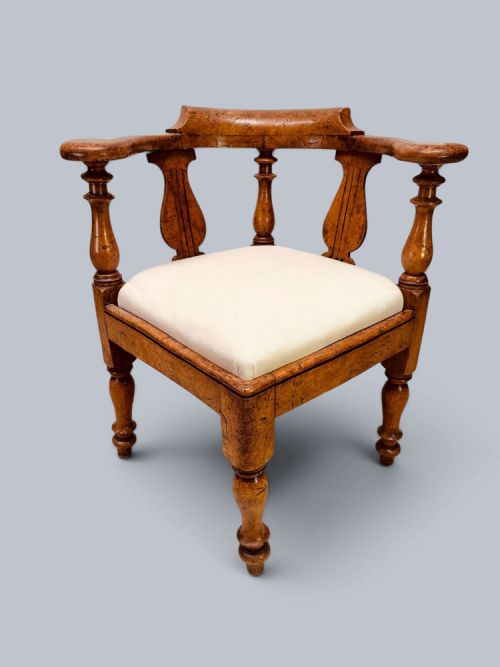
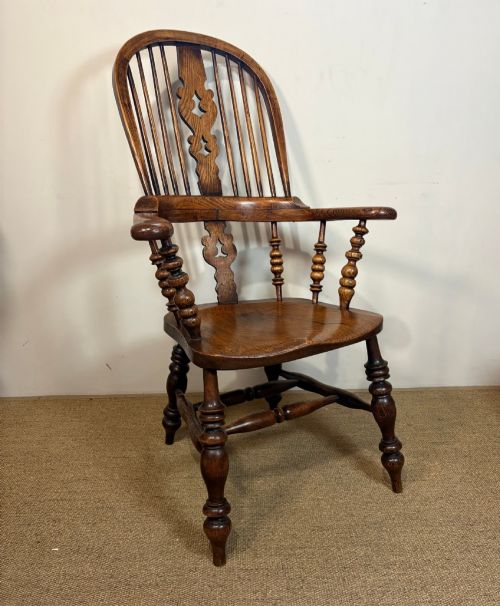
Joinery techniques relied heavily on traditional mortise and tenon construction, alongside hand-carved detailing executed directly into dense hardwoods like mahogany and walnut. Wood turners utilised lathes to shape spindles and legs for specific vernacular forms such as Windsor and turner chairs.
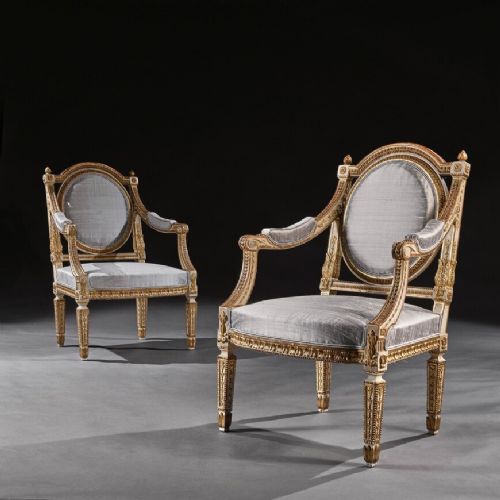
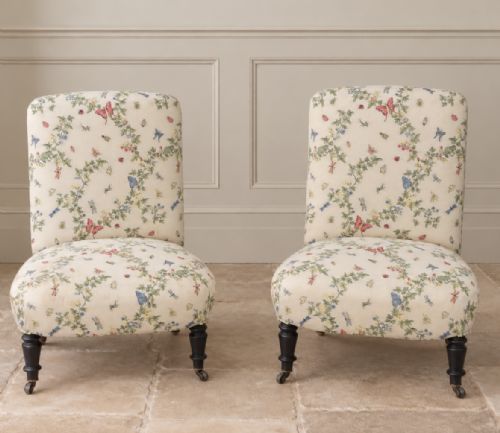
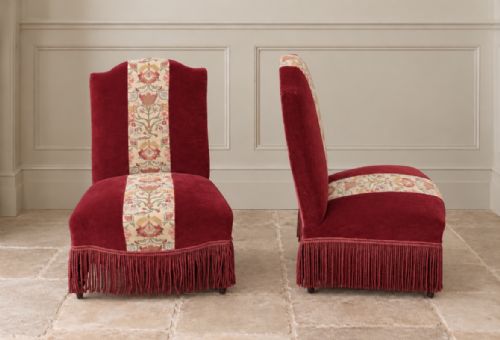
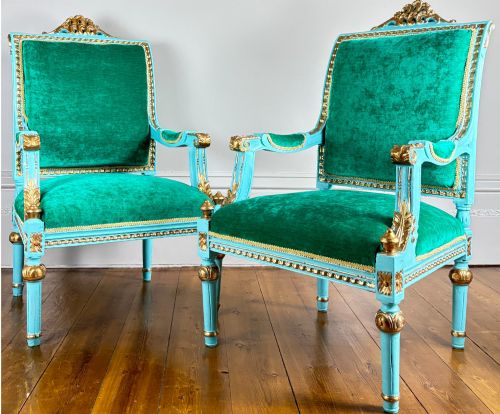
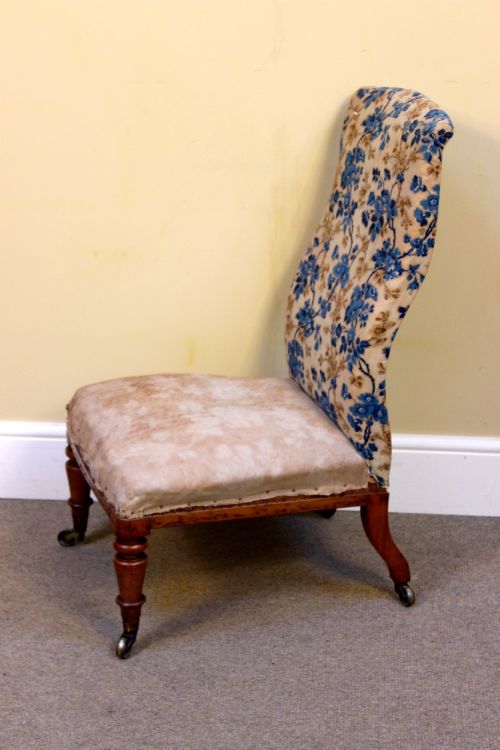
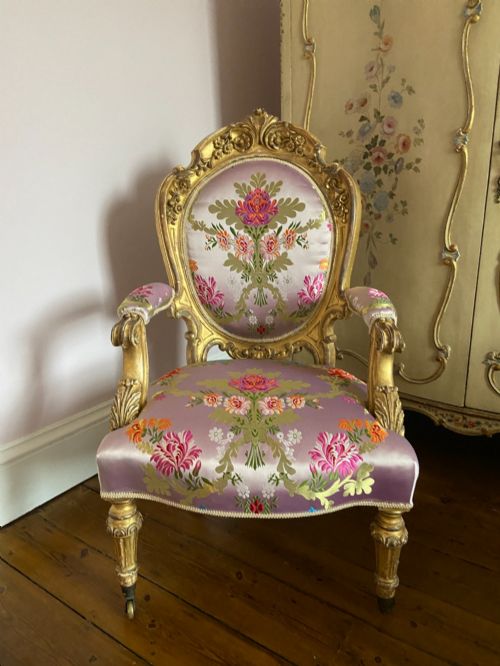
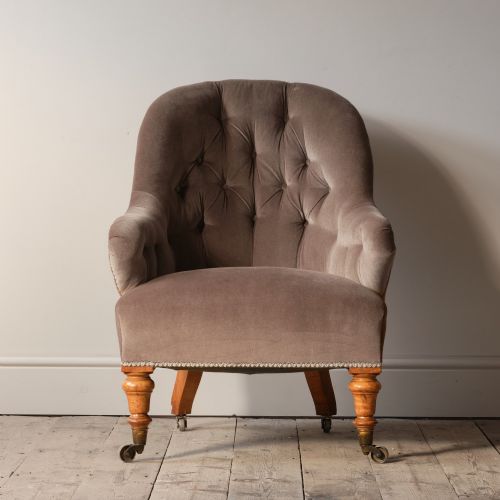
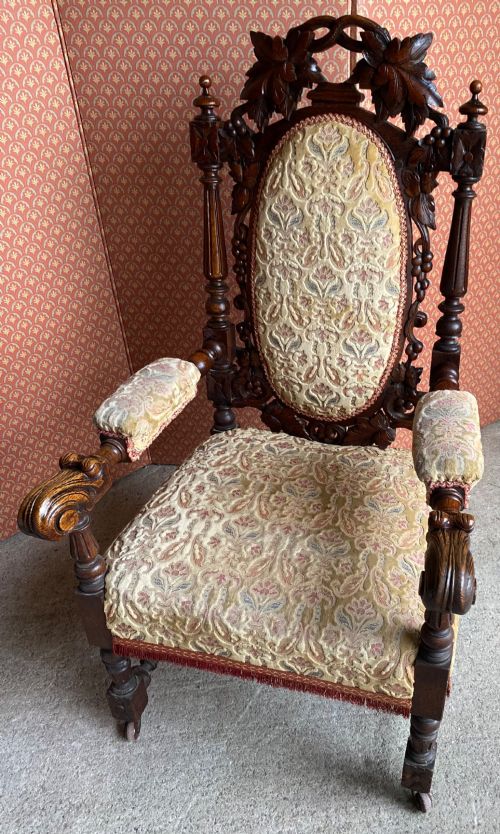
Upholstered models employed webbing, springs, and stuffing layered beneath outer textiles including tapestries, velvet, and leather, secured with individual tacks. Giltwood and parcel gilt finishes required meticulous application of gold leaf over prepared gesso bases on carved wooden frames.
What Varies in Quality
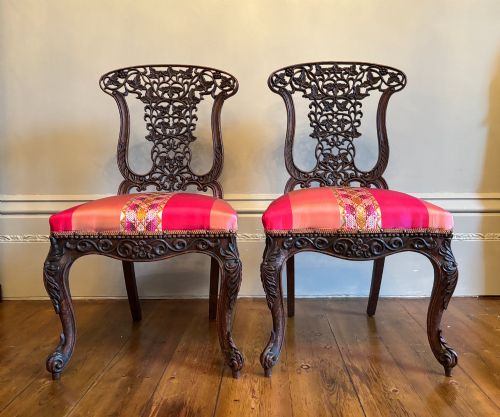
The distinction between standard domestic seating and exhibition pieces rests in the depth and crispness of the hand-carved ornamentation. Finer examples display intricate relief work, superior timber selection with rich grain patterns, and integrated structural stability that survives centuries of use.
Proportion and decorative harmony separate routine workshop production from pieces attributed to notable makers or royal provenances. Original surface patination and intact period upholstery schemes also dictate the upper echelon of these offerings.
19th Century Accent Chair Retail Price Guide 2026
Typical asking prices for 19th century accent chair among the pieces listed under this phrase on Sellingantiques today, from the lower quarter to the upper quarter. They describe what is for sale here now, not the wider market.
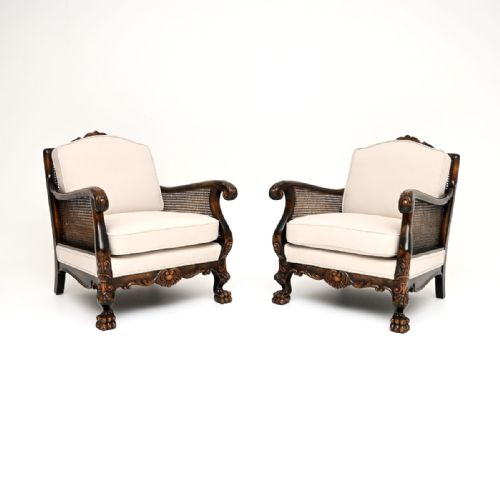
Listings feature multiple timber varieties, including mahogany, walnut, oak, yew, and elm, alongside giltwood and cane.
Jacob-Desmalter·Andrea Brustolon
The 19th Century Accent Chair Glossary
- Carver
- An armchair, usually with open arms, designed for the head of a dining table or as a distinct parlour seat. These often match a set of smaller side chairs.
- Fauteuil
- An open-framed armchair of French origin with wooden arms left uncovered by upholstery. This style gained prominence during various continental revival movements.
- Sgabello
- A rigid wooden hall chair featuring a high back and trestle supports instead of standard legs. Originating in the Renaissance, these were revived during the nineteenth century.
- Carver
- An armchair, usually with open arms, designed for the head of a dining table or as a distinct parlour seat. These often match a set of smaller side chairs.
- Caning
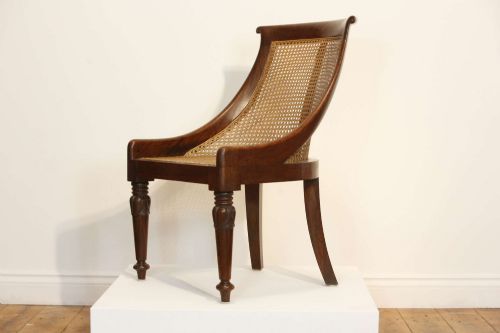
- A seating technique utilising woven rattan or split cane across a wooden frame. This method provides lightweight durability for salon and occasional chairs.
19th Century Accent Chair: Frequently Asked Questions
What is a 19th century accent chair used for?
These chairs served specific domestic functions ranging from reception seating in hallways to relaxed reading in libraries and sitting rooms. Today, they function primarily as decorative focal points that introduce period character into modern interiors.
Different forms suit different spaces, with compact nursing chairs fitting bedrooms and larger library armchairs anchoring living areas.
How do I identify a Regency accent chair?
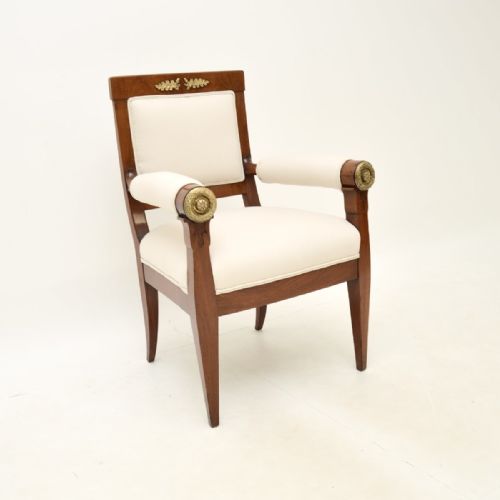
Regency pieces typically display classical restraint, drawing inspiration from ancient Greek, Roman, and Egyptian motifs. Look for sabre legs, brass inlay, parcel gilding, and dark timbers such as rosewood and mahogany.
Proportions are generally clean and architectural, avoiding the heavy ornamentation associated with later Victorian furniture.
What is the difference between a salon chair and a hall chair?
Salon chairs were built for comfort and display in formal entertaining spaces, frequently featuring upholstered backs, padded seats, and decorative giltwood or walnut frames. Hall chairs were constructed entirely of wood with rigid backs, intended for brief seating in entryways.
Hall chairs often feature carved family crests or shields on the backrest, whereas salon chairs prioritise decorative textiles.
Are these chairs suitable for daily use?
Many nineteenth-century chairs remain sturdy enough for regular seating, provided the underlying joinery is sound. Solid hardwood frames in oak and mahogany tolerate daily wear exceptionally well.
Upholstered models may require inspection of the internal webbing and springs to ensure comfortable support for modern sitting habits.