


1940s Oil Painting
These 1940s oil painting works capture the shifting artistic movements of a tumultuous decade through canvas and pigment.
What a 1940s oil painting represents
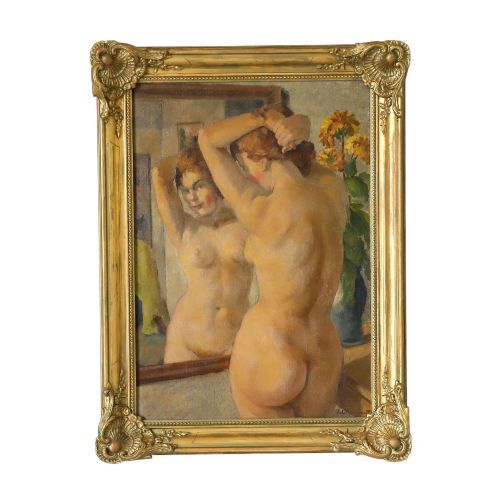
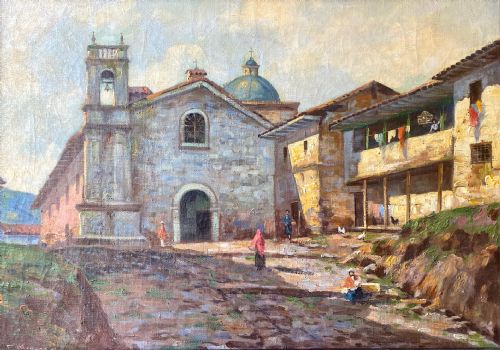
A 1940s oil painting encompasses diverse styles ranging from impressionist street scenes and modernist portraits to cubist compositions and surrealist reflections. The pieces available on this page reflect both European and American artistic responses to the wartime and postwar eras.
Buyers will most frequently encounter canvas supports housed within wood or giltwood frames. The subject matter spans portraiture, landscapes, and figurative works created across the 1940 and 1950 period.
Works originate from various international schools, including French cubism, Latin American impressionism, and New York modernism. This geographical breadth ensures a rich variety of palettes and technical approaches within the selection.
Materials and technique
Artists of this decade utilised traditional oil paint applied to stretched canvas supports. The physical construction relies on wooden stretcher frames, occasionally complemented by decorative wood or giltwood surrounds.
Brushwork varies from the loose, visible strokes typical of impressionist landscapes to the flat planes and geometric abstraction found in modernist and cubist compositions. Pigment application ranges from thin washes to textured impasto.
Listings on this site feature oil on canvas works spanning impressionism, modernism, and mid-century portraiture from the nineteen-forties.
Judging quality in mid-century art
Quality rests in the surety of the brushwork and the cohesion of the composition rather than the nominal prestige of the subject. A successful piece demonstrates an assured handling of oil paint that brings depth and movement to the canvas.
The relationship between the painted surface and the frame also influences the overall integrity of the piece. Works that retain their period wood or giltwood surrounds offer a more complete historical context.
John Gilroy·Tschacbasov·Winifred Bourne Medway·Béla Adalbert Hradil·Hamish Paterson
The 1940s Oil Painting Glossary
- Impressionism
- A style of painting that focuses on capturing the visual impression of a moment, especially through shifting light and unblended brushstrokes. This approach appears frequently in landscape and street scenes from the era.
- Modernism
- A philosophical and artistic movement that rejected traditional academic styles in favour of experimentation with form, colour, and abstraction. Modernist works from this decade often break down subjects into simplified geometric shapes.
- Cubism
- An early twentieth-century style in which subjects are analysed, broken up, and reassembled in an abstracted form. French examples from the 1940s apply this fragmentation to figurative subjects.
- Giltwood
- Wood that has been treated with gold leaf or a gold-coloured finish for decorative effect. Many mid-century frames utilise this material to complement the warm tones of the oil paintings.
- Impasto
- The technique of laying paint on canvas thickly so that it stands out from the surface. This method adds a tactile, three-dimensional quality to the painted brushstrokes.
Frequently Asked Questions
How do I date a 1940s oil painting?
Dating relies on stylistic evidence, signatures, artist records, and occasional inscriptions on the canvas or stretcher frame.
Many works from this decade bear dates alongside the artist signature, while others are attributed through historical exhibition records and stylistic comparison.
What subjects are common in 1940s art?
Portraits, street scenes, landscapes, and abstract compositions dominate the artistic output of this period. Artists frequently turned to portraiture and local scenery during the disruptions of the nineteen-forties.
Surrealist and modernist themes also emerged as responses to the global conflicts of the Second World War.
How should I clean an oil painting?
Surface dust should be removed gently with a soft, dry brush by someone experienced in art handling. Moisture and chemical cleaners must be avoided to protect the delicate oil pigment.
Professional conservators should handle any deeper cleaning or removal of discoloured varnish from the canvas surface.
Where should I hang my painting?
Paintings on canvas require placement away from direct sunlight, high humidity, and rapid temperature fluctuations. Stable indoor environments prevent the wood stretcher and canvas from warping.
Consider eye-level positioning on a solid wall that complements the scale and palette of the specific frame and artwork.