



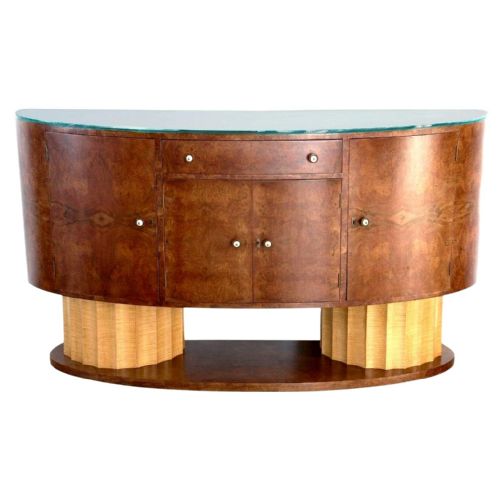

1930s Walnut Credenza
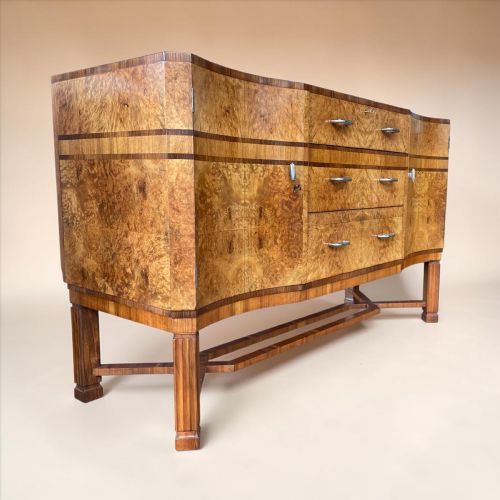
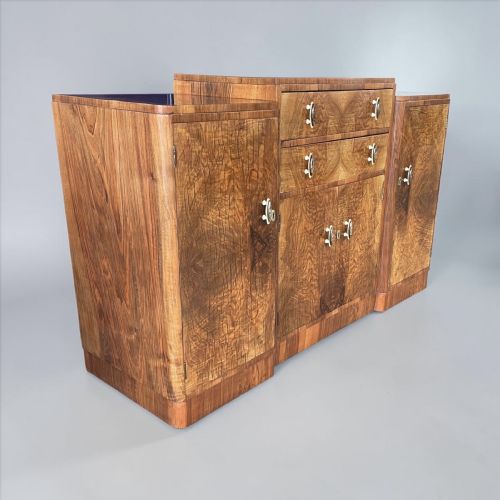
A 1930s walnut credenza brings sophisticated grain patterns and strong architectural form to a modern interior.

1930s Walnut Credenza
When you search for a 1930s walnut credenza, you encounter substantial storage furniture primarily designed as sideboards, cocktail cabinets, and serving consoles. These pieces emerge predominantly from the interwar period, reflecting the dominant modernist and traditional revival tastes of the era.
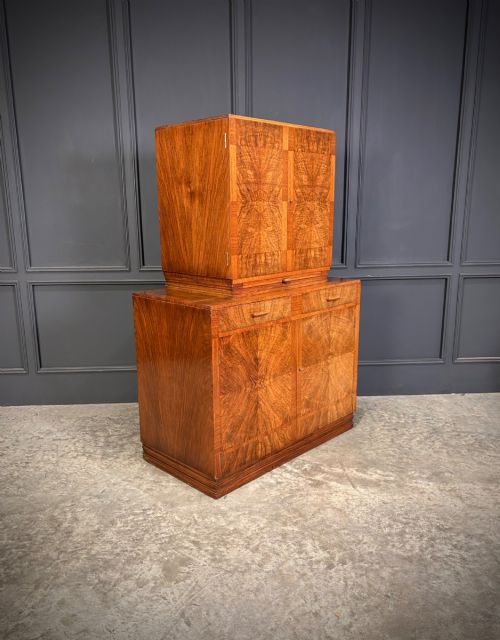
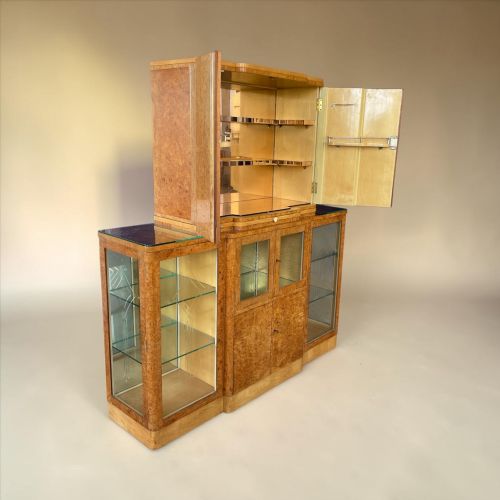
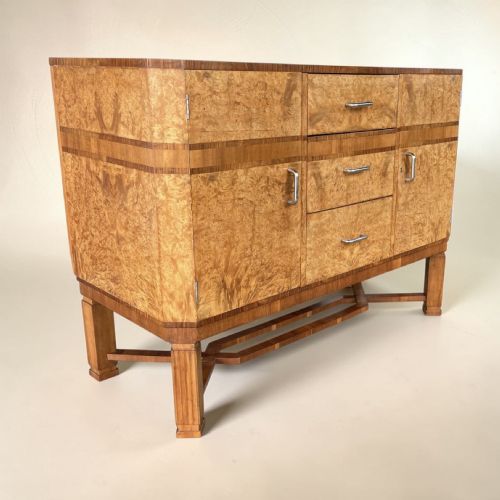
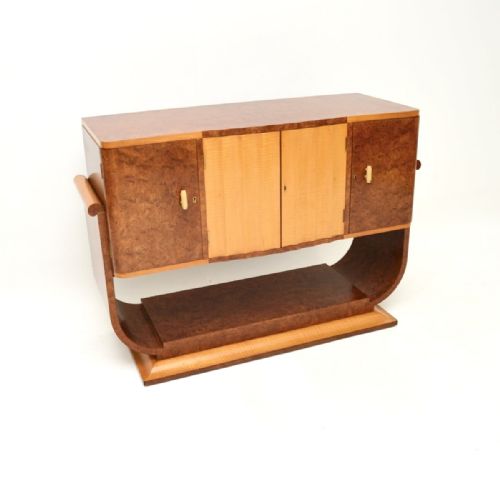
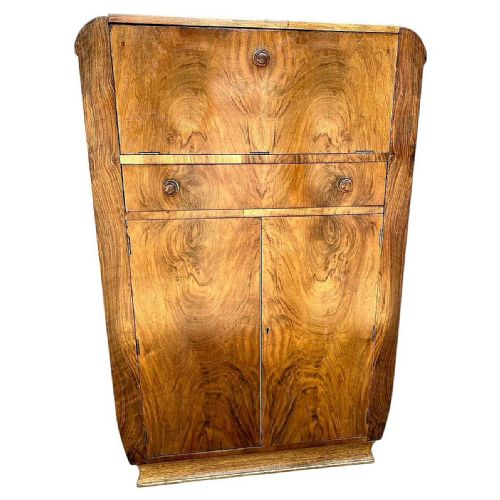
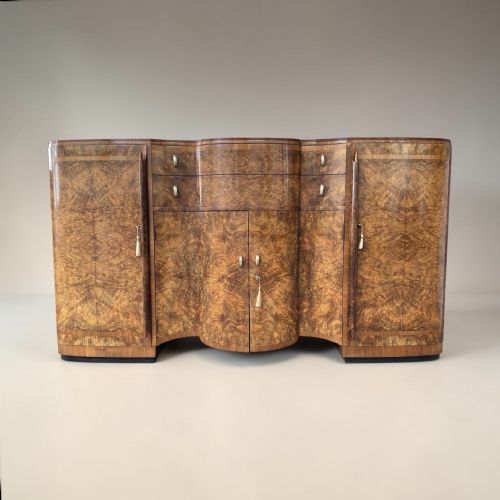
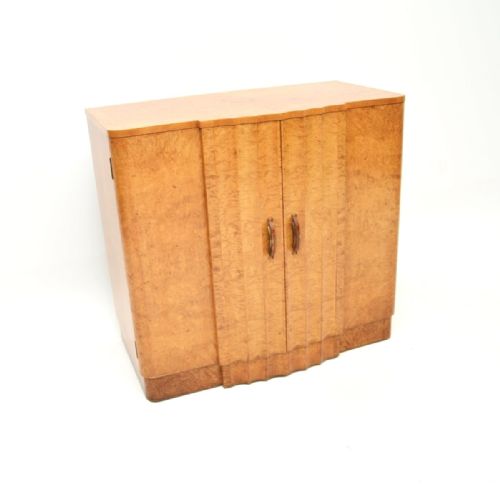
The most common iteration on this page is the Art Deco sideboard or cocktail cabinet, frequently rendered in striking burr walnut veneer. Makers built these forms to command attention in dining rooms and antechambers through curved silhouettes, polished surfaces, and generous internal capacity.
How they were made
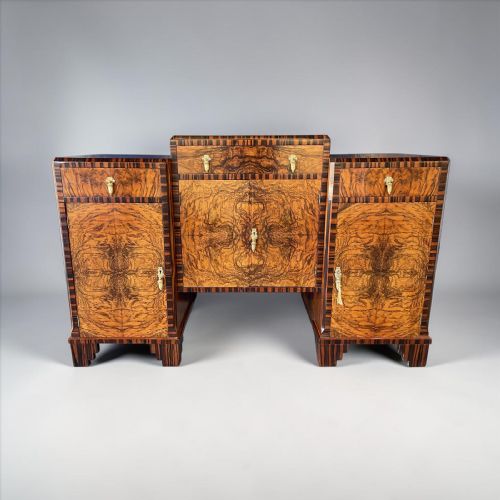
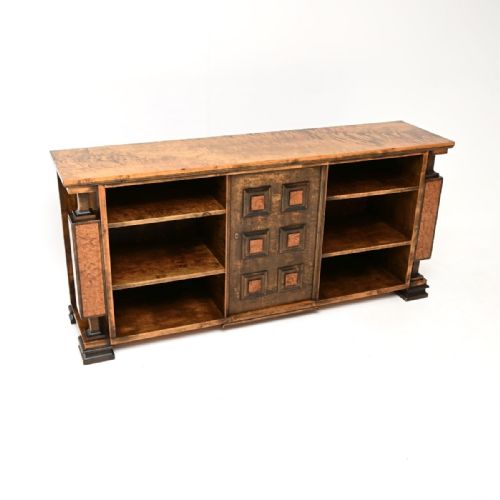
Cabinetmakers constructed these forms using solid timbers for structural carcases while applying highly decorative walnut, burr walnut, and occasional sycamore veneers to external surfaces. This technique allowed craftsmen to display dramatic, symmetrical grain patterns across large cabinet doors and drawer fronts.
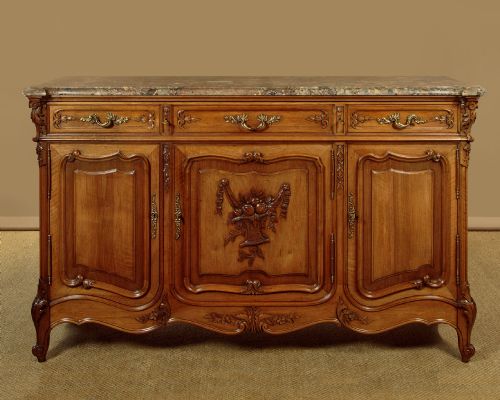
Makers integrated functional hardware cast in brass, metal, and occasionally early plastics like Bakelite to complement the dark, figured timber. Selected French and Italian pieces incorporate fitted marble tops, adding weight and a contrasting tactile finish to the timber body.
1930s Walnut Credenza Retail Price Guide 2026
Typical asking prices for 1930s walnut credenza among the pieces listed under this phrase on Sellingantiques today, from the lower quarter to the upper quarter. They describe what is for sale here now, not the wider market.
Materials span solid walnut, burr walnut veneer, sycamore, marble tops, and Bakelite hardware.
What varies in quality
The distinction between ordinary production and superior work rests heavily on the selection and matching of the veneer. Master workshops ensured that burr patterns mirrored seamlessly across double doors, creating coherent visual symmetry that lesser pieces lack.
Internal joinery and fitted utility also separate the tiers of manufacture. Higher grade cabinets feature specialised compartments for glassware, pull-out slides, and dovetailed drawers constructed with robust secondary woods rather than basic sheet materials.
Maurice Adams·Harry and Lou Epstein·Hille·Hamptons of Pall Mall London·Bowman Brothers
The 1930s Walnut Credenza Glossary
- Burr walnut
- A growth deformity on a walnut tree that produces intricate, swirling grain patterns when sliced into veneer. Cabinetmakers prize this timber for decorative panels on high-end credenzas.
- Veneer
- A thin layer of superior wood glued to a stable core timber. This method prevents warping while displaying expensive figure patterns across wide surfaces.
- Cocktail cabinet
- A specialised storage unit featuring a drop-down prep surface, mirrored interior, and glass shelving for entertaining. These drinks cabinets represent a major portion of interwar case pieces.
- Art Deco
- A design style characterised by streamlined shapes, geometric ornamentation, and bold use of contrasting materials. It dominated international architecture and furniture production during the interwar decades.
1930s Walnut Credenza: Frequently Asked Questions
What is the difference between a sideboard and a credenza?
Sideboards and credenzas both provide foundational storage for dining and living spaces, though historical terminology often overlaps depending on the maker's origin.
British and European workshops applied various labels to long case furniture, ranging from low serving tables to tall cocktail cabinets with enclosed shelving.
How do I care for walnut veneer surfaces?
Walnut veneer requires protection from direct sunlight and excessive moisture to prevent fading and lifting of the thin wood layer.
Applying occasional specialist wax helps nourish the timber and maintain the deep, polished lustre characteristic of interwar furniture.
Where were most of these cabinets manufactured?
The pieces originate primarily from British workshops, alongside notable examples imported from French, Italian, and Swedish makers.
London firms and continental studios drove the dominant Art Deco and revival trends seen across this selection of furniture.
Are these pieces suitable for modern dining rooms?
These low case units offer generous internal space for modern tableware, linens, and media equipment while maintaining a compact footprint.
Their striking timber patterns allow them to function as sculptural focal points in contemporary interior schemes.