



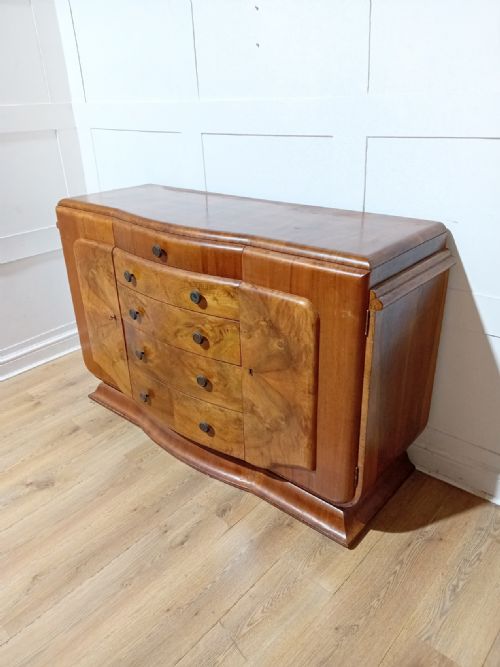

Streamline Moderne Credenza
A streamline moderne credenza brings the sleek curves and bold lines of the interwar years directly into a modern room.
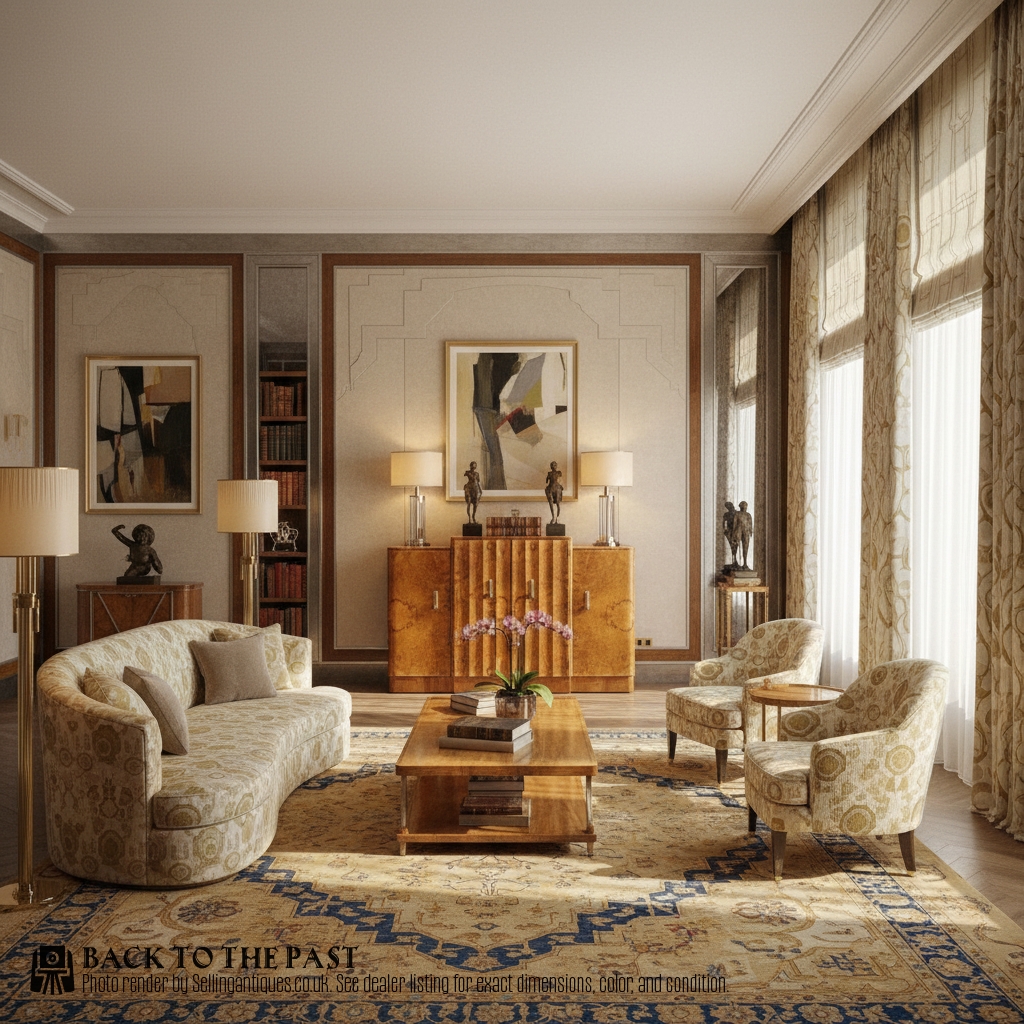
Streamline Moderne Credenza
When you search for a streamline moderne credenza, you are looking at substantial storage furniture created during the interwar decades, specifically the nineteen twenties and nineteen thirties. These pieces sit within the broader Art Deco movement, taking the form of sideboards, cocktail cabinets, and low storage chests designed to anchor a principal room.
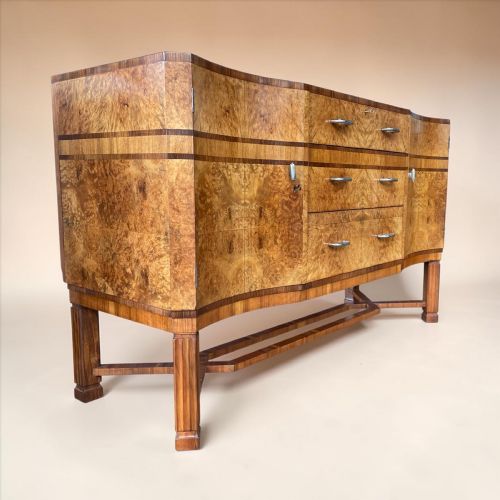
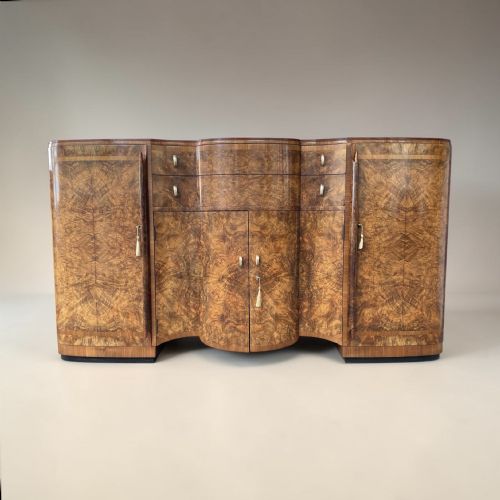
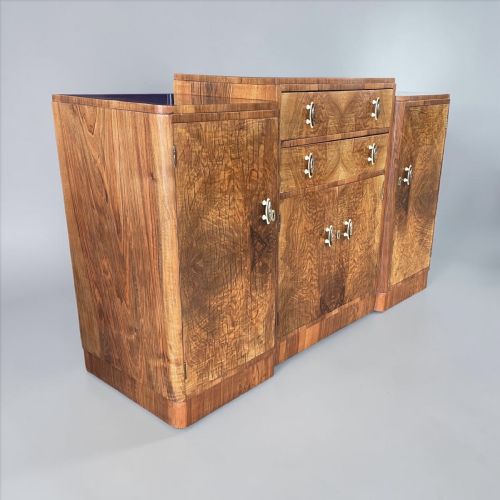
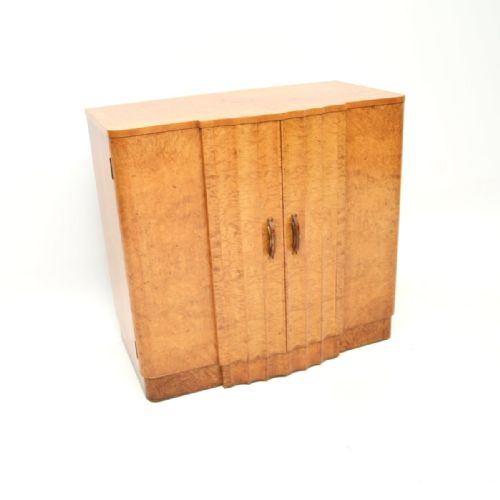
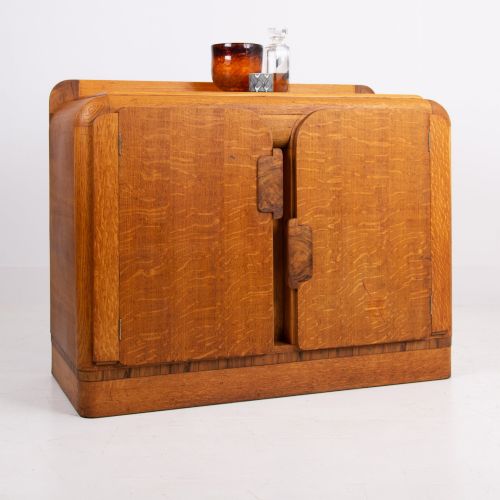
The most common examples you will meet on this page are sideboards and cabinets from nineteen thirty, constructed in rich timbers and arranged with long, horizontal proportions. They offer generous internal shelving and compartmentalised drawers behind flush, streamlined doors that emphasise movement and modern utility.
Materials and construction
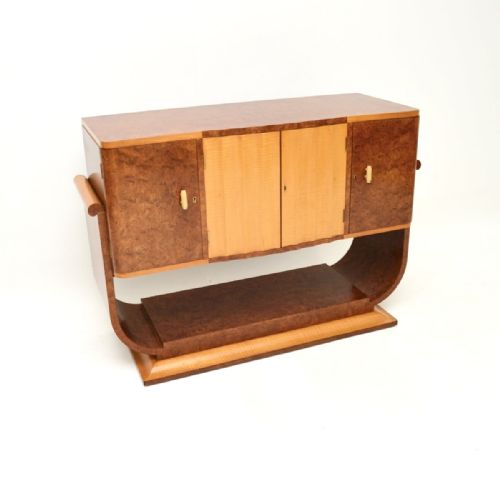
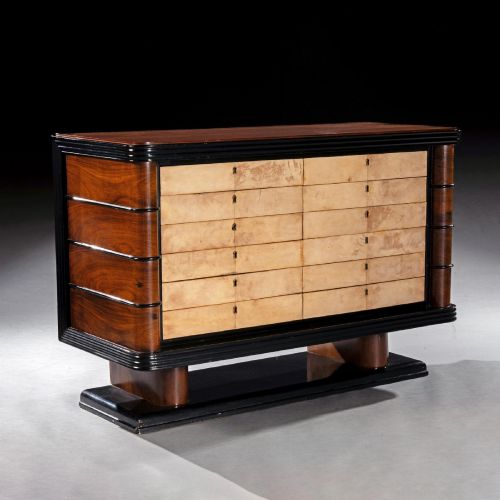
Makers built these pieces using solid carcasses applied with highly figured veneers, predominantly burr walnut, straight walnut, and sycamore. Contrast was achieved through pale secondary woods like sycamore or exotic timbers such as palisander, paired with parchment-covered drawer fronts or contrasting veneers.
Hardware and decorative details relied heavily on metal, brass, glass, and occasionally bakelite for handles and trim. Construction techniques prioritised smooth, unbroken expanses of wood grain that wrapped around curved corners and waterfall edges.
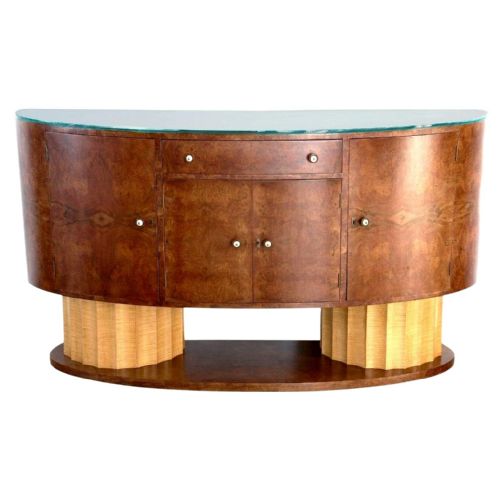
Cabinet forms on this page include sideboards, cocktail cabinets, commodes, and chests of drawers executed in the Art Deco style.
Markers of quality
Quality rests in the selection and matching of the veneer, where top-tier workshops ensured symmetrical grain patterns across large cabinet doors and curved drawer fronts. The integration of specialised hardware, such as custom brass mounts or fitted glass interiors for cocktail cabinets, distinguishes finer work from standard production.
Execution of complex forms, including curved commodes and parchment-covered elements, dictates the upper tier of these pieces. Workshops that maintained rigorous standards in timber selection and joinery produced cabinets that retain their structural integrity and surface depth.
Maurice Adams·Harry and Lou Epstein·Gomme·Hille·Hamptons of Pall Mall London
The Streamline Moderne Credenza Glossary
- Credenza
- A low storage cabinet or sideboard traditionally used for serving and storing dining ware. In interwar design, these forms evolved to emphasise horizontal lines and flush surfaces.
- Burr walnut
- A highly prized wood veneer showing intricate, swirling patterns formed from the growth burls of the walnut tree. It was frequently used on cabinet fronts to create striking visual movement.
- Sycamore
- A pale hardwood often utilised alongside darker timbers to create contrast in stringing, interior compartments, and marquetry. Its light tone highlights the richer grain of walnut.
- Palisander
- A dense, richly figured exotic hardwood falling within the rosewood family, utilised by makers for its deep colour and prominent grain patterns.
- Bakelite
- An early form of synthetic thermosetting plastic used for handles, knobs, and decorative trim on interwar furniture and cocktail cabinets.
Streamline Moderne Credenza: Frequently Asked Questions
What is a streamline moderne credenza?
A streamline moderne credenza is a low storage cabinet dating from the nineteen twenties and nineteen thirties, characterised by horizontal proportions and smooth, rounded corners. These pieces grew out of the Art Deco movement to provide practical storage while celebrating modern industrial aesthetics.
They function primarily as sideboards and cocktail cabinets, offering deep cupboards and fitted drawers behind unadorned, beautifully veneered timber surfaces.
How were these cabinets used originally?
Originally, these pieces served as dining room sideboards for storing china, silver, and linens, or as sophisticated cocktail cabinets for entertaining guests. The specialised drinks cabinets often included mirrored interiors, glass shelving, and dedicated spaces for glassware and bottles.
Today, their generous proportions and striking wood grains make them equally suitable as media consoles or statement storage units in contemporary living spaces.
How do I care for burr walnut veneer?
Burr walnut veneer requires protection from direct sunlight and extreme humidity changes to prevent the thin wooden surfaces from drying out or lifting. Regular dusting with a soft, dry cloth keeps the surface clean without risking moisture damage.
Occasional treatment with appropriate cabinet wax helps nourish the timber and maintain the natural depth of the grain without building up a heavy residue.
How do I distinguish between nineteen twenties and nineteen thirties pieces?
Pieces from the nineteen twenties often retain traditional cabinet proportions while incorporating early geometric Art Deco motifs and darker finishes. By nineteen thirty, designs shifted toward the horizontal emphasis, waterfall edges, and curved corners characteristic of the streamline style.
Makers working through this transition period gradually abandoned heavy ornamentation in favour of unblemished wood veneers and integrated metal hardware.