

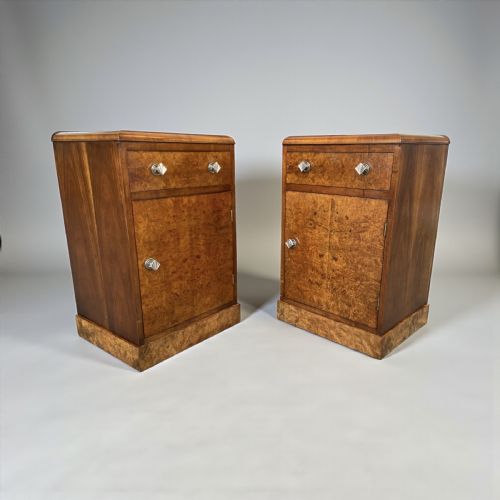


1930s Walnut Bedside Table
A 1930s walnut bedside table brings striking grain patterns and practical bedside storage into a bedroom.
1930s Walnut Bedside Table
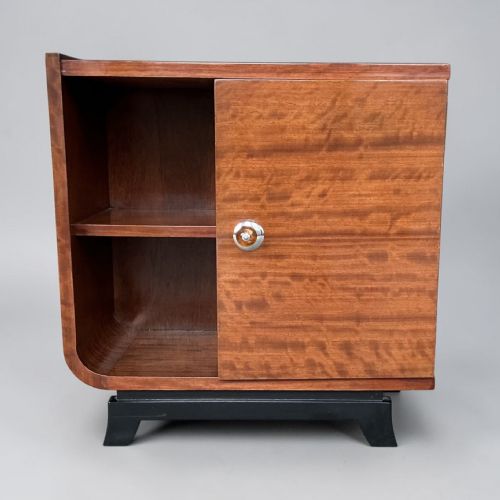
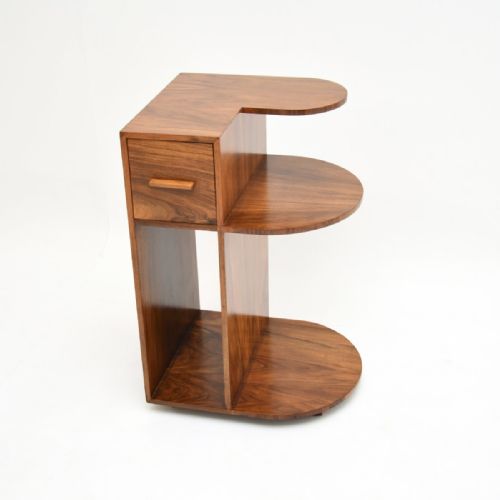
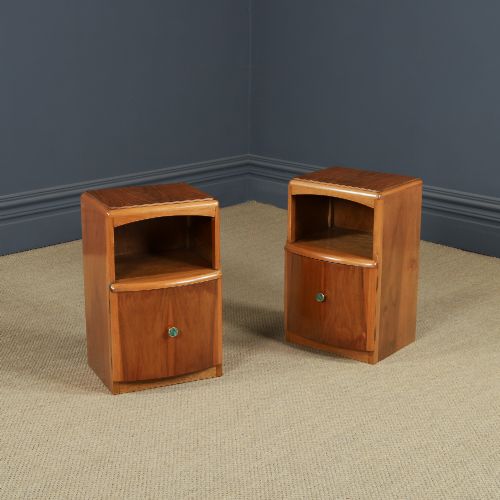
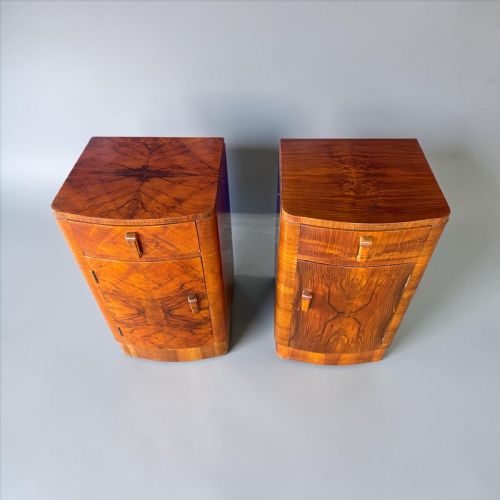
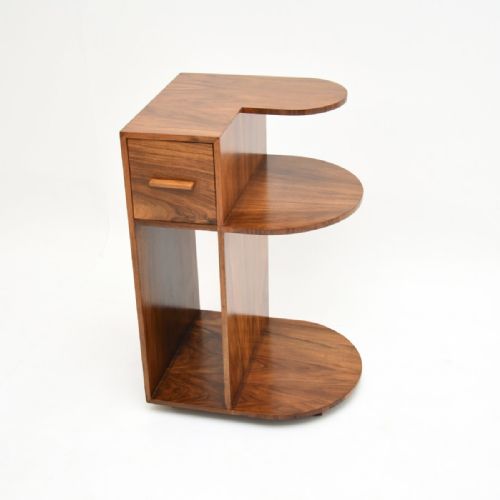
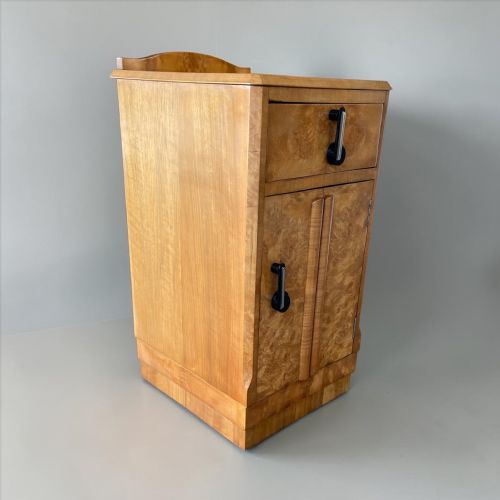
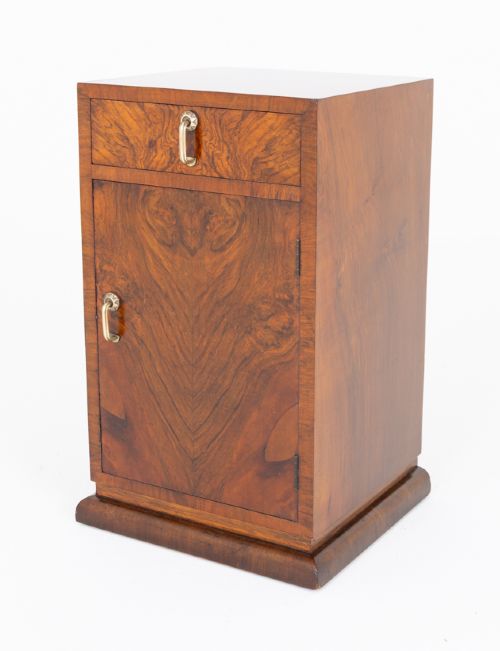
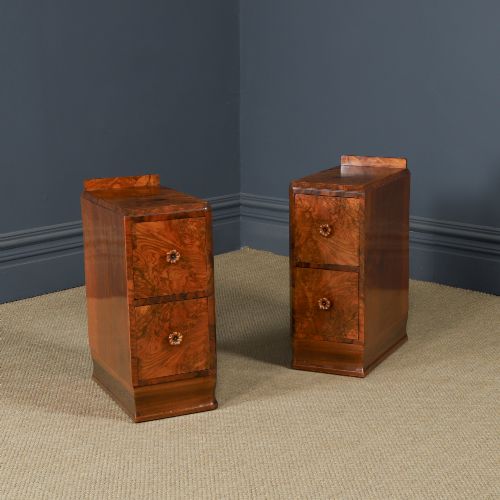
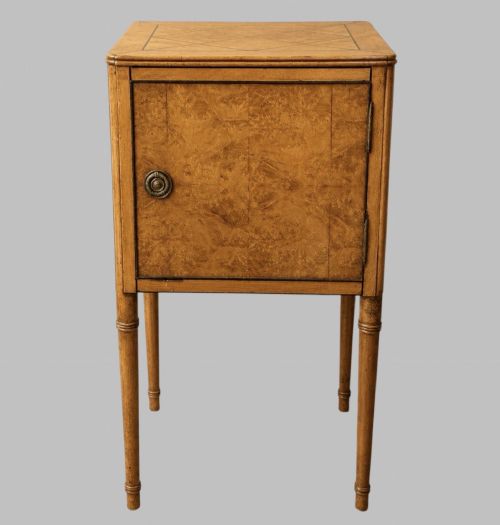
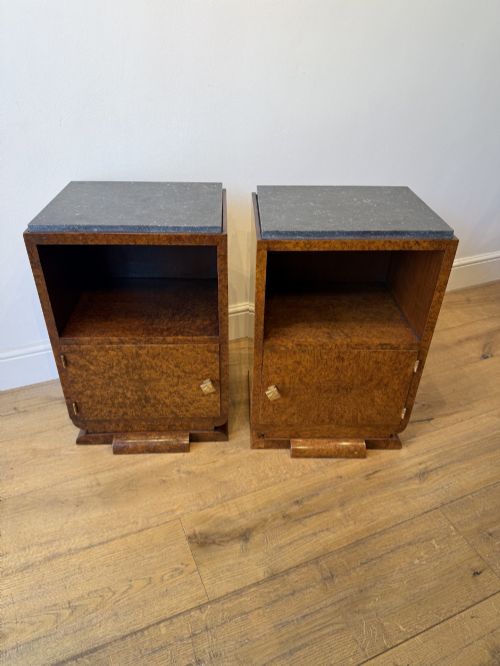
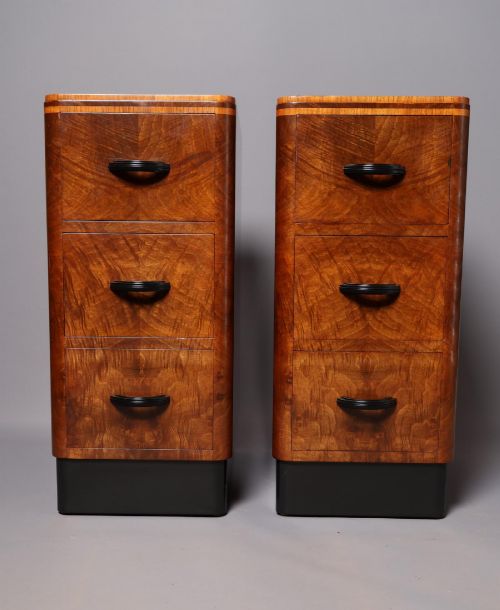
A 1930s walnut bedside table is a compact bedroom piece designed for nighttime storage, frequently found as part of the Art Deco movement. These items appear primarily as enclosed cabinets or open tables with single drawers, often discovered in matching pairs.
The materials span plain walnut alongside richly figured veneers, complemented occasionally by contrasting woods such as satinwood or birds eye maple. Origin points stretch across England and France, showing both streamlined modernism and occasional revival influences.
Materials and construction
Cabinet makers utilised solid timber framing overlaid with decorative walnut veneers, particularly burr walnut, to create dramatic surface patterns on doors and drawer fronts. Brass hardware and glass tops frequently accompanied these surfaces.
Construction techniques balanced geometric forms with curved silhouettes, including drum shapes and serpentine fronts. Workshops applied clear polishing methods to accentuate the natural figuring of the wood.
Several headboards arrive with bedside tables permanently attached, proving that 1930s designers took modular bedroom furniture very seriously.
Judging quality
Quality rests heavily upon the selection and matching of the wood veneer across the visible surfaces, where symmetrical grain patterns indicate superior cabinet making. The depth of the polish and the integrity of the underlying structure also separate standard production from finer workshop output.
Makers known for distinct design modernism or association with notable department stores bring a different level of finish compared to anonymous utility pieces. Hardware execution and the smoothness of drawer operations complete the distinction.
Walter Carter Harrods·Maurice Adams·Harry and Lou Epstein
The 1930s Walnut Bedside Table Glossary
- Burr walnut
- A prized timber harvested from tree growths, yielding intricate swirling patterns. Cabinet makers selected these sections specifically for prominent door and drawer fronts.
- Art Deco
- A design style spanning the interwar period characterised by geometric symmetry and stylised motifs. Pieces from this movement favour clean lines and rich wood tones.
- Veneer
- A thin layer of superior wood applied over a stable secondary timber base. This technique allowed workshops to display expensive grain patterns economically.
- Serpentine front
- A curved furniture front featuring a convex centre flanked by concave ends. This shape requires advanced carpentry skill to execute cleanly in solid wood and veneer.
- Nightstand
- An alternative term for a bedside table or cabinet. These small units provide surface space and enclosed storage next to the bed.
1930s Walnut Bedside Table: Frequently Asked Questions
Are these tables sold in pairs?
Many listings present matching pairs intended to flank a bed symmetrically. Single cabinets also appear for individual placement.
Pairs often command stronger interest from collectors seeking a complete bedroom suite arrangement.
What storage do they offer?
Most designs combine a top surface with internal shelving behind a cupboard door or sliding drawer space. Open areas for books also feature frequently.
Dimensions remain compact to sit neatly beside standard bed frames.
How do I identify Art Deco pieces?
Look for geometric silhouettes, stepped forms, and symmetrical veneer patterns without heavy historical carving. Curved drum shapes and polished walnut finishes reinforce the period aesthetic.
Details like brass pulls and mirror glass tops often accompany the style.
Can I use them as lamp tables?
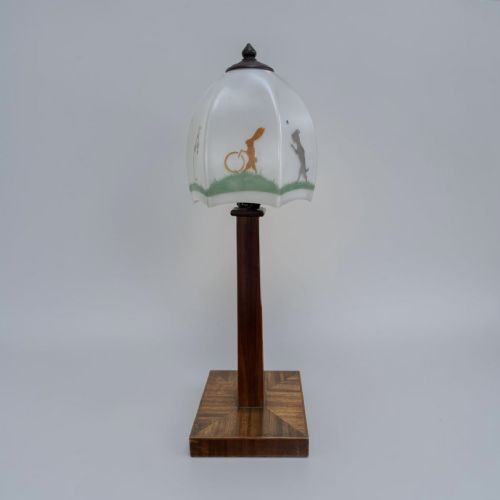
The compact proportions suit general living areas as well as bedrooms. They function readily as small side tables or lamp stands in hallways and lounges.
Surface dimensions accommodate standard lighting fixtures securely.