



1930s Scandinavian Furniture
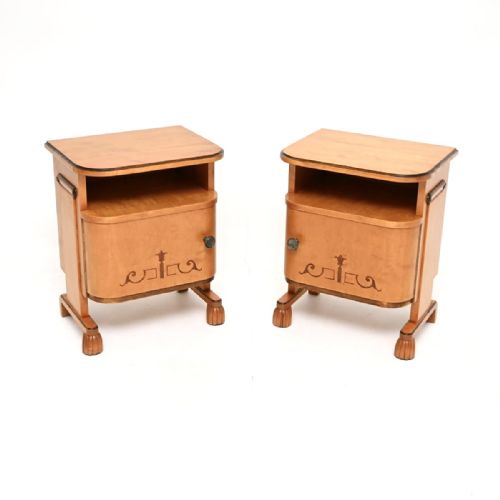
These 1930s scandinavian furniture pieces combine sculptural form with warm northern timbers, offering practical surface space and distinct period character for any interior.
1930s Scandinavian Furniture
When you search for 1930s scandinavian furniture, you encounter items built during the interwar decades that reflect the cleaner lines of the modernist movement alongside traditional cabinet-making skills. The selection on this page centres primarily on pieces dated to nineteen thirty, with occasional examples from nineteen twenty, representing the evolution of northern design.
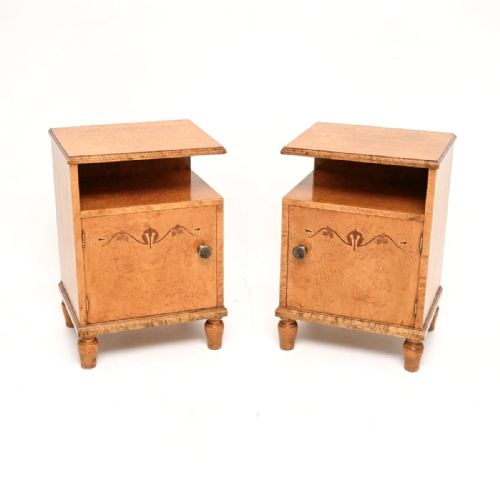
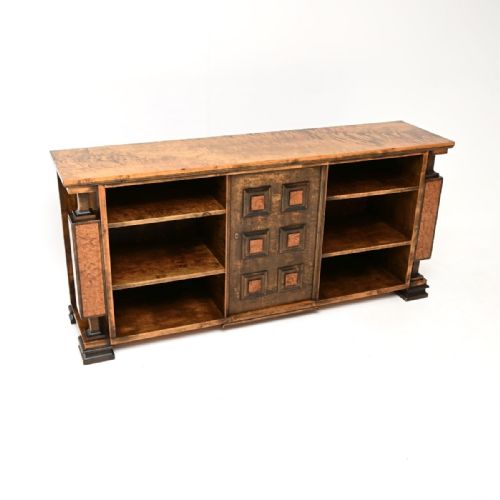
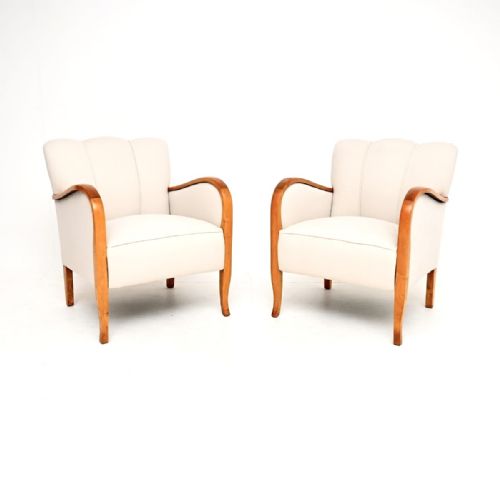
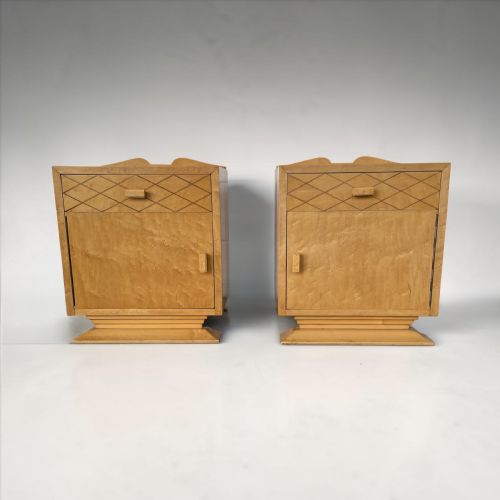
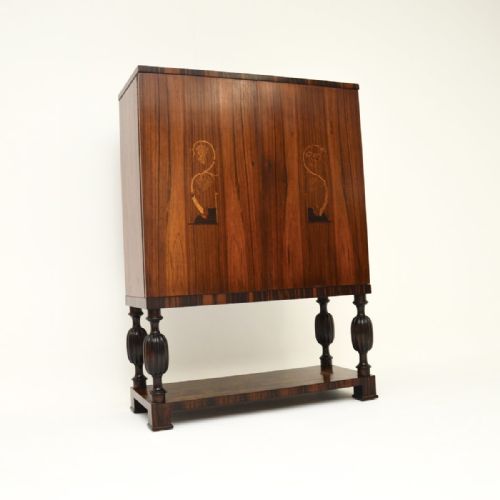
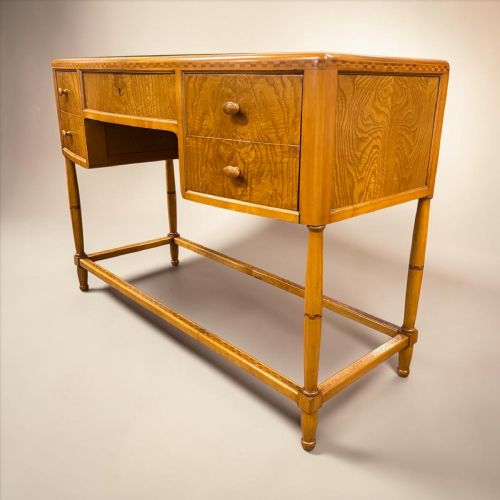
The assortment spans useful domestic forms including armchairs, coffee tables, bedside tables, and desks, alongside larger storage pieces such as cabinets and bookcases. Cabinets and bookcases often combine display space with enclosed shelving, while console and centre tables provide focal points for a hallway or principal room.
Stylistically, these pieces draw heavily upon Art Deco, Swedish Grace, and Scandinavian Art Deco movements. Swedish Art Deco predominates, balancing geometric rigour with the rich visual texture of native wood veneers.
How They Were Made
Cabinet-makers of this period utilised native Scandinavian timbers such as birch, satin birch, elm, burr wood, and walnut, often applying them as sophisticated veneers to create striking grain patterns. Inlaid rosewood details and carved elements appear on select surfaces, demonstrating meticulous hand-finishing.
Seating and occasional tables rely on sturdy internal construction paired with fabric upholstery. The combination of dense hardwoods and decorative burl veneers yields durable domestic items designed for everyday utility as well as visual appeal.
1930s Scandinavian Furniture Retail Price Guide 2026
Typical asking prices for 1930s scandinavian furniture among the pieces listed under this phrase on Sellingantiques today, from the lower quarter to the upper quarter. They describe what is for sale here now, not the wider market.
Even a modest bedside table from this era often conceals wildly swirling burr wood grain beneath its unassuming top surface.
What Varies in Quality
The distinction between standard items and exceptional examples lies in the selection and matching of wood veneers. Flame birch, burr elm, and satin birch surfaces with symmetrical grain patterns elevate a piece well beyond plain timber construction.
Execution of decorative details such as marquetry inlay, carved woodwork, and integrated hardware determines the overall refinement of an item. Superior examples maintain balanced proportions where structural form and decorative timber work reinforce one another.
The 1930s Scandinavian Furniture Glossary
- Satin Birch
- A lustrous variety of birch timber exhibiting a natural sheen and smooth grain. It forms the primary visual surface for many northern European cabinets and tables.
- Swedish Grace
- An architectural and design style bridging neoclassical symmetry and early modernism. This aesthetic dominated Scandinavian production prior to the rise of functionalism.
- Burr Wood
- Wood harvested from tree growths that produce complex, swirling grain patterns. Cabinet-makers prize these sections for decorative veneering on drawer fronts and tabletops.
- Art Deco
- An international design movement characterised by sleek geometric shapes and streamlined forms. In northern Europe, this style merged with local craft traditions using pale hardwoods.
1930s Scandinavian Furniture: Frequently Asked Questions
What defines 1930s Scandinavian furniture?
These pieces combine the geometric impulses of Art Deco with northern European woodworking traditions, focusing on pale native timbers like birch and elm.
They emphasise clean lines and sophisticated veneer work over heavy historical ornamentation, creating a lighter visual presence in domestic spaces.
How do I identify Swedish Art Deco?
Swedish Art Deco relies on the warmth of satin birch, burr walnut, and elm rather than exotic dark woods, often incorporating subtle inlay work.
Forms tend to be restrained and architectural, showing a clear lineage from Swedish Grace design principles.
Where should I place a console table?
Console tables fit well in entrance halls, narrow corridors, or against living room walls beneath mirrors and artwork.
Their shallow depth provides a surface for lamps and decorative objects without impeding foot traffic.
How do I care for satin birch surfaces?
Maintain satin birch and other veneered timbers by dusting with a soft, dry cloth and avoiding direct exposure to strong sunlight.
Keep humidity levels stable in the room to prevent timber movement or veneer cracking over time.