


1930s Oak Side Table
A 1930s oak side table brings sturdy domestic utility and geometric modernist lines to a room, offering practical surface space with period character.
1930s Oak Side Table
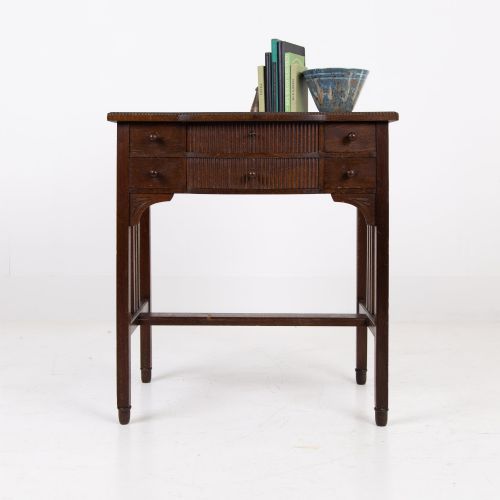
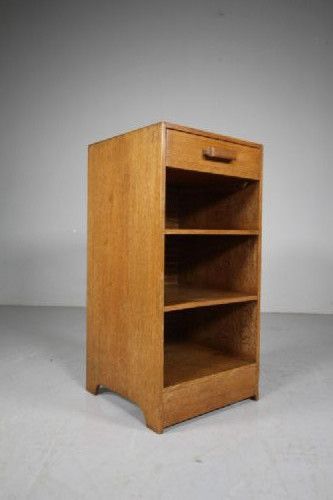
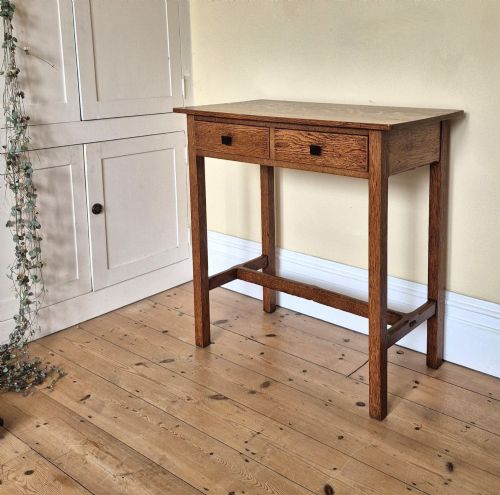
A 1930s oak side table represents a period of transition in British furniture design, moving away from heavy traditional revivalism toward cleaner, more functional forms. You will frequently encounter compact occasional pieces, coffee tables, and lamp tables rendered in solid or veneered oak, often influenced by the Art Deco movement.
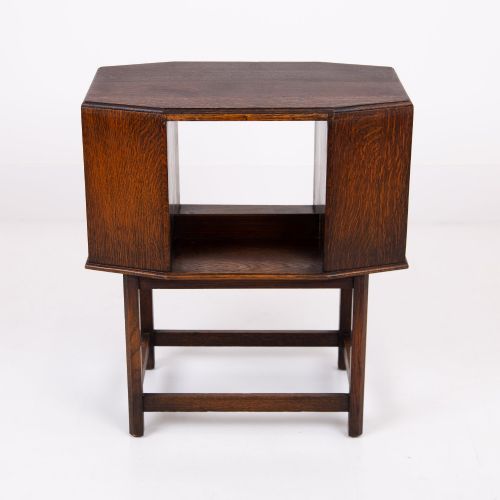
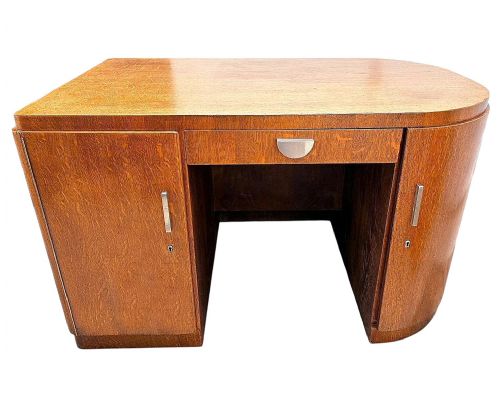
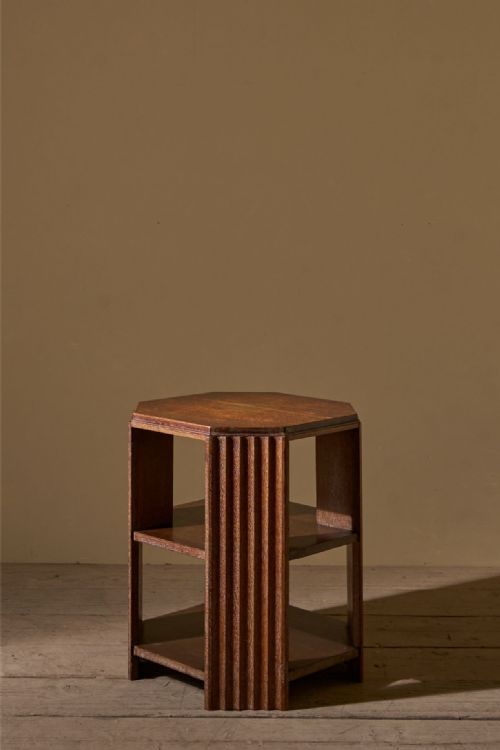
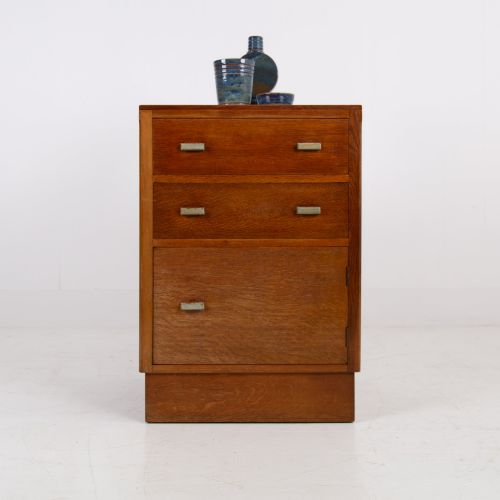
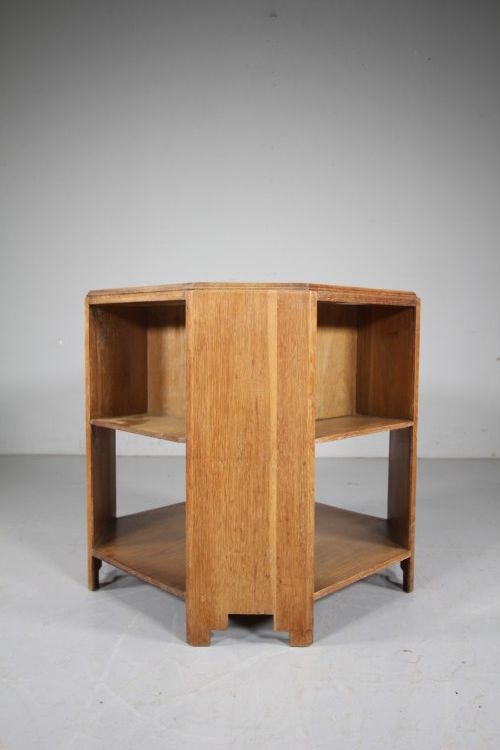
Many of these tables incorporate clever storage solutions, such as integrated bookshelves, tiers, or drawers, reflecting the compact requirements of interwar homes. Alongside straightforward square or rectangular tops, octagonal formats and D-end designs appear regularly across the selection.
Makers and retailers of the era, notably Heals and Gomme, shaped the domestic interior by offering both modernist pieces and restrained revivals. While some examples lean into Jacobean revival motifs like barley twist legs, the dominant aesthetic on this page favours blonde or limed oak finishes aligned with Art Deco Modernism.
Materials and construction
Oak serves as the primary structural timber, utilised either as solid boards or applied as finely figured veneers over secondary woods. Workshops employed traditional joinery alongside contemporary veneering techniques to achieve clean planes and geometric silhouettes.
Designers frequently contrasted the natural warmth of oak with ebonised wood, chrome, brass, or metal details to accentuate the modern lines of the piece. Limed and blonde oak finishes were also widely applied to lighten the visual weight of the timber in accordance with interwar tastes.
Listings feature oak alongside ebonised wood, chrome, metal, and brass across coffee tables, desks, and octagonal formats.
Assessing quality
The distinction between standard commercial production and finer workshops lies in the selection of the timber and the execution of the veneer work. Superior examples display carefully matched grain patterns across the top surface and robust internal joinery that survives decades of daily use without wobble.
Attribution to known makers or distinctive retail houses elevates a piece, as does the integration of thoughtful functional elements like built-in bookcase compartments or dual-sided access. Subtle touches, such as contrasting ebonised accents or specialist limed finishes, separate ambitious modernist designs from plain utility furniture.
Heals·Gomme·Hubert Simpson of Kendal
The 1930s Oak Side Table Glossary
- Limed oak
- A finishing technique where a white or pale pigment is worked into the open pores of the oak to create a pale, scrubbed appearance. This finish was favoured by modernist designers during the interwar decades.
- Art Deco Modernist
- A design style characterised by streamlined geometric forms, symmetry, and a rejection of excessive ornamentation. In these tables, it manifests as clean planes, stepped tiers, and unadorned surfaces.
- Barley twist
- A turned wooden leg carved in a helical screw formation resembling twisted barley sugar. This traditional detail persists on revivalist occasional tables from the period.
- Occasional table
- A versatile, easily movable small table designed for specific, intermittent domestic tasks rather than permanent placement. They include lamp tables, coffee tables, and small book tables.
1930s Oak Side Table: Frequently Asked Questions
How do I style a 1930s oak side table?
These pieces suit both period interiors and contemporary spaces when paired with complementary mid-century or modern lighting. Their compact footprints make them ideal beside a sofa or armchair as a functional lamp or book stand.
Keep styling minimal to let the grain and geometric lines of the oak take precedence. A simple ceramic lamp or a small stack of books works well without cluttering the surface.
What is blonde oak?
Blonde oak refers to timber with a naturally pale, golden tone or a specially treated light finish that avoids the dark, heavy appearance of older Victorian or Edwardian furniture. It reflects the interwar shift toward brighter, airier domestic interiors.
This lighter hue became a hallmark of modernist design, particularly in pieces associated with Heal's and other progressive retailers of the decade.
Are these tables solid oak?
Construction varies between solid timber and veneered panels applied over a stable secondary wood core. Many modernist designs utilised oak veneers to achieve wide, unblemished top surfaces without the risk of warping.
Solid oak is commonly found on structural elements like turned legs, frames, and smaller occasional pieces, while tabletops often feature carefully laid decorative veneers.
How do I tell Art Deco from Jacobean revival?
Art Deco pieces display clean geometric lines, blonde or limed finishes, and smooth planes that emphasise modern minimalism. In contrast, Jacobean revival pieces rely on heavy turned supports like barley twists and darker polished surfaces.
Both styles appear within the 1930s repertoire, reflecting a period where progressive modernism coexisted with traditional domestic revivals.