


1930s Oak Desk
A 1930s oak desk brings solid interwar craftsmanship and practical workspace utility into a modern study.
1930s Oak Desk
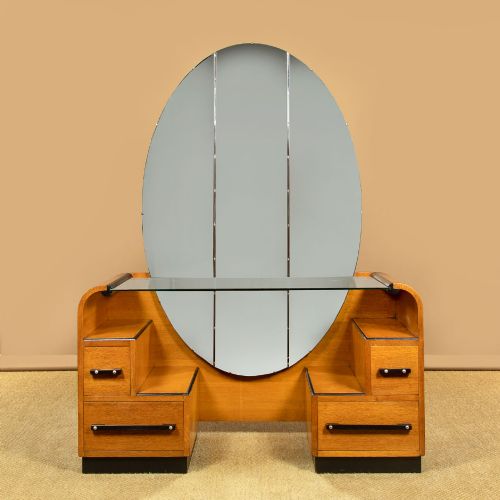
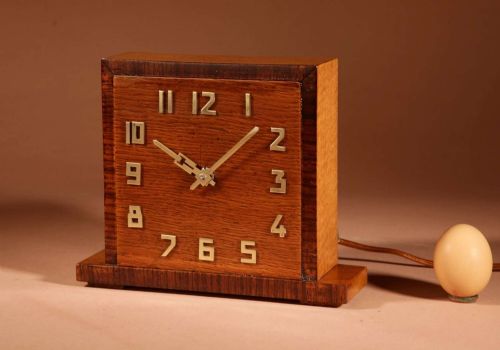
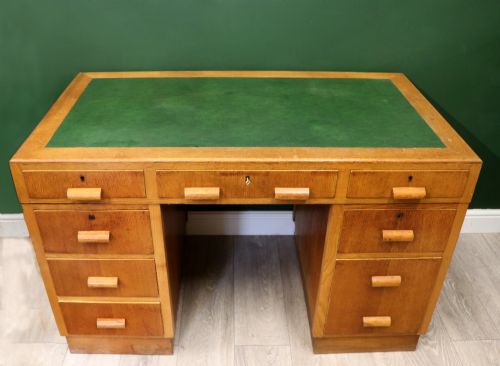
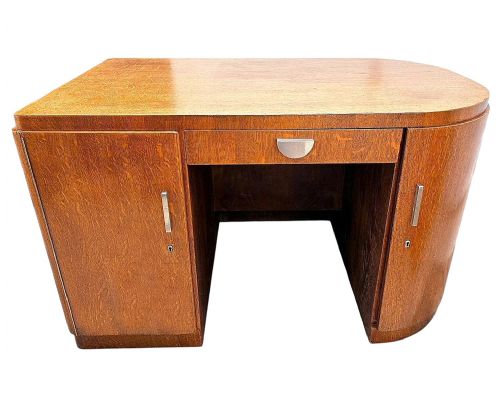
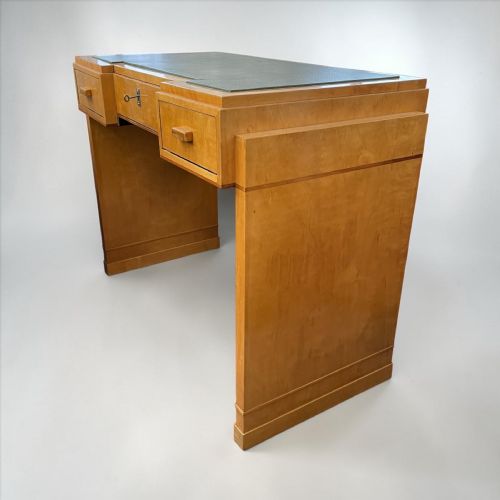
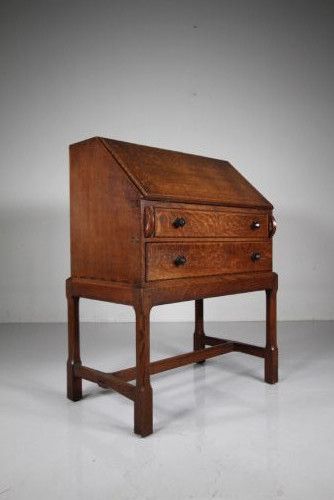
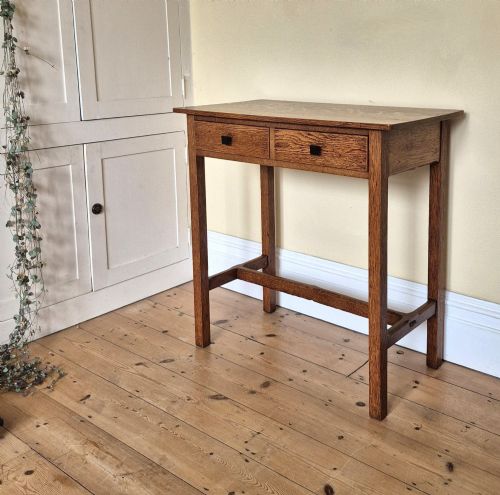
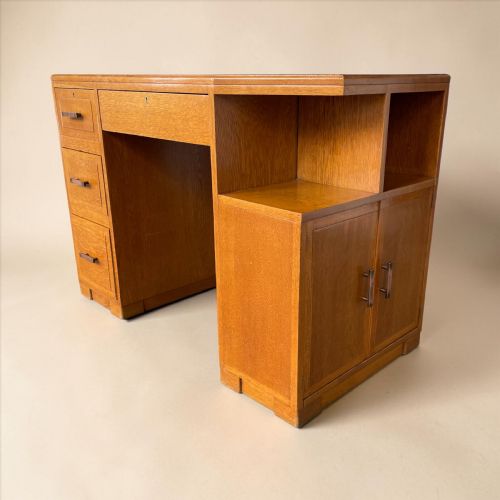
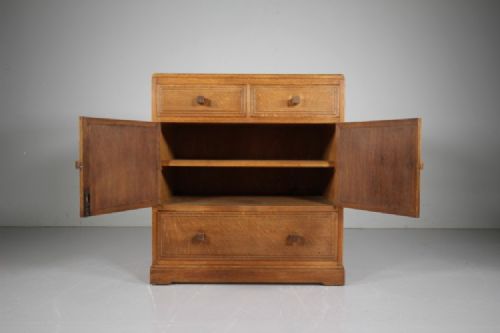
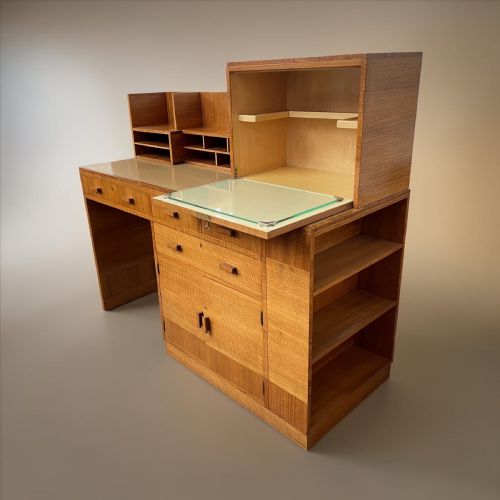
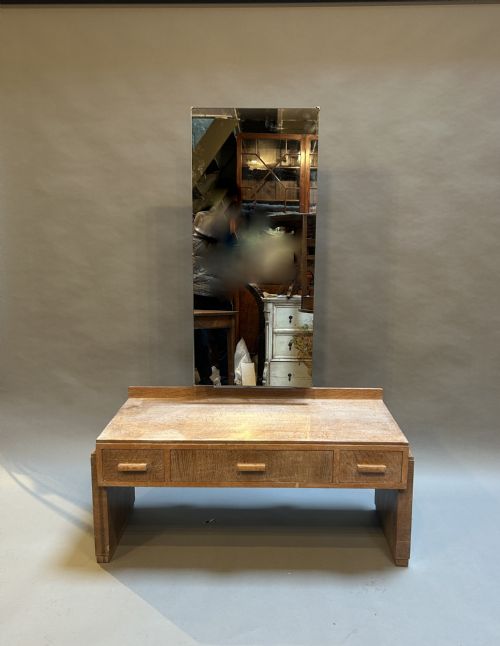
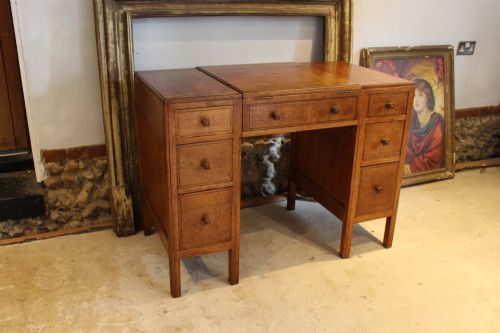
A 1930s oak desk represents a period of transition in British and European furniture design, moving away from heavy Victorian traditions towards cleaner, more functional forms. When searching for a 1930s oak desk, buyers encounter pedestal formats, flat-topped writing tables, and distinctive bureau constructions spanning Art Deco, Arts and Crafts, and Cotswold School aesthetics.
The pieces appearing here range from commercial interwar designs to studio-made pieces by renowned workshops. These items often feature generous top surfaces paired with functional banks of drawers or drop-down writing flaps, designed for practical study and office use.
Quality and craftsmanship
Quality in these items is determined by the integrity of the timber selection, the precision of the joinery, and the distinction of the design. Pieces originating from named makers or specific regional schools display superior timber matching, careful attention to grain direction, and more refined hardware fittings.
The lower end of the range comprises straightforward commercial production items that utilise simpler hardware and thinner oak veneers over secondary timbers. While structurally sound, these examples lack the sculptural handling of planes and edges seen in Cotswold School or commissioned studio pieces.
1930s Oak Desk Retail Price Guide 2026
Typical asking prices for 1930s oak desk among the pieces listed under this phrase on Sellingantiques today, from the lower quarter to the upper quarter. They describe what is for sale here now, not the wider market.
Period styles represented include Art Deco, Arts and Crafts, Cotswold School, and interwar commercial designs.
Edward Barnsley·Stanley Webb Davies·Heal and Sons·Bryn Mawr Welsh Oak·Hubert Simpson of Kendal·Étienne Kohlmann
The 1930s Oak Desk Glossary
- Pedestal desk
- A heavy freestanding writing table supported by two upright banks of drawers flanking a central kneehole. This form provides substantial storage capacity while maintaining a formal presence in an office.
- Writing bureau
- A cabinet featuring a hinged sloping flap that drops down to form a writing surface, concealing small pigeonholes and internal compartments. These items combine vertical storage with a compact fold-away desk space.
- Limed oak
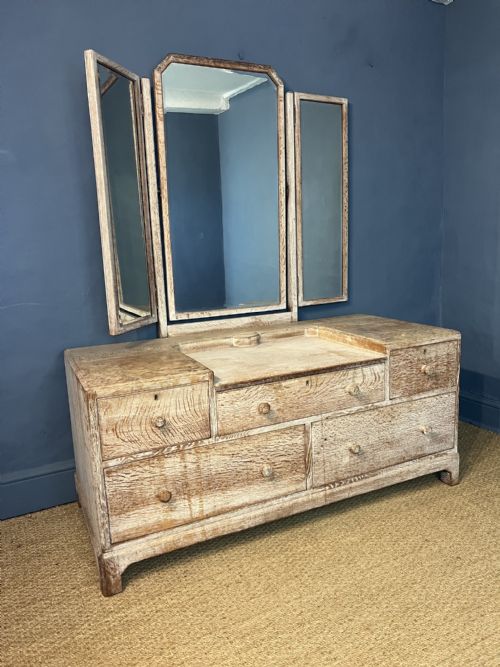
- A finishing technique where a white pigment is rubbed into the open pores of oak timber to highlight the grain pattern. This treatment became particularly popular in interwar British cabinet making.
- Cotswold School
- A regional design movement rooted in the Arts and Crafts tradition, emphasising honest construction, hand-carved details, and traditional joinery. Pieces associated with this tradition display exceptional individual craftsmanship.
- Art Deco
- A dominant stylistic movement of the interwar decades characterised by geometric symmetry, stylised motifs, and sleek modern lines. It manifests in these desks through streamlined silhouettes and contrasting wood tones.
1930s Oak Desk: Frequently Asked Questions
How do I identify a 1930s oak desk?
Look for characteristic interwar design markers such as geometric Art Deco proportions, simple geometric drawer pulls, or Arts and Crafts exposed joinery. The timber treatment often involves limed or bleached finishes alongside traditional solid oak construction.
Maker labels, stamps, or specific regional workshop attributions frequently appear inside drawers or on the reverse panels to confirm the period of manufacture.
Where were these desks used originally?
These pieces served in domestic studies, administrative offices, and institutional rooms across Britain and Europe during the interwar period. Their practical configurations catered to clerical work, writing correspondence, and home management.
Partner desks and pedestal formats were built for professional offices, while smaller writing tables and bureaus suited domestic interiors.
How do I care for an oak desk?
Maintain the wood by dusting with a dry lint-free cloth and applying occasional quality beeswax to nourish the dry grain. Avoid placing the furniture in direct sunlight or near heat sources to prevent the timber from splitting.
Leather inserts require gentle cleaning with specialised leather balms, keeping moisture away from unsealed wooden joints.
What is the difference between Arts and Crafts and Art Deco desks?
Arts and Crafts examples celebrate visible hand-craftsmanship, traditional joinery, and natural oak surfaces without heavy ornamentation. They reflect a philosophical continuity with nineteenth-century guild workshops.
Art Deco variations embrace streamlined modernity, symmetrical geometry, and occasional contrasting materials like chrome or rosewood, pointing towards mid-century design.